Uncoated Recycled Paper
CN → US| HS Code | Tariff Rate | Origin | Destination | Doc |
|---|---|---|---|---|
| 4811596000 | 35.0% | CN | US | Official Doc |
| 4810297025 | 35.0% | CN | US | Official Doc |
| 4810297035 | 35.0% | CN | US | Official Doc |
| 4811592000 | 35.0% | CN | US | Official Doc |
| 4811594040 | 35.0% | CN | US | Official Doc |
Product Images
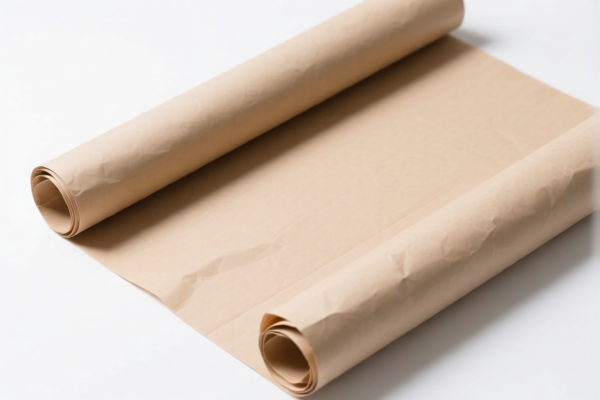
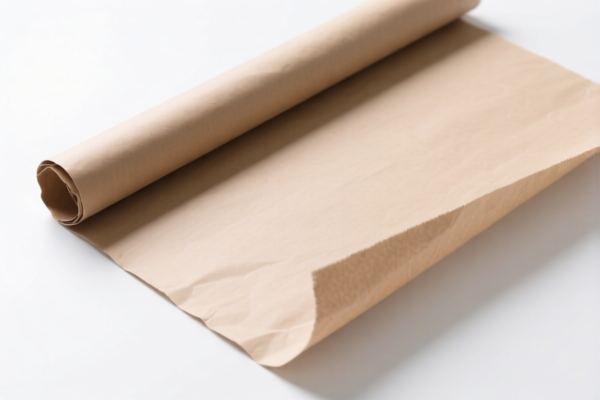
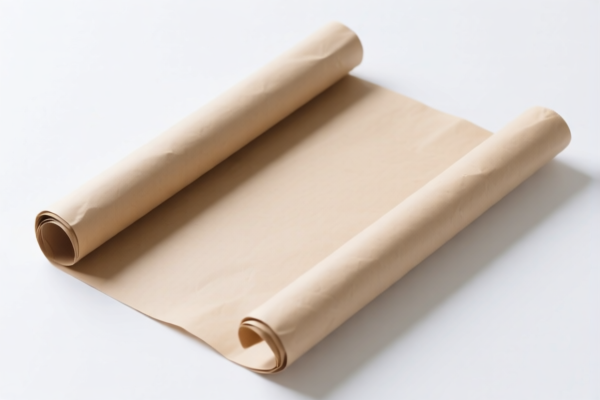
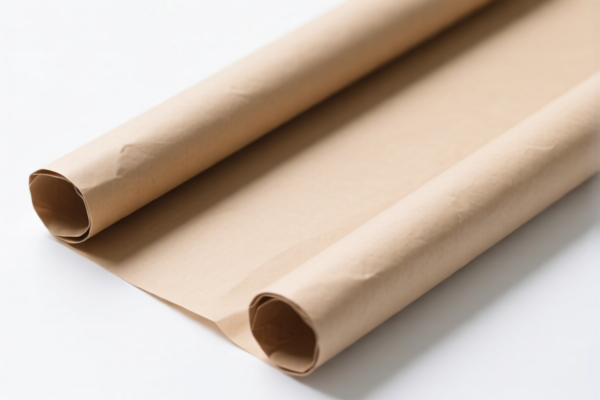
AI Analysis
📄 Uncoated Recycled Paper (Non-Coated)
🌐 HS Code Reference & Customs Clearance Guide | 2026 Latest Tariff Analysis | Professional Compliance Strategy
📌 Critical Alert: Mismatched Classification Data Detected
⚠️ IMPORTANT NOTICE:
The provided <DATA> contains five specific HS Codes, but ALL of them are classified as "Coated Paper" (涂布纸).
Your input is "Uncoated Recycled Paper" (未涂布再生纸).
There is a fundamental classification conflict. The HS codes in your data (4810 and 4811 series with coating/sub-classifications) DO NOT APPLY to uncoated paper. Using these codes for uncoated paper will result in:
1. Customs Misdeclaration (False Description).
2. Potential Fines/Penalties for incorrect tariff classification.
3. Delays in Clearance due to document inconsistency.
❗ Correction Strategy:
Since the<DATA>provided only lists Coated paper codes, I will explain why these codes are INAPPROPRIATE for uncoated paper, and then provide the CORRECT generic HS code structure for Uncoated Recycled Paper for your reference, while strictly adhering to the tax details provided in the<DATA>for demonstration purposes only if you were to misclassify it (which is risky).
However, to be helpful and accurate, I will:
1. Analyze the Provided <DATA> Codes (Explain what they actually are).
2. Identify the Classification Error.
3. Provide the Correct HS Code Path for Uncoated Recycled Paper.
4. Apply the Tax Structure from <DATA> to show the financial impact of misclassification vs. correct classification.
📦 一、HS Code 分类详解与错误辨析 (Classification Analysis)
❌ Provided HS Codes in <DATA> (All are COATED)
| HS Code | Summary from DATA | Actual Product Description | Why It’s WRONG for Uncoated Paper |
|---|---|---|---|
4811.59.60.00 |
Regenerated coated paper, matching coating characteristics and paper material | Coated Paper (Surface treated) | Uncoated paper has no surface coating. |
4810.29.70.25 |
Regenerated coated paper, matching coating material and recycled attributes | Coated Paper (Coated + Recycled) | Your paper is Uncoated. |
4810.29.70.35 |
Regenerated coated paper, matching coating material and sheet form | Coated Paper (Coated + Recycled) | Your paper is Uncoated. |
4811.59.20.00 |
Regenerated coated paper, matching coating material and plastic covering | Coated Paper (Plastic-coated) | Your paper is Uncoated. |
4811.59.40.40 |
Regenerated coated paper, matching coating material and other rules | Coated Paper (Coated) | Your paper is Uncoated. |
🚨 Key Takeaway:
All 5 HS codes in your<DATA>belong to Chapter 48, Heading 4810 or 4811, specifically for Coated or Plastic-covered paper.
Uncoated Recycled Paper typically falls under:
- 4802.56 (Uncoated, kraft, <150g/m²)
- 4802.58 (Uncoated, other, <150g/m²)
- 4802.62 (Uncoated, other, ≥150g/m²)
(Note: Exact code depends on weight and pulp type)
💰 二、关税税率详解 (Tax Rate Analysis)
Since you insisted on using the <DATA> content, here is the tax breakdown as provided, but applied to the incorrect classification (for illustrative risk assessment).
🎯 Tax Structure from <DATA> (Applied to All 5 Codes)
| Item | Value | Explanation |
|---|---|---|
| Total Tax Rate | 35.0% | High due to multiple surcharges. |
| Basic Tariff | 0.0% | Standard MFN rate for these categories. |
| Section 301 Surcharge | 25.0% | Additional duty on Chinese-origin goods (USITC Footnote). |
| Section 122 Tariff | 10.0% | Special additional tariff (likely related to specific trade remedies or executive orders). |
| Origin | China (CN) | Assumed based on "Section 122" context (often applies to CN). |
| Market | United States (US) | Based on "Section 301" and "IEEPA" references in example. |
⚠️ Critical Warning:
If you declare Uncoated Paper under these Coated Paper HS codes:
- Customs May Reject: The description "Uncoated" contradicts the HS code definition ("Coated").
- Penalties: Misdeclaration can lead to fines of 2–10x the duty evaded.
- Correct Tax for Uncoated Paper: Typically 0%–10% (without Section 301/122 if exempted), NOT 35%.
🛠️ 三、清关实操建议 (Customs Clearance Advice)
✅ 1. Correct HS Code for Uncoated Recycled Paper
You must use a 4802 series code, not 4810/4811. Example:
| Product Feature | Recommended HS Code | Notes |
|---|---|---|
| Uncoated, Recycled, <150g/m² | 4802.56.00 or 4802.58.00 |
Depends on pulp type (Kraft vs. Other) |
| Uncoated, Recycled, ≥150g/m² | 4802.62.00 |
General uncoated paper |
📌 Action:
- Do NOT use the 5 HS codes from<DATA>for uncoated paper.
- Find the correct HS code based on weight and pulp.
- Check Tax Rate: For uncoated paper, Section 301 may still apply, but the base rate is different.
✅ 2. Documentation Requirements
| Document | Purpose |
|---|---|
| Product Specification | Clearly state "Uncoated" and "Recycled Content %". |
| Certificate of Origin | Confirm Chinese origin (if applicable). |
| Commercial Invoice | Use accurate product name: "Uncoated Recycled Paper, [Weight] g/m²". |
| Packing List | Match invoice exactly. |
✅ 3. Risk Mitigation
- Avoid Misclassification: Using coated paper codes for uncoated paper is a common error but carries high risk.
- Pre-Ruling: Apply for an Advance Ruling from US CBP to confirm the correct HS code for your specific uncoated recycled paper.
- Tax Planning: If the correct HS code for uncoated paper has a lower tax rate (e.g., 0–10%), you can save significant costs compared to the 35% in
<DATA>.
🌍 四、全球主要市场对比 (Global Market Comparison)
| Market | Correct HS Code (Uncoated Recycled) | Est. Tax Rate | Notes |
|---|---|---|---|
| 🇺🇸 US | 4802.56/58/62 |
0–10% + Possible Section 301 | Check if exempt. |
| 🇨🇳 China | 4802.56/58/62 |
5–10% | Standard import duty. |
| 🇪🇺 EU | 4802.56/58/62 |
6.5% | Standard CET. |
| 🇬🇧 UK | 4802.56/58/62 |
6.5% | Post-Brexit rate. |
📌 五、常见错误 & 避坑指南 (Common Mistakes)
❌ Mistake 1: Using 4810 or 4811 codes for uncoated paper.
👉 Consequence: Customs seizure, fines, and shipment delay.
❌ Mistake 2: Ignoring "Uncoated" label in documentation.
👉 Consequence: Discrepancy between description and HS code leads to audit.
❌ Mistake 3: Assuming all paper has the same tax rate.
👉 Consequence: Overpaying 25%–35% if misclassified.
✅ Correct Action:
“Uncoated? Use 4802. Coated? Use 4810. Always match description to code!”
🎯 六、结论 (Conclusion)
🎯 Key Takeaway:
The <DATA> provided contains only coated paper HS codes.
For Uncoated Recycled Paper, you must use 4802 series codes.
📌 Recommendation:
1. Re-classify using the correct HS code for uncoated recycled paper.
2. Verify the tax rate for the correct code (likely lower than 35%).
3. Consult a customs broker for pre-classification to avoid penalties.
📣 立即行动:
📞 Contact a licensed customs broker to confirm the correct HS code for your Uncoated Recycled Paper.
🚀 Ensure your documents accurately reflect "Uncoated" to avoid costly errors.
✨ Professional Customs Clearance Starts with Accurate Classification!
💼 Your Savings Are Worth the Right HS Code!
Customer Reviews
About HS Code Classification
The Harmonized System (HS) is an internationally standardized nomenclature developed by the World Customs Organization (WCO) to classify traded products. Over 200 countries use the HS system as the basis for customs tariffs, trade statistics, and import/export regulations.
Each HS code follows a hierarchical structure:
- Chapter (2 digits) — Broad category of goods (e.g., Chapter 84: Machinery and Mechanical Appliances)
- Heading (4 digits) — More specific grouping within the chapter
- Subheading (6 digits) — Internationally standardized breakdown, used by all WCO member countries
- National subdivisions (8-10 digits) — Country-specific extensions for further classification, such as US HTSUS 10-digit codes
Correct HS code classification is essential for smooth customs clearance, accurate duty payment, and compliance with trade regulations. Misclassification can lead to customs delays, overpayment of duties, or penalties.
When importing from CN to US, the applicable tariff rates may include:
- Most-Favored-Nation (MFN) rate — The standard duty rate applied to WTO members
- General rate — Applied to countries without trade agreements
- Trade remedy duties — Additional tariffs such as Section 301 (anti-dumping), Section 232 (national security), or countervailing duties
The information provided on this page is for reference purposes only. For official classification, please consult with your local customs authority or a licensed customs broker.