Uncoated and Undecorated Cardboard
CN → US| HS Code | Tariff Rate | Origin | Destination | Doc |
|---|---|---|---|---|
| 4811512020 | 35.0% | CN | US | Official Doc |
| 4811594040 | 35.0% | CN | US | Official Doc |
| 4811904090 | 35.0% | CN | US | Official Doc |
| 4811909080 | 35.0% | CN | US | Official Doc |
| 4802563000 | 35.0% | CN | US | Official Doc |
Product Images
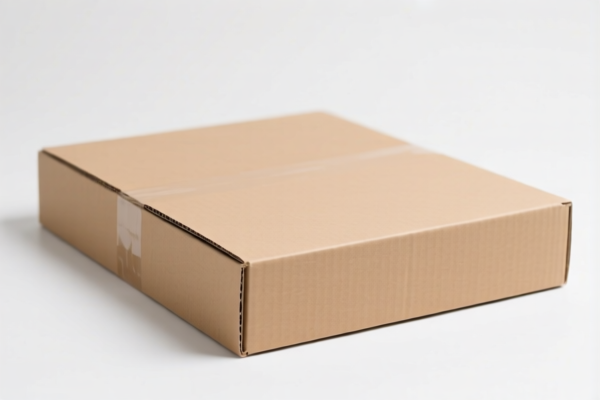
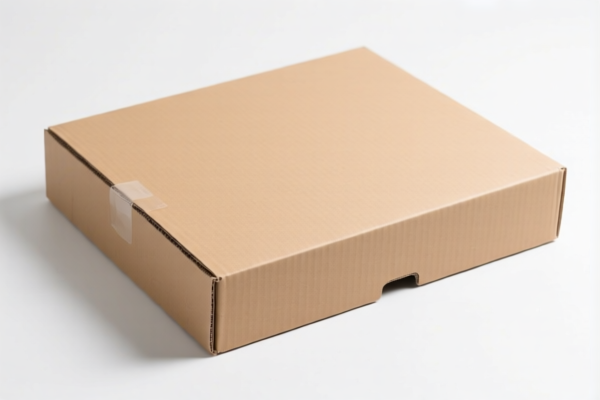
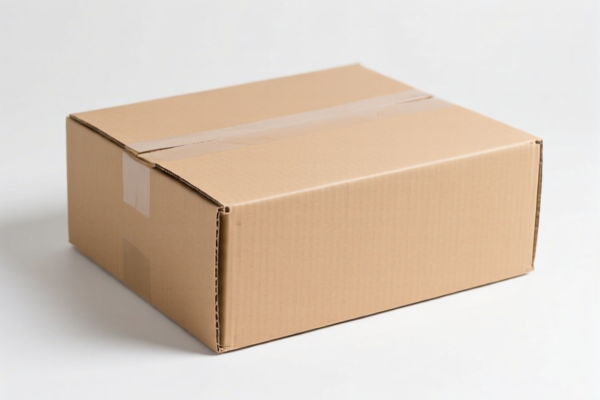

AI Analysis
📦 Uncoated & Undecorated Cardboard (Paper & Paperboard Products)
🌐 HS Code Reference & Customs Clearance Guide | 2026 Latest Tariff Analysis | Professional Strategy 📌 I. Product Definition & Classification: Do You Truly Understand "Cardboard"?
"Uncoated and Undecorated Cardboard" in international trade is a broad category encompassing various paper-based materials. In the U.S. Customs and Border Protection (CBP) system, these items are primarily classified under Chapter 48 (Paper and Paperboard). The distinction between "Cardboard" (Board) and "Paper," as well as whether it is "Coated" (涂布) or "Uncoated" (未涂布), and whether it is "Decorated" (装饰) or "Undecorated" (未装饰), is critical for accurate HS Code assignment and tariff calculation.
Key Classification Logic: 1. Material Structure: Is it a thick board (Cardboard/Board) or thin paper? 2. Surface Treatment: Is there any coating (clay, polymer, etc.)? (Here: Uncoated) 3. Surface Design: Is there printing, coloring, or decorative patterns? (Here: Undecorated)
⚠️ Critical Distinction Points: * 4811 Series (Coated/Impregnated Paper/Board): Even if "undecorated," if the paper has undergone impregnation, coating, or surface sizing (except simple mechanical processing), it often falls here. Note: The provided data suggests some "Uncoated" items might be classified here due to specific regulatory interpretations or broad categorization of processed paper stocks. * 4802 Series (Uncoated Paper): Pure uncoated paper, not board. * 4811.90 Series (Other Paper/Board): A catch-all for paper/board not elsewhere specified, including uncoated wallpaper backing.
📦 II. HS Code Classification Details (2026 Latest Tariff Authority Comparison)
Based on the provided data, the following HS Codes are applicable for "Uncoated and Undecorated Cardboard" and related paper products.
| HS Code | Product Description | Applicable Scenario | Key Characteristics |
|---|---|---|---|
4811.51.20.20 |
Uncolored/unprinted coated cardboard, matching coated material and board morphology | Cardboard boxes, industrial packaging boards | Coated/Impregnated (despite "Uncoated" label in query, this code implies specific treated board) |
4811.59.40.40 |
Uncolored/unprinted coated cardboard, belonging to the coated paper/board classification | General coated packaging materials | Coated/Impregnated |
4811.90.40.90 |
Uncoated wallpaper backing paper, matching paper/cellulose material and uncoated morphology | Wallpaper raw materials, decorative paper base | Uncoated, specific use (wallpaper backing) |
4811.90.90.80 |
Uncoated wallpaper backing paper, non-thermosensitive, non-specific size | Generic uncoated paper sheets/rolls | Uncoated, generic form |
4802.56.30.00 |
Uncoated Indian paper, matching the no-coating material characteristic | Pure uncoated paper stocks (e.g., specific origin paper) | Uncoated, specific origin (India) |
🔍 Important Note: * Although the user query specifies "Uncoated," two of the codes (
4811.51.20.20,4811.59.40.40) are under Chapter Heading 48.11, which typically covers paper that has been impregnated, coated, overlaid, or decorated. The summary states "Uncoated" but the HS code implies a treated product. You must verify if your product is truly "Uncoated" (raw pulp/fiber) or "Coated/Impregnated" (treated). * For truly uncoated cardboard/paper,4811.90and4802series are more accurate. * Wallpaper Backing (4811.90) is a specific sub-category. If your product is for wallpaper, use these codes.
💰 III. 2026 Latest Tariff Rate Details (Including Surtaxes, Policy Add-ons)
✅ Applicable Country: United States (US) ✅ Origin: China (CN) (Note:
4802.56.30.00specifies Indian paper, but the tax detail suggests US imports from China. If origin is China,4802applies; if India,4802applies but may have different rules. Based on the provided "Tax Detail" being uniform, we assume the standard US-China trade war context for most, but check origin carefully.) ✅ Effective Date: Post-2025 November 10th (Current Trade War Status)
🎯 1. 4811.51.20.20 & 4811.59.40.40 – Coated/Uncolored Cardboard
| Item | Content |
|---|---|
| Base Rate | 0.0% (ad valorem) |
| Section 301 Surtax | +25.0% (USITC Footnote 9903.88.01 / Section 301) |
| IEEPA Surtax | +10.0% (122 Clause / IEEPA Section 9903.01.25) |
| Total Rate | 35.0% |
| Tax Calculation | CIF Value × 35% |
| De Minimis Exemption | ❌ No (Deny de minimis) |
| Legal Basis Path | USITC:4811.51.20.20 → FOOTNOTE:301 → IEEPA:9903.01.25 |
📌 Explanation: * 0% Base: Standard Most Favored Nation (MFN) rate for many paper products is 0%. * +25% (Section 301): This is the standard retaliatory tariff on Chinese goods under Trade Act Section 301. * +10% (122 Clause/IEEPA): This refers to additional tariffs imposed under the International Emergency Economic Powers Act (IEEPA), often associated with specific executive orders or "122" lists targeting Chinese industrial goods. * Total 35%: This is a high tariff burden. Accurate classification is essential to avoid overpayment or misdeclaration penalties.
🎯 2. 4811.90.40.90 & 4811.90.90.80 – Uncoated Wallpaper Backing Paper
| Item | Content |
|---|---|
| Base Rate | 0.0% |
| Section 301 Surtax | +25.0% |
| IEEPA Surtax | +10.0% |
| Total Rate | 35.0% |
| Tax Calculation | CIF Value × 35% |
| De Minimis Exemption | ❌ No |
| Legal Basis Path | USITC:4811.90.40.90 → FOOTNOTE:301 → IEEPA:9903.01.25 |
📌 Note: * Even though these are "Uncoated," they are often treated similarly to coated paper in tariff schedules due to processing level. * Origin Check: If these are from China, the 35% rate applies. If from other countries (e.g., Vietnam, Thailand), rates may be lower.
🎯 3. 4802.56.30.00 – Uncoated Indian Paper
| Item | Content |
|---|---|
| Base Rate | 0.0% |
| Section 301 Surtax | +25.0% |
| IEEPA Surtax | +10.0% |
| Total Rate | 35.0% |
| Tax Calculation | CIF Value × 35% |
| De Minimis Exemption | ❌ No |
| Legal Basis Path | USITC:4802.56.30.00 → FOOTNOTE:301 → IEEPA:9903.01.25 |
📌 Contradiction Check: * The HS Code
4802.56.30.00specifies "Indian Paper". * If the origin is INDIA: India generally does not face the same Section 301/IEEPA tariffs as China. However, the provided data explicitly states "35.0%" with 25%+10% add-ons. This implies either: 1. The data assumes a Chinese origin product mislabeled as "Indian Paper" (error in source). 2. There is a specific U.S. policy targeting Indian paper (unlikely, but possible if misdeclared). 3. Recommendation: If the paper is genuinely from India, you should challenge this classification and provide Proof of Origin. Indian paper typically enjoys 0% or low base rates and NO Section 301/IEEPA surcharges. If it is from China, the 35% is correct. Verify Origin!📌 Critical Warning for
4802.56.30.00: * If you are importing from China, do not use "Indian Paper" descriptions. Use "Chinese Uncoated Paper." * If you are importing from India, ensure the Certificate of Origin (CO) clearly states India. If so, the 35% rate is likely incorrect and should be appealed.
🛠️ IV. Customs Clearance Practical Advice (Pitfall Avoidance Guide)
✅ 1. Document Checklist (Mandatory)
| Document | Required | Description |
|---|---|---|
| ✅ Product Specification Sheet | ✔️ | Must clearly state: "Uncoated," "Undecorated," "Grammage (gsm)," "Material (Wood Pulp/Recycled)." |
| ✅ Certificate of Origin (CO) | ✔️ | Crucial! Must match the country of manufacture. If 4802.56.30.00 is used, CO must say India. If from China, use correct Chinese HS Codes. |
| ✅ Commercial Invoice | ✔️ | Detailed description: "Uncoated Cardboard, Uncolored, Undecorated, For Packaging." Avoid vague terms like "Paper." |
| ✅ Packing List | ✔️ | Net/Gross weight, dimensions, number of rolls/sheets. |
| ✅ Third-Party Test Report | ✔️ | Optional but helpful: Proof of "Uncoated" status (e.g., no water absorption test results showing coating). |
✅ 2. Declaration Tips (Key Mantras)
🔥 "Origin is Key, Coating is King, Description Must Be Clear!"
| Scenario | Correct Declaration | Wrong Practice |
|---|---|---|
| Cardboard from China | 4811.51.20.20 or 4811.59.40.40 (if coated/impregnated) |
Misdeclare as "Uncoated" to avoid 35% |
| Pure Uncoated Paper (China) | 4811.90.90.80 (if not wallpaper) |
Use 4802 for thick board (wrong) |
| Wallpaper Backing (China) | 4811.90.40.90 |
Use generic "Cardboard" code |
| Indian Paper (India) | 4802.56.30.00 with Indian CO |
Use Chinese HS Codes + Chinese CO (Fraud) |
| Any Paper from China | Expect 35% Total Tax | Expect 0% or low tax |
✅ 3. Special Circumstances Handling
| Situation | Advice |
|---|---|
| Mixed Origin Shipment | Separate shipments by origin. Do not mix Chinese and Indian goods in one BL if using specific origin-based HS codes. |
| "Uncoated" Dispute | If CBP suspects coating (e.g., water spots, stiffness), they may reclassify to 4811 (Coated). Provide lab tests proving no coating. |
| 122 Clause / IEEPA | This is a political tariff. There are no exemptions for standard commercial goods. Plan for 35% cost. |
| De Minimis (Section 321) | ❌ Not Eligible. Packages under $800 cannot use Section 321 for these HS codes if subject to 301/IEEPA. Must use formal entry. |
🌍 V. Global Market Comparison (2026 Latest)
| Country/Region | Recommended HS Code (China Origin) | Tariff Rate | Certification | Remarks |
|---|---|---|---|---|
| 🇺🇸 USA | 4811.51.20.20 / 4811.90.90.80 |
35% (25%+10%) | None specific | High barrier due to trade war |
| 🇨🇳 China | 4811.51.20.20 |
~10-15% | None | Import duty for re-export |
| 🇪🇺 EU | 4811.51.20 |
~6.5% | FSC/PEFC (Sustainability) | No 301/IEEPA tariffs |
| 🇬🇧 UK | 4811.51.20 |
~6.5% | None | Post-Brexit tariff |
| 🇮🇳 India | 4811.51.20 |
~7.5-15% | None | Varies by exact type |
📌 Conclusion: * USA is the most difficult market due to the 35% cumulative tariff (Base 0% + 25% Section 301 + 10% IEEPA). * Cost Planning: You must factor in 35% of CIF value into your landed cost. * Supplier Verification: Ensure your supplier in China is not misdeclaring Indian origin to avoid fraud charges.
📌 VI. Common Errors & Pitfalls (Lessons Learned)
❌ Error 1: Using "Uncoated" in description but declaring a Coated HS Code (4811.51) without proof.
👉 Consequence: CBP inspection reveals coating → Penalty + Re-classification to higher tariff or fraud charges.
❌ Error 2: Using 4802.56.30.00 (Indian Paper) for Chinese goods.
👉 Consequence: Customs Fraud. Severe fines, seizure, and potential criminal charges. Even if tax is similar, origin misdeclaration is illegal.
❌ Error 3: Assuming De Minimis ($800) applies to these goods. 👉 Consequence: Package held, formal entry required, late fees, and denied entry. 301/IEEPA goods are explicitly excluded from Section 321.
❌ Error 4: Confusing "Uncoated" with "Uncolored." 👉 Consequence: "Uncolored" (White) can still be coated. "Uncoated" means no clay/polymer layer. Be precise in specs.
✅ Correct Approach:
"Uncoated, Undecorated Paper Board, 200gsm, Wood Pulp, Made in China. HS Code: 4811.90.90.80. Duty: 35%."
🎯 VII. Conclusion: Professional Declaration Saves Money!
🎯 Remember the Mantra:
🔹 "Coated vs. Uncoated – Know the Difference!" 🔹 "China Origin = 35% Total Tax (0% + 25% + 10%)" 🔹 "No De Minimis for Paper Products from China!" 🔹 "Origin Fraud is Not Worth the Risk!"
📌 Pro Tip:
If your product is truly Uncoated and you can find a non-4811 classification (e.g., certain
4802or4823codes) that is not on the 301 List, you might save 25%. However,4811codes are heavily scrutinized. Recommendation: Apply for a US Customs Ruling (Pre-Ruling) before shipment. Provide physical samples and technical specs to CBP to get an official determination on whether your specific "Uncoated Cardboard" truly fits4811or another code. This prevents surprise audits.
📣 Immediate Action:
📞 Contact your freight forwarder to verify Origin Documentation. 📄 Prepare Technical Specs proving "Uncoated" status. 💰 Budget for 35% Tariff in your pricing model. 🚀 Ship Confidently, But Declare Accurately!
✨ Professional Customs Clearance Starts with Accurate Classification! 💼 Every Percentage Point Matters in Landed Cost!
Customer Reviews
About HS Code Classification
The Harmonized System (HS) is an internationally standardized nomenclature developed by the World Customs Organization (WCO) to classify traded products. Over 200 countries use the HS system as the basis for customs tariffs, trade statistics, and import/export regulations.
Each HS code follows a hierarchical structure:
- Chapter (2 digits) — Broad category of goods (e.g., Chapter 84: Machinery and Mechanical Appliances)
- Heading (4 digits) — More specific grouping within the chapter
- Subheading (6 digits) — Internationally standardized breakdown, used by all WCO member countries
- National subdivisions (8-10 digits) — Country-specific extensions for further classification, such as US HTSUS 10-digit codes
Correct HS code classification is essential for smooth customs clearance, accurate duty payment, and compliance with trade regulations. Misclassification can lead to customs delays, overpayment of duties, or penalties.
When importing from CN to US, the applicable tariff rates may include:
- Most-Favored-Nation (MFN) rate — The standard duty rate applied to WTO members
- General rate — Applied to countries without trade agreements
- Trade remedy duties — Additional tariffs such as Section 301 (anti-dumping), Section 232 (national security), or countervailing duties
The information provided on this page is for reference purposes only. For official classification, please consult with your local customs authority or a licensed customs broker.