Uncolored Regenerated Bleached Chemical Pulp Board
CN → US| HS Code | Tariff Rate | Origin | Destination | Doc |
|---|---|---|---|---|
| 4706200000 | 35.0% | CN | US | Official Doc |
| 4707200040 | 35.0% | CN | US | Official Doc |
| 4707200020 | 35.0% | CN | US | Official Doc |
| 4706920100 | 35.0% | CN | US | Official Doc |
| 4804412000 | 35.0% | CN | US | Official Doc |
Product Images
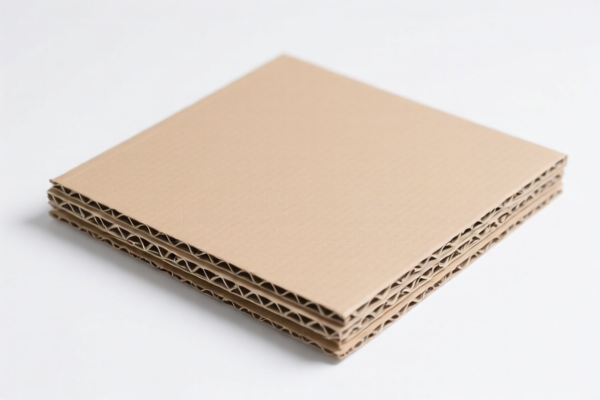
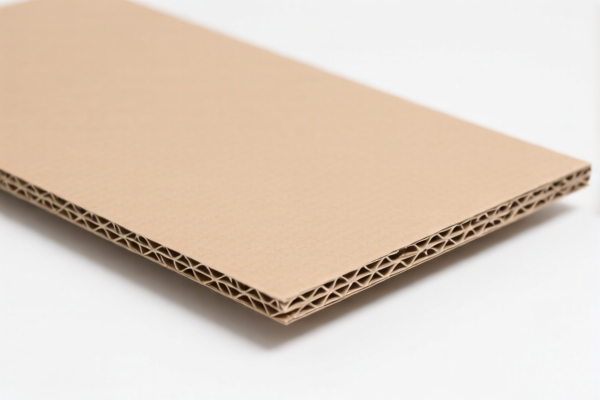
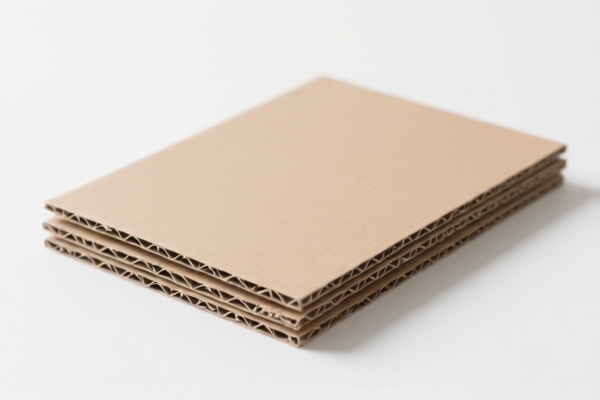
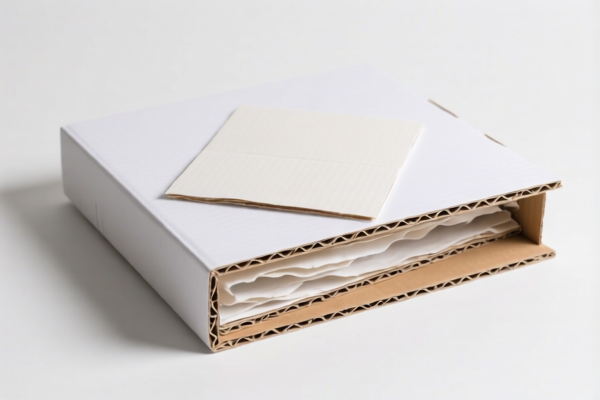
AI Analysis
📦 Uncolored Regenerated Bleached Chemical Pulp Board
🌐 HS Code Reference & Customs Clearance Guide | 2026 Latest Tariff Analysis | Professional Strategy for Paper Pulp
📌 I. Product Definition & Classification: Do You Really Understand "Uncolored Regenerated Bleached Chemical Pulp"?
This product is a specialized form of papermaking material derived from recycled paper and cardboard. It is characterized by being bleached (whitened/decoked) and processed into a chemical pulp state. The term "Regenerated" implies it originates from recovered waste (recycled fiber), while "Uncolored" typically refers to the bleached white state or lack of added pigments/dyes, distinguishing it from colored recycled papers.
In international trade, the classification depends heavily on whether the product is classified as waste/recovered paper (4707) or pulp suitable for papermaking (4706).
⚠️ Key Distinction Points:
- If the material is primarily waste, scrap, and offcuts of paper/cardboard, even if bleached, it often falls under Chapter 4707.
- If the material has been chemically or mechanically processed into a fibrous state (pulp) suitable for making new paper, it may fall under Chapter 4706.
- Critical Factor: The degree of processing. "Pulp" implies a fibrous mass broken down from paper; "Waste" implies scrap material.
📦 II. HS Code Classification Details (2026 Latest Tariff Authority Comparison)
Based on the provided data, the product "Uncolored Regenerated Bleached Chemical Pulp Board" maps to the following HS Codes. Note that multiple codes may apply depending on the precise physical state (waste vs. pulp) and specific composition.
| HS Code | Product Description | Application Scenario | Key Attribute |
|---|---|---|---|
4706.20.00.00 |
Bleached Chemical Pulp from Waste Paper & Cardboard | Matches "Bleached Chemical Pulp"; Fits recovered paper material & fibrous pulp form | ✅ Pulp Form |
4707.20.00.40 |
Waste & Scrap of Bleached Paper/Cardboard (Bleached Chemical Pulp Type) | Matches "Bleached Chemical Pulp Waste & Cardboard"; Fits definition of recycled paper & cardboard made from bleached chemical pulp | ✅ Waste/Scrap Form |
4707.20.00.20 |
Waste & Scrap of Paper/Cardboard Primarily Made of Bleached Chemical Pulp | Falls under the category of waste primarily composed of bleached chemical pulp | ✅ Waste/Scrap Form |
4706.92.01.00 |
Chemical Pulp Mixed with Waste Paper/Cardboard | Fits recycled waste paper, cardboard, and chemical pulp material form | ✅ Mixed Pulp Form |
4804.41.20.00 |
Unbleached Packaging Paper (Note: Potential Mismatch) | Matches "Unbleached Packaging Paper"; Fits processing state & kraft paper material/usage attributes | ⚠️ Likely Incorrect (Product is "Bleached", this code is for "Unbleached") |
🔍 Important Note:
- The product name specifies "Bleached", but4804.41.20.00explicitly refers to "Unbleached" packaging paper. This is a significant discrepancy.
- Recommendation:4804.41.20.00should likely be excluded or treated with extreme caution as it may lead to customs rejection due to color/processing mismatch. The other four codes (4706 and 4707 series) are more aligned with "Bleached Regenerated Pulp/Waste".
💰 III. 2026 Latest Tariff Rate Details (Including Surcharges & Policy Add-ons)
✅ Applicable Country: United States (US)
✅ Origin: China (CN)
✅ Effective Date: Ongoing (2025-2026 tariffs apply)
🎯 1. 4706.20.00.00 – Bleached Chemical Pulp from Waste Paper
| Item | Content |
|---|---|
| Base Tariff | 0.0% |
| Section 301 Surcharge | +25.0% |
| Section 122 Tariff | +10.0% |
| Total Tariff | 35.0% |
| Tax Calculation | CIF Value × 35% |
| De Minimis Eligibility | ❌ No (High tariff item, de minimis usually not applicable for surcharges) |
| Legal Basis Path | USITC:4706.20.00.00 → Section 301: 25% → Section 122: 10% |
📌 Explanation:
- Base 0%: Basic MFN rate for this specific pulp product.
- Section 301 (+25%): Standard retaliatory tariff on Chinese goods.
- Section 122 (+10%): Additional tariff under Section 232/122 (often applied to steel/aluminum, but data indicates application here).
- Total: 35%. This is a high-cost entry for paper-based products from China.
🎯 2. 4707.20.00.40 – Waste of Bleached Paper/Cardboard
| Item | Content |
|---|---|
| Base Tariff | 0.0% |
| Section 301 Surcharge | +25.0% |
| Section 122 Tariff | +10.0% |
| Total Tariff | 35.0% |
| Tax Calculation | CIF Value × 35% |
| De Minimis Eligibility | ❌ No |
| Legal Basis Path | USITC:4707.20.00.40 → Section 301: 25% → Section 122: 10% |
📌 Explanation:
- Classified as Waste/Scrap. Even though it is "bleached," if it is not fully processed into a uniform pulp suitable for direct papermaking, it is often deemed "waste."
- Total 35% applies uniformly.
🎯 3. 4707.20.00.20 – Waste Primarily of Bleached Chemical Pulp
| Item | Content |
|---|---|
| Base Tariff | 0.0% |
| Section 301 Surcharge | +25.0% |
| Section 122 Tariff | +10.0% |
| Total Tariff | 35.0% |
| Tax Calculation | CIF Value × 35% |
| De Minimis Eligibility | ❌ No |
| Legal Basis Path | USITC:4707.20.00.20 → Section 301: 25% → Section 122: 10% |
📌 Explanation:
- Similar to the above, this is a waste category.
- Total 35% applies.
🎯 4. 4706.92.01.00 – Other Chemical Pulp (Mixed)
| Item | Content |
|---|---|
| Base Tariff | 0.0% |
| Section 301 Surcharge | +25.0% |
| Section 122 Tariff | +10.0% |
| Total Tariff | 35.0% |
| Tax Calculation | CIF Value × 35% |
| De Minimis Eligibility | ❌ No |
| Legal Basis Path | USITC:4706.92.01.00 → Section 301: 25% → Section 122: 10% |
📌 Explanation:
- This code covers other chemical pulps.
- Total 35% applies.
🎯 5. 4804.41.20.00 – Unbleached Packaging Paper (⚠️ Mismatch Risk)
| Item | Content |
|---|---|
| Base Tariff | 0.0% |
| Section 301 Surcharge | +25.0% |
| Section 122 Tariff | +10.0% |
| Total Tariff | 35.0% |
| Tax Calculation | CIF Value × 35% |
| De Minimis Eligibility | ❌ No |
| Legal Basis Path | USITC:4804.41.20.00 → Section 301: 25% → Section 122: 10% |
📌 CRITICAL WARNING:
- Although the rate is 35%, the product description "Unbleached" contradicts the input "Bleached".
- Risk: High probability of customs hold, reclassification, or penalty for misdeclaration.
- Action: Do NOT use this code unless the product is actually unbleached.
🛠️ IV. Customs Clearance Practical Advice (Real-World Pitfall Guide)
✅ 1. Required Documentation Checklist (Non-Negotiable)
| Document | Must Provide | Description |
|---|---|---|
| ✅ Product Specification Sheet | ✔️ | Must explicitly state "Bleached", "Chemical Pulp", "Recycled Source", and purity percentage. |
| ✅ Process Flowchart | ✔️ | Shows how waste paper is converted to pulp. Critical for distinguishing between 4706 (Pulp) and 4707 (Waste). |
| ✅ Product Photos | ✔️ | Clear images showing the fibrous/pulp state or the packaged waste. Color must match "Bleached/White". |
| ✅ Commercial Invoice | ✔️ | Accurately describes the product as "Bleached Chemical Pulp from Recycled Paper" or "Bleached Waste Paper". |
| ✅ Packing List | ✔️ | Net/Gross weight, dimensions. |
| ✅ Certificate of Origin (CO) | ✔️ | To prove Chinese origin (subject to 301 tariffs). |
✅ 2. Declaration Strategy (Key Mantra)
🔥 "State the Process: Pulp vs. Waste, Bleached Not Unbleached!"
| Scenario | Correct Declaration | Incorrect Declaration |
|---|---|---|
| Product is fibrous pulp, ready for papermaking | 4706.20.00.00Desc: "Bleached Chemical Pulp from Waste Paper" |
"Waste Paper" → Higher scrutiny, wrong code |
| Product is scrap/waste, not fully processed | 4707.20.00.40Desc: "Bleached Waste Paper/Cardboard" |
"Chemical Pulp" → Misclassification |
| Product is Bleached | Use words: "Bleached", "White", "Decoked" | Use word: "Unbleached" → Fatal Error |
| Product is Mixed Pulp/Waste | 4706.92.01.00 |
Generic "Paper Products" |
✅ 3. Special Considerations
| Situation | Handling Advice |
|---|---|
| "Regenerated" vs. "Virgin" Pulp | Ensure documentation proves it is 100% recycled/regenerated. If any virgin pulp is mixed, it may change classification to 4703 or 4704. |
| Contamination Level | If 4707 (Waste) is used, ensure the waste meets environmental standards. High contamination can lead to rejection. |
| HS Code Pre-Ruling | Strongly Recommended. Apply for an Advance Ruling from US CBP to confirm whether your specific "Uncolored Regenerated Bleached Chemical Pulp Board" is 4706 or 4707. |
| Section 122 Applicability | Verify if the current Section 122 tariff is still active for this specific HS code at the time of import, as policies can shift. |
🌍 V. Global Market Clearance Comparison (2026 Latest)
| Country/Region | Recommended HS Code | Tariff (China Origin) | Key Requirement | Note |
|---|---|---|---|---|
| 🇺🇸 USA | 4706.20.00.00 / 4707.20.00.40 |
35% (0% Base + 25% 301 + 10% 122) | FCC/RoHS not needed, but Detailed Specs required | High tariff burden |
| 🇨🇳 China | 4706.20.00.00 |
Low/Moderate | Environmental Permits | Importing recycled pulp is restricted; check quota |
| 🇪🇺 EU | 4706.20 / 4707.20 |
Varies (0-6.5%) | REACH, Waste Shipment Regulation | Strict waste import rules |
| 🇬🇧 UK | 4706.20 / 4707.20 |
Varies | UKCA, Waste Rules | Post-Brexit rules apply |
| 🇦🇺 Australia | 4706.20 / 4707.20 |
5% | Biosecurity Approval | Strict quarantine for paper waste |
📌 Conclusion:
- The USA imposes a flat 35% effective tariff on these products from China.
- Accuracy in description (Bleached vs. Unbleached) is critical to avoid penalties.
- Pulp (4706) vs. Waste (4707) classification impacts environmental compliance and duty nuances, though here the rate is the same.
📌 VI. Common Mistakes & Pitfalls (Lessons Learned)
❌ Mistake 1: Declaring "Bleached Pulp" as "Unbleached Paper" (4804.41.20.00)
👉 Consequence: Customs rejection, penalty, re-export. Fatal Error.
❌ Mistake 2: Using generic description "Paper Pulp" without specifying "Recycled/Regenerated"
👉 Consequence: Misclassification risk. Recycled pulp may have different environmental import regulations.
❌ Mistake 3: Ignoring Section 122 Tariff
👉 Consequence: Underpayment. The 10% surcharge is significant on high-volume shipments.
❌ Mistake 4: Confusing "Pulp" (4706) with "Waste" (4707)
👉 Consequence: While tax rate is same (35%) in this dataset, Waste imports face stricter environmental/biosecurity checks. Misdeclaration can lead to shipment delays.
✅ Correct Practice:
"Bleached Chemical Pulp from Recycled Waste Paper, Fibrous State, 100% Recycled Content, No Virgin Fibers, Model XYZ"
🎯 VII. Conclusion: Precision in Declaring Recycled Pulp
🎯 Remember the Mantra:
🔹 "Bleached not Unbleached, Pulp not Waste (if processed), 35% is the Price!"
🔹 "HS Code 4706/4707, avoid 4804, save your cargo!"
📌 Tips:
- If your product is 100% chemical pulp from recycled paper, 4706.20.00.00 is the strongest candidate.
- If it is scrap/waste, use 4707.20.00.40.
- Always provide technical data sheets proving the bleaching process and source material.
📣 Immediate Action:
📞 Contact a licensed customs broker + Provide Product Photos & Spec Sheets + Apply for HS Code Pre-Ruling
🚀 Ensure your Bleached Pulp clears US customs smoothly, avoids 35% surprises, and stays compliant.
✨ Professional Clearance Starts with Accurate Classification!
💼 Every Ton of Pulp Counts – Don't Let Misclassification Waste Your Profit!
Customer Reviews
About HS Code Classification
The Harmonized System (HS) is an internationally standardized nomenclature developed by the World Customs Organization (WCO) to classify traded products. Over 200 countries use the HS system as the basis for customs tariffs, trade statistics, and import/export regulations.
Each HS code follows a hierarchical structure:
- Chapter (2 digits) — Broad category of goods (e.g., Chapter 84: Machinery and Mechanical Appliances)
- Heading (4 digits) — More specific grouping within the chapter
- Subheading (6 digits) — Internationally standardized breakdown, used by all WCO member countries
- National subdivisions (8-10 digits) — Country-specific extensions for further classification, such as US HTSUS 10-digit codes
Correct HS code classification is essential for smooth customs clearance, accurate duty payment, and compliance with trade regulations. Misclassification can lead to customs delays, overpayment of duties, or penalties.
When importing from CN to US, the applicable tariff rates may include:
- Most-Favored-Nation (MFN) rate — The standard duty rate applied to WTO members
- General rate — Applied to countries without trade agreements
- Trade remedy duties — Additional tariffs such as Section 301 (anti-dumping), Section 232 (national security), or countervailing duties
The information provided on this page is for reference purposes only. For official classification, please consult with your local customs authority or a licensed customs broker.