Uncored Wood
CN → US| HS Code | Tariff Rate | Origin | Destination | Doc |
|---|---|---|---|---|
| 4403210130 | 35.0% | CN | US | Official Doc |
| 4403260164 | 35.0% | CN | US | Official Doc |
| 4409299100 | 35.0% | CN | US | Official Doc |
| 4407990295 | 35.0% | CN | US | Official Doc |
| 4409109040 | 35.0% | CN | US | Official Doc |
Product Images
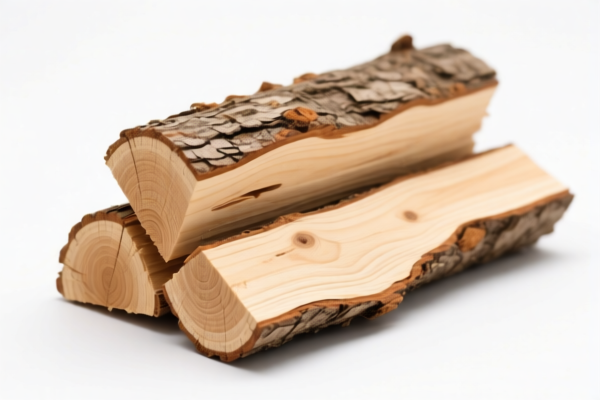
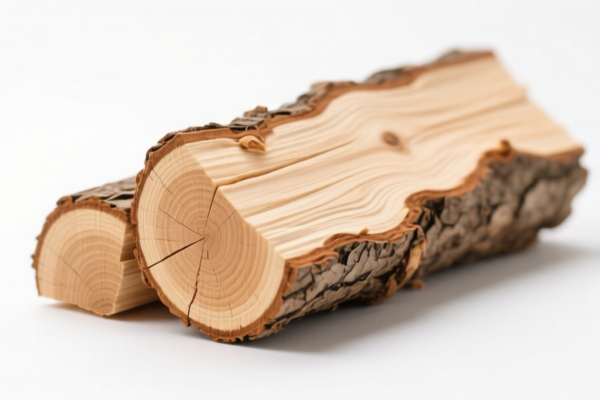
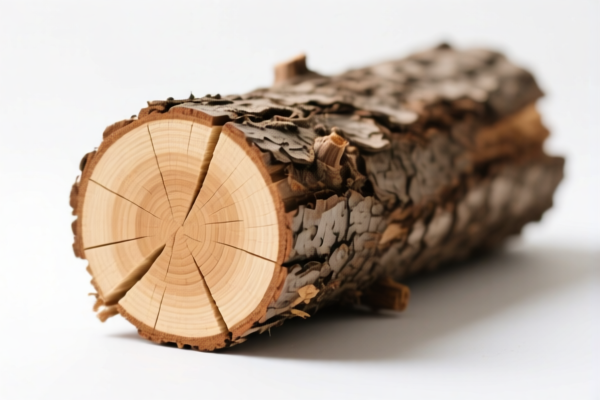

AI Analysis
🌲 Uncored Wood (Solid Wood / Logs)
🌐 HS Code Reference & Customs Clearance Guide | 2026 Latest Tariff Analysis | Professional Clearance Strategy
📌 I. Product Definition & Classification: What is "Uncored Wood"?
"Uncored Wood" in international trade typically refers to solid wood, logs, or semi-processed timber that has not been drilled or hollowed out. It is the raw material for furniture, flooring, and construction. In the context of US imports from China, this category is heavily scrutinized due to specific trade remedies (Section 301 and Section 122 tariffs).
Key Distinctions: * Logs/Raw Timber (4403 series): Unprocessed, stripped of bark, or roughly squared. * Sawn/Lathed Wood (4407/4409 series): Planed, tongue-and-grooved, or otherwise worked, but not yet assembled into final products.
⚠️ Critical Note for US Imports:
Regardless of the specific wood species (coniferous/non-coniferous) or processing level, all solid wood imports from China are subject to a total effective tariff rate of 35% in 2026. This is composed of Base Tariff (0%) + Section 301 Surcharge (25%) + Section 122 Surcharge (10%).
📦 II. HS Code Classification Details (2026 Authority Reference)
Below are the specific HS Codes mapped to "Uncored Wood" based on material attributes and processing logic, as defined in the data.
| HS Code | Summary Description | Material/Logic Match | Tariff Logic |
|---|---|---|---|
4403.21.01.30 |
Solid wood, matching log/wood material attributes | Dumb-filling Logic: Applies to general solid wood logs that fit other category fallbacks. | 35% Total |
4403.26.01.64 |
Solid wood, matching Coniferous/Log material attributes | Coniferous Focus: Specifically targets softwood logs (e.g., Pine, Spruce). | 35% Total |
4409.29.91.00 |
Solid wood, matching Non-Coniferous wood attributes | Fallback Logic: Applies to hardwoods (e.g., Oak, Maple) that meet primary/semi-finished criteria. | 35% Total |
4407.99.02.95 |
Solid wood, matching Non-Coniferous material scope | Conflict-Free Logic: For sawn wood where material matching causes no conflict under other categories. | 35% Total |
4409.10.90.40 |
Solid wood, matching core material requirements | Primary/Semi-Finished: Fits the morphology of raw or simply processed timber. | 35% Total |
🔍 Key Takeaway:
- Whether the wood is Coniferous (Softwood) or Non-Coniferous (Hardwood), and whether it is Log (4403) or Sawn/Worked (4407/4409), the Total Tax Rate remains 35%.
- The HS codes vary only by material specificity and processing stage, but the financial impact is identical.
💰 III. 2026 Latest Tariff Rate Breakdown (Including Surcharges & Policy Add-ons)
✅ Applicable Country: United States (US)
✅ Origin: China (CN)
✅ Effective Date: 2026 (Current Status)
🎯 Uniform Tariff Structure for All Listed HS Codes
| Item | Content |
|---|---|
| Base Tariff | 0% (Ad valorem) |
| Section 301 Surcharge | +25% (USITC Footnote 9903.88.01 / Trade Act of 1974) |
| Section 122 Surcharge | +10% (IEEPA-based tariff on Chinese wood products) |
| Total Effective Rate | 35% |
| Tax Calculation | CIF Value × 35% |
| De Minimis Exemption | ❌ NOT APPLICABLE (High value threshold; typically excluded for wood products) |
| Legal Basis Path | IEEPA:122 → USITC:301 → HS Code (4403/4407/4409 series) |
📌 Explanation:
- Base Tariff (0%): Most wood products from China have a low or zero base duty under normal MFN rates.
- Section 301 (25%): The ongoing tariff on Chinese goods under the "Trade Act of 1974, Section 301."
- Section 122 (10%): A specific tariff provision targeting certain Chinese imports, including wood products.
- Total 35%: This is a fixed burden. Do not expect variations based on the specific HS code listed above; the surcharges apply uniformly to this category.
🛠️ IV. Customs Clearance Practical Advice (Risk Mitigation Guide)
✅ 1. Required Documentation Checklist
| Document | Mandatory? | Description |
|---|---|---|
| ✅ Commercial Invoice | ✔️ | Must clearly state "Uncored Wood" or specific species (e.g., "Pine Logs"). |
| ✅ Packing List | ✔️ | Detail weight, volume, and number of packages. |
| ✅ Phytosanitary Certificate | ✔️ | Critical. Issued by the exporting country's plant protection agency to prove freedom from pests. |
| ✅ ISPM 15 Marking | ✔️ | All wooden packaging (pallets, crates) must be heat-treated or fumigated and marked with the ISPM 15 logo. |
| ✅ Bill of Lading | ✔️ | Standard shipping document. |
| ✅ Country of Origin Certificate | ✔️ | To prove Chinese origin (which triggers the 35% tariff). |
✅ 2. Declaration Tips (Key Mnemonics)
🔥 "Species Matter, But Tariff Doesn't!"
| Scenario | Correct Approach | Error to Avoid |
|---|---|---|
| Softwood (Pine/Spruce) | Use 4403.26.01.64 |
Don't assume lower rates for softwoods. |
| Hardwood (Oak/Mahogany) | Use 4409.29.91.00 or 4407.99.02.95 |
Don't use softwood codes for hardwood. |
| Raw Logs | Use 4403 series |
Don't declare as "Sawn Wood" if not processed. |
| Processed Planks | Use 4407 or 4409 series |
Ensure the description matches the processing level. |
✅ 3. Special Handling for Wood Products
| Situation | Recommendation |
|---|---|
| Pest Control | Ensure ISPM 15 compliance for all wood packaging. Non-compliant packaging can lead to rejection or destruction at the port. |
| Species Identification | Provide detailed botanical names if possible. Customs may verify species to ensure it matches the HS code description. |
| Value Declaration | Declare accurate CIF value. The 35% tax is calculated on the total value (Product + Insurance + Freight). Under-declaration risks penalties. |
| Alternative Origins | If possible, source wood from Vietnam, Malaysia, or Thailand to potentially reduce or avoid Section 301/122 tariffs (verify current rules). |
🌍 V. Global Market Comparison (2026)
| Country/Region | Recommended HS Code | Estimated Tariff (China Origin) | Key Requirements | Notes |
|---|---|---|---|---|
| 🇺🇸 USA | 4403/4407/4409 series |
35% (Fixed) | Phytosanitary + ISPM 15 | High barrier due to Section 301 & 122. |
| 🇨🇳 China | 4403/4407/4409 series |
0-5% (Import Duty) | Standard Import Docs | No Section 301/122 applies domestically. |
| 🇪🇺 EU | 4403/4407/4409 series |
0-3% (If EUTR compliant) | EUTR Due Diligence | Focus on legality, not just tariff. |
| 🇦🇺 Australia | 4403/4407/4409 series |
5% | Biosecurity Check | Strict biosecurity entry permits. |
| 🇯🇵 Japan | 4403/4407/4409 series |
0-2% | Phytosanitary Cert | Standard import procedures. |
📌 Conclusion:
- The US is the most expensive market for Chinese wood products due to the 35% cumulative tariff.
- Other markets offer significantly lower or zero duties, provided regulatory compliance (phytosanitary, legality) is met.
- Recommendation: For US-bound wood, consider transshipment from non-subject countries (if legally compliant) or adjust pricing strategies to absorb the 35% cost.
📌 VI. Common Mistakes & Pitfalls (Lessons Learned)
❌ Mistake 1: Assuming "Raw Logs" have lower tariffs than "Processed Planks"
👉 Result: Incorrect HS code selection leads to delays, but the 35% rate applies to both.
👉 Fix: Use the correct HS code for processing level, but budget for 35% regardless.
❌ Mistake 2: Ignoring ISPM 15 for Wooden Pallets
👉 Result: Entire shipment rejected or destroyed at US ports.
👉 Fix: Ensure all wood packaging is heat-treated and marked.
❌ Mistake 3: Under-declaring Value to Reduce Tariff
👉 Result: Audits, fines, and seizure of goods.
👉 Fix: Declare accurate CIF value. The 35% is unavoidable for Chinese origin.
❌ Mistake 4: Confusing "Uncored Wood" with "Wood Furniture"
👉 Result: Wrong HS code (e.g., 9403) leads to misclassification.
👉 Fix: "Uncored Wood" refers to raw/semi-processed timber (Chapters 44), not finished goods (Chapter 94).
✅ Correct Declaration Example:
"Solid Pine Logs, Uncored, Unprocessed, Origin: China, HS Code: 4403.26.01.64, Value: $10,000 CIF, Subject to 35% Total Tariff."
🎯 VII. Conclusion: Professional Clearance, Cost Control
🎯 Key Takeaway:
🔹 "35% is the King."
🔹 "ISPM 15 is the Gatekeeper."
🔹 "HS Code is for Precision, Not Savings."
- Cost Impact: Every $1,000 of wood imports costs an additional $350 in tariffs.
- Compliance: Phytosanitary certificates and ISPM 15 markings are non-negotiable.
- Strategy: If margin is tight, consider supply chain diversification to avoid US tariffs on Chinese wood.
📌 Pro Tip:
For US-bound wood, consult a customs broker to verify the exact HS code based on the specific wood species and processing level. While the tariff is fixed, correct classification prevents delays and legal issues.
📣 Action Item:
📞 Verify Phytosanitary Certificates before shipment.
📦 Ensure ISPM 15 Marking on all pallets.
💰 Budget for 35% Tariff in your cost model.
✨ Expert Clearance Starts with Accurate Classification!
💼 Your Profit Margin Depends on Predictable Tariffs!
Customer Reviews
About HS Code Classification
The Harmonized System (HS) is an internationally standardized nomenclature developed by the World Customs Organization (WCO) to classify traded products. Over 200 countries use the HS system as the basis for customs tariffs, trade statistics, and import/export regulations.
Each HS code follows a hierarchical structure:
- Chapter (2 digits) — Broad category of goods (e.g., Chapter 84: Machinery and Mechanical Appliances)
- Heading (4 digits) — More specific grouping within the chapter
- Subheading (6 digits) — Internationally standardized breakdown, used by all WCO member countries
- National subdivisions (8-10 digits) — Country-specific extensions for further classification, such as US HTSUS 10-digit codes
Correct HS code classification is essential for smooth customs clearance, accurate duty payment, and compliance with trade regulations. Misclassification can lead to customs delays, overpayment of duties, or penalties.
When importing from CN to US, the applicable tariff rates may include:
- Most-Favored-Nation (MFN) rate — The standard duty rate applied to WTO members
- General rate — Applied to countries without trade agreements
- Trade remedy duties — Additional tariffs such as Section 301 (anti-dumping), Section 232 (national security), or countervailing duties
The information provided on this page is for reference purposes only. For official classification, please consult with your local customs authority or a licensed customs broker.