Undyed, Unassembled Fur with Head
CN → US| HS Code | Tariff Rate | Origin | Destination | Doc |
|---|---|---|---|---|
| 4302193030 | 36.5% | CN | US | Official Doc |
| 4302193040 | 36.5% | CN | US | Official Doc |
| 4301100020 | 17.5% | CN | US | Official Doc |
| 4103901190 | 17.5% | CN | US | Official Doc |
| 4103901130 | 17.5% | CN | US | Official Doc |
Product Images
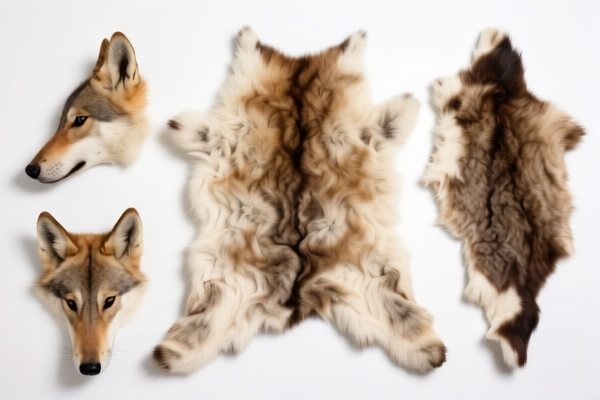
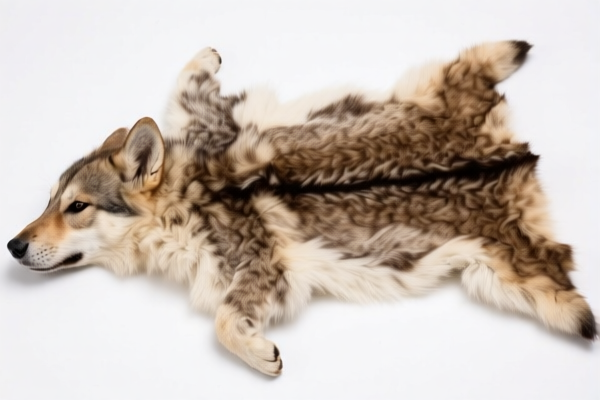
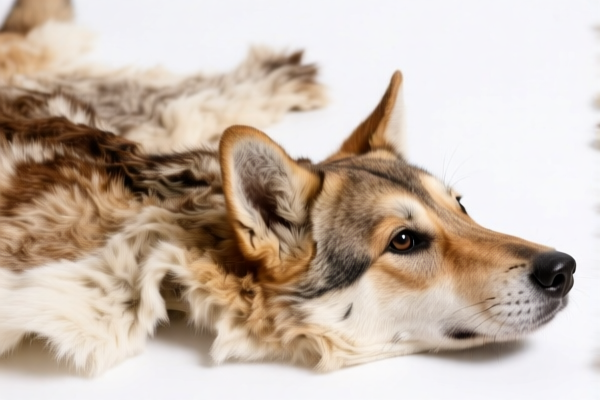
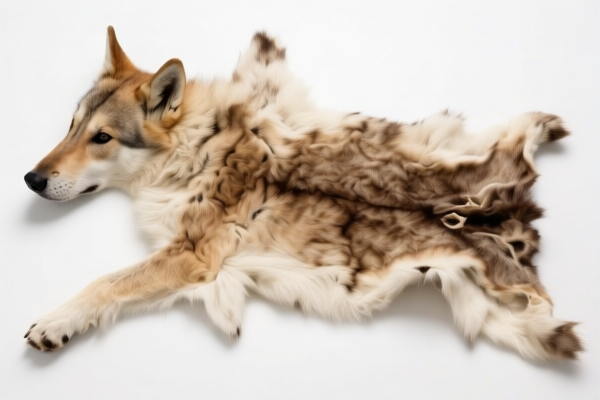
AI Analysis
🦊 Undyed, Unassembled Fur with Head (Raw Skins)
🌐 HS Code Reference & Customs Clearance Guide | 2026 Latest Tariff Analysis | Professional Clearance Strategy
📌 I. Product Definition & Classification: What Exactly is "Undyed, Unassembled Fur with Head"?
"Undyed, Unassembled Fur with Head" refers to raw animal pelts (specifically fox skins in this context) that have been removed from the animal but have not yet undergone processing such as dyeing, tanning, or assembly into garments or accessories. The key characteristics are: 1. State: Raw, untreated (undyed). 2. Form: Unassembled (not sewn into a product). 3. Features: Retains the head (and often the tail), indicating it is a whole skin rather than a cut piece.
In international trade, these skins fall into two primary categories depending on their precise treatment status: * Classified as "Fur Skins" (Chapter 43): If the hair follicles are intact and it is considered a fur product in its natural state. * Classified as "Raw Hides/Skins" (Chapter 41): If it is considered a raw material for leather production, specifically if it is a "green skin" or lightly preserved but not yet tanned for fur fashion purposes.
⚠️ Critical Distinction Point:
- If the skin is preserved specifically for fur fashion (hair intact, often frozen or salted) and retains the head/tail as a whole pelt → It often leans towards Chapter 43 (4301/4302) for higher value fur goods.
- If it is classified as a raw material for leather or basic fur processing without special fur-preserving treatment → It falls under Chapter 41 (4103).
📦 II. HS Code Classification Details (2026 Latest Tariff Authority Comparison)
Based on the provided data, here are the four possible HS Codes, grouped by their logical basis:
| HS Code | Product Description | Applicable Scenario | Tax Rate (Total) |
|---|---|---|---|
4302.19.30.30 |
Undyed Fox Fur (Unassembled) | Fox pelts, undyed, unassembled, fitting fur good characteristics | 36.5% |
4302.19.30.40 |
Undyed Fox Fur (Unassembled) | Fox pelts, undyed, unassembled, fitting fur good characteristics | 36.5% |
4301.10.00.20 |
Undyed Fur Skin with Head | Raw fur skins with head/tail, fitting Chapter 43 raw fur criteria | 17.5% |
4103.90.11.90 |
Undyed Fur Skin with Head | Raw hides/skins, undyed, fitting Chapter 41 raw material criteria | 17.5% |
4103.90.11.30 |
Undyed Fur Skin with Head | Raw hides/skins, unpre-tanned, fitting Chapter 41 raw material criteria | 17.5% |
🔍 Key Observation:
- Chapter 43 Codes (4302...,4301...): Higher tax rate (36.5% for 4302, 17.5% for 4301). These are classified as "Fur Skins and Pelts." - Chapter 41 Codes (4103...): Lower tax rate (17.5%). These are classified as "Raw Hides and Skins." - The Discrepancy: Note that4302.19.30.30/40has a 36.5% total tax, while4301.10.00.20and all4103codes have 17.5%. This suggests4302may include additional specific levies or different base rates in this specific dataset context, or4301is treated more favorably as "raw" compared to4302which might imply slightly more processed but still unassembled fur.
💰 III. 2026 Latest Tariff Rate Breakdown (Including Additional Taxes)
✅ Applicable Country: United States (US)
✅ Origin: China (CN)
✅ Effective Date: November 10, 2025 (and subsequent imports)
🎯 1. 4302.19.30.30 & 4302.19.30.40 —— Undyed Fox Fur (Unassembled)
| Item | Details |
|---|---|
| Base Tariff | 1.5% (Ad Valorem) |
| Section 301 Additional Tariff | +25.0% (USITC Footnote) |
| Section 122 Tariff | +10.0% (Specific provision for certain fur/textile items) |
| Total Tax Rate | 36.5% |
| Tax Calculation | CIF Value × 36.5% |
| De Minimis Exemption | ❌ Not Applicable (High value goods, de minimis does not apply) |
| Legal Basis Path | HTSUS:4302.19.30 → Section 301: Footnote 9903.88.01 → Section 122: 19 U.S.C. 2253 |
📌 Explanation:
- The 1.5% is the standard Most Favored Nation (MFN) duty.
- The 25% is the punitive tariff under Section 301 of the Trade Act of 1974, targeting Chinese imports.
- The 10% is a specific Section 122 tariff, which was recently invoked for certain strategic or sensitive goods (possibly linked to supply chain security or specific trade remedies).
- Total 36.5% is a significant cost driver.
🎯 2. 4301.10.00.20 —— Undyed Fur Skin with Head
| Item | Details |
|---|---|
| Base Tariff | 0.0% |
| Section 301 Additional Tariff | +7.5% |
| Section 122 Tariff | +10.0% |
| Total Tax Rate | 17.5% |
| Tax Calculation | CIF Value × 17.5% |
| De Minimis Exemption | ❌ Not Applicable |
| Legal Basis Path | HTSUS:4301.10.00 → Section 301: Footnote → Section 122 |
📌 Note:
- Although classified under Chapter 43, the base tariff is 0%, leading to a much lower total duty (17.5%) compared to4302.
- This suggests that4301items (often defined as "whole skins, with or without heads or tails") are treated more lightly in terms of base duty, but still face 7.5% Section 301 and 10% Section 122.
🎯 3. 4103.90.11.90 & 4103.90.11.30 —— Undyed Fur Skin with Head (Raw Hides)
| Item | Details |
|---|---|
| Base Tariff | 0.0% |
| Section 301 Additional Tariff | +7.5% |
| Section 122 Tariff | +10.0% |
| Total Tax Rate | 17.5% |
| Tax Calculation | CIF Value × 17.5% |
| De Minimis Exemption | ❌ Not Applicable |
| Legal Basis Path | HTSUS:4103.90.11 → Section 301 → Section 122 |
📌 Note:
- These codes classify the product as raw hides/skins (Chapter 41), not finished fur goods.
- Base tariff is 0%, with 7.5% Section 301 and 10% Section 122.
- Total 17.5% makes these codes highly competitive if the product can be legitimately classified as a "raw hide" rather than a "fur skin."
🛠️ IV. Customs Clearance Practical Advice (Real-World Pitfall Guide)
✅ 1. Documentation Checklist (Essential for Clearance)
| Document | Required | Description |
|---|---|---|
| ✅ Commercial Invoice | ✔️ | Must clearly state "Undyed, Unassembled Fox Fur with Head" and describe material state. |
| ✅ Packing List | ✔️ | Detail number of skins, weight, and dimensions. |
| ✅ Certificate of Origin | ✔️ | Proof of Chinese origin to determine applicable Section 301/122 duties. |
| ✅ Product Description/Spec Sheet | ✔️ | Detailed description: "Raw fox skins, undyed, unassembled, with head and tail attached." |
| ✅ Photo Evidence | ✔️ | Clear photos showing the skin is raw, undyed, and unassembled. |
| ✅ Import License | ✔️ | Check if CITES (endangered species) permits are needed for fox fur. |
✅ 2. Classification Strategy (Key Mnemonic)
🔥 "Raw Hide vs. Fur Skin: Base Duty is King!"
| Scenario | Recommended HS Code | Total Tax | Reason |
|---|---|---|---|
| Product is a raw hide (for leather/fur processing base) | 4103.90.11.90 or 4103.90.11.30 |
17.5% | Lowest base duty (0%) + standard additions. |
| Product is a raw fur skin (Chapter 43, Code 4301) | 4301.10.00.20 |
17.5% | Low base duty (0%) + standard additions. |
| Product is processed fur skin (Chapter 43, Code 4302) | 4302.19.30.30 or 4302.19.30.40 |
36.5% | High base duty (1.5%) + high additions. Avoid if possible. |
📌 Critical Tip:
- If the fur is strictly raw and intended for further processing, argue for Chapter 41 (4103) or Chapter 43 Code4301to benefit from the 0% base duty.
- Do not use4302codes unless the product is already considered a "fur good" (e.g., tanned but not assembled), as the 36.5% rate is significantly higher.
✅ 3. Special Considerations
| Situation | Handling Advice |
|---|---|
| CITES Compliance | Fox species may be listed under CITES. Ensure proper permits are obtained to avoid seizure. |
| Hygiene & Sanitation | Raw fur must be properly salted or preserved to meet USDA/APHIS requirements. Provide a sanitary certificate. |
| Misclassification Risk | Declaring as 4103 when it is clearly 4302 can lead to audits, fines, and penalties. Ensure the "raw" status is well-documented. |
| Section 122 Applicability | Verify if the specific fox fur type is subject to Section 122. The data indicates yes, but always check latest updates. |
🌍 V. Global Market Comparison (2026 Latest)
| Country/Region | Recommended HS Code | Tariff | Certification | Remarks |
|---|---|---|---|---|
| 🇺🇸 USA | 4301.10.00.20 or 4103.90.11.90 |
17.5% | CITES + Phytosanitary | Avoid 4302 if possible (36.5%). |
| 🇨🇳 China | 4302.19.30.30 |
Varies | None | Import duties may differ; check local customs. |
| 🇪🇺 EU | 4302.19.30.30 |
Varies | CITES + EIA | EU has strict fur import regulations. |
| 🇬🇧 UK | 4302.19.30.30 |
Varies | CITES | Post-Brexit rules apply. |
| 🇦🇺 Australia | 4302.19.30.30 |
Varies | CITES + Biosecurity | Strict biosecurity checks. |
📌 Conclusion:
- The US market is the primary focus with the detailed tariff breakdown.
- Tax Savings Strategy: Aim for 17.5% by correctly classifying as4301or4103instead of4302.
📌 VI. Common Mistakes & Pitfall Guide (Blood & Tears Lessons)
❌ Mistake 1: Classifying raw fur as 4302 (36.5%) when it qualifies as 4301 or 4103 (17.5%)
👉 Consequence: Paying double the duty! Always review the "base duty" difference.
❌ Mistake 2: Failing to provide CITES permits for fox fur
👉 Consequence: Seizure of goods and potential legal action. Fox fur is often regulated.
❌ Mistake 3: Not documenting the "undyed" and "unassembled" status
👉 Consequence: Customs may reclassify as a processed fur product, leading to higher duties and penalties.
❌ Mistake 4: Ignoring Section 122 tariffs
👉 Consequence: Unexpected 10% additional tax that was not budgeted for.
✅ Correct Approach:
"Undyed, Unassembled Fox Fur Skins with Head, Raw State, CITES Compliant, Salted Preservation"
🎯 VII. Conclusion: Professional Classification Saves Money!
🎯 Remember the Golden Rule:
🔹 "Base Duty Matters: 0% is better than 1.5%!"
🔹 "Raw Hide/Fur Skin (4301/4103) = 17.5% | Processed Fur Skin (4302) = 36.5%"
🔹 "One HS Code Error = Thousands of Dollars in Extra Duty!"
📌 Pro Tip:
If your fur skins are not from China, Section 301 and Section 122 tariffs may not apply, significantly reducing costs.
Always seek a Pre-Ruling from U.S. Customs and Border Protection (CBP) to confirm the correct HS Code before shipment.
📣 Immediate Action:
📞 Contact your customs broker + Provide product photos + Verify CITES status
🚀 Ensure smooth clearance, minimize costs, and maximize profits!
✨ Professional Customs Clearance Starts with Accurate Classification!
💼 Every Percent in Duty is Money Saved!
Customer Reviews
About HS Code Classification
The Harmonized System (HS) is an internationally standardized nomenclature developed by the World Customs Organization (WCO) to classify traded products. Over 200 countries use the HS system as the basis for customs tariffs, trade statistics, and import/export regulations.
Each HS code follows a hierarchical structure:
- Chapter (2 digits) — Broad category of goods (e.g., Chapter 84: Machinery and Mechanical Appliances)
- Heading (4 digits) — More specific grouping within the chapter
- Subheading (6 digits) — Internationally standardized breakdown, used by all WCO member countries
- National subdivisions (8-10 digits) — Country-specific extensions for further classification, such as US HTSUS 10-digit codes
Correct HS code classification is essential for smooth customs clearance, accurate duty payment, and compliance with trade regulations. Misclassification can lead to customs delays, overpayment of duties, or penalties.
When importing from CN to US, the applicable tariff rates may include:
- Most-Favored-Nation (MFN) rate — The standard duty rate applied to WTO members
- General rate — Applied to countries without trade agreements
- Trade remedy duties — Additional tariffs such as Section 301 (anti-dumping), Section 232 (national security), or countervailing duties
The information provided on this page is for reference purposes only. For official classification, please consult with your local customs authority or a licensed customs broker.