Undyed Fox Fur (Unassembled)
CN → US| HS Code | Tariff Rate | Origin | Destination | Doc |
|---|---|---|---|---|
| 4301800290 | 17.5% | CN | US | Official Doc |
| 4301900000 | 10.0% | CN | US | Official Doc |
| 4302194530 | 37.2% | CN | US | Official Doc |
| 4302191500 | 40.6% | CN | US | Official Doc |
| 4302193030 | 36.5% | CN | US | Official Doc |
Product Images
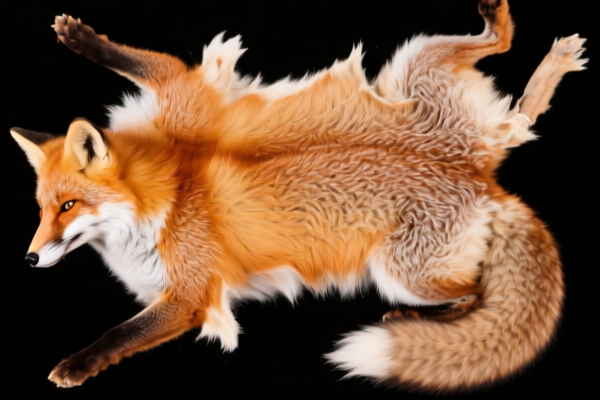
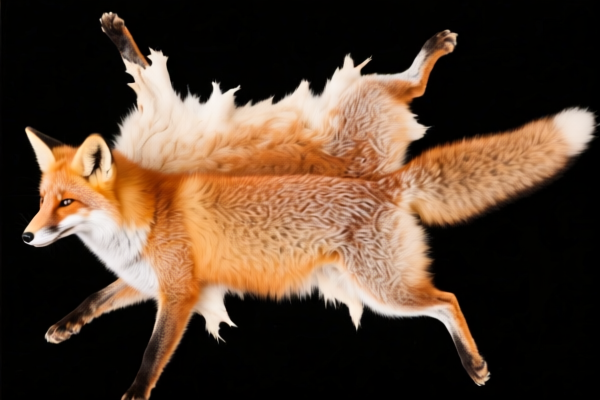
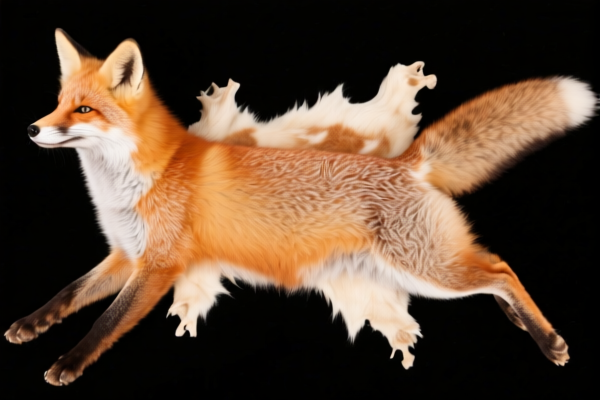
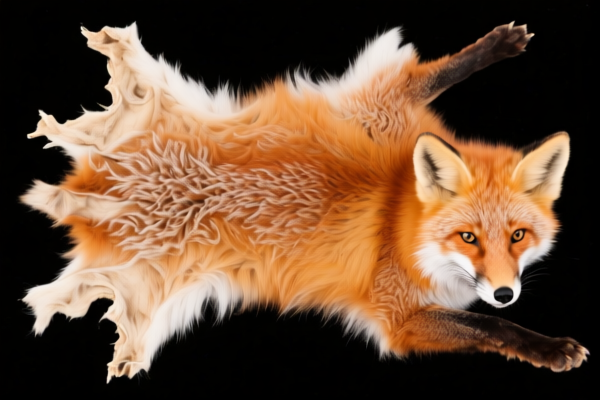
AI Analysis
🦊 Undyed Fox Fur (Unassembled) – HS Code Classification & 2026 US Customs Clearance Guide
🌐 HS Code Reference & Clearance Strategy | 2026 Latest Tariff Schedule | Professional Compliance Guide
📌 I. Product Definition & Classification: What Exactly is "Undyed Fox Fur"?
Undyed Fox Fur (Unassembled) refers to raw, unprocessed fox pelts that have not been dyed, printed, or assembled into garments or accessories. In international trade, these are categorized based on their specific origin (e.g., platinum fox vs. general fox) and physical state (whole skin, pieces, or fragments).
⚠️ Key Distinction:
- If the fur is undyed and in its raw, unassembled state → It falls under Chapter 43 (Prepared Furskins).
- If the fur is dyed → It moves to 4302 (Prepared Furskins, Tanned or Dressed), significantly changing the tariff structure.
- If it is assembled into a garment → It moves to 4303 (Articles of Fur Skin).Crucial Note: This guide strictly covers UNDYED fox fur in UNASSEMBLED form, matching the provided data scope.
📦 II. HS Code Classification Details (2026 Latest Schedule)
Based on the provided dataset, the classification depends on the specific type of fox and the exact physical form of the raw fur.
| HS Code | Product Description | Key Characteristics | Tax Rate (Total) |
|---|---|---|---|
4301.60.60.00 |
General Fox Skins (Undyed, Unassembled) | Raw fox pelts, unprocessed, fitting original skin morphology. No material conflict. | 17.5% |
4301.60.30.00 |
Platinum Fox Skins (Undyed, Unassembled) | Specific high-value category for Platinum Fox raw skins. Unassembled state fits original skin classification. | 22.6% |
4301.80.02.90 |
Other Raw Furskins (Undyed, Unassembled) | Fits the primary morphological characteristics of raw fur but doesn't fit other specific categories. General "other" category for raw, undyed fur. | 17.5% |
4301.90.00.00 |
Fur Skins, Pieces, or Fragments (Undyed) | Small pieces, slices, or fragments of undyed fur, retaining original morphological features. | 10.0% |
4302.19.45.30 |
Dyed Fox Fur Skins (Unassembled) | ⚠️ Excluded from "Undyed" scope but included in data. Applies to dyed fox fur in unassembled state. | 37.2% |
🔍 Critical Clarification:
- HS Code4302.19.45.30applies ONLY if the fur is DYED. If you ship UNDYED fur under this code, you risk severe penalties for misdeclaration.
- For UNDYED fox fur, stick to 4301 series codes (4301.60.60.00,4301.60.30.00,4301.80.02.90, or4301.90.00.00).
💰 III. 2026 Latest Tariff Rate Breakdown (Detailed Tax Clauses)
✅ Applicable Country: United States (US)
✅ Origin: China (CN)
✅ Effective Date: Post-2025 adjustments (Current Rates)
🎯 1. 4301.60.60.00 – Fox Skins (Undyed, Unassembled)
| Item | Detail |
|---|---|
| Base Tariff | 0.0% |
| Section 301 Tariff | +7.5% (Retaliatory/Specific List) |
| Section 122 Tariff | +10% (Additional Duty on Certain Goods) |
| Total Tax Rate | 17.5% |
| Calculation Basis | CIF Value × 17.5% |
| De Minimis Exemption | ❌ Not Eligible (Section 122 and 301 tariffs are not exempt under $800 threshold) |
📌 Explanation:
- The 7.5% Section 301 tariff applies to specific Chinese-origin furskins.
- The 10% Section 122 tariff is an additional duty imposed under recent executive authorities.
- Base tariff is 0%, but the combined impact is 17.5%.
🎯 2. 4301.60.30.00 – Platinum Fox Skins (Undyed, Unassembled)
| Item | Detail |
|---|---|
| Base Tariff | 5.1% |
| Section 301 Tariff | +7.5% |
| Section 122 Tariff | +10% |
| Total Tax Rate | 22.6% |
| Calculation Basis | CIF Value × 22.6% |
| De Minimis Exemption | ❌ Not Eligible |
📌 Explanation:
- Platinum fox fur is often classified differently due to its high value and specific trade restrictions.
- It incurs a higher base tariff (5.1%) compared to general fox fur.
- Total rate is 22.6%, making it one of the more expensive categories.
🎯 3. 4301.80.02.90 – Other Raw Furskins (Undyed, Unassembled)
| Item | Detail |
|---|---|
| Base Tariff | 0.0% |
| Section 301 Tariff | +7.5% |
| Section 122 Tariff | +10% |
| Total Tax Rate | 17.5% |
| Calculation Basis | CIF Value × 17.5% |
| De Minimis Exemption | ❌ Not Eligible |
📌 Explanation:
- This is the "catch-all" for undyed, unassembled fur that doesn't fit other specific subheadings.
- Tax structure mirrors general fox fur: 0% base + 7.5% 301 + 10% 122 = 17.5%.
🎯 4. 4301.90.00.00 – Fur Skins, Pieces, or Fragments (Undyed)
| Item | Detail |
|---|---|
| Base Tariff | 0.0% |
| Section 301 Tariff | 0.0% |
| Section 122 Tariff | +10% |
| Total Tax Rate | 10.0% |
| Calculation Basis | CIF Value × 10.0% |
| De Minimis Exemption | ❌ Not Eligible |
📌 Explanation:
- This code applies to pieces, slices, or fragments of raw fur, not whole skins.
- Lower tax rate (10%) because Section 301 tariffs (7.5%) do not apply to this specific subheading in the provided data.
- Use this code only if the product is fragmented/sliced, not whole skins.
⚠️ 5. 4302.19.45.30 – Dyed Fox Fur Skins (Unassembled)
❌ NOT APPLICABLE TO UNDYED FUR
If you are shipping UNDYED fox fur, do NOT use this code.
- Total Tax Rate: 37.2% (2.2% Base + 25% 301 + 10% 122)
- This code is ONLY for DYED fox fur. Misclassification can lead to audits and fines.
🛠️ IV. Practical Customs Clearance Advice
✅ 1. Essential Documentation Checklist
| Document | Required? | Description |
|---|---|---|
| ✅ Commercial Invoice | ✔️ | Must clearly state: "Undyed Fox Fur Skins, Unassembled, Raw State" |
| ✅ Packing List | ✔️ | Detail the number of skins, total weight, and dimensions |
| ✅ Species Declaration | ✔️ | Specify if Platinum Fox (4301.60.30.00) or General Fox (4301.60.60.00) |
| ✅ Condition Report | ✔️ | Confirm "Undyed" and "Unassembled" status with photos |
| ✅ CITES Permit | ✔️ | Critical! Fox fur may be subject to CITES regulations. Ensure all permits are valid |
| ✅ Bill of Lading/Air Waybill | ✔️ | Standard shipping documents |
📌 Warning:
- CITES Compliance: Many fox species are protected under CITES. Ensure you have the necessary export/import permits.
- "Undyed" Proof: Provide photos or lab test results if Customs requests verification that the fur is not dyed.
✅ 2. Declaration Tips (Key Mnemonics)
🔥 "Raw is Key, Undyed is Clear, Platina Costs More, Pieces Save Less Tax!"
| Scenario | Correct HS Code | Common Mistake |
|---|---|---|
| Whole, Undyed, General Fox | 4301.60.60.00 |
Misdeclaring as dyed → 37.2% tax |
| Whole, Undyed, Platinum Fox | 4301.60.30.00 |
Declaring as general fox → Penalty for misclassification |
| Fragments/Pieces, Undyed | 4301.90.00.00 |
Declaring as whole skins → Overpayment of tax |
| Dyed Fox Fur | 4302.19.45.30 |
Declaring as undyed → Fraudulent declaration |
✅ 3. Special Cases
| Case | Handling Advice |
|---|---|
| Mixed Shipments | Separate undyed and dyed fur into different declarations. Do not mix. |
| CITES-Listed Species | Ensure all CITES permits are attached to the customs entry. Failure to do so will result in seizure. |
| Samples for Trade Shows | Even samples are subject to tariffs and CITES. Declare accurately. |
| OEM Custom Orders | Provide client specifications to confirm if the fur is undyed and unassembled. |
🌍 V. Global Market Comparison (2026)
| Country/Region | Recommended HS Code | Tax Rate (CN Origin) | Notes |
|---|---|---|---|
| 🇺🇸 USA | 4301.60.60.00 |
17.5% (Undyed Fox) | High tariffs due to Section 301 & 122 |
| 🇨🇳 China | 4301.60.60.00 |
5% (Import Duty) | No Section 301/122 tariffs |
| 🇪🇺 EU | 4301.60.60 |
0% - 5% | Varies by member state; check local rules |
| 🇬🇧 UK | 4301.60.60 |
0% - 5% | Post-Brexit tariffs may vary |
| 🇯🇵 Japan | 4301.60.60 |
0% - 5% | Generally low tariffs for raw furs |
📌 Conclusion:
- USA has the highest tariffs for undyed fox fur due to Section 301 (7.5%) and Section 122 (10%) additions.
- China, EU, UK, Japan have significantly lower or zero tariffs for raw furs.
📌 VI. Common Errors & Pitfalls (Lessons Learned)
❌ Error 1: Declaring Undyed fur as Dyed (4302.19.45.30)
👉 Consequence: Overpaying 37.2% instead of 17.5%.
❌ Error 2: Declaring Whole Skins as Pieces (4301.90.00.00) to avoid Section 301
👉 Consequence: Customs audit, penalties, and possible seizure for misclassification.
❌ Error 3: Ignoring CITES Regulations
👉 Consequence: Goods seized, destroyed, or fined. Fox fur is often regulated.
❌ Error 4: Not specifying Platinum Fox vs. General Fox
👉 Consequence: Incorrect tax rate (22.6% vs. 17.5%) and potential fines for incorrect declaration.
✅ Correct Approach:
"Undyed Fox Fur Skins, Unassembled, Raw State, Platinum Fox, CITES Permit Attached"
🎯 VII. Conclusion: Accurate Classification, Smoother Clearance!
🎯 Remember the Key Points:
🔹 "Undyed is 17.5% (Fox) or 10% (Pieces); Dyed is 37.2%. Platinum is 22.6%."
🔹 "CITES is mandatory. No permit, no entry."
🔹 "Do not mix undyed and dyed fur in one declaration."
📌 Pro Tip:
If your fox fur is not from China (e.g., Canada, Russia, Scandinavia), Section 301 tariffs (7.5%) do NOT apply. Only Section 122 (10%) may apply, depending on origin. Check the country of origin carefully!
📣 Immediate Action:
📞 Contact a licensed customs broker.
📄 Prepare CITES permits.
📸 Take clear photos of the undyed, unassembled fur.
🚀 Ensure accurate HS Code declaration to avoid delays and fines.
✨ Professional clearance starts with precise classification!
💼 Every cent saved is a cent earned.
Customer Reviews
About HS Code Classification
The Harmonized System (HS) is an internationally standardized nomenclature developed by the World Customs Organization (WCO) to classify traded products. Over 200 countries use the HS system as the basis for customs tariffs, trade statistics, and import/export regulations.
Each HS code follows a hierarchical structure:
- Chapter (2 digits) — Broad category of goods (e.g., Chapter 84: Machinery and Mechanical Appliances)
- Heading (4 digits) — More specific grouping within the chapter
- Subheading (6 digits) — Internationally standardized breakdown, used by all WCO member countries
- National subdivisions (8-10 digits) — Country-specific extensions for further classification, such as US HTSUS 10-digit codes
Correct HS code classification is essential for smooth customs clearance, accurate duty payment, and compliance with trade regulations. Misclassification can lead to customs delays, overpayment of duties, or penalties.
When importing from CN to US, the applicable tariff rates may include:
- Most-Favored-Nation (MFN) rate — The standard duty rate applied to WTO members
- General rate — Applied to countries without trade agreements
- Trade remedy duties — Additional tariffs such as Section 301 (anti-dumping), Section 232 (national security), or countervailing duties
The information provided on this page is for reference purposes only. For official classification, please consult with your local customs authority or a licensed customs broker.