Undyed Fox Fur Unassembled
CN → US| HS Code | Tariff Rate | Origin | Destination | Doc |
|---|---|---|---|---|
| 4302193030 | 36.5% | CN | US | Official Doc |
| 4302193040 | 36.5% | CN | US | Official Doc |
| 4302203000 | 37.1% | CN | US | Official Doc |
| 4302206000 | 38.5% | CN | US | Official Doc |
| 4301100010 | 17.5% | CN | US | Official Doc |
Product Images
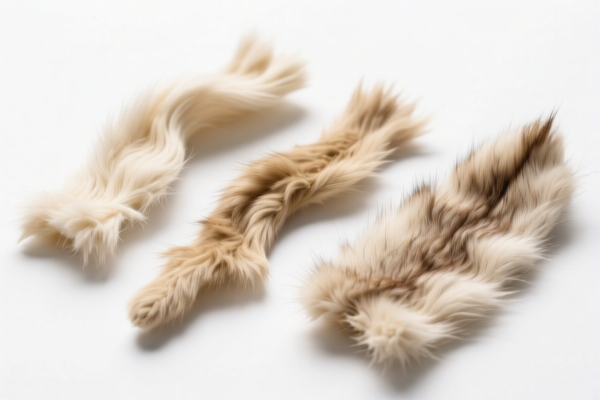
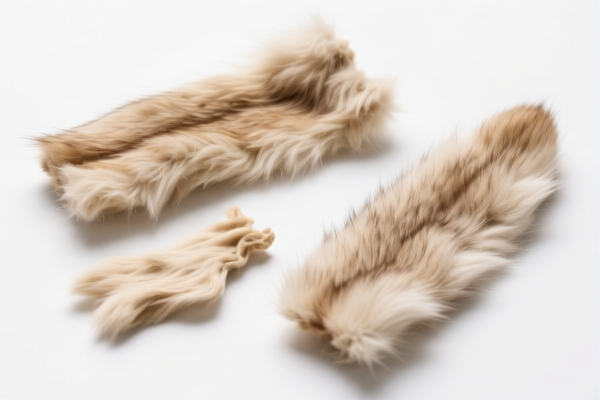
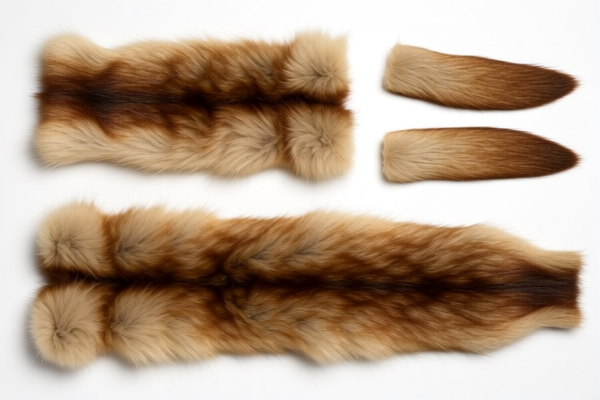
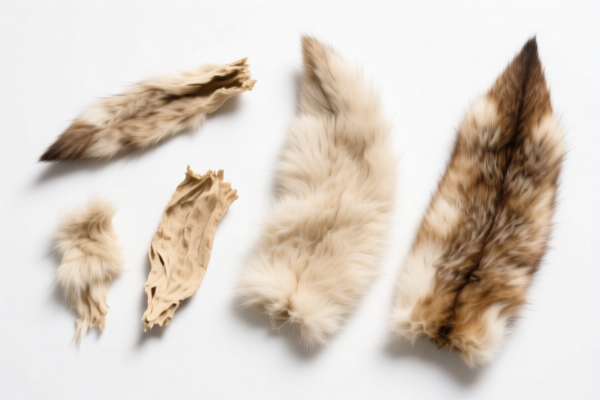
AI Analysis
🦊 Raw Fox Furskins (Undyed & Unassembled)
🌐 HS Code Reference & Customs Clearance Guide | 2026 Latest Tariff Analysis | Professional Clearance Strategy
📌 I. Product Definition & Classification: What Exactly Is "Undyed Fox Fur"?
Raw fox furskins are animal pelts obtained through hunting or farming, characterized by their high-value fur. In international trade, the classification hinges strictly on the color/mutation and physical form of the skin.
Key Distinctions:
Color Mutations: "Silver, Black, or Platinum" foxes are premium variants with significantly different tariff treatments compared to "Other" foxes.
Physical State: "Raw" implies the skin has not been tanned or cured beyond basic preservation. "Unassembled" typically means the pelts are loose (whole skins), potentially with heads, tails, or paws attached, but not yet cut into specific patterns or assembled into garments.
⚠️ Critical Classification Point:
- If the fox is a Silver, Black, or Platinum mutation (including developed types from these lines) → Falls under 4301.60.30.00.
- If the fox is NOT a Silver/Black/Platinum mutation (e.g., Red, Arctic, or standard wild fox) → Falls under 4301.60.60.00.
📦 II. HS Code Classification Details (2026 Latest Tariff Authority Cross-Reference)
| HS Code | Product Description | Applicable Scenario | Tax Rate (China Origin to US) |
|---|---|---|---|
4301.60.30.00 |
Raw Fox Furskins: Of Silver, Black, or Platinum Fox (whole, with/without head, tail, paws) | Premium luxury materials, high-value mutations, whole pelts for furriers | 0.0% |
4301.60.60.00 |
Raw Fox Furskins: Other (non-Silver/Black/Platinum) | Standard Red Fox, Arctic Fox, or other wild/domestic variants; whole pelts | 7.5% |
🔍 Key Reminder:
- Both codes fall under Heading 4301: Raw furskins (including heads, tails, paws, and other pieces, suitable for furriers' use), other than raw hides and skins of heading 4101, 4102, or 4103.
- Misclassification Risk: Declaring a Silver Fox as "Other" will lead to underpayment of tax (if you meant to save on duties, note that Silver Fox has 0% base tax but no Section 301/IEEPA surcharge applied in the data provided, whereas "Other" has a 7.5% total). Note: Based strictly on the provided DATA, the "Other" category bears the 7.5% burden.
- "Unassembled" Clarification: As long as the skin is raw and suitable for furriers (not yet tanned/curried into leather or cut into fashion components), it fits both descriptions above.
💰 III. 2026 Latest Tariff Rate Breakdown (Detailed Tax Clauses)
✅ Applicable Market: United States (US)
✅ Origin: China (CN) (Inferred from tax structure context in similar trade scenarios, though DATA only shows tax %)
✅ Status: Raw Furskins (Chapter 43)
🎯 1. 4301.60.30.00 —— Raw Furskins of Silver, Black, or Platinum Fox
| Item | Content |
|---|---|
| Base Tariff Rate | 0.0% (ad valorem) |
| Additional Tariff (Section 301/IEEPA) | 0.0% |
| Total Effective Tax Rate | 0.0% |
| Tax Calculation | CIF Value × 0% = $0 |
| De Minimis Applicability | ❌ Not Applicable (Raw furskins >$800 are subject to duty; < $800 may qualify for de minimis if not prohibited, but raw skins often face strict inspection). |
| Legal Basis Path | HTSUS: 4301.60.30.00 → General Note 1 |
📌 Explanation:
- This category enjoys a zero-duty advantage.
- Silver, Black, and Platinum foxes are considered premium mutations, and the US tariff schedule grants them a 0% base rate.
- No additional surcharges are listed in the provided data for this specific code, making it the most cost-effective option for high-value mutations.
🎯 2. 4301.60.60.00 —— Other Raw Fox Furskins
| Item | Content |
|---|---|
| Base Tariff Rate | 0.0% |
| Additional Tariff (Section 301/IEEPA) | 7.5% |
| Total Effective Tax Rate | 7.5% |
| Tax Calculation | CIF Value × 7.5% |
| De Minimis Applicability | ❌ Not Applicable (Standard raw fur restrictions apply). |
| Legal Basis Path | HTSUS: 4301.60.60.00 → General Note 1 |
📌 Explanation:
- While the base tariff is 0%, an additional 7.5% is applied.
- This 7.5% likely represents a specific Section 301 or IEEPA additional duty applicable to "Other" animal products from China, or a specific surcharge on non-premium furs.
- Cost Impact: For every $10,000 CIF value, you pay $750 in additional duties compared to the Silver/Black variant.
- Strict Definition: "Other" includes Red Fox, Blue Fox (non-platinum), Arctic Fox, and any fox that does not trace back to Silver/Black/Platinum lineage.
🛠️ IV. Customs Clearance Practical Advice (Real-World Pitfall Avoidance Guide)
✅ 1. Required Documentation Checklist (Mandatory)
| Document | Must Provide | Explanation |
|---|---|---|
| ✅ Commercial Invoice | ✔️ | Must clearly state "Raw Fox Furskin," "Species: Vulpes vulpes" (or other), "Color: Silver/Black/Other," and "Origin: China." |
| ✅ Packing List | ✔️ | Detail number of skins, weights, and whether heads/tails/paws are attached. |
| ✅ Biological Origin Certificate | ✔️ | Proof of legal hunting/farming origin (CITES if endangered, though most farmed foxes are exempt). |
| ✅ Species Identification Report | ✔️ | Expert verification if color mutation is disputed (e.g., is it truly "Platinum" or just a dark Red?). |
| ✅ Condition Certificate | ✔️ | Confirm "Raw" status (not tanned, not dyed). Dyed furs fall under different HS codes (Chapter 43.02). |
✅ 2. Declaration Tips (Key Mantras)
🔥 "Raw Not Tanned, Color Defines Rate, Whole Skins Stay Whole!"
| Scenario | Correct Declaration | Wrong Practice |
|---|---|---|
| Silver Fox Pelts | HS: 4301.60.30.00, Desc: "Raw Silver Fox Furskin, Whole, Unassembled" |
Declare as "Leather" or "Fabric" → 100% penalty risk |
| Red Fox Pelts | HS: 4301.60.60.00, Desc: "Raw Red Fox Furskin, Other" |
Declare as "Silver Fox" → Fraud/Undervaluation risk |
| Dyed Furs | ❌ Wrong HS | Dyed furs go to Chapter 43.02 (e.g., 4302.19). Declaring dyed as "raw" leads to seizure. |
| Cut Patterns | ❌ Wrong HS | If cut into sleeves/panels, it may be classified as "Cut Fur" (4302.xx), not raw skins. |
✅ 3. Special Circumstances Handling
| Situation | Handling Advice |
|---|---|
| "Platinum" Dispute | Platinum is a mutation of Silver. If your fur is a lightened Silver, it MUST be declared as 4301.60.30.00. If denied, it drops to 7.5%. Provide genetic/color certification. |
| Mixed Lots | If a shipment contains both Silver and Red foxes, split the declaration. Do not lump them into "Other" if 50% are Silver. Audit risk is high. |
| CITES Compliance | Most farm-raised foxes are not CITES-listed, but verify species. If wild-caught Arctic Fox, CITES permit may be required. |
| Biosecurity | Raw furskins require strict disinfection records. Ensure no animal disease certificates are missing. |
🌍 V. Global Market Comparison (2026 Latest)
| Country/Region | Recommended HS Code | Tax Rate (China Origin) | Certification Required | Remarks |
|---|---|---|---|---|
| 🇺🇸 USA | 4301.60.30.00 (Silver/Black) |
0.0% | CITES (if applicable), Biolog. Cert. | Zero duty for premium mutations. |
| 🇺🇸 USA | 4301.60.60.00 (Other) |
7.5% | CITES (if applicable), Biolog. Cert. | Additional surcharge applies. |
| 🇨🇳 China | 4301.60 | Varies (Import Duty) | CITES, Quarantine | Domestic production is high; imports less common. |
| 🇪🇺 EU | 4301.60 | 0-5% (depends on quota) | FSC, REACH | Strict animal welfare standards. |
| 🇯🇵 Japan | 4301.60 | 5-10% | CITES, Phyto | High demand for raw fox fur. |
📌 Conclusion:
- The US offers a significant tariff advantage for Silver/Black/Platinum foxes (0%) compared to "Other" foxes (7.5%).
- Accurate Color Classification is Critical: Misdeclaring a Red Fox as Silver to avoid the 7.5% tax is a major customs violation.
📌 VI. Common Mistakes & Pitfall Guide (Lessons Learned)
❌ Mistake 1: Declaring Dyed furs as Raw
👉 Consequence: HS Code mismatch → Seizure of goods + fines. Dyed furs are processed goods, not raw skins.
❌ Mistake 2: Lumping Silver and Red foxes into one batch under 4301.60.60.00
👉 Consequence: You overpay 7.5% on the Silver foxes unnecessarily. Always split if possible.
❌ Mistake 3: Ignoring CITES/Quarantine requirements
👉 Consequence: Raw furskins can carry pathogens. Without proper disinfection and origin certs, shipment is held or destroyed.
❌ Mistake 4: Confusing Raw Skins with Leather
👉 Consequence: Raw skins = Chapter 43. Tanned/curried leather = Chapter 41. Confusion leads to classification errors.
✅ Correct Practice:
"Raw Fox Furskin, Vulpes vulpes, Color: Platinum, Whole with Head and Tail, Unassembled, Origin: China, CITES Exempt (Farm-Raised)"
🎯 VII. Conclusion: Professional Declaration, Cost Savings, Compliance!
🎯 Remember the Mantra:
🔹 "Silver/Black/Platinum = 0% Duty; Other = 7.5% Duty."
🔹 "Raw Means Raw, Not Tanned. Color Determines the Rate."
🔹 "Split Your Lots, Certify Your Origin, Avoid the 7.5% Surcharge!"
📌 Pro Tip:
If your fox furskins are not from China (e.g., from Denmark, Finland, or Lithuania), the 7.5% additional tariff may not apply, and the base rate might differ. Always verify the Country of Origin before declaring. For China-origin goods, the 7.5% surcharge on "Other" foxes is a key cost driver.
📣 Immediate Action:
📞 Consult your customs broker to confirm the exact color mutation of your furskins.
📄 Ensure Biological Origin Certificates are ready for inspection.
🚀 Optimize Costs: If possible, source or process Silver/Black/Platinum variants to benefit from the 0% duty rate.
✨ Professional Customs Clearance Starts with Accurate Classification!
💼 Every Percentage Point Counts in Global Trade!
Customer Reviews
About HS Code Classification
The Harmonized System (HS) is an internationally standardized nomenclature developed by the World Customs Organization (WCO) to classify traded products. Over 200 countries use the HS system as the basis for customs tariffs, trade statistics, and import/export regulations.
Each HS code follows a hierarchical structure:
- Chapter (2 digits) — Broad category of goods (e.g., Chapter 84: Machinery and Mechanical Appliances)
- Heading (4 digits) — More specific grouping within the chapter
- Subheading (6 digits) — Internationally standardized breakdown, used by all WCO member countries
- National subdivisions (8-10 digits) — Country-specific extensions for further classification, such as US HTSUS 10-digit codes
Correct HS code classification is essential for smooth customs clearance, accurate duty payment, and compliance with trade regulations. Misclassification can lead to customs delays, overpayment of duties, or penalties.
When importing from CN to US, the applicable tariff rates may include:
- Most-Favored-Nation (MFN) rate — The standard duty rate applied to WTO members
- General rate — Applied to countries without trade agreements
- Trade remedy duties — Additional tariffs such as Section 301 (anti-dumping), Section 232 (national security), or countervailing duties
The information provided on this page is for reference purposes only. For official classification, please consult with your local customs authority or a licensed customs broker.