Undyed Fox Fur with Tail
CN → US| HS Code | Tariff Rate | Origin | Destination | Doc |
|---|---|---|---|---|
| 4301603000 | 22.6% | CN | US | Official Doc |
| 4301606000 | 17.5% | CN | US | Official Doc |
Product Images
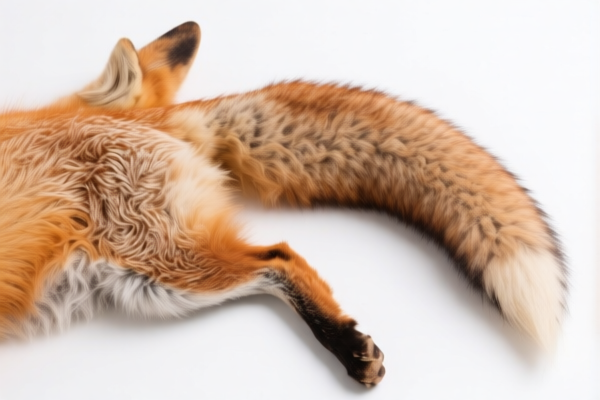
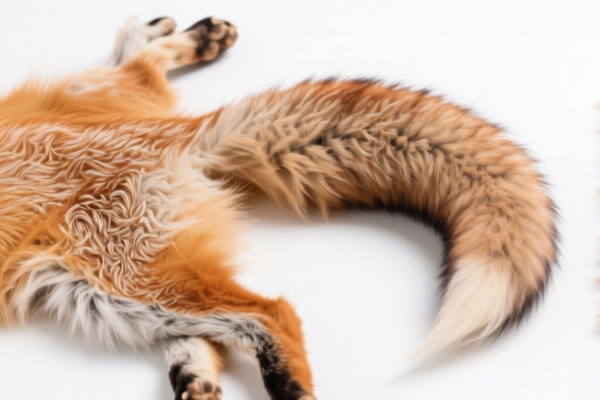
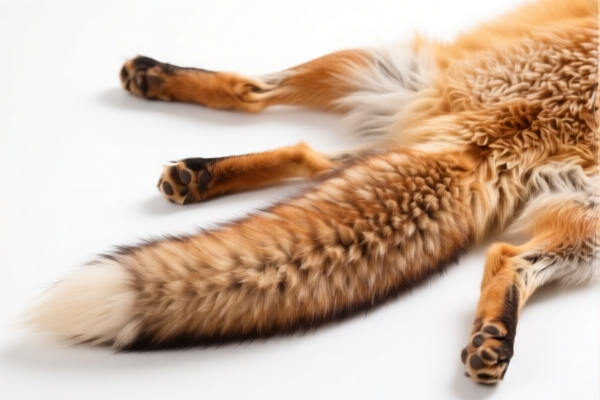
AI Analysis
🦊 Undyed Fox Fur with Tail (Raw Furskins)
🌐 HS Code Reference & Customs Clearance Guide | 2026 Latest Tariff Analysis | Professional Strategy 📌 I. Product Definition & Classification: What exactly is "Undyed Fox Fur with Tail"?
"Undyed Fox Fur with Tail" refers to raw furskins (including heads, tails, paws, and other pieces or cuttings) suitable for furriers' use. Specifically, this falls under the category of Fox furs, whole, with or without head, tail, or paws.
In international trade, the classification depends heavily on the color/mutation type of the fox. The two most common scenarios are: 1. Silver, Black, or Platinum Fox: Includes those which are mutations or types developed from silver, black, or platinum foxes. 2. Other Fox: Any other color or variety not specified above.
⚠️ Key Distinction Point: - If the fur is Silver, Black, or Platinum (including mutations) → Goes to 4301.60.30.00 - If the fur is Any other color/type (e.g., standard red, blue, cross, white non-platinum) → Goes to 4301.60.60.00
📦 II. HS Code Classification Details (2026 Latest Tariff Authority Match)
| HS Code | Product Description | Applicable Scenario | Tax Rate (US-China) |
|---|---|---|---|
4301.60.30.00 |
Of fox, whole, with or without head, tail or paws: Of silver, black or platinum fox (including mutations/types developed from these) | Silver fox, Black fox, Platinum fox, and their specific mutations | 0.0% (Base + Added) |
4301.60.60.00 |
Of fox, whole, with or without head, tail or paws: Other | Red fox, Blue fox, Cross fox, standard white fox, etc. | 7.5% (Base 0% + Added 7.5%) |
🔍 Important Reminder: - "Undyed" means the skin has not been processed or colored; it is in its raw state. - "With Tail" confirms it is a whole skin or piece suitable for furriers, fitting the description of "raw furskins... suitable for furriers' use". - The critical factor is the breed/color mutation. Silver/Black/Platinum are treated as premium/high-demand categories in the tariff structure, while others are classified as "Other".
💰 III. 2026 Latest Tariff Rate Details
✅ Applicable Country: United States (US)
✅ Origin: China (CN)
✅ Effective Time: Current tariff rules apply
🎯 1. 4301.60.30.00 —— Silver, Black, or Platinum Fox Fur
| Item | Content |
|---|---|
| Base Tariff | 0.0% (ad valorem) |
| Added Tariff (Section 301/IEEPA) | 0.0% |
| Total Tax Rate | 0.0% |
| Tax Calculation | CIF Value × 0% = $0 |
| De Minimis Eligibility | ❌ No (Generally, furskins are restricted from de minimis exemption due to biological/animal product regulations and high-value nature) |
📌 Explanation: - This classification benefits from zero duty. - Despite being a high-value luxury raw material, it currently faces no additional punitive tariffs from the US under the referenced data. - Key Advantage: Cost-neutral entry into the US market compared to other fox fur types.
🎯 2. 4301.60.60.00 —— Other Fox Fur
| Item | Content |
|---|---|
| Base Tariff | 0.0% (ad valorem) |
| Added Tariff (Section 301/IEEPA) | +7.5% |
| Total Tax Rate | 7.5% |
| Tax Calculation | CIF Value × 7.5% |
| De Minimis Eligibility | ❌ No |
📌 Explanation: - While the base tariff is 0%, an additional 7.5% tariff is applied. - This 7.5% is typically part of USITC Footnote additions or Section 301 related charges for specific Chinese-origin goods (depending on the specific trade agreement status in 2026). - Key Disadvantage: Higher landed cost compared to Silver/Black/Platinum fox fur.
🛠️ IV. Customs Clearance Practical Advice (Real-World Pitfall Avoidance)
✅ 1. Required Documentation Checklist (All are Mandatory)
| Document | Required? | Explanation |
|---|---|---|
| ✅ Commercial Invoice | ✔️ | Must clearly state: "Raw Fox Fur Skin, Undyed, With Tail", HS Code, Country of Origin. |
| ✅ Packing List | ✔️ | Detail quantity, weight (gross/net), and packaging type. |
| ✅ Animal Health Certificate | ✔️ | Critical: Proof that the skins are free from diseases (e.g., Rabies, Sarcopsys) and meet USDAAPHIS requirements. |
| ✅ Origin Certificate | ✔️ | Needed to verify US-China trade status for tariff application. |
| ✅ Product Description Sheet | ✔️ | Specify if "Silver/Black/Platinum" or "Other" to justify HS Code selection. |
| ✅ Customs Bond | ✔️ | Required for commercial importation into the US. |
✅ 2. Declaration Tips (Key Mantra)
🔥 "Color Determines Code, Document Determines Clearance!"
| Scenario | Correct Declaration | Wrong Practice |
|---|---|---|
| Silver/Black/Platinum Fox | 4301.60.30.00 |
Misdeclaring as "Other" (4301.60.60.00) → Overpaying 7.5% unnecessarily. |
| Standard Red/Blue Fox | 4301.60.60.00 |
Misdeclaring as "Silver Fox" → Underpayment risk → Audit & Penalty! |
| Dyed/Processed Fur | Different HS (e.g., 4302) | Declaring raw fur when it's dyed → Wrong classification → Delay/Confiscation. |
| Small Samples | De Minimis (if eligible) | Fails biological import rules → Confiscation by CBP/USDA. |
📌 Note on "Undyed": If the fur is dyed, it no longer falls under "Raw Furskins" (4301) but likely under "Dressed Furskins" (4302). Ensure the description matches the physical state.
✅ 3. Special Case Handling
| Case | Handling Advice |
|---|---|
| Mutation Types | If the fox is a "Cross Fox" or "Kuro-Kit," classify as "Other" (4301.60.60.00) unless it is explicitly a developed type of Black/Platinum. Err on the side of caution; "Silver/Black/Platinum" is strictly defined. |
| Partial Skins (Paws/Tails only) | Still classified under 4301 if suitable for furriers. Ensure description says "Pieces/Cuttings" but keep the same HS code logic based on species/color. |
| USDA Compliance | All animal products require USDA-APHIS clearance. Without an approved facility and health certificate, the shipment will be rejected or destroyed, regardless of HS Code. |
| CITES Considerations | Verify if the fox species is listed under CITES. Most farmed foxes (Vulpes vulpes) are not CITES-listed, but wild-caught may require permits. |
🌍 V. Global Market Comparison (2026 Latest)
| Country/Region | Recommended HS Code | Tariff (US-China Origin) | Certification Requirements | Notes |
|---|---|---|---|---|
| 🇺🇸 USA | 4301.60.30.00 (Silver/Black) or 4301.60.60.00 (Other) |
0.0% or 7.5% | USDA-APHIS Health Cert, CBP Entry | Strict biological controls. |
| 🇨🇳 China | 4301.30 (Fox, Silver/Black) or 4301.80 (Other) |
Depends on FTA | N/A | China is a major producer/exporter. |
| 🇪🇺 EU | 4301.30 or 4301.80 |
Varies (often 0-4%) | EVC (Ecological Validation Certificate) for fur | EU has stricter animal welfare and labeling laws. |
| 🇬🇧 UK | 4301.30 or 4301.80 |
Varies | Post-Brexit import rules apply | Similar to EU but separate customs process. |
📌 Conclusion: - The US is the primary market with clear 0% or 7.5% tariffs. - Biological safety (USDA) is just as critical as customs duty for fur imports. - Misclassification between "Silver/Black/Platinum" and "Other" leads to direct financial loss (0% vs 7.5%).
📌 VI. Common Errors & Pitfalls (Lessons Learned)
❌ Error 1: Declaring "Red Fox" as "Black Fox" to save 7.5% tax
👉 Consequence: CBP audit, back taxes, penalties, and potential shipment seizure.
👉 Advice: Be honest about color. If it's red/cross, use 4301.60.60.00.
❌ Error 2: Forgetting USDA-APHIS Health Certificate
👉 Consequence: Shipment held at port, decontaminated, or destroyed.
👉 Advice: Arrange health certification before shipping.
❌ Error 3: Confusing "Raw" with "Dressed"
👉 Consequence: Wrong HS Code (4301 vs 4302).
👉 Advice: "Undyed" = Raw (4301). "Dyed/Tanned" = Dressed (4302).
❌ Error 4: Ignoring "Mutation" Definitions
👉 Consequence: Misclassification of premium fox types.
👉 Advice: "Platinum Fox" is explicitly listed under 4301.60.30.00. "Blue Fox" is NOT, so it goes to 4301.60.60.00.
✅ Correct Approach:
"Raw Undyed Fox Fur, Silver Type, With Tail, Suitable for Furriers, Origin: China, HS Code: 4301.60.30.00, USDA Health Cert Attached"
🎯 VII. Conclusion: Professional Declaration, Cost Savings, Smooth Clearance
🎯 Remember the Mantra:
🔹 "Silver/Black/Platinum = 0% Duty"
🔹 "Other Fox = 7.5% Duty"
🔹 "No Health Cert = No Entry!"
🔹 "HS Code Determines Cost, USDA Determines Clearance!"
📌 Tips: - If your fur is Silver, Black, or Platinum, you enjoy zero tariffs. Highlight this in your commercial invoice to facilitate quick clearance. - For Other Fox furs, budget for an additional 7.5% cost. - Always pre-clear with a licensed customs broker to verify USDA requirements.
📣 Immediate Action:
📞 Contact a Customs Broker + Provide Species/Color Details + Arrange USDA Health Certificate
🚀 Ensure your fox fur arrives smoothly, duty-paid, and ready for the market!
✨ Professional Customs Clearance Starts with Precise Classification!
💼 Every Dollar of Duty Saved is Pure Profit!
Customer Reviews
About HS Code Classification
The Harmonized System (HS) is an internationally standardized nomenclature developed by the World Customs Organization (WCO) to classify traded products. Over 200 countries use the HS system as the basis for customs tariffs, trade statistics, and import/export regulations.
Each HS code follows a hierarchical structure:
- Chapter (2 digits) — Broad category of goods (e.g., Chapter 84: Machinery and Mechanical Appliances)
- Heading (4 digits) — More specific grouping within the chapter
- Subheading (6 digits) — Internationally standardized breakdown, used by all WCO member countries
- National subdivisions (8-10 digits) — Country-specific extensions for further classification, such as US HTSUS 10-digit codes
Correct HS code classification is essential for smooth customs clearance, accurate duty payment, and compliance with trade regulations. Misclassification can lead to customs delays, overpayment of duties, or penalties.
When importing from CN to US, the applicable tariff rates may include:
- Most-Favored-Nation (MFN) rate — The standard duty rate applied to WTO members
- General rate — Applied to countries without trade agreements
- Trade remedy duties — Additional tariffs such as Section 301 (anti-dumping), Section 232 (national security), or countervailing duties
The information provided on this page is for reference purposes only. For official classification, please consult with your local customs authority or a licensed customs broker.