Undyed Fur
CN → US| HS Code | Tariff Rate | Origin | Destination | Doc |
|---|---|---|---|---|
| 4301800290 | 17.5% | CN | US | Official Doc |
| 4301900000 | 10.0% | CN | US | Official Doc |
Product Images
AI Analysis
🐾 Undyed Fur (Raw Furskins)
🌐 HS Code Reference & Customs Clearance Guide | 2026 Latest Tariff Analysis | Professional Clearance Strategy
📌 I. Product Definition & Classification: Do You Really Understand "Undyed Fur"?
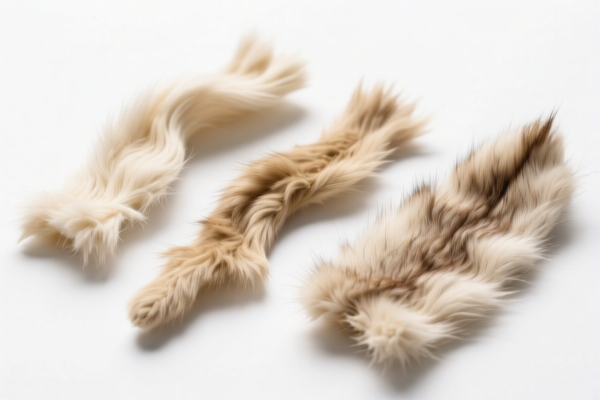
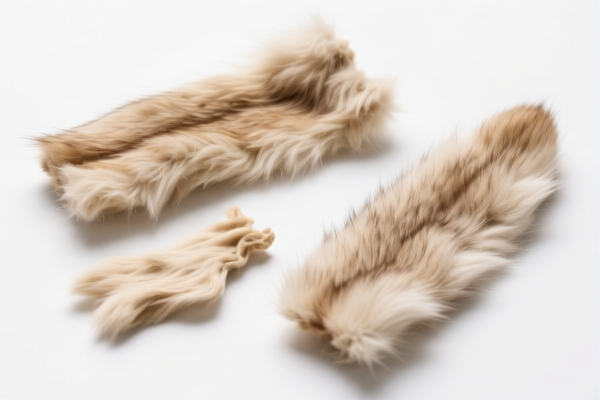
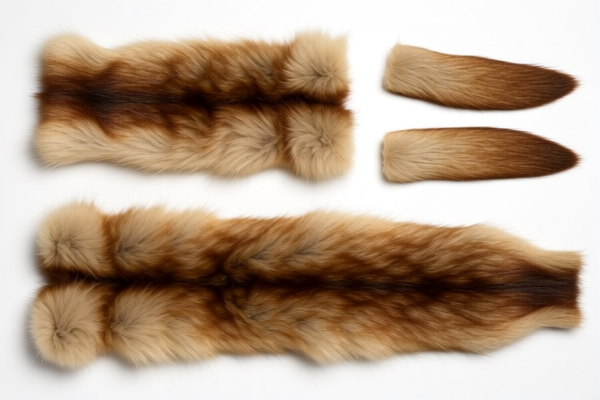
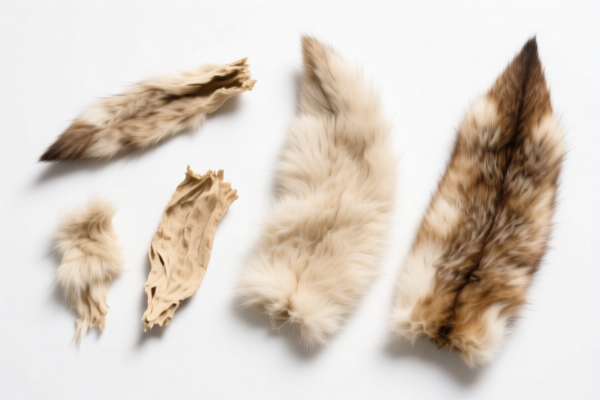
Undyed Fur refers to raw furskins, including heads, tails, paws, and other cuttings, suitable for furriers' use. In international trade, these are primarily classified under Heading 4301 of the Harmonized System (HS), distinct from raw hides and skins of heading 4101, 4102, or 4103 (which typically cover bovine, ovine, or caprine skins).
The classification depends heavily on the form of the product: * Whole Skins: Whether intact or with head, tail, or paws attached. * Pieces/Cuttings: Heads, tails, paws, or other fragments suitable for furriers' use (e.g., for trimming, accessories, or craft).
⚠️ Key Distinction:
- If the fur is whole (complete skin, even if limbs/head are attached) →归入 4301.80.02.90
- If the fur consists of parts, pieces, or cuttings (e.g., isolated paws, tails, scraps) → 归入 4301.90.00.00
📦 II. HS Code Classification Details (2026 Latest Tariff Authority Comparison)
| HS Code | Product Description | Application Scenario | Form Type |
|---|---|---|---|
4301.80.02.90 |
Other furskins, whole, with or without head, tail, or paws | Complete pelts, whole skins for coats, vests, or lining | ✅ Whole |
4301.90.00.00 |
Heads, tails, paws, and other pieces/cuttings suitable for furriers' use | Scraps, parts for accessories, craft materials, trimming | ✅ Pieces/Cuttings |
🔍 Critical Reminder:
- Whole skins (even if de-haired or cured but not dyed) must be classified under 4301.80.02.90.
- Parts only (e.g., a box of fox tails or raccoon paws) must be classified under 4301.90.00.00.
- Do not confuse with Heading 4101/4102/4103: These headings cover raw hides/skins of bovine (cattle), ovine (sheep), or caprine (goat) animals. Fur skins (mink, fox, marten, rabbit, etc.) are explicitly excluded from these headings and belong to Chapter 43.
💰 III. 2026 Latest Tariff Rate Details (Detailed Tax Breakdown)
✅ Applicable Country: United States (US)
✅ Origin: China (CN) (Based on the provided tax data context)
✅ Effective Time: Current 2026 Tariff Schedule
🎯 1. 4301.80.02.90 — Other Furskins, Whole
| Item | Content |
|---|---|
| Base Tariff Rate | 0.0% (ad valorem) |
| Additional Tariff (Section 301/Other) | +7.5% |
| Total Tariff Rate | 7.5% |
| Tax Calculation | CIF Value × 7.5% |
| De Minimis Exemption | ❌ Not Eligible (For commercial shipments; small packages may vary but generally subject to duty if > $800) |
| Legal Basis Path | HTSUS:4301.80.02.90 → Section 301 Footnote |
📌 Explanation:
- The base rate is 0%, reflecting the low traditional duty on raw fur.
- The 7.5% additional tariff is an additional levy (often related to trade remedies or specific U.S. import policies). This is not the full 25% Section 301 rate seen on electronics, but still a significant cost.
- Total Cost Impact: 7.5% of the declared CIF value.
🎯 2. 4301.90.00.00 — Heads, Tails, Paws, and Other Pieces/Cuttings
| Item | Content |
|---|---|
| Base Tariff Rate | 0.0% (ad valorem) |
| Additional Tariff | 0.0% |
| Total Tariff Rate | 0.0% |
| Tax Calculation | No duty owed |
| De Minimis Exemption | ✅ Eligible (If shipment value ≤ $800 and meets all other conditions) |
| Legal Basis Path | HTSUS:4301.90.00.00 |
📌 Note:
- This category enjoys a zero-duty status.
- Whether it's a whole pelt or a cut skin, the form dictates the code. Pieces are cheaper to import from a tariff perspective.
- Ensure the declaration clearly states "pieces/cuttings" to justify this code. Misdeclaring a whole skin as "cuttings" is a serious customs violation.
🛠️ IV. Customs Clearance Practical Advice (Real-World Pitfall Guide)
✅ 1. Required Documentation Checklist (Missing Any = Delay)
| Document | Mandatory? | Description |
|---|---|---|
| ✅ Commercial Invoice | ✔️ | Must clearly state "Raw Undyed Furskins" and specify form (Whole vs. Pieces). |
| ✅ Packing List | ✔️ | Detail the number of skins, weight, and dimensions. Separate whole skins from cuttings if shipped together. |
| ✅ Certificate of Origin | ✔️ | Required for preferential treatment or to verify country of origin for tariff calculations. |
| ✅ Fur Product Labeling | ✔️ | U.S. law requires clear labeling of species (e.g., "Mink," "Fox") and country of origin. |
| ✅ CITES Permit (If Applicable) | ✔️ | If the species is endangered (e.g., certain sable, marten), CITES documentation is mandatory. |
| ✅ Health/Sanitary Certificate | ✔️ | May be required by USDA APHIS to prevent disease transmission. |
✅ 2. Declaration Tips (Key Mantra)
🔥 "Whole is 4301.80, Pieces are 4301.90. Declare species, avoid fines, and keep records clean!"
| Scenario | Correct Declaration | Incorrect Action |
|---|---|---|
| Whole mink pelts (with head) | 4301.80.02.90 |
Declaring as "leather" (Chapter 41) → Seizure Risk |
| Box of isolated rabbit tails | 4301.90.00.00 |
Declaring as "whole skin" → Overpayment (7.5%) |
| Mixed shipment (whole + pieces) | Split Declaration | Combining into one line item → Customs Rejection |
| Dyed/Processed fur | Different HS Code (e.g., 4302) | Using raw fur code for processed goods → Penalty |
✅ 3. Special Considerations
| Situation | Handling Advice |
|---|---|
| Endangered Species | Check CITES Appendix I/II. If listed, you need a valid export/import permit. Failure to provide this results in confiscation. |
| Species Identification | U.S. Customs and Border Protection (CBP) is strict on species accuracy. "Fur" is not specific enough. Use: "Undyed Mink Skin, Whole, Origin: Denmark." |
| Smell/Preservation | Ensure fur is properly treated to prevent mold or pest issues during transit. Improper preservation can lead to USDA rejection. |
| Mixed Containers | If shipping whole skins and pieces in one container, declare them separately on the bill of lading and customs entry. |
🌍 V. Global Market Comparison (2026 Update)
| Country/Region | Recommended HS Code | Tariff (China Origin) | Certification | Notes |
|---|---|---|---|---|
| 🇺🇸 USA | 4301.80.02.90 / 4301.90.00.00 |
7.5% / 0.0% | CITES, Labeling | Strict species labeling; 7.5% add'l duty on whole skins |
| 🇨🇳 China | 4301.80 / 4301.90 | 5% - 10% | N/A | Import duties vary by species and treatment |
| 🇪🇺 EU | 4301.80 / 4301.90 | 4% - 12% | EUTR (Timber-like for fur trade checks) | High scrutiny on origin and legality |
| 🇬🇧 UK | 4301.80 / 4301.90 | 4% - 12% | Post-Brexit Import Rules | Similar to EU but with own customs procedures |
| 🇯🇵 Japan | 4301.80 / 4301.90 | 5% - 10% | Phytosanitary Cert | Strict biosecurity checks |
📌 Conclusion:
- The U.S. is unique in applying a 7.5% additional tariff on whole raw furskins, while pieces remain duty-free.
- Species identification is critical globally. Misclassification can lead to fines from both customs and wildlife agencies.
- CITES compliance is non-negotiable for many fur species. Always verify the species against the CITES database.
📌 VI. Common Errors & Pitfall Guide (Lessons Learned)
❌ Error 1: Declaring "Whole Skins" as "Pieces/Cuttings" to avoid the 7.5% duty
👉 Consequence: CBP inspection reveals attached heads/tails → Penalty + Back Taxes
❌ Error 2: Using generic term "Fur" in commercial invoice
👉 Consequence: Customs cannot determine tariff rate or CITES status → Hold & Inspection
❌ Error 3: Ignoring CITES requirements for endangered species (e.g., Sable, Martens)
👉 Consequence: Seizure of goods and potential criminal liability
❌ Error 4: Confusing Raw Fur (Chapter 43) with Tanned Leather (Chapter 41)
👉 Consequence: Wrong HS Code → 7.5% or 0% vs. 0-12% other rates + potential misdeclaration fines
✅ Correct Practice:
"Undyed Whole Mink Skins, with Head and Tail Attached, Origin: China, Species: Mustela vison"
HS: 4301.80.02.90
🎯 VII. Conclusion: Precision in Classification Saves Money!
🎯 Remember the Mantra:
🔹 "Whole Skin = 7.5%, Pieces = 0%."
🔹 "Declare Species, Check CITES, Avoid Fines."
🔹 "Raw Fur is Not Leather; Keep Chapters Separate."
📌 Pro Tip:
If you are importing large volumes, consider pre-classification rulings from CBP to confirm the "Whole vs. Piece" determination.
For CITES-listed species, engage a wildlife compliance specialist early in the supply chain.
📣 Immediate Action:
📞 Consult with a licensed customs broker to verify your specific fur species.
📄 Ensure your commercial invoice includes scientific species names and physical description.
🚀 Clearance success depends on accuracy, not just speed!
✨ Professional Customs Clearance Starts with Correct Classification!
💼 Every dollar saved on accurate HS codes is pure profit!
Customer Reviews
About HS Code Classification
The Harmonized System (HS) is an internationally standardized nomenclature developed by the World Customs Organization (WCO) to classify traded products. Over 200 countries use the HS system as the basis for customs tariffs, trade statistics, and import/export regulations.
Each HS code follows a hierarchical structure:
- Chapter (2 digits) — Broad category of goods (e.g., Chapter 84: Machinery and Mechanical Appliances)
- Heading (4 digits) — More specific grouping within the chapter
- Subheading (6 digits) — Internationally standardized breakdown, used by all WCO member countries
- National subdivisions (8-10 digits) — Country-specific extensions for further classification, such as US HTSUS 10-digit codes
Correct HS code classification is essential for smooth customs clearance, accurate duty payment, and compliance with trade regulations. Misclassification can lead to customs delays, overpayment of duties, or penalties.
When importing from CN to US, the applicable tariff rates may include:
- Most-Favored-Nation (MFN) rate — The standard duty rate applied to WTO members
- General rate — Applied to countries without trade agreements
- Trade remedy duties — Additional tariffs such as Section 301 (anti-dumping), Section 232 (national security), or countervailing duties
The information provided on this page is for reference purposes only. For official classification, please consult with your local customs authority or a licensed customs broker.