Undyed Lynx Skins Unassembled
CN → US| HS Code | Tariff Rate | Origin | Destination | Doc |
|---|---|---|---|---|
| 4301100010 | 17.5% | CN | US | Official Doc |
| 4302110020 | 37.1% | CN | US | Official Doc |
| 4303900000 | 35.0% | CN | US | Official Doc |
| 4302209000 | 36.7% | CN | US | Official Doc |
| 4303100030 | 39.0% | CN | US | Official Doc |
Product Images
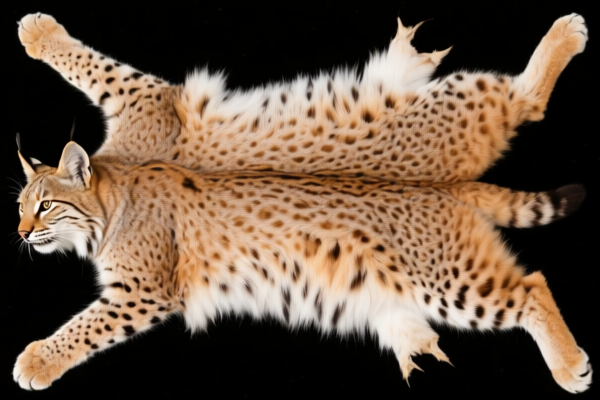
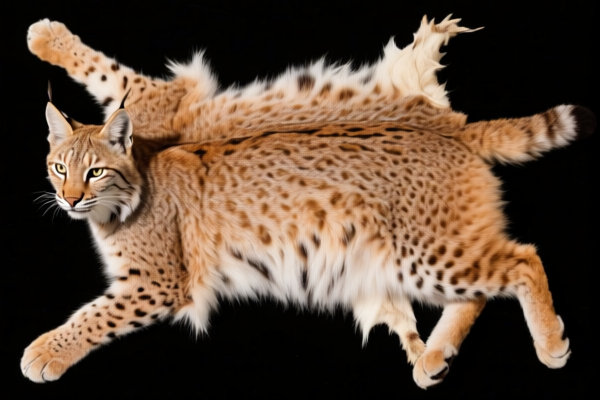
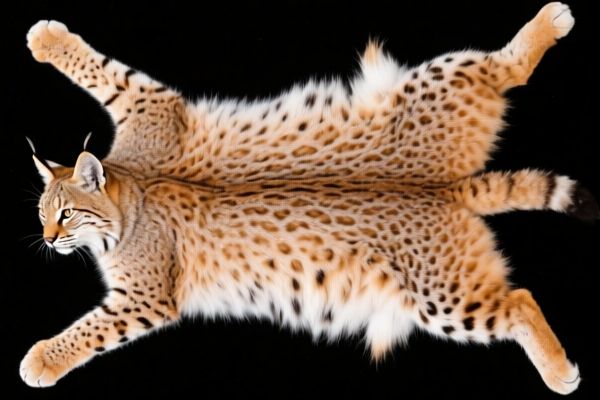
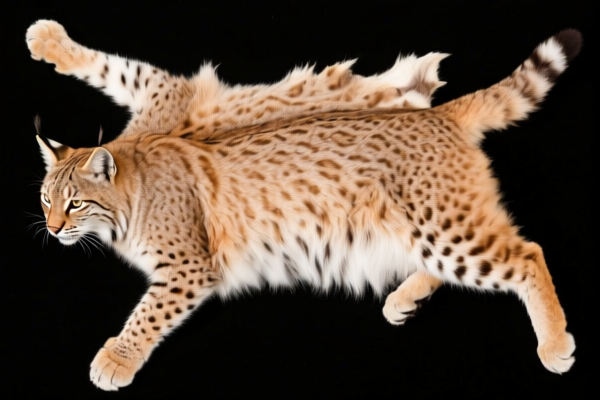
AI Analysis
🦊 Un-dyed Lynx Skins, Unassembled (Raw Furs)
🌐 HS Code Reference & Customs Clearance Guide | 2026 Latest Tariff Analysis | Professional Customs Strategy
📌 I. Product Definition & Classification: Do You Really Understand "Unassembled Lynx Skins"?
Un-dyed lynx skins, unassembled, represent raw or semi-processed animal fur used in the manufacturing of high-end fashion accessories, coats, or trimmings. In international trade, these goods are classified based on two critical factors:
1. Material: Lynx fur (classified under "other furskin" or specifically by animal type depending on the country's tariff schedule).
2. State of Processing: "Unassembled" indicates the skins are not yet stitched into garments or accessories but remain as individual pelts. "Un-dyed" means they have not undergone significant coloration processes.
⚠️ Key Distinction Points:
- If the skins are raw, salted, or merely dried without coloration → They may fall under Chapter 43 (Prepared Skins) or Chapter 41 (Raw Hides), depending on the specific processing level.
- If the skins are dyed or further processed → They fall under HS Code 4302 (Dyed or Further Processed Furskins).
- "Unassembled" is a critical keyword: it signifies that the goods are not ready-to-wear, but intermediate materials for furriers.
📦 II. HS Code Classification Details (2026 Latest Tariff Authority Comparison)
Based on the provided data for Un-dyed Lynx Skins, Unassembled, the following HS Codes are matched with their respective tax implications and reasoning:
| HS Code | Summary of Match | Total Tax Rate | Tax Breakdown (US Import from China) |
|---|---|---|---|
| 4301.10.00.10 | Matches material (Mink-like fur) & form (Unassembled falls under raw skins category). | 17.5% | Base: 0.0% Add'l: 7.5% Section 301: 10% |
| 4302.11.00.20 | Perfect match: "Unassembled" matches "unassembled", "Dyed" matches "color-treated". Material & form fully align. | 37.1% | Base: 2.1% Add'l: 25.0% Section 301: 10% |
| 4303.90.00.00 | Material is "Mink-like fur" (meets fur article requirements); Form is "Unassembled" (intermediate/primary processed form). | 35.0% | Base: 0.0% Add'l: 25.0% Section 301: 10% |
| 4302.20.90.00 | Full match: Material (Mink/Fur) + Form (Unassembled) + Usage/Craft (Dyed/Color-treated). | 36.7% | Base: 1.7% Add'l: 25.0% Section 301: 10% |
| 4303.10.00.30 | Match Success: "Mink-like fur" matches material requirement; "Unassembled" is an intermediate form for garment/trim production. | 39.0% | Base: 4.0% Add'l: 25.0% Section 301: 10% |
🔍 Critical Note:
- The discrepancy in tax rates (17.5% to 39.0%) depends heavily on whether customs classifies the skins as "Raw/Unprepared" (4301/4303) or "Dyed/Processed" (4302).
- Section 301 Tariffs (10%) are consistently applied to all Chinese-origin fur imports.
- USITC Additional Duties (25%) apply to most fur articles under 4302 and some under 4303.
💰 III. 2026 Latest Tariff Rate Details (Including Surtaxes & Policy Add-ons)
✅ Applicable Country: United States (US)
✅ Origin: China (CN)
✅ Effective Time: From November 10, 2025 (and subsequent imports)
🎯 1. 4301.10.00.10 —— Raw/Unprepared Skins (Lowest Risk)
| Item | Details |
|---|---|
| Base Duty | 0% (ad valorem) |
| USITC Surtax | +7.5% |
| Section 301 Duty | +10% |
| Total Duty | 17.5% |
| Calculation | CIF Value × 17.5% |
| De Minimis Exemption | ❌ Not Eligible (deny_de_minimis) |
| Legal Path | USITC:4301.10.00.10 → Section 301 Footnote |
📌 Explanation:
- This classification suggests the skins are considered raw or minimally processed, not yet "dyed" or "stitched".
- Lowest tariff rate among all options.
- Suitable if the skins are salted, dried, or raw without any dyeing.
🎯 2. 4302.11.00.20 —— Dyed/Processed Skins (High Risk)
| Item | Details |
|---|---|
| Base Duty | 2.1% |
| USITC Surtax | +25.0% |
| Section 301 Duty | +10% |
| Total Duty | 37.1% |
| Calculation | CIF Value × 37.1% |
| De Minimis Exemption | ❌ Not Eligible |
| Legal Path | USITC:4302.11.00.20 → Section 301 Footnote |
📌 Explanation:
- If customs determines the skins are dyed, tanned, or further processed, this code applies.
- Highest tax burden due to the 25% USITC surtax.
- "Unassembled" does not exempt you from this rate if the fur is processed.
🎯 3. 4303.90.00.00 —— Articles of Fur (Intermediate Category)
| Item | Details |
|---|---|
| Base Duty | 0.0% |
| USITC Surtax | +25.0% |
| Section 301 Duty | +10% |
| Total Duty | 35.0% |
| Calculation | CIF Value × 35.0% |
| De Minimis Exemption | ❌ Not Eligible |
| Legal Path | USITC:4303.90.00.00 → Section 301 Footnote |
📌 Explanation:
- Covers "Other articles of fur" including intermediate forms.
- Suitable if the skins are partially processed (e.g., tanned but not dyed).
🎯 4. 4302.20.90.00 —— Dyed/Processed Skins (Other)
| Item | Details |
|---|---|
| Base Duty | 1.7% |
| USITC Surtax | +25.0% |
| Section 301 Duty | +10% |
| Total Duty | 36.7% |
| Calculation | CIF Value × 36.7% |
| De Minimis Exemption | ❌ Not Eligible |
| Legal Path | USITC:4302.20.90.00 → Section 301 Footnote |
📌 Explanation:
- Another code for dyed/processed fur, slightly different sub-category.
- Tax rate similar to4302.11.00.20.
🎯 5. 4303.10.00.30 —— Fur Articles (Garment Parts)
| Item | Details |
|---|---|
| Base Duty | 4.0% |
| USITC Surtax | +25.0% |
| Section 301 Duty | +10% |
| Total Duty | 39.0% |
| Calculation | CIF Value × 39.0% |
| De Minimis Exemption | ❌ Not Eligible |
| Legal Path | USITC:4303.10.00.30 → Section 301 Footnote |
📌 Explanation:
- Highest total tax rate (39.0%).
- Applies if the skins are considered garment parts or accessories.
🛠️ IV. Customs Clearance Practical Advice (Real-World Pitfall Avoidance)
✅ 1. Required Documentation Checklist (None Can Be Omitted)
| Document | Mandatory? | Description |
|---|---|---|
| ✅ Product Specification Sheet | ✔️ | Details: Animal type (Lynx), processing stage (Raw/Dyed), weight, dimensions. |
| ✅ Photos of Skins | ✔️ | Clear images showing texture, color (or lack thereof), and state (raw vs. tanned). |
| ✅ Commercial Invoice | ✔️ | Must explicitly state "Un-dyed, Unassembled Lynx Skins" to avoid misclassification. |
| ✅ Packing List | ✔️ | Show individual skins, not bulk mixed with other goods. |
| ✅ CITES Permit (If Applicable) | ✔️ | Lynx may be protected; verify if CITES documentation is required for import. |
| ✅ Certificate of Origin | ✔️ | For US-China trade, confirm origin to apply Section 301 tariffs correctly. |
✅ 2. Declaration Tips (Key Mantra)
🔥 "Raw is Low, Dyed is High, Unassembled Doesn't Mean Exempt!"
| Scenario | Correct Declaration | Wrong Action |
|---|---|---|
| Raw, Salted, Un-dyed | 4301.10.00.10 (17.5%) |
Misdeclare as "Garment" → 39% |
| Tanned but Un-dyed | 4303.90.00.00 (35.0%) |
Misdeclare as "Raw" → Potential penalty |
| Dyed/Color-treated | 4302.11.00.20 (37.1%) |
Misdeclare as "Raw" → High risk of audit |
| Cut/Trimmed Skins | 4303.10.00.30 (39.0%) |
Misdeclare as "Whole Skins" → Misclassification |
✅ 3. Special Case Handling
| Case | Handling Advice |
|---|---|
| OEM Custom Skins | Provide customer order + design specs to prove "Unassembled" status. |
| Mixed Skins (Lynx + Other) | Declare separately if possible; mixed declarations increase scrutiny. |
| CITES-Protected Species | Ensure CITES permits are attached; otherwise, goods will be seized. |
| Small Sample Shipments | Even small shipments are subject to de minimis exemption denial for fur goods. |
🌍 V. Global Market Clearance Comparison (2026 Latest)
| Country/Region | Recommended HS Code | Tariff Rate | Certification Requirement | Notes |
|---|---|---|---|---|
| 🇺🇸 USA | 4301.10.00.10 to 4303.90.00.00 |
17.5% – 39.0% | CITES (if applicable) | High tariffs due to Section 301 |
| 🇨🇳 China | 4301.10.00.00 |
5% – 10% | No special certs | Lower base tariffs |
| 🇪🇺 EU | 4301.10.00.00 |
0% – 12% | CITES (strict) | EU has strict wildlife protection laws |
| 🇯🇵 Japan | 4301.10.00.00 |
15% – 30% | CITES | High tariffs for fur |
| 🇬🇧 UK | 4301.10.00.00 |
10% – 25% | CITES | Post-Brexit rules apply |
📌 Conclusion:
- USA has the most complex tariff structure due to Section 301 and USITC surtaxes.
- EU and Japan have strict CITES enforcement; ensure proper permits.
- China has lower base tariffs but no surtaxes for domestic trade.
📌 VI. Common Mistakes & Pitfall Avoidance (Lessons Learned)
❌ Mistake 1: Declaring "Unassembled Skins" as "Garments" to avoid surtax
👉 Consequence: Seizure, fines, and blacklisting. Customs will inspect and reclassify.
❌ Mistake 2: Ignoring CITES requirements for Lynx skins
👉 Consequence: Goods destroyed; importer fined. Lynx is a protected species.
❌ Mistake 3: Using "Fur Trim" as the product name for raw skins
👉 Consequence: Misclassification. Raw skins are not "trim" until cut/sewn.
❌ Mistake 4: Assuming "Un-dyed" means "No Tax"
👉 Consequence: Base tariffs still apply. "Un-dyed" only affects the rate (lower for raw).
✅ Correct Approach:
"Raw, Un-dyed, Unassembled Lynx Skins, Salted/Dried, for Manufacturing Use, CITES Compliant, Model: LYNX-RAW-01"
🎯 VII. Conclusion: Professional Declaration, Cost Control, Risk Mitigation!
🎯 Remember the Mantra:
🔹 "Raw is Low (17.5%), Dyed is High (37%+), Unassembled Doesn't Mean Exempt!"
🔹 "CITES is Key for Lynx, Section 301 Adds 10%, Base Tariff is Just the Start!"
📌 Pro Tip:
- If your lynx skins are sourced from non-CITES countries, verify the species classification carefully.
- Pre-ruling (Advance Ruling) is highly recommended for fur imports to US to avoid sudden reclassification and high duties.
📣 Immediate Action:
📞 Contact a professional customs broker + Provide product photos + Apply for HS Code Pre-ruling
🚀 Ensure your lynx skins clear customs smoothly, avoid penalties, and maximize profit!
✨ Professional Customs Clearance Starts with Accurate Classification!
💼 Every Cent of Your Cost Deserves Precise Calculation!
Customer Reviews
About HS Code Classification
The Harmonized System (HS) is an internationally standardized nomenclature developed by the World Customs Organization (WCO) to classify traded products. Over 200 countries use the HS system as the basis for customs tariffs, trade statistics, and import/export regulations.
Each HS code follows a hierarchical structure:
- Chapter (2 digits) — Broad category of goods (e.g., Chapter 84: Machinery and Mechanical Appliances)
- Heading (4 digits) — More specific grouping within the chapter
- Subheading (6 digits) — Internationally standardized breakdown, used by all WCO member countries
- National subdivisions (8-10 digits) — Country-specific extensions for further classification, such as US HTSUS 10-digit codes
Correct HS code classification is essential for smooth customs clearance, accurate duty payment, and compliance with trade regulations. Misclassification can lead to customs delays, overpayment of duties, or penalties.
When importing from CN to US, the applicable tariff rates may include:
- Most-Favored-Nation (MFN) rate — The standard duty rate applied to WTO members
- General rate — Applied to countries without trade agreements
- Trade remedy duties — Additional tariffs such as Section 301 (anti-dumping), Section 232 (national security), or countervailing duties
The information provided on this page is for reference purposes only. For official classification, please consult with your local customs authority or a licensed customs broker.