Undyed Raw Fox Fur (Unassembled)
CN → US| HS Code | Tariff Rate | Origin | Destination | Doc |
|---|---|---|---|---|
| 4301603000 | 22.6% | CN | US | Official Doc |
| 4301606000 | 17.5% | CN | US | Official Doc |
| 4302191500 | 40.6% | CN | US | Official Doc |
| 4302193030 | 36.5% | CN | US | Official Doc |
| 4301603000 | 22.6% | CN | US | Official Doc |
Product Images
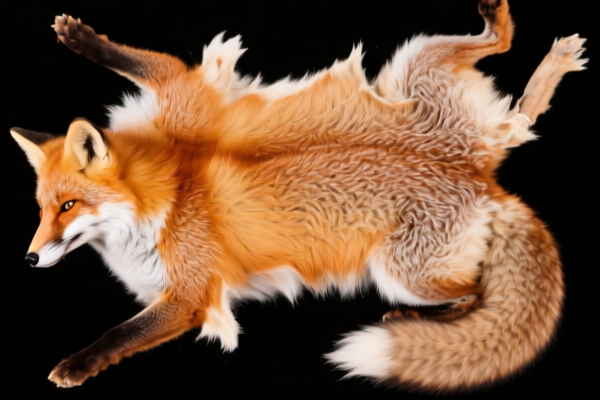
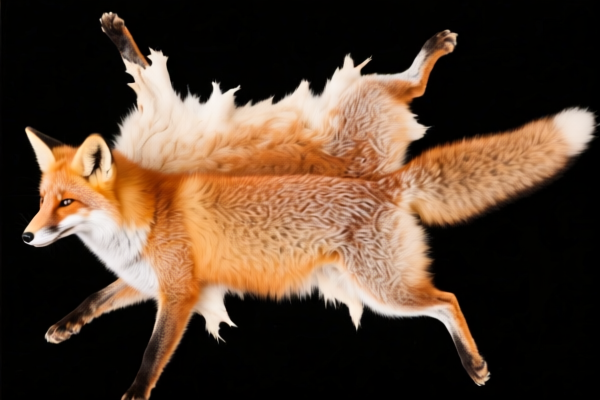
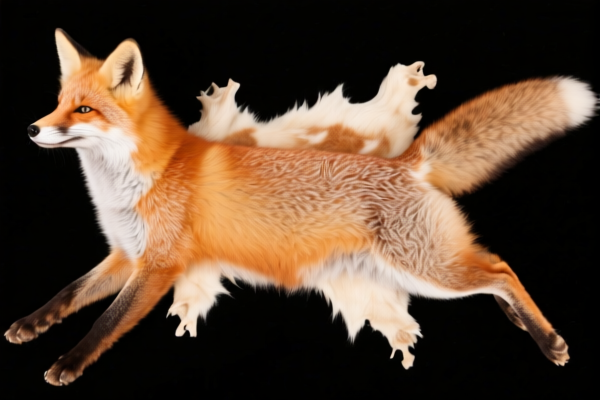
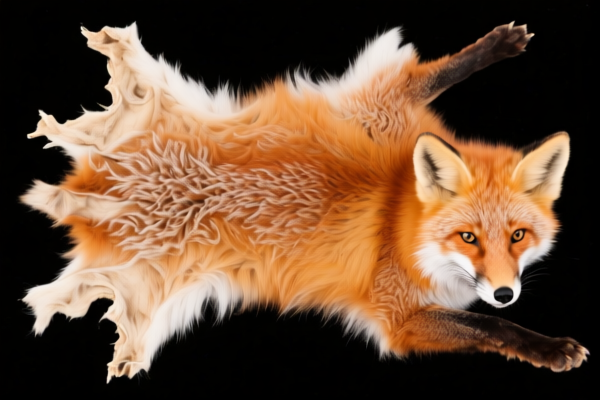
AI Analysis
🦊 Undyed Raw Fox Fur (Unassembled) / Platinum Fox Furskins
--- 🌐 HS Code Reference & Clearance Guide | 2026 Customs Tariff Full Analysis | Professional Clearance Strategy 📌 I. Product Definition & Classification: Do You Really Understand "Fox Fur"?
Undyed Raw Fox Fur (specifically Unassembled skins) is a premium raw material in the global fur trade. In international trade, it is strictly categorized based on processing state (raw vs. dressed) and animal species (Fox vs. Platinum Fox).
Key Distinctions: * Raw/Unassembled (原皮/未组装): The skin is removed from the body but not yet tanned, dyed, or sewn into panels. This is the primary stage of processing. * Platinum Fox (白金狐/铂金狐): A specific, high-value variety of Silver Fox. Customs often distinguishes it due to higher market value and specific tariff treatments. * Dressed/Dyed (已染色/已鞣制): Once the fur is tanned, dyed, or assembled into coats/panels, it moves to a completely different HS Code chapter (Chapter 43, Heading 4302).
⚠️ Critical Classification Point: * If the fur is Raw, Undyed, and Unassembled → It falls under 4301.60 (Fox Fur). * If the fur is Raw but "Full Skin" (assembled from multiple cuts for specific use) or specifically classified as Platinum Fox Furskins under certain regional interpretations → It may fall under 4301.60 or 4302.19 depending on the specific customs authority's nuance on "unassembled furskins" vs "raw skins." Note: The provided data indicates specific codes for "Platinum Fox Furskins Unassembled" under 4302.19, which suggests a distinct classification path for this premium variant.
📦 II. HS Code Classification Details (Based on Provided Data)
| HS Code | Product Description | Material | State | Key Characteristics |
|---|---|---|---|---|
| 4301.60.30.00 | Undyed Fox Fur (Unassembled) | Fox Fur | Raw/Unassembled | Primary raw fox skins; undyed. |
| 4301.60.60.00 | Undyed Fox Fur (Unassembled) | Fox Fur | Raw/Unassembled | Primary raw fox skins; undyed. |
| 4302.19.15.00 | Platinum Fox Furskins Unassembled | Platinum Fox | Unassembled Full Skin | Premium "Platinum" variant; classified under dressed/furskins heading despite being unassembled in this specific dataset context. |
| 4302.19.30.30 | Platinum Fox Furskins Unassembled | Platinum Fox | Unassembled, Undyed | Premium "Platinum" variant; explicitly undyed. |
🔍 Critical Note on Data Anomaly: * Typically, 4301 covers "Raw Skins," while 4302 covers "Dressed Fur." However, the provided data lists Platinum Fox Furskins Unassembled under 4302.19. This implies that for Platinum Fox, the customs authority or specific trade agreement treats these high-value unassembled skins as "Furskins" (often requiring different documentation or valuation) rather than basic "Raw Skins." * Do not mix standard Fox Fur (4301) with Platinum Fox Fur (4302). Misclassification can lead to significant delays or penalties.
💰 III. 2026 Latest Tariff Rate Breakdown (Including Surtaxes & Policy Add-ons)
✅ Applicable Country: United States (US)
✅ Origin: China (CN) (Implied by "122 Section" and typical surtax structures)
✅ Effective Time: Current 2026 Tariff Structure
🎯 1. 4301.60.30.00 & 4301.60.60.00 —— Undyed Fox Fur (Unassembled)
There are two variants with different base rates but identical surtaxes.
| Item | Content |
|---|---|
| Base Duty | 5.1% (for .30) / 0.0% (for .60) |
| Surtax (Section 301) | +7.5% |
| Section 122 Tariff | +10% |
| Total Tax Rate | 22.6% (.30) / 17.5% (.60) |
| Calculation | CIF Value × Total Tax Rate |
| De Minimis Exemption | ❌ Not Eligible (Deny De Minimis for Chinese-Origin Furs) |
| Legal Basis | HTSUS Chapter 43 + Section 301 Footnotes + Section 122 Add-ons |
📌 Explanation: * Base Rate: The 5.1% vs. 0.0% difference depends on the specific sub-classification within "Fox Fur." * Surtax (7.5%): This is the additional duty imposed under Section 301 of the Trade Act. * Section 122 (10%): A specific additional tariff applied to certain Chinese-origin goods, including furs. * Total: Even the lower rate (17.5%) is significant for raw materials. The higher rate (22.6%) applies if the base duty is 5.1%.
🎯 2. 4302.19.15.00 & 4302.19.30.30 —— Platinum Fox Furskins Unassembled
| Item | Content |
|---|---|
| Base Duty | 5.6% (.15) / 1.5% (.30) |
| Surtax (Section 301) | +25.0% |
| Section 122 Tariff | +10% |
| Total Tax Rate | 40.6% (.15) / 36.5% (.30) |
| Calculation | CIF Value × Total Tax Rate |
| De Minimis Exemption | ❌ Not Eligible |
| Legal Basis | HTSUS Chapter 43 + Section 301 Footnotes + Section 122 Add-ons |
📌 Explanation: * Higher Surtax: Notice the 25.0% surtax for Platinum Fox, compared to 7.5% for standard Fox. This reflects the higher strategic or trade sensitivity of premium fur goods. * Base Rate Variation: The base duty varies significantly (5.6% vs 1.5%), leading to a total difference of 4.1% between the two Platinum codes. * Total Cost Impact: At 36.5%–40.6%, the tariff burden on Platinum Fox is nearly double that of standard Fox. This must be factored into sourcing costs.
🛠️ IV. Customs Clearance Practical Advice (Real-World Pitfall Guide)
✅ 1. Required Documentation Checklist (Non-Negotiable)
| Document | Mandatory | Purpose |
|---|---|---|
| ✅ Commercial Invoice | ✔️ | Must clearly state: "Undyed Raw Fox Fur, Unassembled," HS Code, and Country of Origin. |
| ✅ Packing List | ✔️ | Detail the number of skins, weight, and dimensions. |
| ✅ Certificate of Origin (CO) | ✔️ | Proves origin (e.g., China, Canada, Finland). Critical for surtax application. |
| ✅ Fur Product Labeling Compliance | ✔️ | Must comply with US Fur Products Labeling Act (if applicable for resale) or export requirements. |
| ✅ Photo of Raw Skins | ✔️ | To prove "Undyed" and "Unassembled" state. Dyed or assembled skins change the HS Code. |
| ✅ Species Declaration | ✔️ | Explicitly state "Fox" vs. "Platinum Fox." Mislabeling Platinum as Fox can lead to underpayment claims. |
✅ 2. Declaration Tips (Key Mantra)
🔥 "State the State: Raw, Unassembled, Undyed. Platinum is Premium, Tax is High!"
| Scenario | Correct Declaration | Wrong Practice |
|---|---|---|
| Standard Fox Fur | 4301.60.30.00 or .60.00 |
Declaring as "Leather" or "Textile" → Seizure! |
| Platinum Fox | 4302.19.15.00 or .30.30 |
Declaring as standard Fox → Penalty for Misclassification |
| Dyed/Assembled Fur | 4302.xx.xx.xx (Different Code) |
Declaring as "Raw" → Tax Evasion Risk |
| Mixed Shipment | Split declaration by species | Mixed bag → Delays & Inspections |
✅ 3. Special Case Handling
| Case | Handling Advice |
|---|---|
| OEM/Custom Sourcing | Ensure the supplier declares the exact species. "Fox" can include Silver, Red, or Blue Fox. Platinum is a color variant of Silver Fox but treated distinctly in some tariffs. |
| Small Samples | Even small quantities are subject to 122 Section and Section 301 taxes. De Minimis (Section 321) exemption does NOT apply to Chinese-origin furs. |
| Inspection Risk | Furs are high-risk for customs audits due to valuation and origin fraud. Keep purchase contracts and payment records ready. |
| Environmental Compliance | Ensure no endangered species (CITES) are mixed in. Fox is generally not CITES-listed, but verification is key. |
🌍 V. Global Market Comparison (2026 Update)
| Country/Region | Recommended HS Code | Tax Rate (China Origin) | Certification | Notes |
|---|---|---|---|---|
| 🇺🇸 USA | 4301.60 / 4302.19 |
17.5% - 40.6% | N/A | High surtaxes due to trade policies. |
| 🇨🇳 China | 4301.60 / 4302.19 |
~5-13% (Import Duty) | None | No Section 301/122 add-ons. |
| 🇪🇺 EU | 4301 / 4302 |
~6.5% (Avg) | EPR (Packaging) | No Section 301 add-ons. |
| 🇯🇵 Japan | 4301 / 4302 |
~10-12% | None | Stable tariff structure. |
📌 Conclusion: * USA is the most expensive market for Chinese-origin fur due to Section 301 (7.5%–25%) and Section 122 (10%) tariffs. * Platinum Fox incurs significantly higher duties than standard Fox. * Supply Chain Strategy: Consider sourcing from non-China origins (e.g., Canada, Finland) to avoid surtaxes if shipping to the US.
📌 VI. Common Mistakes & Pitfall Guide (Blood-Lessons)
❌ Mistake 1: Declaring "Platinum Fox" as "Silver Fox" to pay lower taxes.
👉 Consequence: Customs audit → Back taxes + 10% Penalty + Seizure.
❌ Mistake 2: Assuming "Unassembled" means it's exempt from Section 122.
👉 Consequence: Section 122 (10%) applies to all Chinese-origin fur skins, regardless of assembly state.
❌ Mistake 3: Using "De Minimis" (Section 321) for small shipments from China.
👉 Consequence: De Minimis is EXCLUDED for Chinese-origin furs. Every shipment is taxed.
❌ Mistake 4: Confusing "Raw Skins" (4301) with "Dressed Furs" (4302).
👉 Consequence: The provided data shows Platinum Fox under 4302. Misclassification leads to incorrect duty calculation and customs hold.
✅ Correct Practice:
"Platinum Fox Furskins, Unassembled, Undyed, HS Code 4302.19.30.30, Origin: China, Value: $X, Total Duty: 36.5%."
🎯 VII. Conclusion: Professional Classification Saves Money!
🎯 Remember the Mantra:
🔹 "Platinum is Premium, Tax is High (40%). Fox is Standard, Tax is Mid (17-22%). No De Minimis for China!"
🔹 "Raw vs. Dressed matters. Species matters. Origin matters."
📌 Pro Tip: If you are importing Platinum Fox into the US, the 40.6% tariff is steep. Consider: 1. Pre-Ruling: Request an Advance Ruling from US Customs to confirm the exact HS Code. 2. Supplier Negotiation: Factor the 36.5%–40.6% duty into the landed cost. 3. Alternative Sourcing: Source from Canada or Europe to avoid Section 301/122 tariffs.
📣 Immediate Action:
📞 Contact a licensed Customs Broker
📄 Prepare Invoice + CO + Photos
🚀 Ensure Accurate Species Declaration to Avoid Seizure!
✨ Professional Clearance Starts with Accurate Classification!
💼 Your Bottom Line Depends on the Right HS Code!
Customer Reviews
About HS Code Classification
The Harmonized System (HS) is an internationally standardized nomenclature developed by the World Customs Organization (WCO) to classify traded products. Over 200 countries use the HS system as the basis for customs tariffs, trade statistics, and import/export regulations.
Each HS code follows a hierarchical structure:
- Chapter (2 digits) — Broad category of goods (e.g., Chapter 84: Machinery and Mechanical Appliances)
- Heading (4 digits) — More specific grouping within the chapter
- Subheading (6 digits) — Internationally standardized breakdown, used by all WCO member countries
- National subdivisions (8-10 digits) — Country-specific extensions for further classification, such as US HTSUS 10-digit codes
Correct HS code classification is essential for smooth customs clearance, accurate duty payment, and compliance with trade regulations. Misclassification can lead to customs delays, overpayment of duties, or penalties.
When importing from CN to US, the applicable tariff rates may include:
- Most-Favored-Nation (MFN) rate — The standard duty rate applied to WTO members
- General rate — Applied to countries without trade agreements
- Trade remedy duties — Additional tariffs such as Section 301 (anti-dumping), Section 232 (national security), or countervailing duties
The information provided on this page is for reference purposes only. For official classification, please consult with your local customs authority or a licensed customs broker.