Undyed Tanned or Fur Hides
CN → US| HS Code | Tariff Rate | Origin | Destination | Doc |
|---|---|---|---|---|
| 4303900000 | 35.0% | CN | US | Official Doc |
| 4303100060 | 39.0% | CN | US | Official Doc |
| 4301900000 | 10.0% | CN | US | Official Doc |
| 4302206000 | 38.5% | CN | US | Official Doc |
| 4302203000 | 37.1% | CN | US | Official Doc |
Product Images
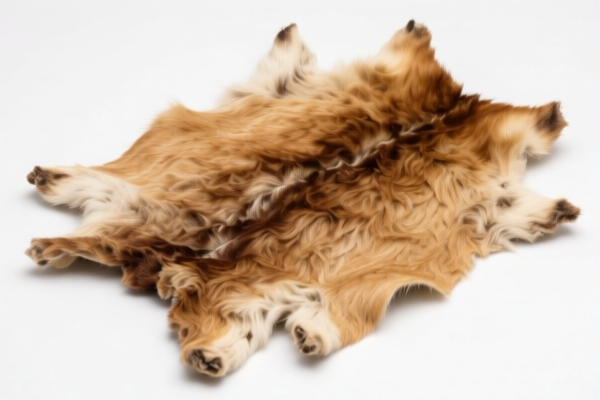
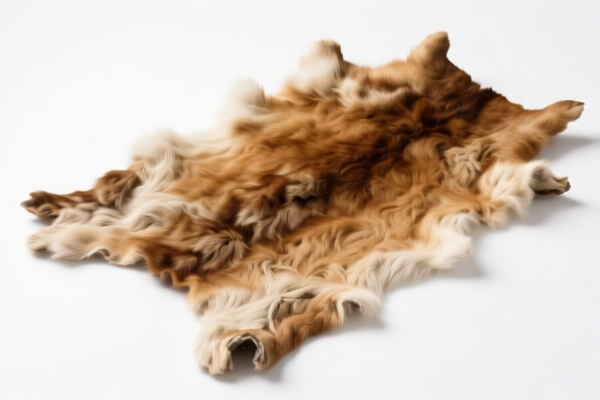
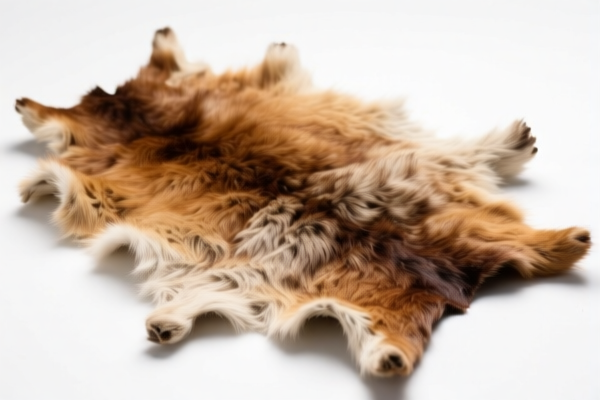
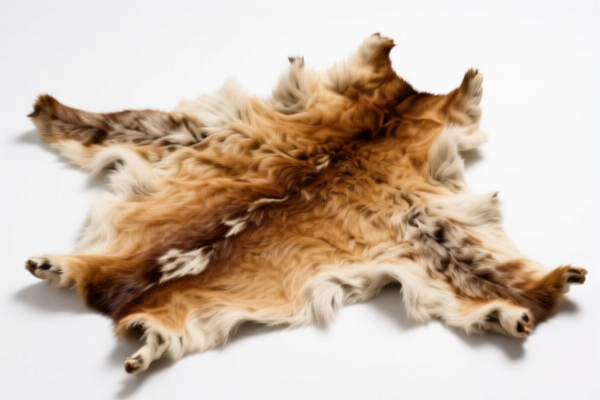
AI Analysis
🧥 Undyed Tanned Fur Hides: Strategic HS Code Classification & Customs Clearance Guide
🌐 HS Code Reference & Customs Clearance Guide | 2026 Latest Tariff Analysis | Professional Compliance Strategy
📌 I. Product Definition & Classification: Do You Really Understand "Undyed Tanned Fur Hides"?
Undyed tanned fur hides refer to animal skins or furs that have undergone the tanning process to prevent decay but have not been dyed, colored, or printed. In international trade, these raw materials are critical for the fashion and leather goods industry. They are classified based on specific attributes: Animal Type, Tanning Method, Form (Full Hides vs. Pieces/Shreds), and Dye Status.
⚠️ Key Distinction Points:
- Tanned vs. Raw: Must have undergone tanning (vegetable, chrome, etc.) to be classified in Chapter 43, not Chapter 41 (raw hides).
- Undyed vs. Dyed: The color of the natural fur/skin is retained. If dyed, they fall under different subheadings.
- Hides vs. Skins: "Hides" usually refers to larger animals (cattle, buffalo), while "Skins" refers to smaller animals (sheep, goat, fox). However, HS codes often group them broadly under "Fur Skins and Hides."
- Form Factor: Full uncut hides vs. cut pieces, shreds, or fragments significantly impact the HS code assignment.
📦 II. HS Code Classification Details (2026 Latest Tariff Authority Cross-Reference)
Based on the provided data, here is the detailed breakdown of the five applicable HS codes for "Undyed Tanned Fur Hides/Pieces."
| HS Code | Product Description (Summary) | Key Attributes & Application | Form Factor |
|---|---|---|---|
4303.90.00.00 |
Other tanned fur skins, undyed, classified as "Other" | General "Other" Category: Fits non-specific uses or mixed types. Base tariff is 0%. | Flexible classification for various undyed tanned skins |
4303.10.00.60 |
Other tanned fur pieces, undyed | Specific Piece Classification: Explicitly defined as "pieces" (small pieces) made of tanned fur. | Pieces (Small pieces) |
4301.90.00.00 |
Other tanned fur skins, undyed, in fragment/shred form | Shreds/Scrap: Material matches the attribute of undyed tanned fur but is in a fragmented state. | Shreds/Fragment |
4302.20.60.00 |
Other tanned fur skins, undyed, precise material/form match | Precision Match: Material and form fully align with specific sub-heading explanations. | Specific Form |
4302.20.30.00 |
Other tanned fur pieces, undyed, residual/bottom-tier attributes | Catch-all/Residual: Small pieces with tanned material, falling under residual/bottom-tier definitions. | Small Pieces |
🔍 Critical Clarification:
-4303.90.00.00is often used as a "basket" category for tanned furs that don't fit more specific descriptions, carrying a 0% base tariff but still subject to additional duties.
-4301.90.00.00is unique because it applies to shreds or fragments. If your product is processed into waste or scrap-like forms, this is the correct code, and it has the lowest total tax burden (10%) because both base and additional 301 tariffs are 0% (excluding the 10% IEEPA).
-4302.20.x.xcodes are typically for sewn or otherwise assembled fur skins or specific pieces. The slight variation in base tariffs (2.1% vs. 3.5%) depends on the precise definition of "piece" vs. "skin."
💰 III. 2026 Latest Tariff Rate Breakdown (Including Surtaxes & Policy Add-ons)
✅ Applicable Country: United States (US)
✅ Country of Origin: China (CN)
✅ Effective Date: November 10, 2025 (and subsequent imports)
🎯 1. 4303.90.00.00 —— Other Tanned Fur Skins (Undyed)
| Item | Content |
|---|---|
| Base Tariff | 0% (ad valorem) |
| Section 301 Surcharge (USITC) | +25% |
| IEEPA Surcharge | +10% |
| Total Tariff Rate | 35.0% |
| Calculation Method | CIF Value × 35% |
| De Minimis Exemption | ❌ Not Eligible (deny_de_minimis) |
| Legal Basis Path | IEEPA:9903.01.25 → IEEPA:9903.01.24 → USITC:4303.90.00.00 |
📌 Analysis:
- Despite a 0% base tariff, the heavy surcharges result in a 35% total cost.
- This code is ideal for "miscellaneous" undyed tanned furs that don't fit the strict "piece" or "shred" definitions.
🎯 2. 4303.10.00.60 —— Other Tanned Fur Pieces (Undyed)
| Item | Content |
|---|---|
| Base Tariff | 4.0% |
| Section 301 Surcharge (USITC) | +25% |
| IEEPA Surcharge | +10% |
| Total Tariff Rate | 39.0% |
| Calculation Method | CIF Value × 39% |
| De Minimis Exemption | ❌ Not Eligible |
| Legal Basis Path | IEEPA:9903.01.25 → IEEPA:9903.01.24 → USITC:4303.10.00.60 |
📌 Analysis:
- The highest total tax (39%) among the primary "piece" categories due to the 4% base tariff.
- Use this only if the product strictly meets the definition of "other tanned fur pieces" under this specific subheading.
🎯 3. 4301.90.00.00 —— Other Tanned Fur Skins (Shreds/Fragment Form)
| Item | Content |
|---|---|
| Base Tariff | 0.0% |
| Section 301 Surcharge (USITC) | 0.0% |
| IEEPA Surcharge | +10% |
| Total Tariff Rate | 10.0% |
| Calculation Method | CIF Value × 10% |
| De Minimis Exemption | ❌ Not Eligible |
| Legal Basis Path | IEEPA:9903.01.25 → USITC:4301.90.00.00 |
📌 Analysis:
- Lowest Total Tax (10%): This is the most cost-effective classification if your product is in shred or fragment form.
- Crucially, the 301 Section 301 surcharge is 0% for this code, which is a significant advantage.
- Caution: Only apply if the physical form is genuinely shredded or fragmented, not whole hides or cut pieces.
🎯 4. 4302.20.60.00 —— Other Tanned Fur Skins (Specific Form)
| Item | Content |
|---|---|
| Base Tariff | 3.5% |
| Section 301 Surcharge (USITC) | +25% |
| IEEPA Surcharge | +10% |
| Total Tariff Rate | 38.5% |
| Calculation Method | CIF Value × 38.5% |
| De Minimis Exemption | ❌ Not Eligible |
| Legal Basis Path | IEEPA:9903.01.25 → IEEPA:9903.01.24 → USITC:4302.20.60.00 |
📌 Analysis:
- High tax burden due to 3.5% base + 25% surcharge.
- Use when the material and form strictly match this specific subheading's technical definition.
🎯 5. 4302.20.30.00 —— Other Tanned Fur Pieces (Residual/Catch-all)
| Item | Content |
|---|---|
| Base Tariff | 2.1% |
| Section 301 Surcharge (USITC) | +25% |
| IEEPA Surcharge | +10% |
| Total Tariff Rate | 37.1% |
| Calculation Method | CIF Value × 37.1% |
| De Minimis Exemption | ❌ Not Eligible |
| Legal Basis Path | IEEPA:9903.01.25 → IEEPA:9903.01.24 → USITC:4302.20.30.00 |
📌 Analysis:
- Slightly lower total tax (37.1%) than4303.10.00.60due to a lower base tariff (2.1% vs. 4.0%).
- Applies to small pieces with "residual" or bottom-tier attributes.
🛠️ IV. Customs Clearance Practical Advice (Battle-Tested Pitfall Avoidance)
✅ 1. Mandatory Documentation Checklist (Non-Negotiable)
| Document | Required? | Notes |
|---|---|---|
| ✅ Product Specification Sheet | ✔️ | Must specify: Animal type, tanning method (chrome/veg), dye status (UNDYED), and physical form (hide/piece/shred). |
| ✅ Technical Data Sheet | ✔️ | Details on weight, dimensions, and processing stage. |
| ✅ Product Photos | ✔️ | High-res images showing texture, back (pelt), and front (fur). Must prove no dye. |
| ✅ Commercial Invoice | ✔️ | Must accurately describe goods as "Undyed Tanned Fur Skins/Pieces." Avoid vague terms like "Leather." |
| ✅ Packing List | ✔️ | Clearly separate items if mixed (e.g., whole hides vs. shreds in same shipment). |
| ✅ Certificate of Origin | ✔️ | To confirm China origin for IEEPA/301 calculation. |
✅ 2. Declaration Tips (Key Mnemonics)
🔥 "Form Dictates Code, Dye Defines Class, Shreds Save Money!"
| Scenario | Correct HS Code | Consequence of Error |
|---|---|---|
| Whole Undyed Tanned Hides | 4303.90.00.00 (General) |
Misclassifying as "pieces" may lead to higher base tax. |
| Small Cut Pieces | 4303.10.00.60 or 4302.20.30.00 |
Choosing 4303.10.00.60 (39%) over 4302.20.30.00 (37.1%) unnecessarily increases cost. |
| Shreds/Scrap/Fragments | 4301.90.00.00 |
CRITICAL: If declared as "pieces" instead of "shreds," you pay 35-39% instead of 10%. Huge savings opportunity if applicable. |
| Dyed Fur | Not in Dataset | Declaring dyed fur as "undyed" is fraud. Penalties include seizure and fines. |
✅ 3. Special Considerations
| Situation | Handling Advice |
|---|---|
| Mixed Shipment | If a shipment contains both whole hides and shreds, must split declaration. Cannot lump under one HS code if definitions differ significantly. |
| OEM/Custom Orders | Provide customer design specs. If "undyed" is part of the spec, ensure photos match. |
| Origin Marking | Ensure all packaging clearly marks "Made in China" to trigger accurate IEEPA/301 calculations. |
| Pre-Ruling | Given the high variance in tax rates (10% vs. 39%), apply for an Advance Ruling from CBP if the form is ambiguous (e.g., large chunks vs. small pieces). |
🌍 V. Global Market Comparison (2026 Latest)
| Country/Region | Recommended HS Code | Base Tariff | 301 Surtax | IEEPA | Total Est. Rate | Notes |
|---|---|---|---|---|---|---|
| 🇺🇸 USA | 4301.90.00.00 (Shreds) |
0% | 0% | 10% | 10% | Best for shreds. |
| 🇺🇸 USA | 4303.90.00.00 (Hides) |
0% | 25% | 10% | 35% | Standard for general hides. |
| 🇨🇳 China | 4303.90.00.00 |
~5-10% | N/A | N/A | ~5-10% | Lower entry barrier for domestic processing. |
| 🇪🇺 EU | 4303.90 |
~4-12% | N/A | N/A | ~4-12% | No 301/IEEPA surcharges. |
| 🇬🇧 UK | 4303.90 |
~4-12% | N/A | N/A | ~4-12% | Post-Brexit rules apply. |
📌 Conclusion:
- US Market is Highly Sensitive to Form: Declaring "shreds" (4301.90.00.00) saves 25-29% in taxes compared to "pieces" or "hides."
- EU/UK/China do not impose the 25% Section 301 or 10% IEEPA surcharges, making them less impacted by the form factor for cost purposes (though base rates may vary).
📌 VI. Common Errors & Pitfall Guide (Lessons Learned)
❌ Error 1: Calling "Shreds" "Pieces"
👉 Consequence: Paying 35-39% tax instead of 10%.
👉 Fix: Ensure physical form is genuinely fragmented/shredded before using 4301.90.00.00.
❌ Error 2: Calling "Dyed" Fur "Undyed"
👉 Consequence: Customs seizure, fines, and potential legal action for false declaration.
👉 Fix: Always provide color-fastness tests or photo evidence if doubt exists.
❌ Error 3: Using Vague Descriptions like "Leather" or "Fur Material"
👉 Consequence: Delays, queries, and potential reclassification to higher-tariff codes.
👉 Fix: Use precise terms: "Undyed Chrome-Tanned Fox Fur Pieces."
❌ Error 4: Ignoring the "Piece" vs. "Shred" Distinction
👉 Consequence: Overpaying taxes or underpaying taxes (leading to penalties).
👉 Fix: Measure and define the physical dimensions clearly in the specification sheet.
✅ Correct Declaration Example:
"Undyed Chrome-Tanned Mink Fur Skins, Cut into Small Pieces, for Apparel Manufacturing, Origin: China"
(If pieces are small enough to be considered shreds, argue for4301.90.00.00with evidence.)
🎯 VII. Conclusion: Precision Pays Off
🎯 Remember the Mnemonic:
🔹 "Shreds are King (10%), Pieces are Expensive (37-39%), Hides are Middle (35%)."
🔹 "Form is Everything: Don't mislabel scraps as pieces to save time—you'll pay for it in tax!"
📌 Pro Tip:
If your product is undyed tanned fur, and you can process it into shreds/fragments rather than selling as pieces, you can reduce your US import duty by 25-29%.
Always verify the physical form with CBP via Advance Ruling if there is any ambiguity between "piece" and "shred."
📣 Immediate Action:
📞 Consult a licensed customs broker.
📸 Provide clear photos of the physical form.
📄 Apply for an Advance Ruling for complex shipments.
🚀 Optimize your HS Code choice to save thousands in duties!
✨ Professional Customs Clearance Starts with Accurate Classification!
💼 Every percentage point matters in global trade!
Customer Reviews
About HS Code Classification
The Harmonized System (HS) is an internationally standardized nomenclature developed by the World Customs Organization (WCO) to classify traded products. Over 200 countries use the HS system as the basis for customs tariffs, trade statistics, and import/export regulations.
Each HS code follows a hierarchical structure:
- Chapter (2 digits) — Broad category of goods (e.g., Chapter 84: Machinery and Mechanical Appliances)
- Heading (4 digits) — More specific grouping within the chapter
- Subheading (6 digits) — Internationally standardized breakdown, used by all WCO member countries
- National subdivisions (8-10 digits) — Country-specific extensions for further classification, such as US HTSUS 10-digit codes
Correct HS code classification is essential for smooth customs clearance, accurate duty payment, and compliance with trade regulations. Misclassification can lead to customs delays, overpayment of duties, or penalties.
When importing from CN to US, the applicable tariff rates may include:
- Most-Favored-Nation (MFN) rate — The standard duty rate applied to WTO members
- General rate — Applied to countries without trade agreements
- Trade remedy duties — Additional tariffs such as Section 301 (anti-dumping), Section 232 (national security), or countervailing duties
The information provided on this page is for reference purposes only. For official classification, please consult with your local customs authority or a licensed customs broker.