Undyed Unassembled Furskins with Tail
CN → US| HS Code | Tariff Rate | Origin | Destination | Doc |
|---|---|---|---|---|
| 4103901190 | 17.5% | CN | US | Official Doc |
| 4103901130 | 17.5% | CN | US | Official Doc |
| 4301100020 | 17.5% | CN | US | Official Doc |
| 4303900000 | 35.0% | CN | US | Official Doc |
| 4303100060 | 39.0% | CN | US | Official Doc |
Product Images
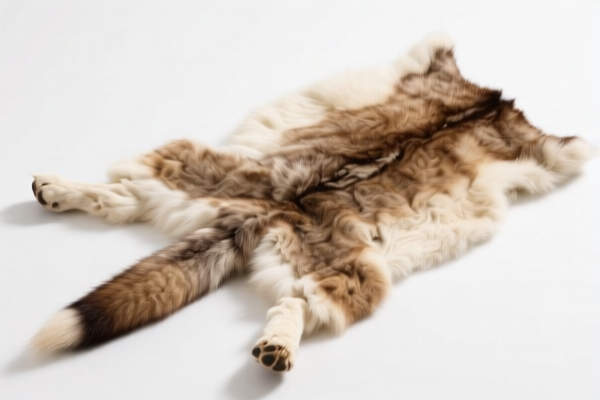
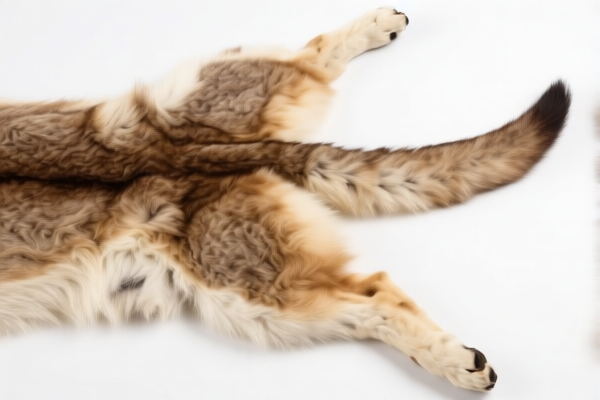
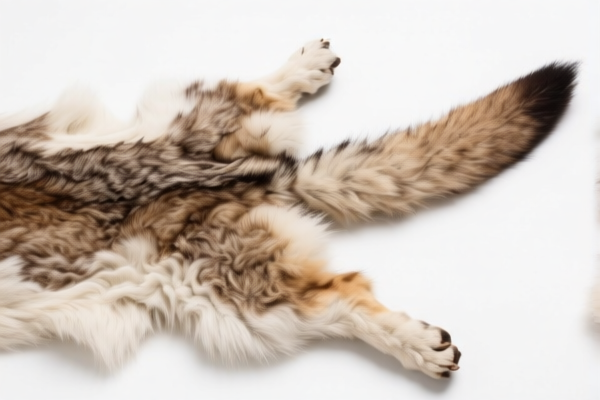
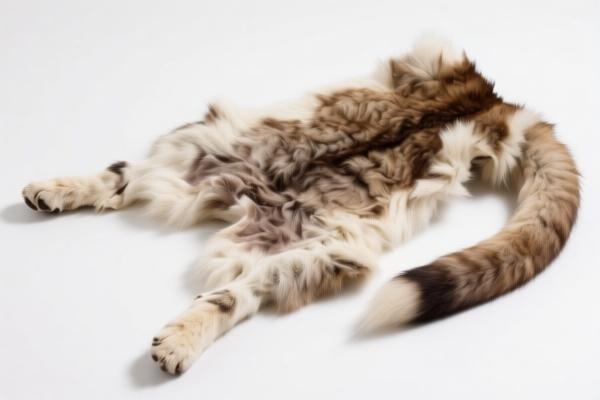
AI Analysis
🧥 Undyed Unassembled Furskins with Tail (未染色毛皮带尾)
🌐 HS Code Reference & Clearance Guide | 2026 Latest Tariff Analysis | Professional Customs Strategy
📌 I. Product Definition & Classification: What Are "Undyed Unassembled Furskins with Tail"?
"Undyed Unassembled Furskins with Tail" refers to raw animal hides that have been removed from the carcass but have not undergone any dyeing or tanning processes and retain their natural tail. In international trade, these are considered raw materials or semi-processed goods, distinct from finished leather or fur garments.
The classification depends heavily on whether the hide is treated as a raw skin (Category 41) or a prepared fur skin (Category 43).
⚠️ Key Distinction Point:
- If the skin is raw, un-tanned, and un-dyed → It generally falls under Chapter 41 (Raw Hides and Skins) or specific fur skin codes in Chapter 43 depending on national interpretation of "unassembled" vs "prepared".
- If the skin is tanned but un-dyed (e.g., pickled or chrome-tanned but not colored) → It falls under Chapter 43 (Furskins and Furs).
- "With Tail": The presence of the tail often triggers specific sub-categories requiring precise HS code selection to avoid misclassification penalties.
📦 II. HS Code Classification Details (2026 Latest Tariff Authority Alignment)
Based on the provided data, here are the specific HS Codes, their summaries, and tax details. Note that these codes reflect specific interpretations for imports into the US (implied by "Section 301" and "122 Clause" references in tax details).
| HS Code | Product Description | Key Characteristics | Total Tax Rate |
|---|---|---|---|
4103.90.11.90 |
Undyed furskins with tail, matching raw material and pre-tanning form, classified under "Other" | Raw, un-dyed, un-tanned. Considered "Other" category skins. | 17.5% |
4103.90.11.30 |
Undyed furskins with tail, categorized as raw hides (的生皮范畴), un-dyed fits pre-tanning features | Raw hides范畴. Emphasizes the "raw" status. | 17.5% |
4301.10.00.20 |
Undyed furskins with tail, possesses fur material and tail morphology, fits complete fur skin classification | Treated as a complete fur skin (毛皮), likely slightly more processed than raw but still un-dyed. | 17.5% |
4303.90.00.00 |
Undyed tanned small fur pieces, belongs to tanned fur category, fits "Other" non-specific use classification | Tanned but un-dyed. Small pieces. | 35.0% |
4303.10.00.60 |
Undyed tanned small fur pieces, non-mink fur, small size fits "other fur products" definition | Tanned, non-mink, small pieces. | 39.0% |
🔍 Critical Note:
- Codes4103...apply to raw/un-tanned or lightly processed skins.
- Codes4301...and4303...apply to tanned/prepared furskins, even if un-dyed.
- Misclassification Risk: Declaring a tanned fur as "raw" (4103) to save tax is illegal and subject to heavy penalties. Always verify the tanning process before selecting Chapter 41 vs 43.
💰 III. 2026 Latest Tariff Rate Details (Including Surcharges & Policy Add-ons)
✅ Applicable Country: United States (US)
✅ Origin: China (CN)
✅ Effective Date: Post-November 2025 (Reflecting current trade tensions)
🎯 1. 4103.90.11.90 & 4103.90.11.30 — Undyed Raw/Pre-tanned Skins with Tail
| Item | Detail |
|---|---|
| Base Tariff | 0.0% (Ad Valorem) |
| Section 301 Surcharge | +7.5% (Retaliatory tariff) |
| Section 122 Tariff | +10% (Trade remedy duty) |
| Total Tax Rate | 17.5% |
| Tax Calculation | CIF Value × 17.5% |
| De Minimis Exemption | ❌ Not Applicable (High risk of seizure if < $800) |
| Legal Basis Path | HTSUS:4103.90.11 → Section 301: 7.5% → Section 122: 10% |
📌 Explanation:
- These codes are relatively low-risk compared to finished fur goods, but the 17.5% total rate is significant due to combined surcharges.
- Section 122 is a specific trade remedy that can apply to certain animal products, so verify if your product qualifies for exemption (rare).
🎯 2. 4301.10.00.20 — Undyed Prepared Fur Skins with Tail
| Item | Detail |
|---|---|
| Base Tariff | 0.0% |
| Section 301 Surcharge | +7.5% |
| Section 122 Tariff | +10% |
| Total Tax Rate | 17.5% |
| Tax Calculation | CIF Value × 17.5% |
| De Minimis Exemption | ❌ Not Applicable |
| Legal Basis Path | HTSUS:4301.10.00 → Section 301: 7.5% → Section 122: 10% |
📌 Explanation:
- Although this is a "fur skin" (Chapter 43), the base tariff is 0%, but the surcharges remain the same as raw skins.
- Ensure the tail is intact as per the HS code description; severed tails may change the classification.
🎯 3. 4303.90.00.00 — Undyed Tanned Small Fur Pieces (Other)
| Item | Detail |
|---|---|
| Base Tariff | 0.0% |
| Section 301 Surcharge | +25.0% |
| Section 122 Tariff | +10% |
| Total Tax Rate | 35.0% |
| Tax Calculation | CIF Value × 35.0% |
| De Minimis Exemption | ❌ Not Applicable |
| Legal Basis Path | HTSUS:4303.90.00 → Section 301: 25% → Section 122: 10% |
📌 Explanation:
- Higher Surcharge: The Section 301 rate jumps to 25% for this category (likely due to it being classified as "manufactured" or "processed" goods rather than raw materials).
- Total 35% is a significant cost factor.
🎯 4. 4303.10.00.60 — Undyed Tanned Small Fur Pieces (Non-Mink)
| Item | Detail |
|---|---|
| Base Tariff | 4.0% |
| Section 301 Surcharge | +25.0% |
| Section 122 Tariff | +10% |
| Total Tax Rate | 39.0% |
| Tax Calculation | CIF Value × 39.0% |
| De Minimis Exemption | ❌ Not Applicable |
| Legal Basis Path | HTSUS:4303.10.00 → Section 301: 25% → Section 122: 10% |
📌 Explanation:
- Highest Tax Rate: This category has a 4% base tariff plus the 25% + 10% surcharges.
- Non-Mink: If the fur is mink, the code might differ, potentially affecting the base rate. Verify the animal species.
🛠️ IV. Customs Clearance Practical Advice (Pitfall Avoidance Guide)
✅ 1. Documentation Checklist (Mandatory)
| Document | Must Provide | Explanation |
|---|---|---|
| ✅ Product Specification Sheet | ✔️ | Must clearly state: Dye Status (Undyed), Tanning Status (Raw/Tanned), Tail Presence (Yes/No). |
| ✅ Processing Flow Chart | ✔️ | Show steps from slaughter to export. Critical to prove "Raw" vs "Tanned". |
| ✅ High-Resolution Photos | ✔️ | Show the tail, the skin interior, and any tags/labels. |
| ✅ Commercial Invoice | ✔️ | Description must match HS Code exactly: e.g., "Undyed, Un-tanned Fur Skins with Tail". |
| ✅ Country of Origin Certificate | ✔️ | Required for Section 301 and 122 duty calculations. |
| ✅ Fur Products Labeling | ✔️ | US requires labeling with species name, country of origin, and processing method. |
✅ 2. Declaration Tips (Key Mantras)
🔥 “Raw vs Tanned, Tail On/Off, Species Name, Tax Hops!”
| Scenario | Correct Declaration | Wrong Action |
|---|---|---|
| Raw, Un-dyed, With Tail | 4103.90.11.90 or 4301.10.00.20 |
Declare as "Leather" → High penalty |
| Tanned, Un-dyed, Small Pieces | 4303.90.00.00 |
Declare as "Raw Skins" → Fraud risk |
| Non-Mink, Tanned, Small | 4303.10.00.60 |
Omit "Non-Mink" → Wrong base rate |
| Dyed Skins | Different Code (Not in this list) | Declare as "Undyed" → Seizure |
✅ 3. Special Handling for "With Tail"
- Tail Integrity: If the tail is severed, it may no longer qualify for "Furskins with Tail" codes. It might be reclassified as "Fur Pieces" or "Shoddy," which could change the HS Code entirely.
- Species Identification: You must specify the animal species (e.g., Fox, Rabbit, Mink, Cow). The HS Code
4303.10.00.60explicitly mentions "Non-mink," so if it is mink, you need a different code.
🌍 V. Global Market Comparison (2026 Latest)
| Country/Region | Recommended HS Code | Tariff (China Origin) | Certification | Notes |
|---|---|---|---|---|
| 🇺🇸 USA | 4301.10.00.20 (Undyed) |
17.5% | USDA, CITES (if endangered) | High surcharges (301+122) |
| 🇪🇺 EU | 4301.10.00.20 |
~4-12% | EU Furs Regulation, CITES | No Section 301/122 |
| 🇨🇳 China | 4301.10.00.20 |
~0-5% | N/A | Import duty may be low |
| 🇯🇵 Japan | 4301.10.00.20 |
~0-6% | CITES | Low base tariffs |
📌 Conclusion:
- USA is the most expensive market due to Section 301 (7.5%-25%) and Section 122 (10%) surcharges.
- EU and Japan have much lower total duties but strict CITES and animal welfare regulations.
📌 VI. Common Errors & Pitfall Guide (Lessons Learned)
❌ Error 1: Declaring Tanned furs as Raw (4103) to avoid higher tariffs.
👉 Consequence: Customs inspection reveals tanning chemicals → Fine + Back Duty + Penalties.
❌ Error 2: Omitting "With Tail" in the description.
👉 Consequence: If the tail is physically present, it’s a misdeclaration. If absent, the code is wrong. → Delay/Refusal.
❌ Error 3: Ignoring CITES Restrictions.
👉 Consequence: Many fur animals (e.g., certain foxes, raccoon dogs) are CITES-listed. Without Permits, the shipment will be Confiscated.
❌ Error 4: Using generic terms like "Fur Material" without specifying Undyed and Tail Status.
👉 Consequence: Ambiguity leads to manual review → Clearance Delay.
✅ Correct Practice:
"Undyed, Un-tanned Fox Fur Skins with Tail, Raw, 100% Natural, No Chemical Dye"
🎯 VII. Conclusion: Professional Declaration, Save Cost, Ensure Smooth Clearance
🎯 Remember the Mantra:
🔹 "Raw is 17.5%, Tanned is 35-39%, Tail is Key, Species is King!"
🔹 "HS Code Defines Your Tax, 17.5% vs 39% is a Huge Gap!"
📌 Pro Tip:
If your furskins are originally from Vietnam, Mexico, or Thailand, you MAY be eligible for IEEPA Exemptions or lower Section 301 rates.
Always apply for a Pre-Ruling (Advance Ruling) from US Customs and Border Protection (CBP) before shipping to avoid surprises.
📣 Immediate Action:
📞 Contact a Licensed Customs Broker + Provide Product Photos + Verify CITES Status
🚀 Ensure your Furskins with Tail clear customs smoothly, efficiently, and profitably!
✨ Professional Clearance Starts with Accurate Classification!
💼 Every Percent of Tax Saved is Pure Profit!
Customer Reviews
About HS Code Classification
The Harmonized System (HS) is an internationally standardized nomenclature developed by the World Customs Organization (WCO) to classify traded products. Over 200 countries use the HS system as the basis for customs tariffs, trade statistics, and import/export regulations.
Each HS code follows a hierarchical structure:
- Chapter (2 digits) — Broad category of goods (e.g., Chapter 84: Machinery and Mechanical Appliances)
- Heading (4 digits) — More specific grouping within the chapter
- Subheading (6 digits) — Internationally standardized breakdown, used by all WCO member countries
- National subdivisions (8-10 digits) — Country-specific extensions for further classification, such as US HTSUS 10-digit codes
Correct HS code classification is essential for smooth customs clearance, accurate duty payment, and compliance with trade regulations. Misclassification can lead to customs delays, overpayment of duties, or penalties.
When importing from CN to US, the applicable tariff rates may include:
- Most-Favored-Nation (MFN) rate — The standard duty rate applied to WTO members
- General rate — Applied to countries without trade agreements
- Trade remedy duties — Additional tariffs such as Section 301 (anti-dumping), Section 232 (national security), or countervailing duties
The information provided on this page is for reference purposes only. For official classification, please consult with your local customs authority or a licensed customs broker.