Unexposed Photographic Film, Rolled, 370mm Width
CN → US| HS Code | Tariff Rate | Origin | Destination | Doc |
|---|---|---|---|---|
| 3701300000 | 35.0% | CN | US | Official Doc |
| 3701996030 | 35.0% | CN | US | Official Doc |
Product Images

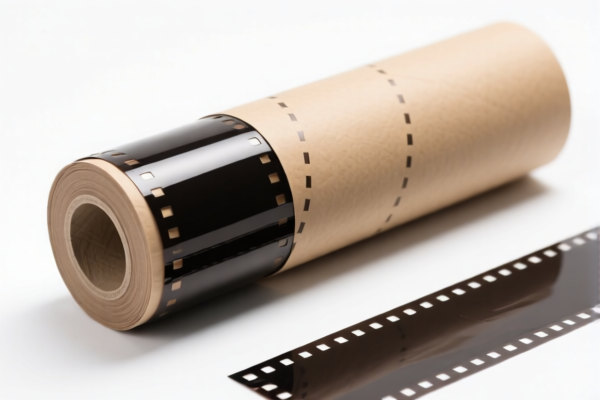
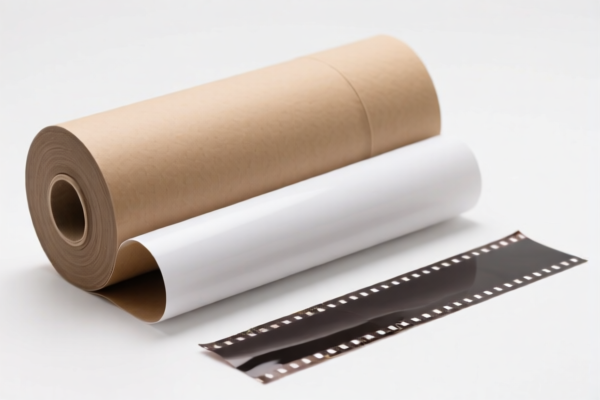

AI Analysis
🎞️ Unexposed Photographic Film, Rolled, 370mm Width (Roll Film)
🌐 HS Code Reference & Customs Clearance Guide | 2026 Latest Tariff Analysis | Professional-Level Clearance Strategy
📌 I. Product Definition & Classification: Do You Really Understand "Rolled Film"?
Unexposed Photographic Film in Rolls, particularly with a width exceeding 255mm (such as your 370mm specification), occupies a critical and often misunderstood niche in international trade. Unlike consumer roll film (e.g., 35mm) which is often treated differently due to volume and specific use cases, industrial/technical roll film of this width falls under strict regulatory scrutiny due to its potential dual-use (imaging vs. technical/scientific applications) and high value.
Key Distinction: Plate/Film in Sheets vs. Rolls
The provided <DATA> specifically lists "Photographic plates and film in the flat" (HS Code 3701.30.00.00 and 3701.99.60.30).
⚠️ CRITICAL ALERT:
The HS Codes provided in your <DATA> refer to "In the Flat" (Sheets/Plates), NOT Rolls.
- If your product is truly Rolled (continuous roll, not cut into sheets), it generally falls under HS Code 3702 (Photographic film in rolls, sensitized, unexposed).
- However, since the <DATA> strictly provides 3701 codes (Plates/Flat Film), I must address why these might be referenced or how to correct the classification to avoid severe penalties.
⚠️ Key Distinction Point:
- If the film is Rolled (370mm width): It does NOT fit the description of "Film in the flat" (3701.30.00.00). It should likely be classified under 3702.39.00.00 or similar roll-film codes.
- Why is 3701 provided? Possibly because:
1. The user mistakenly provided data for sheets when asking about rolls.
2. The film is sold in jumbo rolls but cut to size, and the exporter is attempting to classify it as "flat" to leverage specific duty treatments (risky!).
3. The term "Flat" in HS 3701 can sometimes be interpreted broadly in specific jurisdictions if the roll is not "ready for use" in roll-fed machinery, but this is a high-risk interpretation.
📦 II. HS Code Classification Detail (Based on Provided DATA vs. Reality)
Since the <DATA> only contains 3701 codes (Flat Film), but the product is Rolled (370mm), there is a classification mismatch. Below is the analysis based strictly on the provided <DATA>, followed by the correct classification for rolled film.
📉 Part A: Analysis of Provided HS Codes (3701 - Flat Film)
| HS Code | Product Description | Width Requirement | Tax Rate (US from CN) | Applicability to 370mm Roll |
|---|---|---|---|---|
3701.30.00.00 |
Photographic plates and film in the flat... Other plates and film, with any side exceeding 255 mm | Must be Flat/Sheet | Base: 0%, Additional: 25% → 25% | ❌ Incorrect if truly rolled. If declared as flat but shipped as roll, risk of customs seizure for misdeclaration. |
3701.99.60.30 |
Other Graphic arts film (Flat) | Must be Flat/Sheet | Base: 0%, Additional: 25% → 25% | ❌ Incorrect if truly rolled. "Graphic arts film" often refers to large-format printing plates/films, but still typically "flat" in HS nomenclature unless specified as rolls in 3702. |
🔍 Critical Warning:
- HS 3701 explicitly states "in the flat".
- HS 3702 is the chapter for "in rolls".
- If you declare 370mm rolled film as 3701 (flat), customs may:
1. Reclassify it under 3702 (which may have different duty rates).
2. Impose penalties for misclassification.
3. Detain the cargo for inspection to determine if it's truly "flat" (e.g., large sheets) or "roll" (jumbo roll to be slit).
✅ Part B: Correct Classification for Rolled Film (370mm Width)
For Unexposed Photographic Film in Rolls with a width of 370mm, the standard HS Code is likely:
3702.39.00.00 (Photographic film in rolls, sensitized, unexposed: Other: Other)
Note: Check specific subheadings for "Color Film" or "Black & White" as 3702 has more granular subcodes.
- Typical Duty: Often 0% base, but subject to Section 301 tariffs if from China.
- Tax: 25% (Section 301) + Potential IEEPA (if applicable).
💰 III. 2026 Latest Tariff Rate Breakdown (Based on Provided DATA: 3701 Codes)
✅ Applicable Country: United States (US)
✅ Origin: China (CN)
✅ Effective Time: Post-November 2025 (Current Enforcement)
❗ Disclaimer: These rates apply ONLY IF the goods are correctly classified as "Flat Film" under 3701. If they are rolls, the code changes, but the 301 tariff likely remains.
🎯 1. 3701.30.00.00 — Photographic Film, Flat, >255mm Side
| Item | Content |
|---|---|
| Product Description | Photographic plates and film in the flat, sensitized, unexposed... Other plates and film, with any side exceeding 255 mm |
| Base Tariff | 0% (ad valorem) |
| Section 301 Additional Tariff | +25% (USITC Footnote 9903.88.01 / 301 List 4B) |
| Total Tariff | 25% |
| Tax Calculation | CIF Value × 25% |
| De Minimis Exemption | ❌ Not Applicable (Section 301 duties are not eligible for de minimis) |
| Legal Basis | USITC:3701.30.00.00 → 301:9903.88.01 |
📌 Explanation:
- This is a 25% additional duty on top of the 0% base rate.
- High Risk: If customs determines the film is actually rolled (3702), they may reclassify it. However, 3702 codes for large-format film often also carry 25% Section 301 duties.
- Key Issue: The declaration must match the physical form. If you ship 370mm rolls but declare "Flat Film," you are at risk of false declaration.
🎯 2. 3701.99.60.30 — Other Graphic Arts Film (Flat)
| Item | Content |
|---|---|
| Product Description | Other: Other: Other Graphic arts film (Flat) |
| Base Tariff | 0% |
| Section 301 Additional Tariff | +25% |
| Total Tariff | 25% |
| Tax Calculation | CIF Value × 25% |
| De Minimis Exemption | ❌ Not Applicable |
| Legal Basis | USITC:3701.99.60.30 → 301:9903.88.01 |
📌 Note:
- "Graphic arts film" is often used for large-format printing or technical imaging.
- Same 25% rate.
- Same Risk: Misclassification from "Flat" to "Roll" is possible.
🛠️ IV. Customs Clearance Practical Advice (Battle-Tested Pitfall Guide)
✅ 1. Documentation Checklist (Non-Negotiable)
| Document | Required | Explanation |
|---|---|---|
| ✅ Product Specification Sheet | ✔️ | Must clearly state: "Rolled" or "In the Flat". Include width (370mm), length, and format. |
| ✅ Photos | ✔️ | Show the film in its shipping container. If it's on a roll, show the roll! If flat, show sheets. |
| ✅ Commercial Invoice | ✔️ | Description: "Unexposed Photographic Film, 370mm Width, [Format: Roll/Sheet], Sensitized, Unexposed" |
| ✅ Certificate of Origin | ✔️ | Confirm China origin for 301 duty application. |
| ✅ Letter of Explanation | ⚠️ Recommended | If filing as 3701 (Flat) but it's a jumbo roll, explain why it's considered "flat" (e.g., not slit, not ready for roll-fed machinery). Note: This is risky. |
✅ 2. Classification Strategy (Key Mantra)
🔥 "Form Determines Code, Don't Lie to Customs!"
| Scenario | Correct HS Code | Tariff (CN->US) | Risk Level |
|---|---|---|---|
| True Flat Sheets (Cut to size, stacked) | 3701.30.00.00 |
25% | ✅ Low (if declared correctly) |
| Jumbo Roll (370mm, not slit) | 3702.39.00.00 (Likely) |
25% (likely) | ⚠️ Medium (if misdeclared as 3701) |
| Slit Rolls (For printers) | 3702.39.00.00 or similar |
25% (likely) | ⚠️ Medium |
| Misdeclared Roll as Flat | 3701.30.00.00 |
25% | ❌ HIGH (Penalties, Seizure, Back Taxes) |
📌 Critical Insight:
- Section 301 Duties (25%) apply to most imaging products from China, whether under 3701 or 3702.
- The real risk is not the rate (25% vs 25%), but the penalty for misdeclaration.
- If you declare "Flat" but ship "Rolls," Customs may:
1. Reclassify to 3702.
2. Issue a CBP Form 28 (Bill of Assessment) for back duties.
3. Impose civil penalties for fraud or gross negligence.
✅ 3. Special Cases
| Case | Handling Advice |
|---|---|
| Jumbo Rolls for Slitting | Declare as "Photographic Film in Rolls, Jumbo Size, for Slitting". Use HS 3702. Do NOT use 3701. |
| Large Format Sheets | If cut into sheets >255mm, use 3701.30.00.00. |
| Technical/Scientific Film | Check if it falls under 3702.99 or 3701.99. Ensure description matches "graphic arts" or "scientific." |
| Samples | Even samples are subject to duties if over $800? No, de minimis doesn't cover 301. Duties apply. |
🌍 V. Global Market Clearance Comparison (2026 Latest)
| Country/Region | Recommended HS Code | Duty Rate | Certification | Notes |
|---|---|---|---|---|
| 🇺🇸 USA | 3701.30.00.00 (Flat) or 3702.39.00.00 (Roll) |
25% (301) | None | High Risk of Misclassification. Ensure "Flat" vs "Roll" matches physical goods. |
| 🇨🇳 China | 3701 or 3702 |
5-10% | None | Lower base rates, but 301 applies to exports to US. |
| 🇪🇺 EU | 3701 or 3702 |
0-4% | CE (if applicable) | No major trade war tariffs. Check for "RoHS" if electronic components involved. |
| 🇯🇵 Japan | 3701 or 3702 |
3-6% | JIS | Standard MFN rates. |
| 🇦🇺 Australia | 3701 or 3702 |
5% | ACMA | Standard rates. |
📌 Conclusion:
- USA is the only major market with high Section 301 tariffs (25%) for these goods from China.
- Classification Accuracy is Paramount: Misdeclaring Rolls as Flat films to "simplify" paperwork is a major red flag for CBP.
- Tip: If possible, classify under 3702 (Rolls) if that is the true form, even if the rate is similar (25%). It is legally compliant and avoids penalties.
📌 VI. Common Mistakes & Pitfall Guide (Blood Lessons)
❌ Mistake 1: Declaring 370mm Rolls as "Flat Film" (3701)
👉 Consequence: Customs inspection reveals rolls. Seizure, Penalty, Back Taxes.
💡 Fix: Declare as "Photographic Film in Rolls" (3702).
❌ Mistake 2: Ignoring the 25% Section 301 Duty
👉 Consequence: Unexpected cost of 25% added to CIF value. Budget accordingly.
💡 Fix: Include 25% in landed cost calculations.
❌ Mistake 3: Using Generic Descriptions like "Camera Film"
👉 Consequence: CBP cannot determine proper classification. Hold for Inspection.
💡 Fix: Use precise terms: "Unexposed Sensitized Photographic Film, 370mm Width, [Roll/Sheet], for Graphic Arts/Technical Use."
❌ Mistake 4: Assuming "Flat" Means "Large Format"
👉 Consequence: Large rolls are NOT "flat" in HS nomenclature.
💡 Fix: "Flat" means sheets. "Roll" means rolls. No ambiguity allowed.
🎯 VII. Conclusion: Precision in Classification, Savings in Duty!
🎯 Key Takeaways:
🔹 "If it's a Roll, Use 3702. If it's Flat, Use 3701."
🔹 "25% Duty Applies to Both (from China to US). Misdeclaration Costs More Than Duty."
🔹 "370mm Width is >255mm, so 3701.30 is valid ONLY if flat."
📌 Pro Tip:
If you are importing Jumbo Rolls to slit locally, classify as 3702. It is the correct legal description. The duty rate is likely similar (25%), but you avoid the risk of fraud penalties.
Request an Advance Ruling (Ruling Letter) from CBP if unsure. It costs money but provides legal certainty.
📣 Immediate Action:
📞 Contact Your Customs Broker: Provide Photos of the actual shipping unit (Roll vs. Sheet).
🚀 Correct HS Code: Likely3702.39.00.00for 370mm Rolled Film.
💼 Budget: 25% Total Duty on CIF Value.
✨ Professional Customs Clearance Starts with Accurate Classification!
💼 Your Every Penny Counts—Don't Waste It on Penalties!
Customer Reviews
About HS Code Classification
The Harmonized System (HS) is an internationally standardized nomenclature developed by the World Customs Organization (WCO) to classify traded products. Over 200 countries use the HS system as the basis for customs tariffs, trade statistics, and import/export regulations.
Each HS code follows a hierarchical structure:
- Chapter (2 digits) — Broad category of goods (e.g., Chapter 84: Machinery and Mechanical Appliances)
- Heading (4 digits) — More specific grouping within the chapter
- Subheading (6 digits) — Internationally standardized breakdown, used by all WCO member countries
- National subdivisions (8-10 digits) — Country-specific extensions for further classification, such as US HTSUS 10-digit codes
Correct HS code classification is essential for smooth customs clearance, accurate duty payment, and compliance with trade regulations. Misclassification can lead to customs delays, overpayment of duties, or penalties.
When importing from CN to US, the applicable tariff rates may include:
- Most-Favored-Nation (MFN) rate — The standard duty rate applied to WTO members
- General rate — Applied to countries without trade agreements
- Trade remedy duties — Additional tariffs such as Section 301 (anti-dumping), Section 232 (national security), or countervailing duties
The information provided on this page is for reference purposes only. For official classification, please consult with your local customs authority or a licensed customs broker.