Unfinished Commercial Non Velvet Fabric
CN → US| HS Code | Tariff Rate | Origin | Destination | Doc |
|---|---|---|---|---|
| 5407710015 | 49.9% | CN | US | Official Doc |
| 5407710060 | 49.9% | CN | US | Official Doc |
| 3921901500 | 41.5% | CN | US | Official Doc |
| 5603110095 | 35.0% | CN | US | Official Doc |
| 5603120095 | 35.0% | CN | US | Official Doc |
Product Images
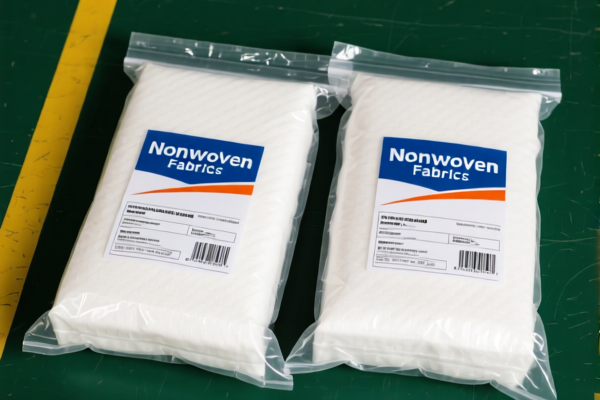
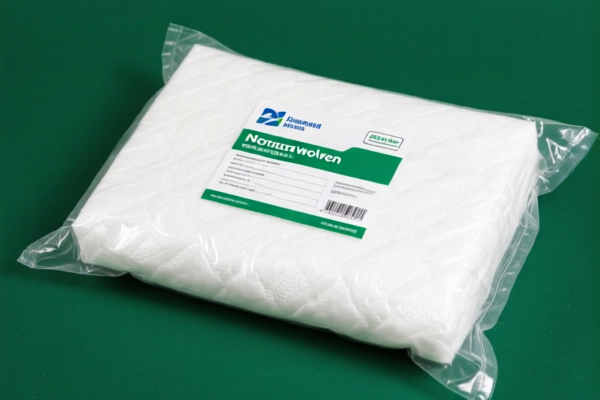
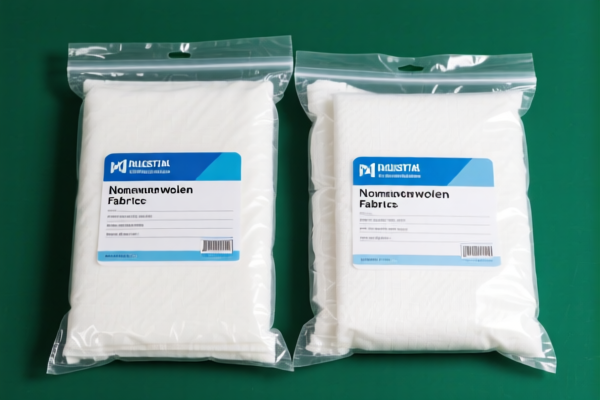
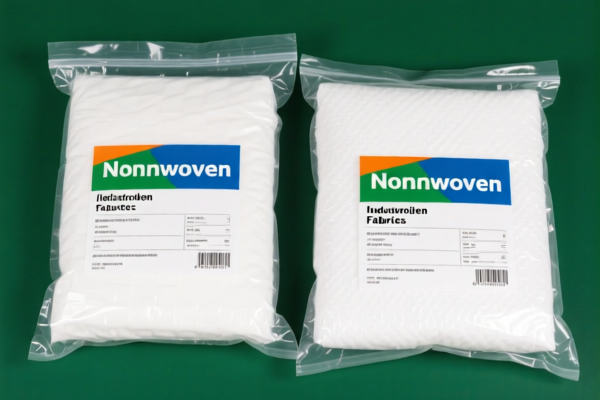
AI Analysis
🧵 Unfinished Commercial Non-Velvet Fabric (Semi-Finished Textiles & Composites)
🌐 HS Code Reference & Customs Clearance Guide | 2026 Latest Tariff Analysis | Professional Compliance Strategy
📌 Part 1: Product Definition & Classification: What Exactly is "Unfinished Commercial Non-Velvet Fabric"?
"Unfinished Commercial Non-Velvet Fabric" is a broad description used in international trade to describe textile materials that have not yet been processed into final garments, upholstery, or finished goods. The term "Non-Velvet" excludes piled fabrics, while "Unfinished" implies the material is in a grey state, raw weave, or basic composite form, lacking final dyeing, printing, or coating processes that would make it "finished commercial fabric."
In international trade, this item is tricky because its classification depends entirely on its base material composition (Synthetic vs. Artificial vs. Plastic composite) and its structural form (Woven vs. Non-woven).
⚠️ Critical Distinction:
- If it is woven using continuous filaments → It is classified as Synthetic/Artificial Long-Filament Fabric (Chapter 54).
- If it is composite/plate-like containing plastic → It is classified as Plastic Sheet/Film (Chapter 39).
- If it is non-woven (felt-like, bonded) → It is classified as Non-Wovens (Chapter 56).
- Velvet/Terry piles are excluded from these specific codes, as per the "Non-Velvet" constraint.
📦 Part 2: HS Code Classification Details (2026 Latest Tariff Authority Mapping)
| HS Code | Product Description | Applicability Scenario | Material Structure |
|---|---|---|---|
5407.71.00.15 |
Woven fabrics of synthetic filament yarn, non-velvet, unfinished commercial grade | Synthetic long-filament woven textiles (e.g., Polyester/Nylon base) | ✅ Woven |
5407.71.00.60 |
Other woven fabrics of synthetic filament yarn, non-velvet, unfinished | Synthetic woven textiles, generic classification | ✅ Woven |
3921.90.15.00 |
Plates, sheets, film, foil & strip of plastics, unfinished composite | Plastic-based composites or plastic-coated textile substrates | ✅ Plastic/Composite |
5603.11.00.95 |
Non-wovens, weighing ≤ 25g/m², of artificial staple fibers or filaments | Lightweight non-woven fabrics (e.g., filter media, lining) | ✅ Non-Woven |
5603.12.00.95 |
Non-wovens, weighing > 25g/m² but ≤ 70g/m², of artificial/synthetic | Medium-weight non-woven fabrics (e.g., interlining, packaging) | ✅ Non-Woven |
🔍 Key Insight:
- Chapter 54 applies to woven fabrics made from synthetic or artificial long filaments.
- Chapter 39 applies if the fabric is essentially a plastic sheet with textile reinforcement or coating.
- Chapter 56 applies if the material is non-woven (fibers bonded together, not woven).
- Do not confuse with Chapter 50 (Silk) or Chapter 52 (Cotton), as the data specifically points to Synthetic/Artificial/Plastic origins.
💰 Part 3: 2026 Latest Tariff Rate Breakdown (Including Additional Duties & Policy Surcharges)
✅ Applicable Country: United States (US)
✅ Origin: China (CN)
✅ Effective Date: Current trade policies (Section 301 & IEEPA)
🎯 1. 5407.71.00.15 & 5407.71.00.60 —— Synthetic Filament Woven Fabrics (Unfinished)
These codes cover woven synthetic fabrics (like polyester or nylon sheets) that are not yet cut or sewn into garments.
| Item | Content |
|---|---|
| Base Duty Rate | 14.9% (Standard MFN Rate for Chapter 54) |
| Section 301 Surcharge | +25.0% (U.S. Trade Relations Act, Section 301) |
| IEEPA Surcharge | +10.0% (Section 122 Tariff Clause, targeting specific Chinese materials) |
| Total Effective Tax | 49.9% |
| Calculation Base | CIF Value (Cost + Insurance + Freight) × 49.9% |
| De Minimis Eligibility | ❌ NO (Deny_de_minimis). Section 301 and IEEPA duties do not apply to the $800 de minimis exemption. All shipments, regardless of value, are subject to these duties. |
| Legal Reference Path | USITC:5407.71.00 → FOOTNOTE:301.9901 → IEEPA:9903.01.24 |
📌 Explanation:
- These are considered intermediate goods (semi-finished).
- The 49.9% total tax is extremely high. Importers must factor this into their cost of goods sold (COGS).
- Warning: Misdeclaring this as "finished fabric" or "apparel" to avoid Section 301 duties is a major compliance risk.
🎯 2. 3921.90.15.00 —— Other Plastic Plates, Sheets, Film (Unfinished Composite)
If the "fabric" is actually a plastic sheet or a textile-laminated plastic product (e.g., PVC-coated nylon, plastic-fiber composite), it falls here.
| Item | Content |
|---|---|
| Base Duty Rate | 6.5% (Standard MFN Rate for Chapter 39) |
| Section 301 Surcharge | +25.0% (U.S. Trade Relations Act, Section 301) |
| IEEPA Surcharge | +10.0% (Section 122 Tariff Clause) |
| Total Effective Tax | 41.5% |
| Calculation Base | CIF Value × 41.5% |
| De Minimis Eligibility | ❌ NO (Deny_de_minimis) |
| Legal Reference Path | USITC:3921.90.15 → FOOTNOTE:301.9901 → IEEPA:9903.01.24 |
📌 Explanation:
- This rate is 8.4% lower than the woven textile code (5407).
- Strategic Note: If the product can be legitimately classified as a "Plastic Sheet/Film" rather than a "Woven Fabric," this could save significant duty costs. However, the product must meet the legal definition of a plastic article (Chapter 39 Note 1).
🎯 3. 5603.11.00.95 & 5603.12.00.95 —— Non-Woven Fabrics (Unfinished)
These codes apply if the material is non-woven (e.g., felt, bonded fibers, spunlace). Note the weight distinction:
- 5603.11: ≤ 25 g/m² (Very light)
- 5603.12: > 25 g/m² and ≤ 70 g/m² (Light/Medium)
| Item | Content |
|---|---|
| Base Duty Rate | 0.0% (MFN Rate for Non-Wovens is often 0%) |
| Section 301 Surcharge | +25.0% (U.S. Trade Relations Act, Section 301) |
| IEEPA Surcharge | +10.0% (Section 122 Tariff Clause) |
| Total Effective Tax | 35.0% |
| Calculation Base | CIF Value × 35.0% |
| De Minimis Eligibility | ❌ NO (Deny_de_minimis) |
| Legal Reference Path | USITC:5603.11/12 → FOOTNOTE:301.9901 → IEEPA:9903.01.24 |
📌 Explanation:
- This is the lowest tax bracket (35%) among all listed options.
- Why? Because the base duty is 0%. However, the Section 301 (25%) + IEEPA (10%) surcharges still apply in full.
- Critical Check: Ensure the product is genuinely non-woven. If it is woven (even loosely), it will be reclassified to5407(49.9%) or penalized.
🛠️ Part 4: Customs Clearance Practical Advice (Battle-Tested Guide)
✅ 1. Documentation Checklist (Non-Negotiable)
| Document | Mandatory? | Purpose |
|---|---|---|
| ✅ Product Specification Sheet | ✔️ | Must explicitly state: "Unfinished," "Non-Velvet," "Woven/Non-Woven," "Material Composition (% Synthetic/Artificial)." |
| ✅ Microscopic Analysis Report | ✔️ | To prove woven vs. non-woven structure. Crucial for distinguishing between 5407 and 5603. |
| ✅ Bill of Materials (BOM) | ✔️ | Detail the filament type (Polyester, Nylon, Viscose, etc.). |
| ✅ Commercial Invoice | ✔️ | Clearly describe as "Unfinished Synthetic Woven Fabric" or "Non-Woven Sheet." Avoid vague terms like "Textile Material." |
| ✅ Origin Certificate | ✔️ | Proof of Chinese origin (to apply Section 301/IEEPA correctly). |
| ✅ Photos of Product | ✔️ | Show weave structure, edges, and surface texture. |
✅ 2. Declaration Strategy (Key Mnemonics)
🔥 “Weave is Woven (54), Felt is Non-Woven (56), Plastic is Plastic (39)!”
| Scenario | Correct Declaration | Incorrect Declaration | Consequence |
|---|---|---|---|
| Polyester Woven Sheet | 5407.71.00.15 |
"Textile Material" | High audit risk; potential 49.9% duty + penalties |
| Plastic-Coated Fabric | 3921.90.15.00 (if plastic is essential character) |
"Woven Fabric" | Underpayment of duty; 41.5% vs 49.9% savings if correct |
| Felt-Like Fabric (Bonded) | 5603.11.00.95 or 5603.12.00.95 |
"Woven Fabric" | Highest Savings (35% vs 49.9%) |
| Velvet/Pile Fabric | Excluded (Not in DATA) | 5407.71.00.15 |
Rejection/Seizure: "Non-Velvet" condition violated |
✅ 3. Special Cases & Risk Management
| Situation | Advice |
|---|---|
| Is it Woven or Non-Woven? | This is the #1 dispute point. Woven = interlaced threads. Non-woven = bonded fibers. Use a microscope. Misclassification leads to duty differences of 14.9%. |
| Is it Plastic or Textile? | If the fabric is coated with >50% plastic by weight or thickness, it may be classified as 3921 (41.5%) instead of 5407 (49.9%). Consult a customs broker for essential character test. |
| De Minimis ($800) Myth | ❌ DO NOT ship unfinished commercial fabrics under $800 using Section 321 (de minimis) to avoid tariffs. Section 301 and IEEPA duties apply to ALL values. You will be caught at customs and charged 49.9% + penalties. |
| Sample Shipments | Even samples are subject to these duties. Do not label them as "Gifts" or "Free Samples" to evade taxes. |
🌍 Part 5: Global Market Comparison (2026 Snapshot)
| Market | Recommended HS Code (Example) | Base Duty | Additional Duties (China) | Total Effective Duty | Notes |
|---|---|---|---|---|---|
| 🇺🇸 USA | 5407.71.00.15 / 5603.11.00.95 |
0% - 14.9% | +35% (301+IEEPA) | 35.0% - 49.9% | Highest burden. Strict origin enforcement. |
| 🇨🇳 China | 5407.71.00.15 |
14.9% | None | 14.9% | No Section 301/IEEPA. |
| 🇪🇺 EU | 5407.71.00.15 |
4.5% | None | 4.5% | No Section 301. Lower risk. |
| 🇨🇦 Canada | 5407.71.00.15 |
5% | None | 5% | CUSMA benefits may apply (if eligible). |
| 🇯🇵 Japan | 5407.71.00.15 |
4.9% | None | 4.9% | No Section 301. |
📌 Conclusion:
The US market is uniquely punitive for Chinese-origin unfinished textiles due to the combination of Section 301 (25%) and IEEPA (10%).
- USA: 35% - 49.9%
- Rest of World: 0% - 15%
Strategy: Consider transshipment or supply chain diversification if targeting the US market with high-volume unfinished fabrics.
📌 Part 6: Common Mistakes & Pitfalls (Lessons Learned)
❌ Mistake 1: Declaring "Unfinished Fabric" as "Used Fabric" or "Recycled Material"
👉 Consequence: Fraud allegation. US Customs uses chemical tests to verify material age and origin.
❌ Mistake 2: Ignoring the "Non-Velvet" constraint
👉 Consequence: If the fabric has any pile, it does not fit 5407.71 or 5603. It may fall under different chapters with different duties.
❌ Mistake 3: Assuming De Minimis ($800) applies
👉 Consequence: Seizure of goods. Section 301 and IEEPA duties are not exempt under de minimis rules. You will pay the duty + administrative fees + storage.
❌ Mistake 4: Confusing "Artificial" (e.g., Viscose/Rayon) with "Synthetic" (e.g., Polyester)
👉 Consequence: While both fall under Chapter 54, the subheadings differ. Incorrect HS code leads to classification audits.
✅ Best Practice:
"Unfinished Woven Polyester Fabric, 100% Filament, Non-Velvet, Grey State, Roll Form, Weight: 150g/m², Model: XYZ"
🎯 Part 7: Conclusion: Precision Classification, Cost Optimization!
🎯 Remember These Rules:
🔹 "Woven = 54 (49.9%), Non-Woven = 56 (35%), Plastic = 39 (41.5%)"
🔹 "No De Minimis! Every shipment pays the 35-50% tariff."
🔹 "Prove the Structure: Weave vs. Bonded is the key to saving 15%."
📌 Pro Tip:
If your supplier offers both woven and non-woven versions of the same product, choose non-woven (5603) if structurally possible. The 35% tax is significantly lower than the 49.9% tax for woven fabrics.
Always request a microscopic image of the fabric structure to confirm classification before shipment.
📣 Immediate Action:
📞 Contact a licensed US Customs Broker to confirm the HS Code based on physical samples.
📦 Prepare detailed material specs (Weave density, fiber type, coating %).
🚀 Budget for 35-50% duty costs in your pricing model. Do not underestimate US trade barriers.
✨ Accurate Classification is Your Best Shield!
💼 In the trade war era, every percentage point of tax savings matters!
Customer Reviews
About HS Code Classification
The Harmonized System (HS) is an internationally standardized nomenclature developed by the World Customs Organization (WCO) to classify traded products. Over 200 countries use the HS system as the basis for customs tariffs, trade statistics, and import/export regulations.
Each HS code follows a hierarchical structure:
- Chapter (2 digits) — Broad category of goods (e.g., Chapter 84: Machinery and Mechanical Appliances)
- Heading (4 digits) — More specific grouping within the chapter
- Subheading (6 digits) — Internationally standardized breakdown, used by all WCO member countries
- National subdivisions (8-10 digits) — Country-specific extensions for further classification, such as US HTSUS 10-digit codes
Correct HS code classification is essential for smooth customs clearance, accurate duty payment, and compliance with trade regulations. Misclassification can lead to customs delays, overpayment of duties, or penalties.
When importing from CN to US, the applicable tariff rates may include:
- Most-Favored-Nation (MFN) rate — The standard duty rate applied to WTO members
- General rate — Applied to countries without trade agreements
- Trade remedy duties — Additional tariffs such as Section 301 (anti-dumping), Section 232 (national security), or countervailing duties
The information provided on this page is for reference purposes only. For official classification, please consult with your local customs authority or a licensed customs broker.