Unfinished Dry Sheepskins
CN → US| HS Code | Tariff Rate | Origin | Destination | Doc |
|---|---|---|---|---|
| 4103901200 | 17.5% | CN | US | Official Doc |
| 4102293000 | 19.5% | CN | US | Official Doc |
| 4105300000 | 12.0% | CN | US | Official Doc |
| 4102103000 | 12.0% | CN | US | Official Doc |
| 4103901190 | 17.5% | CN | US | Official Doc |
Product Images
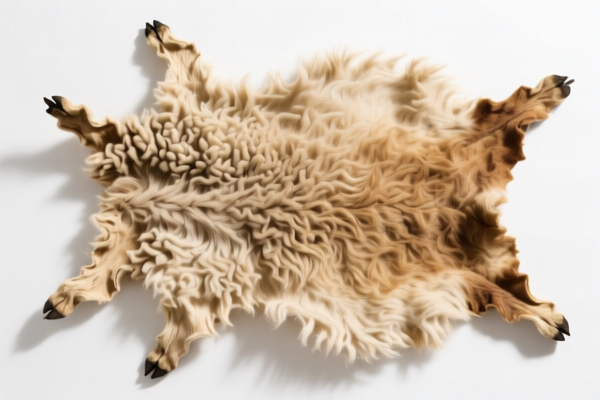
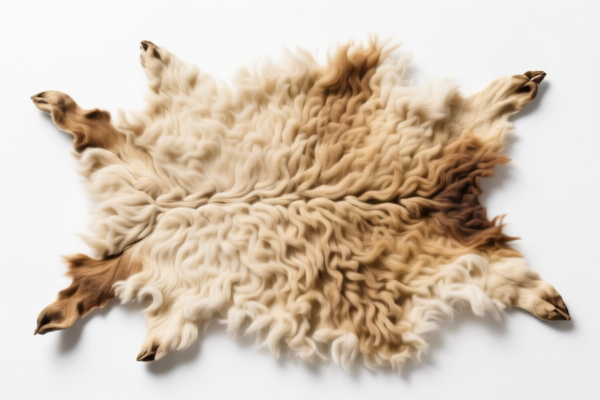
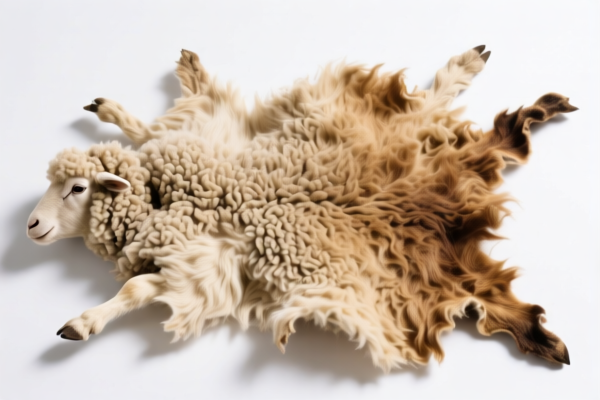
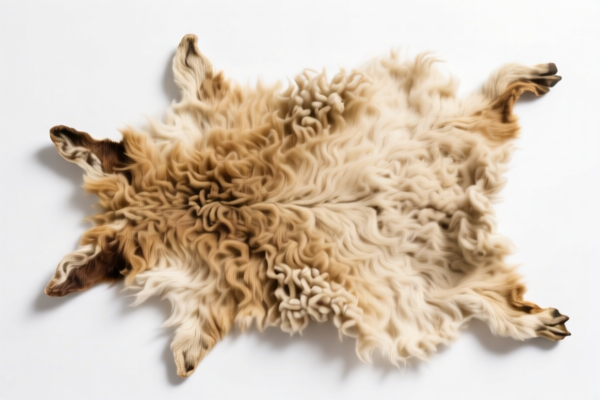
AI Analysis
🐑 Unfinished Dry Sheepskins (Raw & Unprocessed)
🌐 HS Code Reference & Customs Clearance Guide | 2026 Latest Tariff Analysis | Professional Entry Strategy
📌 I. Product Definition & Classification: What Exactly Are "Unfinished Dry Sheepskins"?
Unfinished Dry Sheepskins refer to animal hides that have been removed from the sheep, salted or dried, but have not yet undergone tanning, parchment-making, or any further processing. They are the raw material for the leather industry.
In international trade, these are classified under Chapter 41 (Animal Skin and Fur), specifically focusing on: 1. Sheep/Lamb Origin: Must be explicitly identified as sheep or lamb. 2. State: "Unfinished" means no tanning (vegetable, chrome, or otherwise) has occurred. 3. Form: "Dry" indicates the moisture content has been reduced, often referred to in customs terms as "crust" or simply dried skins, distinct from wet-salted or fresh skins.
⚠️ Key Distinction Point:
- If the skin has been tanned (even if not yet dressed) → It falls under Chapter 41 (Tanned Skins) or Chapter 43 (Fur), not raw skins.
- If the skin is fresh (wet) or heavily salted but not dried → It may fall under different subheadings of 4101/4102/4103 depending on preservation method.
- Critical: The term "Unfinished" is the legal trigger for HS Codes 4101-4103. Once "Finished" (tanned/dressed), it moves to 4104-4107.
📦 II. HS Code Classification Details (Based on Provided Data)
The following HS Codes are derived from the provided data, each with specific matching logic and tax implications.
| HS Code | Product Description | Matching Logic from Data | Total Tax Rate |
|---|---|---|---|
4103.90.12.00 |
Unfinished Sheepskins (Other/Unspecified) | Matches "Unfinished" (State) + "Sheepskin" (Material as Goat Skin per logic). Fits raw skin characteristics. | 17.5% |
4102.29.30.00 |
Unfinished Lamb/Sheep Skins (Other) | Matches "Sheepskin" (Material) + "Unfinished" (Not tanned/parchment). | 19.5% |
4105.30.00.00 |
Unfinished Sheep/Lamb Skins, Dried | Matches "Sheepskin" + "Unfinished" + "Dry" (interpreted as "crust" state). | 12.0% |
4102.10.30.00 |
Unfinished Sheep/Lamb Skins (Sheep/Lamb) | Matches "Dry Sheepskin" (Material: Sheep/Lamb) + "Unfinished" (Not tanned/processed). | 12.0% |
4103.90.11.90 |
Unfinished Sheepskins (Other) | Matches Material (Sheepskin) + State (Unfinished/Prematurely tanned/Unprocessed). | 17.5% |
🔍 Key Observation:
- Lowest Tax Rate (12.0%): HS Codes4105.30.00.00and4102.10.30.00. These require precise classification as Sheep/Lamb skins in a dry/unprocessed state.
- Highest Tax Rate (19.5%): HS Code4102.29.30.00.
- Medium Tax Rate (17.5%): HS Codes4103.90.12.00and4103.90.11.90. These are "Other" unfinished skins, often attracting higher duties due to less specific categorization.
💰 III. 2026 Tariff Rate Breakdown (Including Surcharges)
✅ Applicable Country: United States (US)
✅ Origin: China (CN)
✅ Effective Date: From November 10, 2025 (and subsequent imports)
🎯 1. 4105.30.00.00 & 4102.10.30.00 —— Unfinished Sheep/Lamb Skins (Lowest Tax Category)
| Item | Details |
|---|---|
| Base Duty Rate | 2.0% (ad valorem) |
| Section 301 Surcharge | 0.0% (Note: Data indicates 0% for these specific codes) |
| IEEPA Surcharge | 10% (Targeting Chinese products) |
| Total Tax Rate | 12.0% |
| Calculation | CIF Value × 12% |
| De Minimis Eligibility | ❌ Not Applicable (Generally, raw skins over de minimis threshold) |
| Legal Path | Base Tariff → IEEPA Footnote (10%) |
📌 Explanation:
- This is the most cost-effective classification if your product strictly meets the definition of "Sheep/Lamb" and "Unfinished/Dry."
- The 0% Section 301 surcharge for these specific subheadings is a significant advantage compared to other leather-related goods.
- The 10% IEEPA tax is mandatory for Chinese-origin goods.
🎯 2. 4103.90.12.00 & 4103.90.11.90 —— Other Unfinished Skins (Medium Tax Category)
| Item | Details |
|---|---|
| Base Duty Rate | 0.0% (ad valorem) |
| Section 301 Surcharge | 7.5% |
| IEEPA Surcharge | 10% |
| Total Tax Rate | 17.5% |
| Calculation | CIF Value × 17.5% |
| De Minimis Eligibility | ❌ Not Applicable |
| Legal Path | Base Tariff → Section 301 Footnote → IEEPA |
📌 Explanation:
- The base duty is 0%, but the Section 301 surcharge is 7.5% (instead of 0%).
- Combined with the 10% IEEPA, the total is 17.5%.
- This classification is riskier if the goods are actually sheepskins, as customs may challenge the "Other" classification.
🎯 3. 4102.29.30.00 —— Unfinished Sheep/Lamb Skins (Highest Tax Category)
| Item | Details |
|---|---|
| Base Duty Rate | 2.0% (ad valorem) |
| Section 301 Surcharge | 7.5% |
| IEEPA Surcharge | 10% |
| Total Tax Rate | 19.5% |
| Calculation | CIF Value × 19.5% |
| De Minimis Eligibility | ❌ Not Applicable |
| Legal Path | Base Tariff → Section 301 Footnote → IEEPA |
📌 Explanation:
- This code carries the highest total duty (19.5%).
- It includes both the 2% base duty, 7.5% Section 301, and 10% IEEPA.
- Avoid this classification unless strictly required by specific product attributes not covered by4105or4102.10.
🛠️ IV. Customs Clearance Practical Advice (Avoiding Pitfalls)
✅ 1. Document Checklist (Must-Haves)
| Document | Required | Notes |
|---|---|---|
| ✅ Commercial Invoice | ✔️ | Must explicitly state "Unfinished Dry Sheepskins" and "Not Tanned". |
| ✅ Packing List | ✔️ | Detail weight, quantity, and drying method (air-dried, salted-dried, etc.). |
| ✅ Product Description | ✔️ | Include material (Sheep/Lamb), state (Unfinished/Dry), and processing history (if any). |
| ✅ Certificate of Origin | ✔️ | Essential for IEEPA duty calculation. Must confirm China Origin. |
| ✅ Lab Test Report | ✔️ | Crucial: Proves the skins are NOT tanned (chemical test for chromium or vegetable tanning agents). |
| ✅ Photos | ✔️ | Clear images of skins showing texture, salt/dry state, and any markings. |
✅ 2. Declaration Tips (Key Mantras)
🔥 "Unfinished is Key, Tanned is Wrong! Specify 'Dry' and 'Sheep', Avoid 'Other'!"
| Scenario | Correct Declaration | Wrong Declaration |
|---|---|---|
| Raw Skins | "Unfinished Dry Sheepskins, Not Tanned" | "Leather Skins" or "Finished Sheepskin" |
| Material | "100% Sheep/Lamb" | "Animal Skin" (Too vague) |
| Processing | "No Tanning, No Dressing" | "Semi-processed" (May imply partial tanning) |
| HS Code Selection | 4105.30.00.00 or 4102.10.30.00 (12%) |
4103.90.12.00 (17.5%) or 4102.29.30.00 (19.5%) |
✅ 3. Special Cases
| Scenario | Handling Advice |
|---|---|
| Mixed Batches (Sheep & Goat) | If mixed, customs may apply the higher tax rate or classify as "Other" (4103). Separate shipments if possible. |
| Wet-Salted vs. Dry | "Dry" skins may qualify for 4105.30.00.00. Wet-salted might fall under different subheadings. Clarify with customs broker. |
| Tanning Agents Detected | If lab test shows tanning agents, goods are NOT unfinished. They may be classified under Chapter 41 (Tanned) or Chapter 43, leading to different duties and potential penalties. |
| De Minimis (Section 321) | Do not use de minimis for raw animal skins. They are subject to APHIS (USDA) regulations and tariffs. |
🌍 V. Global Market Comparison (2026)
| Country/Region | Recommended HS Code | Total Duty (China Origin) | Certification/Notes |
|---|---|---|---|
| 🇺🇸 USA | 4105.30.00.00 or 4102.10.30.00 |
12% | Requires USDA/APHIS import permit. |
| 🇨🇳 China | 4105.30.00.00 |
~10-12% | Import quotas may apply. |
| 🇪🇺 EU | 4105.30.00 |
0-3% | No IEEPA equivalent. Requires EC Label. |
| 🇬🇧 UK | 4105.30.00 |
0-3% | Post-Brexit tariffs. |
| 🇯🇵 Japan | 4105.30.00 |
0-3% | No significant surcharges. |
📌 Conclusion:
- The USA has the highest effective duty (12%) due to IEEPA 10% + Base 2%.
- Other markets like EU/UK/Japan have lower or zero duties on raw sheepskins.
- US Customs is strict on the "Unfinished" definition. Misclassification can lead to audits and penalties.
📌 VI. Common Errors & Pitfalls (Lessons Learned)
❌ Error 1: Declaring "Tanned Leather" as "Unfinished Skins"
👉 Consequence: Fraud penalties, back taxes, and seizure. Tanned skins have different tariffs and environmental regulations.
❌ Error 2: Using "Leather" in the description for raw skins
👉 Consequence: Customs may assume tanning occurred, leading to incorrect HS Code and higher duties.
❌ Error 3: Not providing Lab Test Reports
👉 Consequence: Customs may reject the shipment or force a re-inspection, causing delays and storage fees.
❌ Error 4: Ignoring USDA/APHIS Regulations
👉 Consequence: Import ban or destruction of goods if not properly registered with USDA.
✅ Correct Practice:
"Unfinished Dry Sheepskins, Origin: China, Not Tanned, HS Code: 4105.30.00.00, USDA Permit #: XXXXX"
🎯 VII. Conclusion: Precision in Classification Saves Money!
🎯 Remember the Mantra:
🔹 "Unfinished = 12% (Best), Tanned = Different, Dry & Sheep = 4105/4102.10."
🔹 "IEEPA 10% is Non-Negotiable for China. Base Duty Varies."
🔹 "Lab Test is Your Best Friend for 'Unfinished' Status."
📌 Pro Tip:
- Apply for an Advance Ruling from US Customs if you are unsure about the classification.
- Work with a Licensed Customs Broker who specializes in animal products.
- Ensure USDA Compliance to avoid shipment rejection.
📣 Immediate Action:
📞 Contact a US Customs Broker + Provide Lab Test Results + Apply for USDA Import Permit
🚀 Ensure smooth clearance, minimize duties, and avoid penalties.
✨ Professional Clearance Starts with Accurate Classification!
💼 Every Percent Saved is Pure Profit!
Customer Reviews
About HS Code Classification
The Harmonized System (HS) is an internationally standardized nomenclature developed by the World Customs Organization (WCO) to classify traded products. Over 200 countries use the HS system as the basis for customs tariffs, trade statistics, and import/export regulations.
Each HS code follows a hierarchical structure:
- Chapter (2 digits) — Broad category of goods (e.g., Chapter 84: Machinery and Mechanical Appliances)
- Heading (4 digits) — More specific grouping within the chapter
- Subheading (6 digits) — Internationally standardized breakdown, used by all WCO member countries
- National subdivisions (8-10 digits) — Country-specific extensions for further classification, such as US HTSUS 10-digit codes
Correct HS code classification is essential for smooth customs clearance, accurate duty payment, and compliance with trade regulations. Misclassification can lead to customs delays, overpayment of duties, or penalties.
When importing from CN to US, the applicable tariff rates may include:
- Most-Favored-Nation (MFN) rate — The standard duty rate applied to WTO members
- General rate — Applied to countries without trade agreements
- Trade remedy duties — Additional tariffs such as Section 301 (anti-dumping), Section 232 (national security), or countervailing duties
The information provided on this page is for reference purposes only. For official classification, please consult with your local customs authority or a licensed customs broker.