Unfoamed PVC Plastic Board
CN → US| HS Code | Tariff Rate | Origin | Destination | Doc |
|---|---|---|---|---|
| 3921125000 | 41.5% | CN | US | Official Doc |
| 3921905050 | 39.8% | CN | US | Official Doc |
| 3926909989 | 22.8% | CN | US | Official Doc |
| 3925900000 | 40.3% | CN | US | Official Doc |
| 3925100000 | 41.3% | CN | US | Official Doc |
Product Images
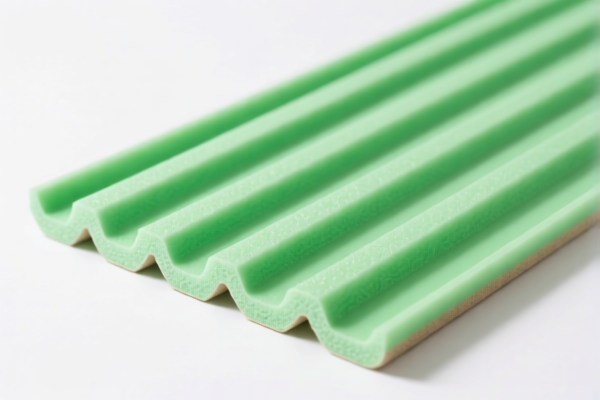
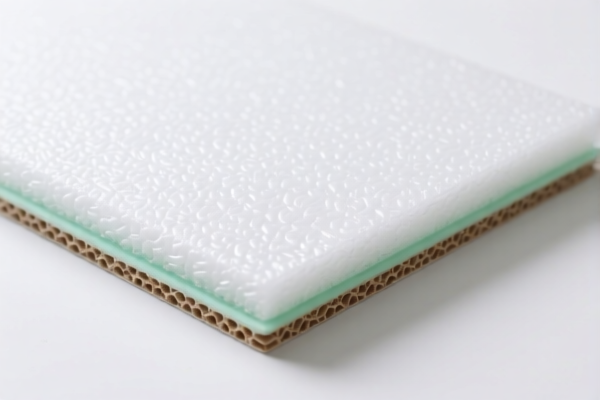
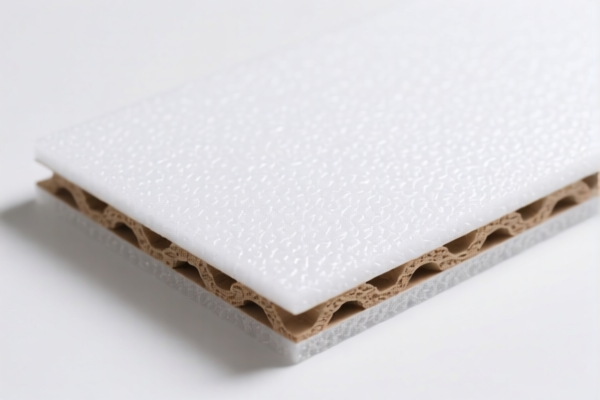

AI Analysis
🏗️ Unfoamed PVC Plastic Board
🌐 HS Code Reference & Customs Clearance Guide | 2026 Latest Tariff Analysis | Professional-Level通关 Strategy
📌 I. Product Definition & Classification: Do You Really Understand "Unfoamed PVC Board"?
Unfoamed PVC (Polyvinyl Chloride) plastic boards are rigid, dense plastic sheets widely used in construction, signage, furniture, and industrial manufacturing. Unlike foamed PVC (which has a lightweight, cellular core), unfoamed PVC is solid, heavier, and offers higher mechanical strength and chemical resistance.
In international trade, the classification depends on: 1. Chemical Composition: Is it Polyvinyl Chloride (PVC) or another polymer? 2. Physical State: Is it cellular (foamed) or solid (unfoamed)? 3. End Use: Is it a general-purpose sheet, a building material, or a container?
⚠️ Key Distinction Point:
- If the product is cellular/foamed (lightweight, open or closed cell) → It falls under 3921.12.50.00.
- If the product is solid/unfoamed (dense, rigid) → It typically falls under 3921.90.50.50.
- If the product is specifically designed as a reservoir, tank, or vat (>300L) → It falls under 3925.10.00.00.
- If the product is a general builder’s ware not elsewhere specified → It falls under 3925.90.00.00.
📦 II. HS Code Classification Details (2026 Latest Tariff Authority Comparison)
Based on the provided data, here are the four potential HS Codes for PVC-related products, with specific focus on the Unfoamed PVC Board scenario.
| HS Code | Product Description | Applicability to "Unfoamed PVC Board" | Key Characteristics |
|---|---|---|---|
3921.12.50.00 |
Cellular PVC Sheets/Film/Foil (Of polymers of vinyl chloride) | ❌ Incorrect for Unfoamed | Applies to Foamed/Cellular PVC. High density/weight difference. |
3921.90.50.50 |
Other Plates, Sheets, Film, Foil of Plastics: Other | ✅ Correct for General Unfoamed Boards | Standard classification for rigid, solid PVC sheets used in general applications. |
3925.10.00.00 |
Builders' Ware: Reservoirs, Tanks, Vats (>300 Liters) | ❌ Incorrect unless it's a finished container | Applies only if the board is fabricated into a large tank/vat. |
3925.90.00.00 |
Builders' Ware: Other (Not Elsewhere Specified) | ⚠️ Possible if used strictly as construction material | Applies if the board is specifically categorized as "builders' ware" and doesn't fit other precise headings. |
🔍 Focus on
3921.90.50.50:
- Most unfoamed PVC plastic boards (rigid sheets) are classified under 3921.90.50.50.
- This code covers "Other plates, sheets, film, foil and strip of plastics" that are not cellular and not elsewhere specified.
- Why not 3921.12? Because 3921.12 is explicitly for Cellular (foamed) PVC. Unfoamed PVC is solid.
💰 III. 2026 Latest Tariff Rate Detail (Including Surtaxes & Policy Add-ons)
✅ Applicable Country: United States (US)
✅ Origin: China (CN)
✅ Effective Time: As per current trade policies (2025-2026)
🎯 1. 3921.90.50.50 —— Unfoamed PVC Plastic Sheets/Boards (Solid)
| Item | Content |
|---|---|
| Base Tariff | 4.8% (ad valorem) |
| Section 301 Surtax | +25.0% |
| Total Tax Rate | 29.8% |
| Tax Calculation | CIF Value × 29.8% |
| De Minimis Eligibility | ❌ No (High tax rate triggers strict scrutiny) |
| Legal Basis Path | HTSUS:3921.90.50.50 → Section 301 Footnote |
📌 Explanation:
- The 4.8% base rate is the standard Most-Favored-Nation (MFN) rate for other plastic sheets.
- The 25.0% surtax is imposed under Section 301 of the Trade Act of 1974 on Chinese-origin plastic products.
- Total: 29.8%. This is a significant cost driver for unfoamed PVC imports.
- Note: Unlike foamed PVC (3921.12.50.00), which has a 31.5% total tax, unfoamed PVC is slightly cheaper but still subject to high duties.
🎯 2. 3925.90.00.00 —— Builders' Ware of Plastics (Other)
| Item | Content |
|---|---|
| Base Tariff | 0.0% |
| Surtax | 0.0% |
| Total Tax Rate | 0.0% |
| Tax Calculation | CIF Value × 0.0% |
| De Minimis Eligibility | ⚠️ Check Specifics (Low tax may allow de minimis depending on volume) |
| Legal Basis Path | HTSUS:3925.90.00.00 |
📌 Explanation:
- If the unfoamed PVC board is classified as Builders' Ware (e.g., siding, window frames, specific construction panels) and not as a general "sheet," it may qualify for 0% duty.
- Risk: Customs may reclassify it as3921.90.50.50(29.8%) if it’s just a raw sheet not yet fabricated into a specific building component.
- Strategy: Provide clear documentation proving its end-use as "builders' ware" (e.g., architectural specifications, installation manuals).
🎯 3. 3925.10.00.00 —— Reservoirs/Tanks (>300 Liters)
| Item | Content |
|---|---|
| Base Tariff | 0.0% |
| Surtax | 0.0% |
| Total Tax Rate | 0.0% |
| Applicability | Only if the PVC board is fabricated into a tank/vat >300L. |
🛠️ IV. Customs Clearance Practical Advice (Real-World Pitfall Avoidance Guide)
✅ 1. Document Checklist (Essential)
| Document | Must Provide | Explanation |
|---|---|---|
| ✅ Product Specification Sheet | ✔️ | Must clearly state "Unfoamed" or "Solid" PVC. Avoid vague terms like "PVC Board." |
| ✅ Material Safety Data Sheet (MSDS) | ✔️ | Confirms chemical composition (100% PVC, no additives that change classification). |
| ✅ Product Photos | ✔️ | Show cross-section to prove no cellular structure (no bubbles/foam). |
| ✅ Intended Use Declaration | ✔️ | If claiming 3925.90.00.00 (0% tax), provide evidence it’s for construction/builders' ware. |
| ✅ Commercial Invoice | ✔️ | Describe as "Rigid PVC Sheet, Unfoamed, for [Specific Use]." |
| ✅ Packing List | ✔️ | Detail weight, dimensions, and quantity. |
✅ 2. Declaration Tips (Key Mnemonic)
🔥 "Foam vs. Solid: Weight is Key. Use Determines Code!"
| Scenario | Correct HS Code | Wrong Code | Tax Difference |
|---|---|---|---|
| Standard Unfoamed PVC Sheet (General Use) | 3921.90.50.50 |
3921.12.50.00 |
29.8% vs 31.5% (Minor saving, but misclassification risk) |
| Unfoamed PVC Board (Used in Construction, e.g., Siding) | 3925.90.00.00 (If eligible) |
3921.90.50.50 |
0% vs 29.8% (Huge saving!) |
| Foamed PVC Board | 3921.12.50.00 |
3921.90.50.50 |
31.5% vs 29.8% (Misclassification leads to penalties) |
| PVC Tank (>300L) | 3925.10.00.00 |
3921.90.50.50 |
0% vs 29.8% |
📌 Critical Advice:
- Do NOT declare unfoamed PVC as "Foamed" to avoid higher taxes if it’s actually unfoamed. Customs can perform density tests.
- Do NOT declare unfoamed PVC as "Builders' Ware" unless it’s specifically designed for construction. General-purpose sheets must use3921.90.50.50.
✅ 3. Special Cases Handling
| Scenario | Handling Advice |
|---|---|
| PVC Boards with Surface Treatment | If coated or printed, still likely 3921.90.50.50. Ensure coating doesn’t change the essential character. |
| PVC Sheets for Signage | Usually 3921.90.50.50. Not considered "Builders' Ware" unless part of a building facade. |
| PVC Sheets for Medical Devices | Still 3921.90.50.50. Medical use doesn’t change plastic sheet classification. |
| Mixed Shipments (Foamed + Unfoamed) | Must separate. Misclassification leads to audits and penalties. |
🌍 V. Global Market Customs Comparison (2026 Latest)
| Country/Region | Recommended HS Code | Tariff (China Origin) | Certification Requirement | Notes |
|---|---|---|---|---|
| 🇺🇸 USA | 3921.90.50.50 |
29.8% (25% surtax + 4.8% base) | None (but MSDS recommended) | High duty due to Section 301. |
| 🇪🇺 EU | 3920.62.00 (Approx.) |
~6.5% | REACH Compliance | No Section 301 surtax. |
| 🇨🇳 China | 3921.12.50.00 / 3921.90.50.50 |
5-6% (Import Duty) | None | Domestic use tax may apply. |
| 🇬🇧 UK | 3920.62.00 |
~6.5% | UKCA Mark (if applicable) | Post-Brexit rules apply. |
📌 Conclusion:
- USA is the most costly market for unfoamed PVC boards due to 29.8% total duty.
- EU/UK offer lower tariffs (~6.5%) but require REACH/UKCA compliance.
- Strategy: For US imports, consider supply chain diversification or HTSUS pre-rulings to ensure correct classification and avoid penalties.
📌 VI. Common Errors & Pitfall Avoidance (Blood Lessons)
❌ Error 1: Declaring unfoamed PVC as "Foamed PVC" to claim a different code.
👉 Consequence: Customs density test reveals solid core → Penalty + Back Duties + Audit.
❌ Error 2: Declaring general PVC sheets as "Builders' Ware" (3925.90.00.00) to get 0% duty.
👉 Consequence: Customs reclassifies to 3921.90.50.50 → Pay 29.8% + Interest.
❌ Error 3: Not providing MSDS or Product Specs.
👉 Consequence: Customs delays shipment for verification → Demurrage Costs + Delays.
❌ Error 4: Using vague description "PVC Sheet" on Invoice.
👉 Consequence: Customs cannot determine if it’s foamed or unfoamed → Hold for Inspection.
✅ Correct Declaration:
"Rigid Unfoamed PVC Sheet, 2mm Thickness, 1200x2400mm, Solid Polymer of Vinyl Chloride, For Industrial Fabrication, No Cellular Structure."
🎯 VII. Conclusion: Precision in Classification Saves Costs!
🎯 Remember the Mnemonic:
🔹 "Unfoamed = Solid = 3921.90.50.50 (29.8%)"
🔹 "Foamed = Cellular = 3921.12.50.00 (31.5%)"
🔹 "Builders' Ware = 3925.90.00.00 (0%)" (Only if truly builders' ware)
🔹 "Misclassification = Penalty + Audit + Delay!"
📌 Pro Tip:
- For large shipments, apply for a Binding Ruling from CBP (Customs and Border Protection) in the US to confirm the HS Code and tax rate.
- Ensure your Supplier provides accurate material specs (density, foaming percentage) to support your declaration.
📣 Immediate Action:
📞 Contact your freight forwarder + Provide Product Photos + Submit MSDS
🚀 Ensure Smooth Clearance, Avoid Surprises, Maximize Profit Margins!
✨ Professional Customs Clearance Starts with Accurate Classification!
💼 Every Percent Saved is Pure Profit!
Customer Reviews
About HS Code Classification
The Harmonized System (HS) is an internationally standardized nomenclature developed by the World Customs Organization (WCO) to classify traded products. Over 200 countries use the HS system as the basis for customs tariffs, trade statistics, and import/export regulations.
Each HS code follows a hierarchical structure:
- Chapter (2 digits) — Broad category of goods (e.g., Chapter 84: Machinery and Mechanical Appliances)
- Heading (4 digits) — More specific grouping within the chapter
- Subheading (6 digits) — Internationally standardized breakdown, used by all WCO member countries
- National subdivisions (8-10 digits) — Country-specific extensions for further classification, such as US HTSUS 10-digit codes
Correct HS code classification is essential for smooth customs clearance, accurate duty payment, and compliance with trade regulations. Misclassification can lead to customs delays, overpayment of duties, or penalties.
When importing from CN to US, the applicable tariff rates may include:
- Most-Favored-Nation (MFN) rate — The standard duty rate applied to WTO members
- General rate — Applied to countries without trade agreements
- Trade remedy duties — Additional tariffs such as Section 301 (anti-dumping), Section 232 (national security), or countervailing duties
The information provided on this page is for reference purposes only. For official classification, please consult with your local customs authority or a licensed customs broker.