Unfoamed PVC Plastic Sheets for Packaging
CN → US| HS Code | Tariff Rate | Origin | Destination | Doc |
|---|---|---|---|---|
| 3920435000 | 39.2% | CN | US | Official Doc |
| 3921125000 | 41.5% | CN | US | Official Doc |
| 3919905040 | 40.8% | CN | US | Official Doc |
| 3919905060 | 40.8% | CN | US | Official Doc |
| 3920490000 | 40.8% | CN | US | Official Doc |
Product Images

AI Analysis
📦 Unfoamed PVC Plastic Sheets for Packaging
🌐 HS Code Reference & Customs Clearance Guide | 2026 Latest Tariff Analysis | Professional Compliance Strategy
📌 I. Product Definition & Classification: Are You Sure About "PVC Sheets"?
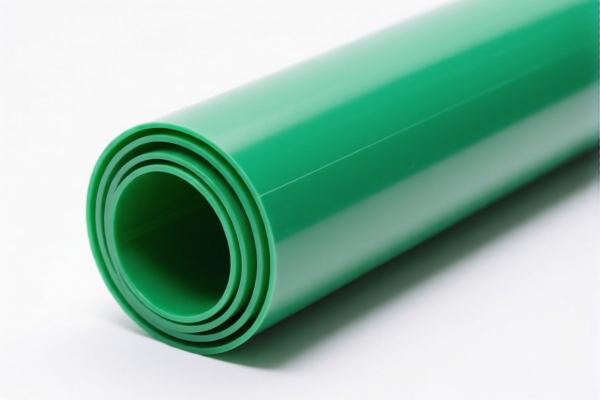
Unfoamed Polyvinyl Chloride (PVC) Plastic Sheets are rigid, flat polymer materials widely used in packaging, signage, construction, and industrial applications. In international trade, these sheets are classified based on their form (sheets/plates) and processing status (unfoamed/solid).
Unlike foamed PVC (which is lightweight and cellular), unfoamed PVC is dense and rigid, making it suitable for high-strength packaging solutions, blister packs, and durable containers.
⚠️ Key Classification Distinction:
- If the product is a raw sheet/plate (flat, not rolled, not self-adhesive) → It falls under Chapter 39, specifically subheadings for plates, sheets, film, foil, and strip.
- If the product is self-adhesive (has glue backing) → It might fall under 3919 (Self-adhesive plates/sheets).
- If the product is simply cut into sheets without further finishing → It generally falls under 3920 (Other plates, sheets, film, foil, and strip).
📦 II. HS Code Classification Details (2026 Latest Tariff Authority Cross-Reference)
Based on the provided data, here are the valid HS codes for Unfoamed PVC Plastic Sheets when importing into specific markets (primarily US, given the tariff structure in the data):
| HS Code | Product Description | Application Scenario | Key Feature |
|---|---|---|---|
3920.43.50.00 |
Other plates, sheets, film, foil, and strip, of polymers of vinyl chloride, unfoamed | General packaging, rigid containers, industrial sheets | 4.2% Base + 25% Section 301 + 10% 122 Provision |
3921.12.50.00 |
Other plates, sheets, film, foil and strip, of plastics: Of polyvinyl chloride, unfoamed, reinforced, laminated, supported or similarly combined with other materials | Packaged sheets with backing/reinforcement, composite materials | 6.5% Base + 25% Section 301 + 10% 122 Provision |
3919.90.50.40 |
Self-adhesive plates, sheets, film, foil, tape, strip and other flat shapes, of plastics | Self-adhesive PVC tapes or sheets for packaging sealing | 5.8% Base + 25% Section 301 + 10% 122 Provision |
3919.90.50.60 |
Other self-adhesive plastic flat shapes | Specific self-adhesive variants not listed elsewhere | 5.8% Base + 25% Section 301 + 10% 122 Provision |
3920.49.00.00 |
Other plates, sheets, film, foil, and strip, of polymers of vinyl chloride | Other unfoamed PVC sheets not specified elsewhere | 5.8% Base + 25% Section 301 + 10% 122 Provision |
🔍 Critical Note:
- 3920 codes are for non-self-adhesive, non-reinforced unfoamed PVC sheets. This is the most common classification for pure packaging sheets.
- 3921 codes apply if the sheet is reinforced, laminated, or combined with other materials.
- 3919 codes apply only if the product is self-adhesive. If your PVC sheets are not sticky on one side, do NOT use 3919.
💰 III. 2026 Latest Tariff Rate Breakdown (Including Surtaxes & Policy Add-ons)
✅ Applicable Country: United States (US)
✅ Origin: China (CN)
✅ Effective Date: Rates include Section 301 tariffs and Section 122 provisions.
🎯 1. 3920.43.50.00 —— Unfoamed PVC Sheets (Standard Packaging Grade)
| Item | Details |
|---|---|
| Base Duty Rate | 4.2% (ad valorem) |
| Section 301 Surtax | +25.0% (From USITC Footnote 9903.88.01) |
| Section 122 Provision | +10.0% (Specific policy surcharge) |
| Total Effective Rate | 39.2% |
| Tax Calculation | CIF Value × 39.2% |
| De Minimis Eligibility | ❌ No (Deny de minimis) |
| Legal Authority Path | HTSUS:3920.43.50.00 → USITC:9903.88.01 (301 Tariff) → 122 Provision |
📌 Explanation:
- This is a standard unfoamed PVC sheet.
- The 39.2% total rate is high due to the叠加 (stacking) of base duties, Section 301 tariffs, and Section 122 surcharges.
- No de minimis exemption applies; all shipments are subject to full duty.
🎯 2. 3921.12.50.00 —— Reinforced/Laminated Unfoamed PVC Sheets
| Item | Details |
|---|---|
| Base Duty Rate | 6.5% (ad valorem) |
| Section 301 Surtax | +25.0% |
| Section 122 Provision | +10.0% |
| Total Effective Rate | 41.5% |
| Tax Calculation | CIF Value × 41.5% |
| De Minimis Eligibility | ❌ No |
| Legal Authority Path | HTSUS:3921.12.50.00 → USITC:9903.88.01 → 122 Provision |
📌 Note:
- Higher base rate (6.5%) because the product is considered more processed (reinforced/laminated).
- Suitable for high-performance packaging where strength is enhanced by other materials.
🎯 3. 3919.90.50.40 & 3919.90.50.60 —— Self-Adhesive PVC Sheets
| Item | Details |
|---|---|
| Base Duty Rate | 5.8% (ad valorem) |
| Section 301 Surtax | +25.0% |
| Section 122 Provision | +10.0% |
| Total Effective Rate | 40.8% |
| Tax Calculation | CIF Value × 40.8% |
| De Minimis Eligibility | ❌ No |
| Legal Authority Path | HTSUS:3919.90.50.XX → USITC:9903.88.01 → 122 Provision |
📌 Note:
- These codes apply only if the PVC sheet has a self-adhesive backing.
- Commonly used for self-adhesive labels, tapes, or sticky packaging materials.
- Do not use if the product is a plain, non-sticky sheet.
🎯 4. 3920.49.00.00 —— Other Unfoamed PVC Sheets
| Item | Details |
|---|---|
| Base Duty Rate | 5.8% (ad valorem) |
| Section 301 Surtax | +25.0% |
| Section 122 Provision | +10.0% |
| Total Effective Rate | 40.8% |
| Tax Calculation | CIF Value × 40.8% |
| De Minimis Eligibility | ❌ No |
| Legal Authority Path | HTSUS:3920.49.00.00 → USITC:9903.88.01 → 122 Provision |
📌 Note:
- A "catch-all" for unfoamed PVC sheets not specifically listed in 3920.43 (which is for rigid sheets).
- Use only if 3920.43.50.00 does not apply due to specific physical characteristics.
🛠️ IV. Customs Clearance Practical Advice (Avoiding Pitfalls)
✅ 1. Preparation Checklist (Mandatory)
| Document | Required | Explanation |
|---|---|---|
| ✅ Product Specification Sheet | ✔️ | Must clearly state: Material: 100% PVC, Form: Unfoamed/Non-cellular, Thickness, Dimensions. |
| ✅ HS Code Justification Memo | ✔️ | Explain why it is 3920 vs. 3919 (i.e., confirm it is not self-adhesive). |
| ✅ Product Photos | ✔️ | Clear images showing flat, rigid sheets. No glue visible. |
| ✅ Commercial Invoice | ✔️ | Description must match HS code precisely: "Unfoamed PVC Plastic Sheets, Non-Self-Adhesive, for Packaging." |
| ✅ Packing List | ✔️ | Detail weight and dimensions to verify CIF value. |
✅ 2. Declaration Tips (Key Mnemonic)
🔥 “Non-Sticky is 3920, Sticky is 3919, Reinforced is 3921, Check Tax 40%+!”
| Scenario | Correct HS Code | Wrong Code | Consequence |
|---|---|---|---|
| Plain, rigid, non-adhesive sheet | 3920.43.50.00 |
3919... |
Misclassification → Penalties + Back Duties |
| Self-adhesive PVC sheet | 3919.90.50.40/60 |
3920... |
Underpayment → Seizure/Fin |
| PVC sheet with fabric backing | 3921.12.50.00 |
3920... |
Incorrect duty base → Audit Risk |
| Foamed (lightweight) PVC | Not in list | Any above | Wrong Chapter (likely 3921) → Rejection |
✅ 3. Special Situations
| Situation | Handling Advice |
|---|---|
| Mixed Packaging | If PVC sheets are packed with other items, declare separately. Do not lump together. |
| Sample Shipments | Even samples are subject to full duties if >$800 (US De Minimis threshold). No exemption for these HS codes. |
| Colorant/Additives | Declaring "Pure PVC" vs. "PVC with Additives" may affect classification under 3920.43 vs. 3920.49. Be precise. |
| Recycled PVC | If made from recycled material, additional environmental declarations may be required. |
🌍 V. Global Market Comparison (2026 Update)
| Country/Region | Recommended HS Code | Duty Rate (China Origin) | Key Certification | Notes |
|---|---|---|---|---|
| 🇺🇸 USA | 3920.43.50.00 |
39.2% | None (General) | High due to Section 301 + 122. No de minimis. |
| 🇪🇺 EU | 3920.43.00 |
~5% + VAT | REACH (Chemicals) | Lower duty, but strict chemical regulations. |
| 🇨🇳 China | 3920.43.50.00 |
~5% | CCC (If applicable) | Lower import duty, no Section 301. |
| 🇯🇵 Japan | 3920.49.00 |
~5% | JIS Standards | Moderate duty, strict safety standards. |
📌 Conclusion:
- USA has the highest effective duty rate (39.2% - 41.5%) due to multiple surcharges.
- EU and Japan have lower duties but stricter regulatory compliance (REACH, etc.).
- Cost Planning: Factor in ~40% total landed cost increase for US imports.
📌 VI. Common Mistakes & Pitfalls (Lessons Learned)
❌ Mistake 1: Declaring "PVC Sheets" as "Plastic Bags" (HS 3923)
👉 Result: Wrong classification → Delay & Fines. Sheets are rigid; bags are flexible.
❌ Mistake 2: Ignoring Section 122 Provision
👉 Result: Underpayment by 10% → Back taxes + Interest.
❌ Mistake 3: Using De Minimis for Small Orders
👉 Result: Goods seized or returned. These codes are not eligible for de minimis exemption.
❌ Mistake 4: Confusing "Unfoamed" with "Foamed"
👉 Result: Foamed PVC may have different HS codes and lower base duties. Misdeclaration leads to audits.
✅ Correct Practice:
"Unfoamed PVC Plastic Sheets, Rigid, Non-Self-Adhesive, For Packaging Use, HS 3920.43.50.00"
🎯 VII. Conclusion: Precise Classification, Cost Control, Compliance!
🎯 Remember the Rules:
🔹 "Non-Sticky = 3920, Sticky = 3919, Reinforced = 3921"
🔹 "Total Tax is ~40%, No De Minimis, Declare Accurately"
🔹 "Check Section 301 & 122, Avoid Audits, Save Costs"
📌 Pro Tip:
If your PVC sheets are imported in small quantities, consider Advance Rulings from US CBP to confirm the HS code.
For large volumes, negotiate FOB/CIF terms carefully to manage the high duty burden.
📣 Immediate Action:
📞 Contact your freight forwarder + Provide product specs + Confirm HS Code 3920.43.50.00
🚀 Ensure compliance, avoid seizures, and optimize your supply chain!
✨ Professional Customs Clearance Starts with Accurate Classification!
💼 Every percent of duty saved is profit earned!
Customer Reviews
About HS Code Classification
The Harmonized System (HS) is an internationally standardized nomenclature developed by the World Customs Organization (WCO) to classify traded products. Over 200 countries use the HS system as the basis for customs tariffs, trade statistics, and import/export regulations.
Each HS code follows a hierarchical structure:
- Chapter (2 digits) — Broad category of goods (e.g., Chapter 84: Machinery and Mechanical Appliances)
- Heading (4 digits) — More specific grouping within the chapter
- Subheading (6 digits) — Internationally standardized breakdown, used by all WCO member countries
- National subdivisions (8-10 digits) — Country-specific extensions for further classification, such as US HTSUS 10-digit codes
Correct HS code classification is essential for smooth customs clearance, accurate duty payment, and compliance with trade regulations. Misclassification can lead to customs delays, overpayment of duties, or penalties.
When importing from CN to US, the applicable tariff rates may include:
- Most-Favored-Nation (MFN) rate — The standard duty rate applied to WTO members
- General rate — Applied to countries without trade agreements
- Trade remedy duties — Additional tariffs such as Section 301 (anti-dumping), Section 232 (national security), or countervailing duties
The information provided on this page is for reference purposes only. For official classification, please consult with your local customs authority or a licensed customs broker.