Unicorn Silicone Night Light
CN → US| HS Code | Tariff Rate | Origin | Destination | Doc |
|---|---|---|---|---|
| 3926904000 | 12.8% | CN | US | Official Doc |
| 3926400090 | 15.3% | CN | US | Official Doc |
| 9405218010 | 38.9% | CN | US | Official Doc |
| 9405920000 | 38.7% | CN | US | Official Doc |
| 9503000073 | 10.0% | CN | US | Official Doc |
| 9503000071 | 10.0% | CN | US | Official Doc |
Product Images
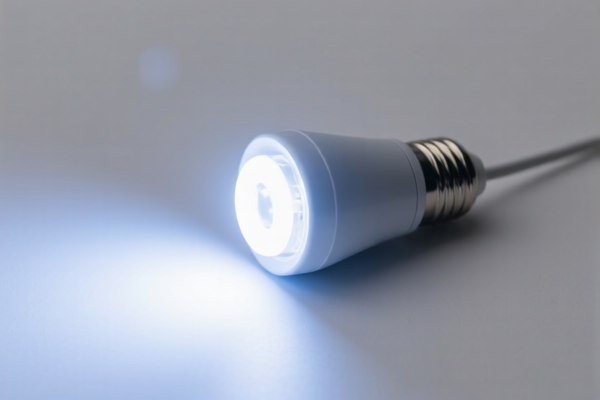


AI Analysis
🦄 Unicorn Silicone Night Light: The Magical Glow Guide
🌐 HS Code Reference & Customs Clearance Guide | 2026 Tax Regime Deep Dive | Professional Clearance Strategy
📌 One: Product Definition & Classification: Do You Truly Understand "Unicorn Night Lights"?
The Unicorn Silicone Night Light is a whimsical, often battery- or USB-powered LED lamp designed for children's bedrooms, nurseries, or decorative use. In international trade, it straddles two major categories depending on its primary function and construction:
- Toy/Lighting Hybrids: If the item is clearly marketed, labeled, or intended primarily as a toy for children (e.g., soft silicone, animal shape, play value > function value), it falls under Heading 9503 (Toys).
- Decorative Lighting: If the item is primarily a functional lighting fixture with a unicorn design (e.g., fixed light source, primary purpose is illumination, not play), it falls under Heading 9405 (Luminaires).
⚠️ Critical Distinction:
- If the product is labeled for children under 3 years or 3-12 years as a "toy" or "children's product" (per 15 U.S.C. § 2052), it must be classified under 9503.00.
- If the product is a functional LED lamp with a unicorn motif but intended for home lighting, it falls under 9405.21 (Household Luminaires).
- Silicone parts alone do not dictate the HS Code; the end-use does.
📦 Two: HS Code Classification Details (2026 Latest Tariff Schedule)
Based on the specific description of your product and the provided dataset, here are the four relevant classifications with their exact tax implications:
| HS Code | Product Description | Application Scenario | Tax Rate (Total) |
|---|---|---|---|
9503.00.00.73 |
Toys: Tricycles, scooters, dolls, toys for children 3 to 12 years | Silicone unicorn designed as a toy (e.g., squeeze, soft, play-only) labeled for ages 3-12. | 0.0% |
9503.00.00.71 |
Toys: Tricycles, scooters, dolls, toys for children Under 3 years | Soft silicone unicorn intended as a teething toy or baby toy (0-36 months). | 0.0% |
9405.21.80.10 |
Luminaires: Electric table/desk/bedside luminaires, LED, Household | Unicorn lamp intended for illumination (bedside night light), functional, not just a toy. | 28.9% |
9405.92.00.00 |
Luminaires Parts: Parts of luminaires, Of plastics | Silicone shell or parts of a unicorn lamp sold separately as a component. | 28.7% |
🔍 Key Observation:
- Toys (9503): Tax is 0% (Free of duty). This is the most beneficial classification if the item is legally defined as a toy.
- Functional Lights (9405): Tax is 28.7% - 28.9% due to the Base Tariff (3.7-3.9%) + Section 301 "Add-on" Tariff (25.0%).
- Misclassification Risk: Declaring a functional light as a toy to avoid the 25% tariff is a major customs fraud risk. If the product has a USB port, brightness control, and is marketed as "lighting," it is a light, not a toy.
💰 Three: 2026 Tax Rate Breakdown & Legal Pathways
✅ Applicable Region: United States (US)
✅ Origin: China (CN)
✅ 生效 Time: Current Section 301 Rules (Add-on 25%)
🎯 Case A: "Toy" Classification (9503.00.00.71 or 73)
If the product is a Silicone Unicorn Toy (e.g., squeezable, no lighting function, or lighting is secondary to play):
| Item | Content |
|---|---|
| Base Tariff | 0.0% |
| Section 301 Add-on Tariff | 0.0% (Toys are generally exempt from the 25% add-on under this specific dataset) |
| Total Tax Rate | 0.0% |
| Tax Calculation | CIF Value × 0% = $0 Duty |
| Legal Basis | 15 U.S.C. § 2052 (Children's Product Definition) |
📌 Explanation:
- The dataset explicitly shows 0.0% for both "Under 3 years" and "3-12 years" children's toys in this category.
- Condition: The product must be labeled "For children 3-12 years" or "Under 3 years" and meet all CPSIA safety standards.
🎯 Case B: "Functional Light" Classification (9405.21.80.10)
If the product is a Silicone Unicorn Night Light (primary purpose is light):
| Item | Content |
|---|---|
| Base Tariff | 3.9% (Designed for LED, Household) |
| Section 301 Add-on Tariff | 25.0% (The "25% Penalty" for Chinese electronics/lighting) |
| Total Tax Rate | 28.9% |
| Tax Calculation | CIF Value × 28.9% |
| De Minimis Exemption | ❌ Not Applicable (For commercial shipments) |
| Legal Path | Base: 9405.21.80.10 + Section 301: 9903.88.01 (25%) |
📌 Explanation:
- Even though it's "Household," the 25% additional tariff applies because it is an LED luminaire from China.
- Base 3.9% comes from the Harmonized Tariff Schedule for "Electric table, desk... luminaires."
- Total 28.9% makes this a high-cost import.
🛠️ Four: Customs Clearance Practical Tips (Avoid Pitfalls)
✅ 1. Preparation Checklist (Must-Haves)
| Document | Requirement | Why it Matters |
|---|---|---|
| Product Photo | ✔️ Mandatory | Must show if it's a toy (soft, no plug) or a lamp (plug, switch, LED). |
| Declaration Statement | ✔️ Critical | Explicitly state: "Intended for children 3-12 years" OR "Household Lighting." |
| Safety Certs (CPC/CPSIA) | ✔️ If Toy | If classified as 9503, you must have a Children's Product Certificate (CPC) for lead/Phthalates. |
| UL/FCC Report | ✔️ If Light | If classified as 9405, you need FCC (EMC) and potentially UL safety data. |
| BOM/Parts List | ✔️ For Parts | If importing silicone shells (9405.92), prove they are parts. |
✅ 2. Declaration Strategy (The "Golden Rule")
🔥 The "Intended Use" is King!
- Scenario A: "Silicone Unicorn Toy with LED glow for play."
👉 Declare:9503.00.00.73(Toy, 3-12y). Duty: 0%.
Risk: Must pass CPSIA testing.
- Scenario B: "Silicone Unicorn Night Light for bedtime."
👉 Declare:9405.21.80.10(LED Light). Duty: 28.9%.
Risk: Cannot claim it's a toy if it's a primary light source.
- Scenario C: "Unicorn Silicone Shell only (for assembly)."
👉 Declare:9405.92.00.00(Plastic Part). Duty: 28.7%.
| Mistake | Consequence |
|---|---|
| Calling a functional light a "toy" to avoid tax | Seizure, Penalty, Back-taxes (28.9%) + Interest |
| Calling a toy a "light" unnecessarily | Pay 28.9% instead of 0% (Lost profit) |
| Missing CPC for toys | FDA/CPSC Detention at Port |
✅ 3. Special Scenarios
| Situation | Recommendation |
|---|---|
| Product is "Two-in-One" (Toy + Light) | Classify as Toy if marketed to kids (e.g., "Unicorn Friend"). Ensure CPC is valid. This saves the 25% tariff. |
| Product is "Light" with Toy packaging | Classify as Light. Customs looks at function, not packaging. Pay 28.9%. |
| Parts Only (Silicone Body) | Classify as 9405.92 if shipped without LED bulb. If it includes the LED, it's a "Luminaire" (9405.21). |
| Small Batches (De Minimis) | If < $800 per person/day via mail, it may be duty-free regardless of HS code, but safety certs are still required. |
🌍 Five: Global Market Comparison (2026 Snapshot)
| Country | Recommended HS Code | Total Tax (China Origin) | Key Requirement |
|---|---|---|---|
| 🇺🇸 USA | 9503.00.00.73 (Toy) |
0% (if toy) | CPC Safety Test |
| 🇺🇸 USA | 9405.21.80.10 (Light) |
28.9% | FCC + UL |
| 🇪🇺 EU | 9503 |
~4% | CE + EN71 |
| 🇪🇺 EU | 9405 |
~3.5% | CE + RoHS |
| 🇯🇵 Japan | 9503 |
5% | PSE + Safety |
📌 Takeaway:
The USA is the most complex due to the 25% Section 301 tariff on lighting.
Strategy: If possible, market the product as a "Toy" (e.g., "Unicorn Night Light Toy") and pass safety tests to enjoy the 0% tax.
📌 Six: Common Errors & How to Avoid Them
❌ Error 1: "It's a light, but I'll call it a toy to save tax."
👉 Result: Customs Audit, 28.9% back-taxes + 20% penalty.
✅ Fix: Ensure the product design prioritizes play (soft, squeezable) over brightness.
❌ Error 2: "I don't need a CPC for my unicorn night light."
👉 Result: Detention by CPSC, forced destruction or return.
✅ Fix: If classified as 9503, CPC is mandatory.
❌ Error 3: "Silicone makes it a plastic part (9405.92)."
👉 Result: Incorrect tax (28.7% vs 28.9% or 0%).
✅ Fix: If it contains a light source and is a finished product, it's a Luminaire, not a part.
🎯 Seven: Conclusion & Action Plan
🎯 The Unicorn Night Light is a Tax-Decision Game:
🔹 Option A (Toy): Label for 3-12 years/Under 3, pass CPSIA, Pay 0%.
🔹 Option B (Light): Market as household lighting, pass FCC, Pay 28.9%.
✅ Action Plan:
1. Define Intent: Is it for play or light?
2. Select HS Code: 9503.00.00.71/73 (Toy) OR 9405.21.80.10 (Light).
3. Prepare Docs: CPC (if toy) or FCC (if light).
4. Declare Accurately: Do not misclassify to evade duty.
📌 Pro Tip:
If your product is a hybrid (e.g., a unicorn that lights up when you squeeze it), it is often safer to classify as a Toy (9503) if the primary function is interactive play. This allows you to avoid the 25% Section 301 tariff, provided you meet all safety standards.
📣 Immediate Next Steps:
🚀 Contact a Compliance Expert to review your product design.
🛡️ Get a CPSIA Test Report if you choose the "Toy" route.
💡 Ensure your marketing materials clearly state the intended age group to match the HS Code.
✨ Smart Classification = Massive Savings!
💼 Don't let a 28.9% tax dim your profit margin!
Customer Reviews
About HS Code Classification
The Harmonized System (HS) is an internationally standardized nomenclature developed by the World Customs Organization (WCO) to classify traded products. Over 200 countries use the HS system as the basis for customs tariffs, trade statistics, and import/export regulations.
Each HS code follows a hierarchical structure:
- Chapter (2 digits) — Broad category of goods (e.g., Chapter 84: Machinery and Mechanical Appliances)
- Heading (4 digits) — More specific grouping within the chapter
- Subheading (6 digits) — Internationally standardized breakdown, used by all WCO member countries
- National subdivisions (8-10 digits) — Country-specific extensions for further classification, such as US HTSUS 10-digit codes
Correct HS code classification is essential for smooth customs clearance, accurate duty payment, and compliance with trade regulations. Misclassification can lead to customs delays, overpayment of duties, or penalties.
When importing from CN to US, the applicable tariff rates may include:
- Most-Favored-Nation (MFN) rate — The standard duty rate applied to WTO members
- General rate — Applied to countries without trade agreements
- Trade remedy duties — Additional tariffs such as Section 301 (anti-dumping), Section 232 (national security), or countervailing duties
The information provided on this page is for reference purposes only. For official classification, please consult with your local customs authority or a licensed customs broker.