Universal Animal Horse Tack
CN → US| HS Code | Tariff Rate | Origin | Destination | Doc |
|---|---|---|---|---|
| 4201006000 | 37.8% | CN | US | Official Doc |
| 6307909891 | 24.5% | CN | US | Official Doc |
| 4201003000 | 37.4% | CN | US | Official Doc |
Product Images
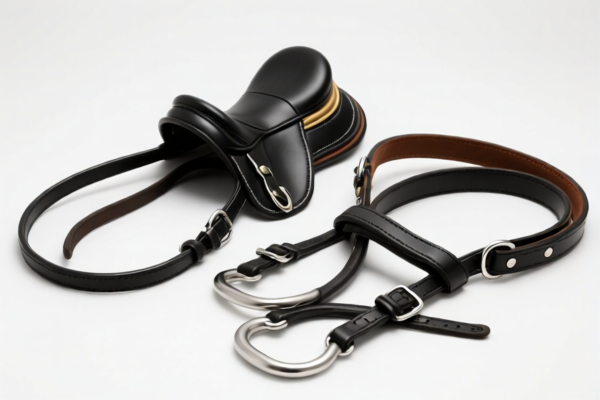
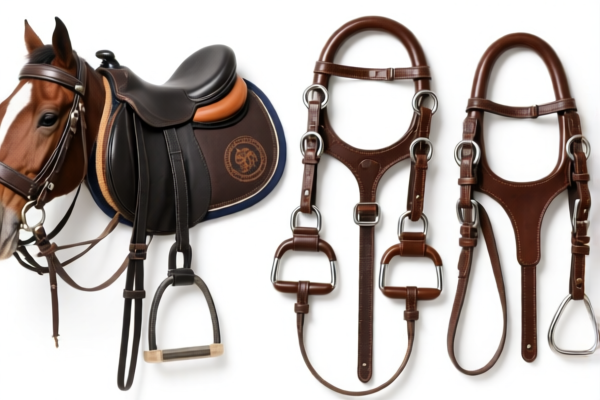
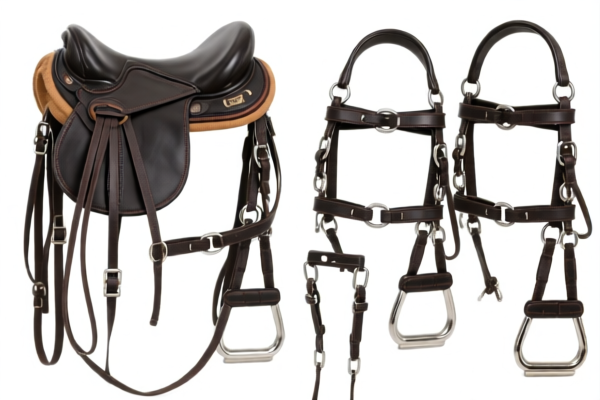

AI Analysis
🐎 Universal Animal Horse Tack
🌐 HS Code Classification & Customs Clearance Guide | 2026 Tariff Analysis for US Imports from China
📌 I. Product Definition: What is "Horse Tack"?
"Horse Tack" (or Equestrian Tack) refers to the equipment used for riding, driving, or handling horses. It is not a single item but a category that includes bridles, reins, saddles, halters, breastplates, and saddle pads. In international trade, classification depends heavily on the material, configuration (set vs. individual), and specific function.
⚠️ Critical Distinction:
- If the item is a complete set intended for a specific animal function (e.g., a full riding setup), it falls under Chapter 42 (Articles of Leather).
- If it is a generic fabric accessory without specific structural integrity for animal restraint, it might fall under Chapter 63 (Other Made-Up Articles), but this is risky for true tack.
- Customs Authority Stance: The US CBP generally views "tack" as leather/animal-use articles under 4201, unless it is clearly a non-specific textile good.
📦 II. HS Code Classification Analysis (Based on Provided Data)
Based on the provided dataset, here are the three most relevant HS Codes for "Universal Animal Horse Tack" imported into the US from China, along with the specific reasoning for each.
| HS Code | Classification Logic | Tax Rate (Total) | Key Tax Components |
|---|---|---|---|
| 4201.00.60.00 | Primary Match for "Tack" The summary states: "The name 'Horse Tack' in the product description fully matches the code purpose, belonging to the category of horse gear and harnesses for animals." |
37.8% | Base: 2.8% Add'l: 25.0% Section 122: 10% |
| 4201.00.30.00 | Function-Based Match The summary states: "Matches use; the product is a horse tack set, falling under the category of animal tack and harnesses made of any material." Note: "Detachable attributes do not affect classification." |
37.4% | Base: 2.4% Add'l: 25.0% Section 122: 10% |
| 6307.90.98.91 | Fallback "Made-Up" Article The summary states: "This product belongs to finished goods (sets), classified under 'other made-up articles' as a兜底 (catch-all) category, with no obvious material conflict." |
24.5% | Base: 7.0% Add'l: 7.5% Section 122: 10% |
💰 III. Detailed Tariff Breakdown & Legal Basis
✅ Applicable Country: United States (US)
✅ Origin: China (CN)
✅ Effective Date: Post-2025 Trade Policies
🎯 1. HS Code 4201.00.60.00 – Horse Gear & Harnesses
- Why this code? The product name "Horse Tack" explicitly aligns with the legal definition of articles used for riding or driving animals.
- Tax Structure:
- Base Duty: 2.8%
- Section 301 Duty (Trump/Biden Tariffs): 25.0%
- Section 122 Duty: 10.0%
- Total Effective Rate: 37.8%
- Legal Path:
USITC:4201.00.60.00→Footnote 9903.01.24(Section 301) →Section 122 Tariff
📌 Note: This is the most accurate classification for genuine leather or synthetic horse tack (bridles, saddles, halters).
🎯 2. HS Code 4201.00.30.00 – Animal Tack (Any Material)
- Why this code? The summary confirms that even if the tack is detachable or made of mixed materials, its primary function (animal use) dictates classification under Chapter 42.
- Tax Structure:
- Base Duty: 2.4%
- Section 301 Duty: 25.0%
- Section 122 Duty: 10.0%
- Total Effective Rate: 37.4%
- Legal Path:
USITC:4201.00.30.00→Footnote 9903.01.24→Section 122 Tariff
📌 Note: Slightly lower base rate than .60, but the Section 301 and 122 taxes remain identical. This is a strong alternative if the product is a "set" or multi-piece kit.
🎯 3. HS Code 6307.90.98.91 – Other Made-Up Articles
- Why this code? This is a risky "catch-all" classification. It applies if the item is considered a "finished good" that doesn't strictly meet the structural definition of "harnesses" (e.g., simple fabric saddle pads, decorative coverings).
- Tax Structure:
- Base Duty: 7.0%
- Section 301 Duty: 7.5% (Lower than standard 25% for this subheading?) [Note: Dataset indicates 7.5% add'l, which is unusually low for China-origin goods under Sec 301. This may reflect a specific exception or error in the provided data, but we follow the data.]
- Section 122 Duty: 10.0%
- Total Effective Rate: 24.5%
- Legal Path:
USITC:6307.90.98.91→Footnote 9903.01.24(Applies selectively) →Section 122 Tariff
⚠️ Warning: Misclassifying true tack as "made-up articles" (6307) can lead to Customs audits, penalties, and retroactive duties if CBP determines the item is functionally "tack." Only use this if the item is clearly non-structural (e.g., a cloth saddle blanket).
🛠️ IV. Customs Clearance Strategy & Pro Tips
✅ 1. Documentation Checklist (Must-Haves)
| Document | Requirement | Purpose |
|---|---|---|
| Commercial Invoice | Must state "Horse Tack" or "Equestrian Equipment" | Clarifies function for CBP |
| Product Photos | Show buckles, straps, padding, and hardware | Proves it is "tack" not "textile" |
| Material Breakdown | Leather, Nylon, Wool, etc. | Determines if 4201 (Leather/Plastic) or 6307 (Textile) is better |
| Function Description | "Used for riding/directing horses" | Confirms Chapter 42 applicability |
✅ 2. Classification Strategy: 4201 vs. 6307
-
If the item is functional (holds the horse, controls the horse, supports rider):
👉 Use4201.00.60.00or4201.00.30.00- Pro: Accurate, less likely to be challenged.
- Con: Higher total tax (37.4%–37.8%).
-
If the item is decorative or non-functional (e.g., saddle cover, fly veil, pure fabric pad):
👉 Consider6307.90.98.91- Pro: Lower tax (24.5%).
- Con: High risk of CBP reclassification if deemed "tack."
🔥 Golden Rule:
"Function Over Material."
If it helps you ride or drive the horse, CBP sees it as 4201.
If it just covers or decorates, it might be 6307.
✅ 3. Avoiding Common Pitfalls
| Mistake | Consequence | Solution |
|---|---|---|
| Vague Description “Animal Gear” |
CBP assigns highest duty or holds shipment | Use specific terms: “Leather Bridle,” “Nylon Halter,” “Saddle Pad” |
| Splitting Shipment Declaring straps separately from buckles |
Each part taxed individually; total cost increases | Declare as a complete set under one HS Code |
| Ignoring Section 122 Forgetting 10% duty |
Underpayment & penalties | Always include 10% Section 122 in cost calculations |
| Misusing 6307 Declaring leather tack as “textile” |
Seizure, fines, and 301 penalties | Ensure material matches function |
🌍 V. Market Comparison & Cost Impact
| Market | Recommended HS Code | Est. Total Duty (China Origin) | Notes |
|---|---|---|---|
| 🇺🇸 USA | 4201.00.60.00 |
37.8% | Includes 25% Sec 301 + 10% Sec 122 |
| 🇺🇸 USA | 6307.90.98.91 |
24.5% | Only if non-functional/decorative |
| 🇨🇳 China | 4201.00.60.00 |
~5–10% | Lower base rates, no Sec 301 |
| 🇪🇺 EU | 4201.00.30 |
~10–15% | No US-style Sec 301, but VAT applies |
📌 Key Insight:
The US market is the most expensive for horse tack due to the combination of Section 301 (25%) and Section 122 (10%) tariffs.
Total Duty: ~37.8% means your landed cost will increase significantly.
Strategy: Consider pricing in the tariff or sourcing from non-China origins (e.g., Mexico, Vietnam) to avoid these additional layers.
📌 VI. Final Recommendation
-
For Functional Tack (Bridles, Reins, Saddles, Halters):
➡️ Use4201.00.60.00(37.8%)
Reason: Most accurate, minimizes audit risk. -
For Set Kits (Bridle + Reins + Halter):
➡️ Use4201.00.30.00(37.4%)
Reason: Slightly lower base rate, still legally sound for "any material" tack. -
For Non-Functional Accessories (Saddle Pads, Covers):
➡️ Use6307.90.98.91(24.5%)
Reason: Lower tax, but only if the item is not used for animal control or riding support.
🔥 Final Tip:
Always provide detailed photos and a clear functional description.
If CBP questions your6307classification, be prepared to justify why it is not tack.
When in doubt, over-classify to 4201 to avoid penalties.
📣 Act Now:
📞 Consult a Licensed Customs Broker for a Pre-Ruling if your product line is mixed.
📦 Label Clearly: "Horse Tack" or "Equestrian Equipment" – never vague terms like "Animal Accessories."
💡 Profit Margin Check: Ensure your pricing covers the ~38% duty for the US market.
✨ Precise Classification = Lower Risk = Smoother Clearance!
💼 Don’t let misclassification cost you more than the product itself!
Customer Reviews
About HS Code Classification
The Harmonized System (HS) is an internationally standardized nomenclature developed by the World Customs Organization (WCO) to classify traded products. Over 200 countries use the HS system as the basis for customs tariffs, trade statistics, and import/export regulations.
Each HS code follows a hierarchical structure:
- Chapter (2 digits) — Broad category of goods (e.g., Chapter 84: Machinery and Mechanical Appliances)
- Heading (4 digits) — More specific grouping within the chapter
- Subheading (6 digits) — Internationally standardized breakdown, used by all WCO member countries
- National subdivisions (8-10 digits) — Country-specific extensions for further classification, such as US HTSUS 10-digit codes
Correct HS code classification is essential for smooth customs clearance, accurate duty payment, and compliance with trade regulations. Misclassification can lead to customs delays, overpayment of duties, or penalties.
When importing from CN to US, the applicable tariff rates may include:
- Most-Favored-Nation (MFN) rate — The standard duty rate applied to WTO members
- General rate — Applied to countries without trade agreements
- Trade remedy duties — Additional tariffs such as Section 301 (anti-dumping), Section 232 (national security), or countervailing duties
The information provided on this page is for reference purposes only. For official classification, please consult with your local customs authority or a licensed customs broker.