Universal Animal Jacket
CN → US| HS Code | Tariff Rate | Origin | Destination | Doc |
|---|---|---|---|---|
| 6114909070 | 15.6% | CN | US | Official Doc |
| 6114200055 | 28.3% | CN | US | Official Doc |
| 4201006000 | 37.8% | CN | US | Official Doc |
| 6214900090 | 28.8% | CN | US | Official Doc |
| 4201006000 | 37.8% | CN | US | Official Doc |
Product Images
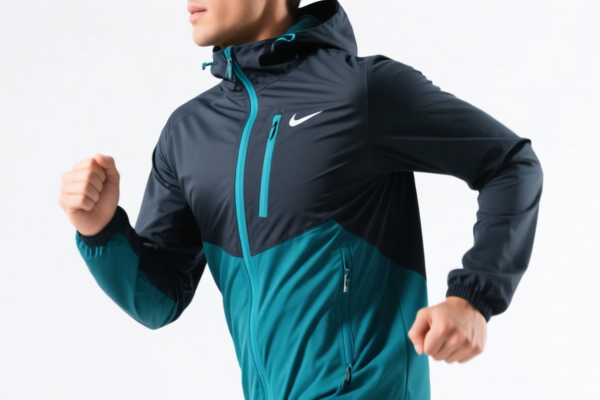
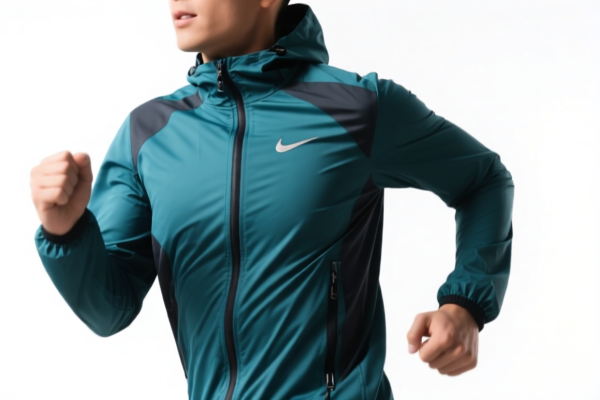


AI Analysis
🐕 Universal Animal Jacket (Pet Coats & Outerwear)
🌐 HS Code Reference & Clearance Guide | 2026 Latest Tariff Analysis | Professional Customs Strategy
📌 I. Product Definition: What Exactly Is a "Universal Animal Jacket"?
A "Universal Animal Jacket" typically refers to outerwear designed for pets (most commonly dogs or cats). In international trade, the classification depends heavily on two factors: 1. Intended Use: Is it for human use or animal use? 2. Material & Construction: Is it knitted/crocheted (Chapter 61) or woven (Chapter 62)? Is it made of textile or other materials (Chapter 42)?
⚠️ Critical Distinction Point:
- If it is Textile (Knitted/Crocheted) intended for Humans → 6114
- If it is Textile (Woven) intended for Humans → 6214
- If it is intended for Animals (regardless of material, often grouped under specific animal articles or textile analogs) → 4201 or 6114/6214 depending on customs interpretation of "garments of a kind designed for animals."
📦 II. HS Code Classification Details (2026 Tariff Authority Match)
Based on the provided data, here are the precise classifications and tax implications:
| HS Code | Product Description | Application Scenario | Key Differentiator |
|---|---|---|---|
6114.90.90.70 |
Knitted/Crocheted Garments, Other | Human use, knitwear, "jacket" shape | ✅ Knitted/Crocheted; Textile Material |
6114.20.00.55 |
Other Textile Garments (Catch-all) | Non-specific category, no material conflict | ✅ Fallback logic for other textile categories |
4201.00.60.00 |
Saddlery and Harnesses; Articles of Animal Origin | Animal Use (Dog/Cat Coats) | ✅ Intended for Animals; Outerwear shape |
6214.90.00.90 |
Woven Textile Outerwear | Human use, woven fabric (e.g., nylon, polyester woven) | ✅ Woven; Textile Material |
4201.00.60.00 |
Animal Apparel (Dog Clothes) | Specific for pets, textile/synthetic material | ✅ Explicitly for Pets (Dog/Cat); Outerwear |
🔍 Key Insight:
- The biggest cost difference lies between Human Garments (Ch 61/62) and Animal Articles (Ch 42).
- Human Garments (6114/6214) have lower base tariffs but still incur high additional taxes.
- Animal Articles (4201) have a very low base tariff (2.8%) but a massive additional tariff (25%), resulting in the highest total tax burden.
💰 III. 2026 Tariff Rate Breakdown (Including Surtaxes & Policy Add-ons)
✅ Applicable Country: United States (US)
✅ Origin: China (CN)
✅ Effective Date: From November 10, 2025 (inclusive of subsequent imports)
🎯 1. 6114.90.90.70 —— Knitted/Crocheted Garments (Human Use)
| Item | Details |
|---|---|
| Base Tariff | 5.6% |
| Section 301 Surtax | 0.0% (No additional 25% tariff mentioned in this specific path) |
| Section 122 Tariff | 10% (Specific policy add-on) |
| Total Tax Rate | 15.6% |
| Tax Calculation | CIF Value × 15.6% |
| De Minimis Eligibility | ❌ No (High threshold applies) |
| Legal Basis Path | Base: 5.6% → Section 122: 10% → Total: 15.6% |
📌 Interpretation:
- This is the most cost-effective option if the product can be classified as a knitted garment (Chapter 61).
- The 10% "Section 122" tariff is a specific policy levy, but the absence of the 25% Section 301 tariff makes this significantly cheaper than other options.
🎯 2. 6114.20.00.55 —— Other Textile Garments (Catch-all)
| Item | Details |
|---|---|
| Base Tariff | 10.8% |
| Section 301 Surtax | 7.5% |
| Section 122 Tariff | 10% |
| Total Tax Rate | 28.3% |
| Tax Calculation | CIF Value × 28.3% |
| De Minimis Eligibility | ❌ No |
| Legal Basis Path | Base: 10.8% → Surtax: 7.5% → Section 122: 10% → Total: 28.3% |
📌 Interpretation:
- This "catch-all" textile classification incurs all three taxes: Base, Section 301 Surtax, and Section 122.
- It is more expensive than the knitted version (6114.90.90.70) by 12.7%.
🎯 3. 4201.00.60.00 —— Animal Articles (Dog/Cat Jackets)
| Item | Details |
|---|---|
| Base Tariff | 2.8% |
| Section 301 Surtax | 25.0% (High Surtax for Animal Articles) |
| Section 122 Tariff | 10% |
| Total Tax Rate | 37.8% |
| Tax Calculation | CIF Value × 37.8% |
| De Minimis Eligibility | ❌ No |
| Legal Basis Path | Base: 2.8% → Surtax: 25.0% → Section 122: 10% → Total: 37.8% |
📌 Interpretation:
- Highest Tax Burden. Even though the base tariff is low (2.8%), the 25% Section 301 Surtax dominates.
- This classification is for items explicitly designed for animals (e.g., "Dog Coat," "Pet Jacket").
- Warning: Do not classify human-looking pet clothes as "Animal Articles" if they can be reasonably classified as human garments, to avoid this 37.8% rate. However, if it is clearly for pets, this is the correct code.
🎯 4. 6214.90.00.90 —— Woven Textile Outerwear (Human Use)
| Item | Details |
|---|---|
| Base Tariff | 11.3% |
| Section 301 Surtax | 7.5% |
| Section 122 Tariff | 10% |
| Total Tax Rate | 28.8% |
| Tax Calculation | CIF Value × 28.8% |
| De Minimis Eligibility | ❌ No |
| Legal Basis Path | Base: 11.3% → Surtax: 7.5% → Section 122: 10% → Total: 28.8% |
📌 Interpretation:
- Similar to6114.20.00.55but with a slightly higher base rate.
- Applies to woven fabrics (e.g., nylon raincoats, polyester shells) intended for humans.
- If the product is a "Universal Animal Jacket" made of woven fabric, customs may still allow Chapter 61/62 if it lacks specific animal features (e.g., leash holes, specific sizing), but risk of reclassification to 4201 exists.
🛠️ IV. Clearance Practical Advice (Battle-Tested Tips)
✅ 1. Preparation Checklist (Non-Negotiable)
| Document | Required | Explanation |
|---|---|---|
| ✅ Product Specifications | ✔️ | Material composition (Knitted vs. Woven), Dimensions, Weight |
| ✅ Product Photos | ✔️ | Show all features: Zippers, Leash Holes, Branding, Tags |
| ✅ Commercial Invoice | ✔️ | Clearly state: "Knitted/Crocheted Garment" OR "Article for Animal Use" |
| ✅ Origin Certificate (CO) | ✔️ | Required for China-origin goods to confirm Section 301 applicability |
| ✅ Packaging List | ✔️ | Confirm items are packed as a set, not split |
✅ 2. Declaration Strategy (Key Mantras)
🔥 "Knit Low, Weave Mid, Animal High!"
Translation: Knitted garments (6114) have the lowest tax (15.6%). Woven garments (6214) are mid-tier (28.8%). Animal-specific articles (4201) are the highest (37.8%).
| Scenario | Correct Declaration | Risk of Misclassification |
|---|---|---|
| Knitted Pet Coat | Declare as 6114.90.90.70 (Knitted Garment) |
Low risk if no unique animal features |
| Woven Pet Coat | Declare as 6214.90.00.90 (Woven Garment) |
Medium risk; customs may check for animal-specific design |
| Dog Coat with Leash Hole | Declare as 4201.00.60.00 (Animal Article) |
High risk if declared as human garment; leads to 37.8% tax + penalty |
| Human Jacket Worn by Pet | Declare as 6114 or 6214 |
Best for cost; ensure it looks like a human jacket |
📌 Critical Warning:
- If your product has leash holes, specific animal-sized patterns, or pet-themed designs, Customs will likely classify it as4201.00.60.00.
- To avoid the 37.8% tax, ensure the product looks like a human garment (even if sized for small pets) and use knitted fabrics (6114) whenever possible.
✅ 3. Special Circumstances
| Situation | Handling Advice |
|---|---|
| Unisex/Human-Style Pet Clothes | Use 6114.90.90.70 (Knitted) to minimize tax. Avoid animal-specific terminology in HS description. |
| Woven Raincoat for Dogs | Use 6214.90.00.90 (Woven). Still cheaper than 4201. |
| Accessories (Leashes, Harnesses) | May fall under 4201 as well. Check if they are "saddlery" or "harness." |
| Non-Textile Materials (Leather/Plastic) | Likely 4201 or Chapter 39/41. Higher risk for 25% surtax. |
🌍 V. Global Market Comparison (2026 Latest)
| Country/Region | Recommended HS Code | Tariff Rate | Certification | Notes |
|---|---|---|---|---|
| 🇺🇸 USA | 6114.90.90.70 |
15.6% | No special cert | Best option for knitted items |
| 🇺🇸 USA | 4201.00.60.00 |
37.8% | No special cert | Highest tax; only for clear animal use |
| 🇨🇳 China | 6114.90.90.70 |
5% | No special cert | Lower base tax, no Section 301 |
| 🇪🇺 EU | 6114.90.90.70 |
0-12% | CE/RoHS | No Section 301 or 122 equivalent |
| 🇦🇺 Australia | 6114.90.90.70 |
5-10% | No special cert | Moderate tariffs |
📌 Conclusion:
- USA is the most expensive market due to Section 301 and Section 122 tariffs.
- Knitted garments (6114) are the strategic choice for US clearance to save ~22% in tax compared to animal articles.
📌 VI. Common Mistakes & Pitfalls (Lessons Learned)
❌ Mistake 1: Classifying a knitted dog coat as 4201.00.60.00
👉 Result: Pay 37.8% tax instead of 15.6%. Loss of 22.2% margin!
❌ Mistake 2: Declaring woven pet jackets as 6114 (Knitted)
👉 Result: Customs inspection reveals woven fabric → Reclassification to 6214 (28.8%) + Penalty.
❌ Mistake 3: Ignoring Section 122 Tariff
👉 Result: Underpaying by 10% on all textile/animal articles. Audit risk.
❌ Mistake 4: Using "Dog Jacket" in HS Description for Human-like Garments
👉 Result: Customs flags as "Animal Article" → Pushed to 4201 (37.8%).
✅ Correct Practice:
"Knitted Jacket for Pets, Unisex Design, Cotton Blend, Model XYZ"
→ Declared under6114.90.90.70(15.6% Tax)
🎯 VII. Conclusion: Smart Classification, Maximize Profit!
🎯 Remember the Mantra:
🔹 "Knit is King (15.6%), Weave is Middle (28.8%), Animal is Expensive (37.8%)."
🔹 "Design like Human, Label for Pet, Save 22% in Tax!"
📌 Pro Tip:
If your product is knitted and has a human-like cut, even with leash holes, try to classify under 6114.90.90.70. Provide evidence that the style is generic/unisex.
For woven products, aim for 6214.90.00.90 if possible, as it is still cheaper than 4201.
📣 Immediate Action:
📞 Consult your customs broker for Pre-Ruling on
6114eligibility.
🚀 Optimize product design (knitted fabric, human-style) to lower tax burden.
✨ Professional Clearance Starts with Accurate Classification!
💼 Your Profit Margin is Protected by Smart HS Code Strategy!
Customer Reviews
About HS Code Classification
The Harmonized System (HS) is an internationally standardized nomenclature developed by the World Customs Organization (WCO) to classify traded products. Over 200 countries use the HS system as the basis for customs tariffs, trade statistics, and import/export regulations.
Each HS code follows a hierarchical structure:
- Chapter (2 digits) — Broad category of goods (e.g., Chapter 84: Machinery and Mechanical Appliances)
- Heading (4 digits) — More specific grouping within the chapter
- Subheading (6 digits) — Internationally standardized breakdown, used by all WCO member countries
- National subdivisions (8-10 digits) — Country-specific extensions for further classification, such as US HTSUS 10-digit codes
Correct HS code classification is essential for smooth customs clearance, accurate duty payment, and compliance with trade regulations. Misclassification can lead to customs delays, overpayment of duties, or penalties.
When importing from CN to US, the applicable tariff rates may include:
- Most-Favored-Nation (MFN) rate — The standard duty rate applied to WTO members
- General rate — Applied to countries without trade agreements
- Trade remedy duties — Additional tariffs such as Section 301 (anti-dumping), Section 232 (national security), or countervailing duties
The information provided on this page is for reference purposes only. For official classification, please consult with your local customs authority or a licensed customs broker.