Universal Animal Saddle Pad Cotton
CN → US| HS Code | Tariff Rate | Origin | Destination | Doc |
|---|---|---|---|---|
| 4201006000 | 12.8% | CN | US | Official Doc |
| 3926909989 | 22.8% | CN | US | Official Doc |
| 4201003000 | 37.4% | CN | US | Official Doc |
| 3926909950 | 22.8% | CN | US | Official Doc |
| 3926909950 | 22.8% | CN | US | Official Doc |
Product Images
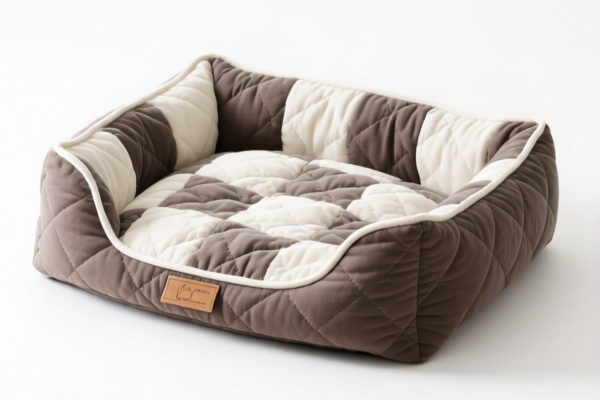
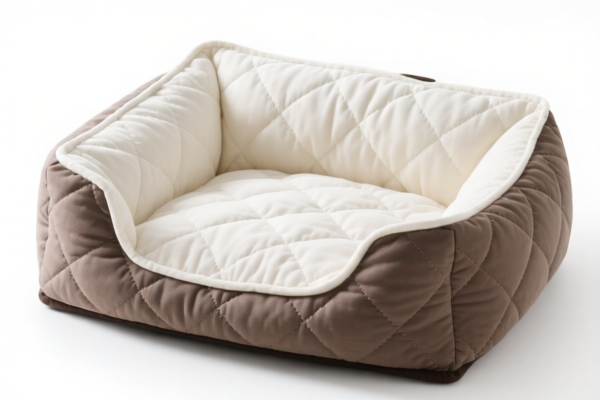
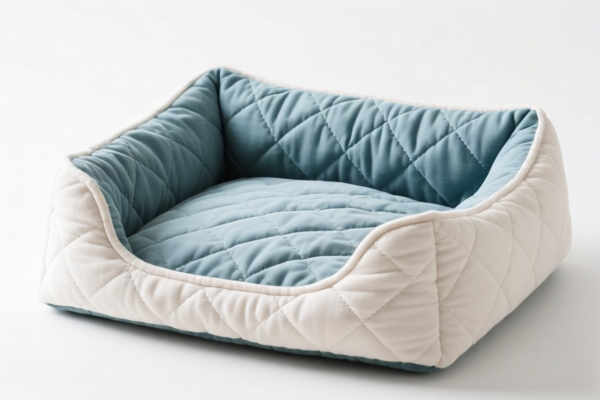
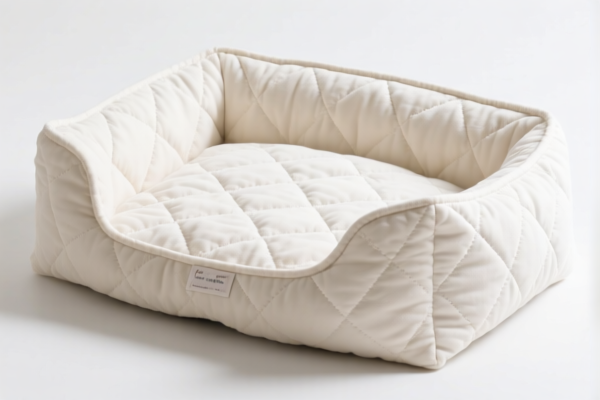
AI Analysis
🐎 Universal Animal Saddle Pad Cotton: HS Code Classification & US Customs Clearance Guide
🌐 HS Code Reference & Customs Clearance Guide | 2026 Latest Tariff Analysis | Professional Strategy
📌 I. Product Definition: What is a "Universal Animal Saddle Pad Cotton"?
A Saddle Pad is an essential accessory in equestrian sports, placed between the saddle and the horse's back. It serves three primary functions: 1. Cushioning: Protects the horse’s spine and muscles from saddle pressure. 2. Absorption: Wicks away sweat to keep the horse dry. 3. Fit: Helps secure the saddle in place and fills gaps for a better fit.
The term "Cotton" refers to the material composition (typically cotton filling or cotton-blend fabric), which classifies it as a soft, non-rigid textile composite. In international trade, classification hinges on whether it is viewed as a specific equestrian accessory (Part of Horse Tack) or a general-purpose padding/material.
⚠️ Key Classification Distinction: - If classified under Chapters 42 (Articles of Leather; Saddle Harness), it is treated as a specialized equestrian item. - If classified under Chapter 39 (Plastics/Other) or general textile categories, it is treated as a generic padding or unclassified article.
📦 II. HS Code Classification Matrix (2026 Tariff Schedule)
Based on the provided data, here are the four potential HS Codes and their logical justifications.
| HS Code | Classification Logic & Summary | Tariff Impact |
|---|---|---|
| 4201.00.60.00 | Most Favorable for Equestrian Use Classified under Chapter 42 (Articles of Leather; Saddlery & Harness). • Logic: Directly fits the definition of a "saddle pad" (part of horse tack). • Material: Cotton filling aligns with standard equestrian padding requirements. |
12.8% (Lowest Base + Add.) |
| 3926.90.99.89 | General Plastics/Synthetic Fallback Classified under Chapter 39 (Plastics and Articles Thereof). • Logic: Treated as a "filling article" not specifically listed elsewhere. Assumes synthetic/composite nature. • Risk: Misclassification risk if purely cotton, but often used for mixed-material pads. |
22.8% |
| 4201.00.30.00 | Specific Equestrian Sub-category Classified under Chapter 42. • Logic: Fits the "saddle pad" definition precisely in usage and form. • Penalty: Subject to high Section 301 tariffs due to specific trade policy targeting this sub-heading. |
37.4% (Highest Effective Rate) |
| 3926.90.99.50 | Transport/Medical Padding Fallback Classified under Chapter 39. • Logic: Viewed as a "padding material" for transport or general use. Non-metallic, soft form. • Note: Appears twice in data with identical rates. |
22.8% |
💰 III. Detailed Tariff Breakdown (US Imports from China)
✅ Applicable Country: United States (US)
✅ Origin: China (CN)
✅ Effective Time: Post-2025 Adjustments (Including Section 301 & IEEPA)
🎯 1. 4201.00.60.00 — The Strategic Choice
Best for cost optimization while maintaining accurate equestrian classification.
| Item | Detail |
|---|---|
| Base Duty | 2.8% |
| Section 301 (Add'l) | 0.0% (Note: Data shows 0%, likely exempt or low-tier) |
| Section 122 / IEEPA | +10% |
| Total Effective Rate | 12.8% |
| Calculation | CIF Value × 12.8% |
| De Minimis Exemption | ❌ Not Eligible (De Minimis usually excludes Section 301/122 goods) |
| Legal Basis | USITC: 4201.00.60.00 → IEEPA: 122 Clause |
📌 Analysis:
This is the lowest taxable rate. By arguing the product is a specialized "saddle pad" under Chapter 42, you avoid the higher Section 301 penalties often applied to Chapter 39 goods. The 10% IEEPA/122 tariff is unavoidable for Chinese-origin equestrian goods, but the base duty is minimal.
🎯 2. 3926.90.99.89 & 3926.90.99.50 — The Mid-Tier Options
Used when the pad contains significant synthetic materials or is classified as general padding.
| Item | Detail |
|---|---|
| Base Duty | 5.3% |
| Section 301 (Add'l) | +7.5% |
| Section 122 / IEEPA | +10% |
| Total Effective Rate | 22.8% |
| Calculation | CIF Value × 22.8% |
| De Minimis Exemption | ❌ Not Eligible |
| Legal Basis | USITC: 3926.90.99.50/89 → Section 301 → IEEPA: 122 Clause |
📌 Analysis:
These two codes (89and50) have identical tax implications in the provided data. They are suitable if the pad is marketed as "general-purpose cushioning" rather than strictly equestrian. However, they are 9.5% more expensive than the4201.00.60.00classification due to the higher base duty and Section 301 add-on.
🎯 3. 4201.00.30.00 — The High-Cost Equestrian Category
Avoid unless specific legal exemption applies.
| Item | Detail |
|---|---|
| Base Duty | 2.4% |
| Section 301 (Add'l) | +25.0% (High Penalty) |
| Section 122 / IEEPA | +10% |
| Total Effective Rate | 37.4% |
| Calculation | CIF Value × 37.4% |
| De Minimis Exemption | ❌ Not Eligible |
| Legal Basis | USITC: 4201.00.30.00 → Section 301 Footnote → IEEPA: 122 Clause |
📌 Analysis:
Even though it is a Chapter 42 item (correct category), this specific sub-heading triggers the maximum 25% Section 301 tariff. This makes it the most expensive option. Importers should actively avoid this code for cotton saddle pads unless a specific exclusion list applies.
🛠️ IV. Customs Clearance Strategy & Recommendations
✅ 1. Documentation Checklist (Critical for Chapter 42)
To successfully clear under 4201.00.60.00 (12.8%), you must prove the product is an equestrian accessory.
| Document | Requirement |
|---|---|
| Product Description | Must explicitly state: "Saddle Pad for Horses/Animals, Cotton Filling, Equestrian Use" |
| Material Breakdown | Detailed fabric composition (e.g., "Outer: Polyester, Filling: 100% Cotton") |
| Usage Statement | Declaration that the product is designed specifically for use with saddles |
| Photos | Clear images showing the pad’s shape, size, and placement on a saddle (if possible) |
| Invoice | Must match the description precisely; avoid generic terms like "Cushion" or "Mat" |
✅ 2. Classification Strategy (How to Save Money)
| Scenario | Recommended HS Code | Total Tax | Why? |
|---|---|---|---|
| Pure Cotton Saddle Pad | 4201.00.60.00 | 12.8% | ✅ Lowest tax. Correct functional classification. |
| Synthetic/Mixed Pad | 3926.90.99.89 | 22.8% | ⚠️ Mid-tier. Use if cotton content is low (<50%). |
| High-Value Ornamental Pad | 4201.00.30.00 | 37.4% | ❌ Avoid. High Section 301 penalty. |
🔥 Pro Tip:
Never declare "Saddle Pad" under4201.00.30.00if you want to save taxes. Instead, argue for4201.00.60.00by emphasizing the generic nature of the cotton filling and its standard equestrian function, which falls under the broader "saddlery" category rather than the penalized sub-heading.
✅ 3. Common Pitfalls to Avoid
❌ Mistake 1: Using generic terms like "Cotton Mat" or "Animal Cushion"
👉 Risk: Customs may reclassify under Chapter 39 (3926.90.99) or reject Chapter 42 eligibility → Higher Tax + Delay.
❌ Mistake 2: Ignoring Section 122/IEEPA Tariffs
👉 Risk: All Chinese-origin textile/leather goods from this chapter face a 10% additional tariff. Do not plan pricing without including this cost.
❌ Mistake 3: Misrepresenting Material Content
👉 Risk: If you claim 100% cotton but the filling is synthetic foam, Customs may flag for fraud or misclassification → Fines + Seizure.
🌍 V. Global Market Comparison (2026 Context)
| Market | Best HS Code | Est. Total Duty | Notes |
|---|---|---|---|
| 🇺🇸 USA | 4201.00.60.00 |
12.8% | Best balance of accuracy and cost. Avoid 4201.00.30.00. |
| 🇨🇳 China | 4201.00.60.00 |
~6.5% | Lower base duty, no Section 301. |
| 🇪🇺 EU | 4201.00.30 |
~12.0% | VAT not included. No Section 301 equivalent. |
| 🇬🇧 UK | 4201.00.30 |
~12.0% | Post-Brexit rules apply. |
📌 Conclusion for US Importers:
The 10% IEEPA/Section 122 tariff is universal for Chinese goods in this category. The key to saving money is choosing4201.00.60.00over4201.00.30.00to save an extra 24.6% in duties.
📌 VI. Final Verdict & Action Plan
🏆 Recommendation:
Use HS Code 4201.00.60.00
- Total Tax: 12.8%
- Justification: The product is a "saddle pad" (Chapter 42) with cotton filling. It does not fall under the highly penalized 4201.00.30.00 sub-heading if described correctly as a general equestrian accessory.
🚀 Immediate Next Steps:
- Update Invoice Description: Change generic names to "Cotton Filled Saddle Pad for Equine Use".
- Verify Material Composition: Ensure cotton content is accurate.
- Apply Pre-Ruling (Optional): If shipping large volumes, file a binding ruling with US CBP to confirm
4201.00.60.00eligibility. - Budget for 12.8%: Include this in your landed cost calculation. Do not assume de minimis exemption applies (it does not).
📣 Need Help?
📞 Contact a licensed customs broker to file a Pre-Import Ruling.
📄 Provide product samples and photos to justify Chapter 42 classification.
💡 Avoid the 37.4% tax trap! Choose4201.00.60.00for smarter margins.
✨ Accurate Classification = Lower Taxes + Faster Clearance
💼 Don’t let tariff complexity cost you profit.
Customer Reviews
About HS Code Classification
The Harmonized System (HS) is an internationally standardized nomenclature developed by the World Customs Organization (WCO) to classify traded products. Over 200 countries use the HS system as the basis for customs tariffs, trade statistics, and import/export regulations.
Each HS code follows a hierarchical structure:
- Chapter (2 digits) — Broad category of goods (e.g., Chapter 84: Machinery and Mechanical Appliances)
- Heading (4 digits) — More specific grouping within the chapter
- Subheading (6 digits) — Internationally standardized breakdown, used by all WCO member countries
- National subdivisions (8-10 digits) — Country-specific extensions for further classification, such as US HTSUS 10-digit codes
Correct HS code classification is essential for smooth customs clearance, accurate duty payment, and compliance with trade regulations. Misclassification can lead to customs delays, overpayment of duties, or penalties.
When importing from CN to US, the applicable tariff rates may include:
- Most-Favored-Nation (MFN) rate — The standard duty rate applied to WTO members
- General rate — Applied to countries without trade agreements
- Trade remedy duties — Additional tariffs such as Section 301 (anti-dumping), Section 232 (national security), or countervailing duties
The information provided on this page is for reference purposes only. For official classification, please consult with your local customs authority or a licensed customs broker.