Universal Car Seat Cover
CN → US| HS Code | Tariff Rate | Origin | Destination | Doc |
|---|---|---|---|---|
| 9401991085 | 17.5% | CN | US | Official Doc |
| 9401991020 | 17.5% | CN | US | Official Doc |
| 8708998180 | 12.5% | CN | US | Official Doc |
| 9401991085 | 17.5% | CN | US | Official Doc |
| 9401991020 | 17.5% | CN | US | Official Doc |
Product Images
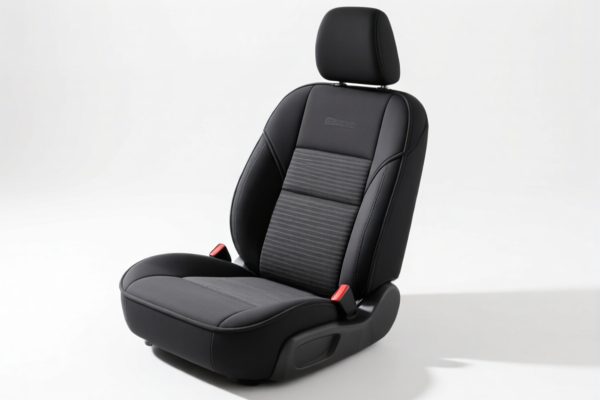
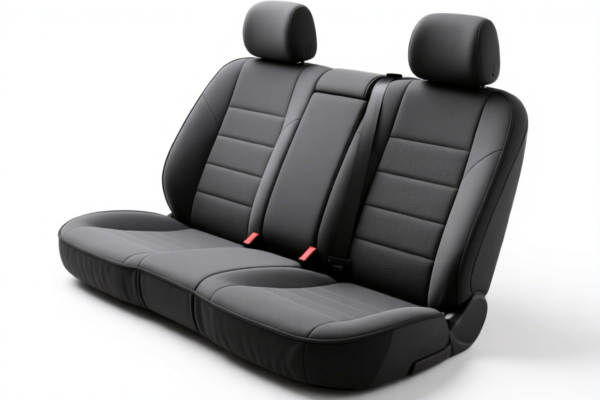
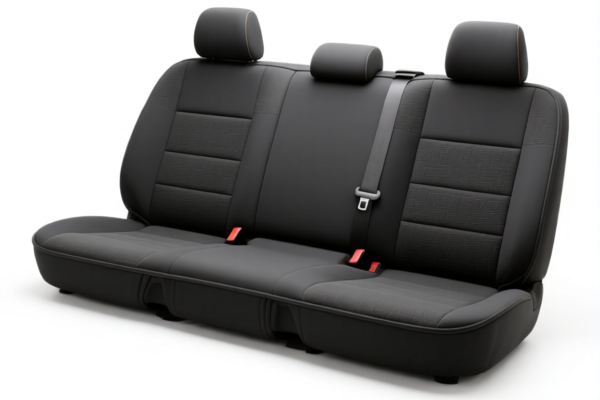
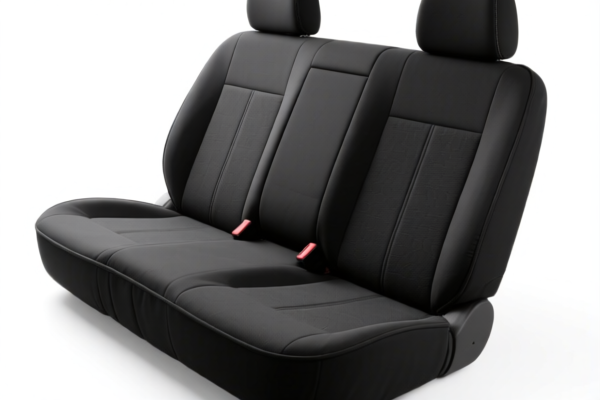
AI Analysis
🚗 Universal Car Seat Cover (Automotive Seat Covers)
🌐 HS Code Reference & Customs Clearance Guide | 2026 Latest Tariff Analysis | Professional Clearance Strategy
📌 I. Product Definition & Classification: What Exactly Is a "Universal Car Seat Cover"?
A Universal Car Seat Cover is an accessory designed to protect, decorate, or enhance the comfort of vehicle seats. In international trade, its classification depends heavily on whether it is viewed as a part of the seat itself or an accessory for the vehicle.
Key Distinction Points: * Viewed as Seat Part (9401): If the cover is considered a specific component of the seating system, often inferred as textile or synthetic material due to the lack of specified material data, it falls under Chapter 94 (Furniture). * Viewed as Vehicle Accessory (8708): If the cover is categorized broadly as an interior decoration or accessory for the motor vehicle, it falls under Chapter 87 (Vehicles).
⚠️ Critical Classification Logic:
- Without Specific Material Info: Customs often apply a "fallback principle," assuming non-leather, non-textile-cut components or general textile/synthetic materials → HS 9401.99.10.
- As Vehicle Accessory: If clearly defined as an interior trim/decoration item for the car → HS 8708.99.81.
📦 II. HS Code Classification Details (2026 Latest Tariff Authority Comparison)
Based on the provided data, there are three primary HS Code pathways for Universal Car Seat Covers. Note that the tax rates differ significantly based on the chosen code.
| HS Code | Product Description | Applicable Scenario | Tax Rate |
|---|---|---|---|
9401.99.10.85 |
Automotive Seat Cover (Fallback/Other Parts) | Classified as other parts of seats; assumed non-leather/non-textile cut shapes due to vague material description. | 17.5% |
9401.99.10.20 |
Automotive Seat Cover (Textile/Synthetic Inference) | Matches use as car seat parts; inferred as textile or synthetic material based on common sense and accessory logic. | 17.5% |
8708.99.81.80 |
Car Seat Cover (Automotive Accessory/Trim) | Categorized as automotive accessories/decorations; fits the definition of vehicle parts/accessories under Chapter 87. | 12.5% |
🔍 重点提醒 (Key Reminders):
- Why 17.5% vs. 12.5%?
- Codes9401.99.10.85and9401.99.10.20carry a 7.5% Add-on Tariff (Section 301/Trade War tariff).
- Code8708.99.81.80has 0% Add-on Tariff but a 2.5% Base Tariff.
- The "122 Clause" Impact: All three codes listed above are subject to an additional 10% "122 Clause" Tariff (Section 122 or similar specific trade restriction), bringing the total to 17.5% or 12.5%.
- Strategy: If your product can be clearly justified as a general "Automotive Accessory/Trim" rather than a specific "Seat Part," HS 8708.99.81.80 is the most tax-efficient option (12.5% vs. 17.5%).
💰 III. 2026 Latest Tariff Rate Breakdown (Including Add-ons)
✅ Applicable Country: USA
✅ Origin: China (CN)
✅ Effective Time: Ongoing (Post-2025 adjustments)
🎯 1. 9401.99.10.85 & 9401.99.10.20 — Seat Parts (Textile/Synthetic Fallback)
| Item | Content |
|---|---|
| Base Tariff | 0.0% (ad valorem) |
| USITC Add-on Tariff (Section 301) | +7.5% |
| 122 Clause Tariff | +10.0% |
| Total Tariff Rate | 17.5% |
| Tax Calculation | CIF Value × 17.5% |
| De Minimis Exemption? | ❌ No (Not eligible for $800 de minimis relief if classified as restricted goods, subject to specific enforcement) |
| Legal Basis Path | USITC:9401.99.10.85 → Footnote 9903.88.01 (Section 301) → 122 Clause |
📌 Explanation:
- These codes are treated as Parts of Furniture (Chapter 94).
- The 7.5% Add-on applies to many furniture components.
- The 10% Additional Tariff is applied due to specific trade clauses (often referred to as "122" in specific customs databases for certain textile/parts imports).
- High Risk: Misclassification here leads to higher costs. Ensure material description supports this if chosen.
🎯 2. 8708.99.81.80 — Automotive Accessory/Trim
| Item | Content |
|---|---|
| Base Tariff | 2.5% (ad valorem) |
| USITC Add-on Tariff (Section 301) | 0.0% |
| 122 Clause Tariff | +10.0% |
| Total Tariff Rate | 12.5% |
| Tax Calculation | CIF Value × 12.5% |
| De Minimis Exemption? | ❌ No (Likely restricted under similar clauses) |
| Legal Basis Path | USITC:8708.99.81.80 → 122 Clause |
📌 Explanation:
- This code treats the seat cover as a Vehicle Accessory.
- No Section 301 Add-on (0%), which saves 7.5% compared to the 9401 codes.
- Only the 2.5% Base + 10% 122 Clause applies.
- Recommendation: If you can argue the product is a "trim accessory" rather than a "seat part," this is the optimal classification for cost savings.
🛠️ IV. Customs Clearance Practical Advice (Avoiding Pitfalls)
✅ 1. Required Documentation Checklist
| Document | Must Provide | Description |
|---|---|---|
| ✅ Product Specification Sheet | ✔️ | Material composition (e.g., Polyester, Neoprene, Leather), dimensions, universal fit details. |
| ✅ Product Photos | ✔️ | Clear images showing the cover on a seat, labels, and packaging. |
| ✅ Commercial Invoice | ✔️ | Clearly state "Universal Car Seat Cover" or "Automotive Interior Accessory." Avoid vague terms like "Fabric." |
| ✅ Packing List | ✔️ | Detail contents per package. |
| ✅ Material Declaration | ✔️ | Explicitly state if textile, synthetic, or leather. This is crucial for choosing between 9401 and 8708. |
| ✅ Certificate of Origin (CO) | ✔️ | To verify origin for tariff calculations. |
✅ 2. Declaration Strategy (Key Tips)
🔥 "Describe as Accessory, Not Part, to Save 5%!"
| Scenario | Recommended Declaration | Risk of Wrong Classification |
|---|---|---|
| Generic Seat Cover (Textile/Synthetic) | 8708.99.81.80 (Auto Accessory) |
Low if marketing as "Interior Trim." Avoids 7.5% Section 301 add-on. |
| Specific Seat Component (e.g., Heated Cover) | 9401.99.10.20 (Seat Part) |
High. Must prove it's integral to the seat structure. Subject to 7.5% add-on. |
| Vague Description ("Seat Cover") | Customs may default to 9401.99.10.85 |
Highest Risk. Assumes fallback category, leading to 17.5% tax. |
📌 Note on "122 Clause":
Regardless of the HS code chosen from the list above, the 10% 122 Clause Tariff applies. This is a non-negotiable add-on for these specific codes under current trade rules. Do not assume exemption.
✅ 3. Special Handling Cases
| Case | Handling Advice |
|---|---|
| Leather Seat Covers | If made of genuine leather, classification may shift. Ensure HS code supports leather (often different subheading). If listed here, assume non-leather fallback. |
| OEM Custom Fit vs. Universal | "Universal" strengthens the argument for Accessory (8708). "OEM Custom Fit" might be argued as a Part (9401). Choose 8708 for "Universal" to lower taxes. |
| Bundles (Cover + Mat) | Declare separately. Mats may have different HS codes. Mixing them can cause delays. |
🌍 V. Global Market Comparison (2026)
| Country/Region | Recommended HS Code | Total Tariff | Certification Required | Notes |
|---|---|---|---|---|
| 🇺🇸 USA | 8708.99.81.80 |
12.5% | None specific | Best option for seat covers. 9401 codes cost 17.5%. |
| 🇺🇸 USA | 9401.99.10.20 |
17.5% | None specific | Higher tax due to Section 301 add-on. |
| 🇨🇳 China | 9401.99.90.00 |
~15-20% | CCC (if applicable) | Different tariff structure for imports into China. |
| 🇪🇺 EU | 9401.99.90.00 |
4-15% | CE (if applicable) | Varies by material. No Section 301 equivalent. |
| 🇦🇺 Australia | 9401.99.90.00 |
5% | None | Generally low tariffs. |
📌 Conclusion for US Market:
- Target HS Code:8708.99.81.80.
- Why? It saves 5% in total tariffs (12.5% vs 17.5%) by avoiding the 7.5% Section 301 add-on.
- Justification: Describe as "Automotive Interior Accessory" or "Car Trim Cover" rather than "Seat Part."
📌 VI. Common Mistakes & Pitfalls (Lessons Learned)
❌ Mistake 1: Using "Seat Cover" without specifying "Automotive Accessory."
👉 Result: Customs may default to 9401.99.10.85 (Furniture Part), resulting in 17.5% tax.
✅ Fix: Use "Universal Car Accessory" in the description.
❌ Mistake 2: Ignoring the "122 Clause."
👉 Result: Underpayment by 10%. Customs will assess back taxes + penalties.
✅ Fix: Always budget for the additional 10% on these specific HS codes.
❌ Mistake 3: Misdeclaring material.
👉 Result: If you claim "Synthetic" but it's "Genuine Leather," classification changes entirely, leading to seizure or fines.
✅ Fix: Provide accurate material specs. If material is unknown, expect fallback classification (9401.99.10.85).
🎯 VII. Conclusion: Smart Classification Saves Money!
🎯 Remember:
🔹 "Accessory over Part: Save 5% on US Customs."
🔹 "122 Clause is Mandatory: Budget for that extra 10%."
🔹 "Material Matters: Unknown material = Fallback Tax (17.5%)."
📌 Pro Tip:
If your seat covers are made from specialized materials (e.g., carbon fiber, advanced composites), the classification might differ. However, for standard textile/synthetic covers, 8708.99.81.80 is the clear winner for cost efficiency in the US market.
📣 Immediate Action:
📞 Consult your customs broker to confirm if your specific "Universal Cover" qualifies as an "Accessory" under
8708.99.81.80.
🚀 Optimize your invoice description to support this classification and secure the 12.5% tax rate.
✨ Professional Clearance Starts with Accurate Classification!
💼 Your profit margin depends on every percentage point!
Customer Reviews
About HS Code Classification
The Harmonized System (HS) is an internationally standardized nomenclature developed by the World Customs Organization (WCO) to classify traded products. Over 200 countries use the HS system as the basis for customs tariffs, trade statistics, and import/export regulations.
Each HS code follows a hierarchical structure:
- Chapter (2 digits) — Broad category of goods (e.g., Chapter 84: Machinery and Mechanical Appliances)
- Heading (4 digits) — More specific grouping within the chapter
- Subheading (6 digits) — Internationally standardized breakdown, used by all WCO member countries
- National subdivisions (8-10 digits) — Country-specific extensions for further classification, such as US HTSUS 10-digit codes
Correct HS code classification is essential for smooth customs clearance, accurate duty payment, and compliance with trade regulations. Misclassification can lead to customs delays, overpayment of duties, or penalties.
When importing from CN to US, the applicable tariff rates may include:
- Most-Favored-Nation (MFN) rate — The standard duty rate applied to WTO members
- General rate — Applied to countries without trade agreements
- Trade remedy duties — Additional tariffs such as Section 301 (anti-dumping), Section 232 (national security), or countervailing duties
The information provided on this page is for reference purposes only. For official classification, please consult with your local customs authority or a licensed customs broker.