Universal Car Seat Covers
CN → US| HS Code | Tariff Rate | Origin | Destination | Doc |
|---|---|---|---|---|
| 9401991085 | 17.5% | CN | US | Official Doc |
| 9401991020 | 17.5% | CN | US | Official Doc |
| 8708998180 | 12.5% | CN | US | Official Doc |
| 9401991085 | 17.5% | CN | US | Official Doc |
| 9401991020 | 17.5% | CN | US | Official Doc |
Product Images
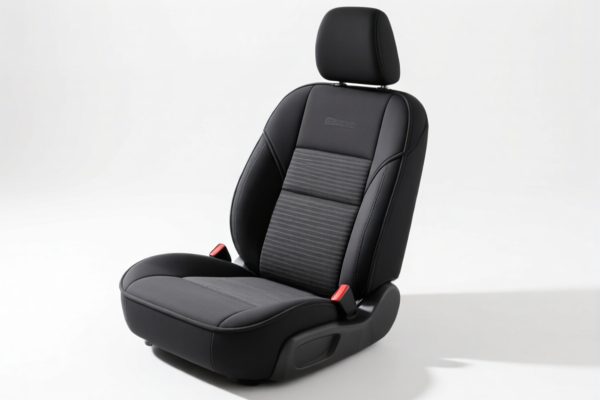
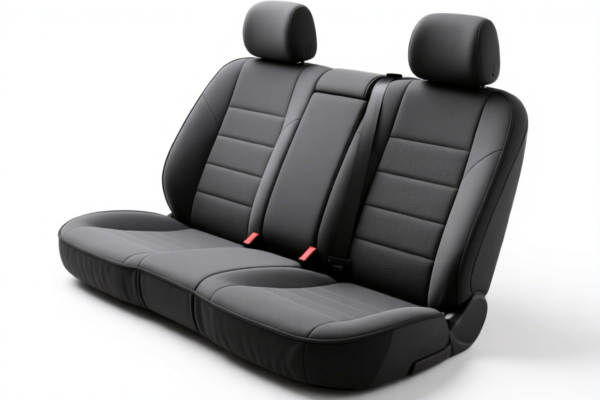
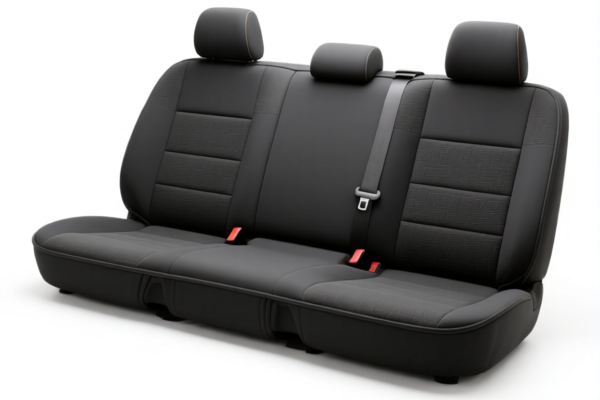
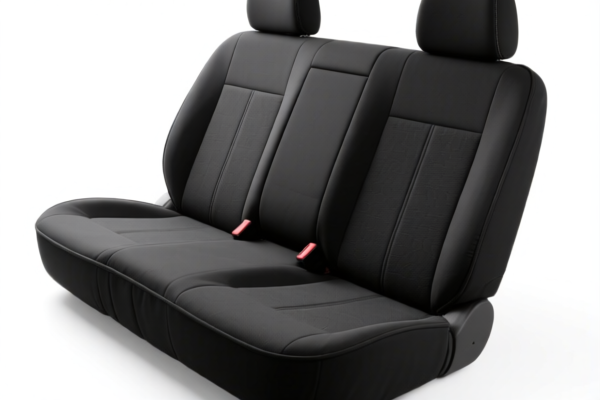
AI Analysis
🚗 Universal Car Seat Covers: HS Code Classification & Tariff Breakdown | 2026 Customs Guide
🌐 HS Code Reference & Clearance Guide | 2026 Latest Tariff Analysis | Professional Compliance Strategy
📌 I. Product Definition & Classification: What Exactly Are “Universal Car Seat Covers”?
Car seat covers are interior accessories designed to protect vehicle seats from wear, stains, and damage. In international trade, they are primarily categorized based on their primary function and material composition. Since the input “Universal Car Seat Covers” does not specify material, customs authorities often apply residual clauses or usage-based inference to determine the correct HS Code.
Two main classification paths exist: 1. Parts of Seats (Chapter 94): If viewed strictly as components of the seating assembly, regardless of material. 2. Parts of Motor Vehicles (Chapter 87): If viewed as general automotive interior accessories/decorations, typically made of textile or synthetic leather.
⚠️ Key Distinction Point:
- If the product is considered a component part of the seat structure itself →归入 Chapter 94 (9401.99.10.x)
- If the product is considered an automotive interior accessory/decor → 归入 Chapter 87 (8708.99.81.x)
📦 II. HS Code Classification Details (2026 Latest Tariff Authority Comparison)
Based on the provided data, there are two primary HS Code clusters with distinct tax implications.
| HS Code | Product Description | Application Scenario | Key Classification Logic |
|---|---|---|---|
9401.99.10.85 |
Car Seat Cover (Non-leather/Non-textile cut) | Automotive seat parts; residual category for unspecified materials | Classified as “Other parts of seats”; assumed non-leather/non-textile due to lack of explicit material definition. |
9401.99.10.20 |
Car Seat Cover (Textile/Synthetic Material) | Automotive seat parts; formed shape; inferred textile/synthetic | Classified as seat parts; matches the logical tendency for formed accessories. |
8708.99.81.80 |
Car Seat Cover (Interior Decoration Accessory) | General automotive interior accessory; decorative fitment | Classified under “Parts and Accessories of Motor Vehicles”; typically textile or synthetic leather. |
🔍 Critical Reminder:
- Chapter 94 Codes (9401.99.10.85/9401.99.10.20) carry a higher total tariff (17.5%) due to the absence of a base tariff but the presence of significant additional duties. - Chapter 87 Code (8708.99.81.80) carries a lower total tariff (12.5%) due to a 2.5% base tariff. - Misclassification can lead to significant duty discrepancies. Proof of material and intended use is crucial.
💰 III. 2026 Latest Tariff Rate Breakdown (Including Additional Duties & Policy Surcharges)
✅ Applicable Country: United States (US)
✅ Country of Origin: China (CN)
✅ Effective Date: From November 10, 2025 (including subsequent imports)
🎯 1. 9401.99.10.85 & 9401.99.10.20 —— Seat Parts (Chapter 94)
These codes are classified under “Parts of Seats.” The tariff structure is identical for both codes in the provided data.
| Item | Content |
|---|---|
| Base Tariff Rate | 0% (ad valorem) |
| Section 301 Additional Duty | +7.5% |
| 122 Clause Duty | +10% |
| Total Tariff Rate | 17.5% |
| Tax Calculation | CIF Value × 17.5% |
| De Minimis Exemption | ❌ Not Eligible (Section 301 and 122 duties generally exempt low-value shipments from de minimis relief) |
| Legal Basis Path | Base Tariff: 0% → Section 301: 7.5% → Clause 122: 10% |
📌 Explanation:
- The 0% base rate reflects the general MFN rate for these specific subheadings. - The 7.5% Section 301 duty is the standard countervailing/additional duty on many Chinese imports. - The 10% Clause 122 duty is a specific trade restriction surcharge. - Total 17.5%: This is the effective cost impact on the import value.
🎯 2. 8708.99.81.80 —— Motor Vehicle Parts & Accessories (Chapter 87)
This code is classified under “Parts and Accessories of Motor Vehicles.” It benefits from a lower base tariff.
| Item | Content |
|---|---|
| Base Tariff Rate | 2.5% (ad valorem) |
| Section 301 Additional Duty | 0.0% (Specific exemption or non-applicability for this subheading) |
| 122 Clause Duty | +10% |
| Total Tariff Rate | 12.5% |
| Tax Calculation | CIF Value × 12.5% |
| De Minimis Exemption | ❌ Not Eligible (Due to Clause 122) |
| Legal Basis Path | Base Tariff: 2.5% → Clause 122: 10% |
📌 Explanation:
- The 2.5% base rate is standard for many automotive parts under Chapter 87. - The 0% Section 301 indicates this specific subheading may be exempt from the broader 301 tariff list, or the data reflects a specific preferential treatment. - The 10% Clause 122 still applies, resulting in a lower total (12.5%) compared to the Chapter 94 codes. - Savings Potential: Choosing8708.99.81.80over9401.99.10.xsaves 5% in total duties (17.5% vs 12.5%).
🛠️ IV. Customs Clearance Practical Advice (Real-World Pitfall Avoidance Guide)
✅ 1. Preparation Checklist (Mandatory Documents)
| Document | Required | Description |
|---|---|---|
| ✅ Product Specification Sheet | ✔️ | Must clearly state dimensions, material (e.g., 100% Polyester, PU Leather), and fit type (Universal/Semi-custom). |
| ✅ Material Composition Certificate | ✔️ | Essential to justify Chapter 87 (Accessory) vs. Chapter 94 (Seat Part). If textile, support 8708.99.81.80 if possible. |
| ✅ Product Photos (Front/Back/Interior) | ✔️ | Show the hook-and-loop fasteners, elastic edges, and any branding. |
| ✅ Commercial Invoice | ✔️ | Must describe as “Universal Car Seat Cover Set, Textile/Synthetic, for Passenger Vehicles.” Avoid vague terms like “Accessory.” |
| ✅ Packing List | ✔️ | Detail quantity per set (e.g., 1 front bucket seat cover + 1 rear bench cover). |
✅ 2. Declaration Strategy (Key Tips)
🔥 “Material First, Function Second; Chapter 87 Saves Cash!”
| Scenario | Correct Declaration | Incorrect Action |
|---|---|---|
| Textile/Synthetic Leather Covers | 8708.99.81.80 (12.5%) |
Declaring as 9401.99.10.20 (17.5%) → Overpay 5% |
| Unspecified Material Covers | Risk of 9401.99.10.85 (17.5%) |
Ambiguous description → Customs may assume residual category |
| Leather Covers | Verify specific leather HS Code (Chapter 41/94) | Declaring as generic textile code → Misclassification penalty |
| Semi-Custom (Front Row Only) | Still 8708.99.81.80 if accessory nature |
Declaring as “Seat Assembly” → Higher tariff |
📌 Note:
- If the product is clearly textile or synthetic, argue for Chapter 87 (8708.99.81.80) as an “accessory” rather than a “seat part.” - If the product is made of rigid materials or structural components, Chapter 94 may be unavoidable.
✅ 3. Special Cases Handling
| Situation | Handling Advice |
|---|---|
| OEM Custom Fits | Provide OEM approval letters. May still qualify for Chapter 87 if decorative/protective function dominates. |
| Mixed Material Packs | Declare based on the essential character (e.g., if 90% textile, declare as textile accessory). |
| Low-Value Shipments (< $800) | ⚠️ Warning: Due to 122 Clause Duty (10%), de minimis exemptions are likely not available. Do not assume duty-free entry for cheap seat covers. |
| Anti-Dumping/Countervailing | Check if specific textile materials face additional duties beyond Section 301. |
🌍 V. Global Market Clearance Comparison (2026 Latest)
| Country/Region | Recommended HS Code | Tariff Rate (China Origin) | Certification Requirements | Notes |
|---|---|---|---|---|
| 🇺🇸 USA | 8708.99.81.80 |
12.5% (10% 122-Clause) | None specific | 9401.99.10.20 is 17.5%. Choose 8708 for savings. |
| 🇨🇳 China | 8708.99.81.80 |
0% - 5% | CCC (if applicable) | Domestic trade often lower rates. |
| 🇪🇺 EU | 8708.99.81.80 |
0% - 4.5% | REACH, Flammability Standards | Textile origin rules apply. |
| 🇬🇧 UK | 8708.99.81.80 |
0% - 4.5% | UKCA (if applicable) | Post-Brexit rules vary by material. |
| 🇦🇺 Australia | 8708.99.81.80 |
0% - 5% | ADR (if containing hazardous materials) | Low duty environment. |
📌 Conclusion:
- The USA is the most critical market due to 122 Clause duties. - Chapter 87 (8708.99.81.80) is the optimal choice for textile/synthetic universal seat covers, saving 5% compared to Chapter 94 codes. - Misclassifying as Chapter 94 results in a 17.5% effective rate, which is unnecessarily high for decorative/protective accessories.
📌 VI. Common Mistakes & Pitfalls Guide (Lessons Learned)
❌ Mistake 1: Declaring seat covers as “Auto Parts” without specifying material
👉 Result: Customs may default to residual codes (9401.99.10.85) with 17.5% tax.
👉 Fix: Explicitly state “Textile Universal Car Seat Cover” to support 8708.99.81.80.
❌ Mistake 2: Assuming small shipments are duty-free due to de minimis
👉 Result: 122 Clause duties apply, leading to unexpected bills or customs holds.
👉 Fix: Calculate duties including the 10% surcharge for all shipments, regardless of value.
❌ Mistake 3: Confusing “Seat Cover” with “Seat Assembly”
👉 Result: Higher duty rates and potential regulatory scrutiny for safety-critical parts.
👉 Fix: Emphasize “Decorative/Protective Accessory” in commercial invoice.
❌ Mistake 4: Ignoring the 122 Clause Impact
👉 Result: Underestimating landed cost by 10%.
👉 Fix: Include 122 Clause in all cost calculations.
✅ Correct Approach:
“Universal Car Seat Cover Set, 100% Polyester Textile, Protective Interior Accessory, Model XYZ, Fits Most Sedans”
🎯 VII. Conclusion: Precise Classification, Higher Profit Margins!
🎯 Remember the Motto:
🔹 “Textile/Synthetic? Go Chapter 87!”
🔹 “122 Clause Applies Everywhere – Plan for 10% Surcharge!”
🔹 “Save 5% by Avoiding Chapter 94 Residual Codes!”
📌 Pro Tip:
If your seat covers are made in Vietnam, Mexico, or Thailand, you may qualify for IEEPA Exemptions or lower Section 301 rates.
Recommendation: Apply for an Advance Ruling (Pre-Ruling) from U.S. Customs to confirm the 12.5% rate for 8708.99.81.80 before bulk shipping.
📣 Immediate Action Required:
📞 Contact a licensed customs broker + Provide material specs + Request HS Code Pre-Ruling
🚀 Ensure your universal car seat covers clear customs smoothly, legally, and profitably!
✨ Professional Clearance Starts with Accurate Classification!
💼 Every Percent of Duty Saved is Pure Profit!
Customer Reviews
About HS Code Classification
The Harmonized System (HS) is an internationally standardized nomenclature developed by the World Customs Organization (WCO) to classify traded products. Over 200 countries use the HS system as the basis for customs tariffs, trade statistics, and import/export regulations.
Each HS code follows a hierarchical structure:
- Chapter (2 digits) — Broad category of goods (e.g., Chapter 84: Machinery and Mechanical Appliances)
- Heading (4 digits) — More specific grouping within the chapter
- Subheading (6 digits) — Internationally standardized breakdown, used by all WCO member countries
- National subdivisions (8-10 digits) — Country-specific extensions for further classification, such as US HTSUS 10-digit codes
Correct HS code classification is essential for smooth customs clearance, accurate duty payment, and compliance with trade regulations. Misclassification can lead to customs delays, overpayment of duties, or penalties.
When importing from CN to US, the applicable tariff rates may include:
- Most-Favored-Nation (MFN) rate — The standard duty rate applied to WTO members
- General rate — Applied to countries without trade agreements
- Trade remedy duties — Additional tariffs such as Section 301 (anti-dumping), Section 232 (national security), or countervailing duties
The information provided on this page is for reference purposes only. For official classification, please consult with your local customs authority or a licensed customs broker.