Universal Color Copy Film
CN → US| HS Code | Tariff Rate | Origin | Destination | Doc |
|---|---|---|---|---|
| 3706106030 | 35.0% | CN | US | Official Doc |
| 4823903100 | 35.0% | CN | US | Official Doc |
| 4911998000 | 17.5% | CN | US | Official Doc |
| 3706106060 | 35.0% | CN | US | Official Doc |
| 3706106030 | 35.0% | CN | US | Official Doc |
Product Images
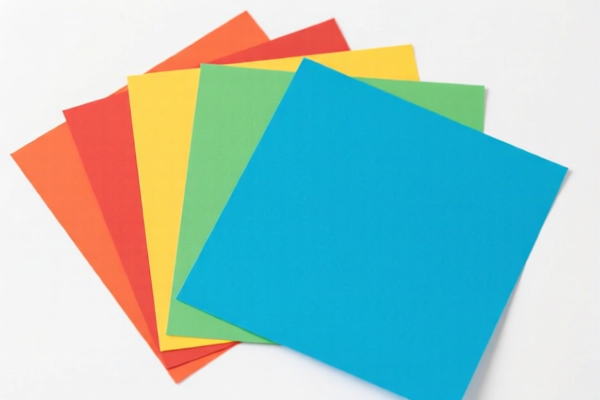

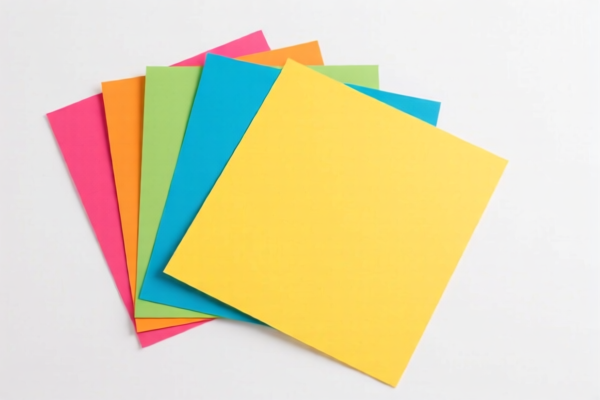

AI Analysis
🎨 Universal Color Copy Film (Thermal/Duplicating Sheet)
🌐 HS Code Reference & Customs Clearance Guide | 2026 Latest Tariff Analysis | Professional Level Clearance Strategy
📌 I. Product Definition & Classification: Do You Truly Understand "Color Copy Film"?
Universal Color Copy Film (often referred to as NCR paper sheets, carbonless copy paper, or thermal duplicating films in international trade) is a specialized paper/plastic substrate used for creating immediate duplicates of documents without the need for liquid carbon paper.
In international trade, it is categorized based on its physical form, material composition, and functional stage in the printing process:
- Film/Sheet Form (Section 37): If treated as a photographic or recording medium substrate (even if not for cameras, but for optical copying mechanisms).
- Paper/Cellulose Film (Section 48): If classified as a plastic/fiber-based film used for general copying purposes.
- Printed/Pre-printed Material (Section 49): If considered a printed intermediate product or a specific type of printed matter.
⚠️ Key Distinction Point:
- If viewed as a generic plastic/transparent film for copying → Chapter 37 or 48.
- If viewed as a finished printed substrate or specific copy-paper → Chapter 49.
- Classification heavily depends on whether customs officers view it as a "recording medium" (37), a "plastic/fiber film" (48), or "other printed matter" (49).
📦 II. HS Code Classification Details (2026 Latest Tariff Authority Comparison)
| HS Code | Product Description | Application Scenario | Material/Nature |
|---|---|---|---|
3706.10.60.30 |
Universal Color Copy Film (Film Form) | Transparent/Colored film substrates for copying; fits logical use/material criteria of film category. | Transparent/Colored Film |
4823.90.31.00 |
Universal Color Copy Film (Cellulose/Plastic Film) | Falls under "Other" colored products in paper/board/cellulose fiber film categories. | Cellulose/Plastic Film |
4911.99.80.00 |
Universal Color Copy Film (Printed Intermediate) | Intermediate printed product; fits "Other Printed Matters" for carriers/materials. | Printed Plastic/Paper Film |
3706.10.60.60 |
Universal Color Copy Film (Film Form - Bottom Category) | Form is film; material/function consistent with film category; bottom-tier fallback with no obvious conflict. | General Film Substrate |
🔍 Key Reminder:
- Chapter 37 codes treat the product as a "film" (often borrowed from photographic/optical terminology, applied broadly to transparent media). - Chapter 48 emphasizes the cellulose/plastic film material itself. - Chapter 49 emphasizes the printed/ready-to-use nature of the copy film. - All listed codes currently carry high trade tensions due to US-China tariffs.
💰 III. 2026 Latest Tariff Rate Details (Including Surcharges & Policy Add-ons)
✅ Applicable Country: United States (US)
✅ Country of Origin: China (CN)
✅ Effective Date: Ongoing (Includes subsequent imports post-2025/2026 adjustments)
🎯 1. 3706.10.60.30 —— Universal Color Copy Film (Film Form)
| Item | Content |
|---|---|
| Base Tariff | 0% (ad valorem) |
| USITC Surcharge | +25% (Section 301) |
| IEEPA Surcharge | +10% (Section 122 / China-specific measures) |
| Total Rate | 35% |
| Tax Calculation | CIF Value × 35% |
| De Minimis Exemption | ❌ Not Available (High value/risk category) |
| Legal Basis Path | Base:0% → Sec301:25% → Sec122:10% → Total:35% |
📌 Explanation:
- The 25% is the standard Section 301 tariff on many Chinese industrial/goods. - The 10% is the specific "Section 122" surcharge often applied to certain Chinese imports targeting specific material categories. - Total 35% is significant. Mistaking the HS code for a lower-tariff paper product (e.g., standard copy paper under 4816) is risky if the film nature is detected.
🎯 2. 4823.90.31.00 —— Universal Color Copy Film (Cellulose/Plastic Film)
| Item | Content |
|---|---|
| Base Tariff | 0% |
| USITC Surcharge | +25% |
| IEEPA Surcharge | +10% |
| Total Rate | 35% |
| Tax Calculation | CIF Value × 35% |
| De Minimis Exemption | ❌ Not Available |
| Legal Basis Path | Base:0% → Sec301:25% → Sec122:10% → Total:35% |
📌 Note:
- This code falls under "Paper and paperboard... other." - Even though it's "paper-based," if it's a film or plastic-coated, US Customs may still apply the 301 surcharge if deemed sensitive. - Same 35% total tax burden as the film category.
🎯 3. 4911.99.80.00 —— Universal Color Copy Film (Printed Intermediate)
| Item | Content |
|---|---|
| Base Tariff | 0% |
| USITC Surcharge | +7.5% |
| IEEPA Surcharge | +10% |
| Total Rate | 17.5% |
| Tax Calculation | CIF Value × 17.5% |
| De Minimis Exemption | ❌ Not Available (Generally) |
| Legal Basis Path | Base:0% → Sec301:7.5% → Sec122:10% → Total:17.5% |
📌 Crucial Insight:
- This code offers the lowest total tariff (17.5%) among the options. - However, this is a "Other Printed Matters" category. It requires the product to be clearly defined as a printed intermediate or specific printed copy sheet. - Risk: If the film is plain, unprinted, or generic, Customs may reject this code and shift to Chapter 37/48 (35%). You must prove it is a "printed product" or fits the specific "Other Printed Matters" legal definition.
🎯 4. 3706.10.60.60 —— Universal Color Copy Film (Film Form - Fallback)
| Item | Content |
|---|---|
| Base Tariff | 0% |
| USITC Surcharge | +25% |
| IEEPA Surcharge | +10% |
| Total Rate | 35% |
| Tax Calculation | CIF Value × 35% |
| De Minimis Exemption | ❌ Not Available |
| Legal Basis Path | Base:0% → Sec301:25% → Sec122:10% → Total:35% |
📌 Note:
- This is a "bottom-tier" or fallback code within Chapter 37. - It carries the same 35% tax burden as the primary film code. - Use only if3706.10.60.30is not applicable due to specific film type (e.g., non-standard size, specific chemical coating not fitting 60.30).
🛠️ IV. Customs Clearance Practical Advice (Pitfall Avoidance Guide)
✅ 1. Required Documentation List (Indispensable)
| Document | Must Provide | Explanation |
|---|---|---|
| ✅ Product Specification Sheet | ✔️ | Dimensions, coating type (thermal/carbonless), material (plastic vs. paper-fiber). |
| ✅ Material Composition Report | ✔️ | Crucial to distinguish between "Plastic Film" (Ch 37/39) and "Cellulose/Paper Film" (Ch 48). |
| ✅ Product Photos (Clear) | ✔️ | Show packaging, label, and any printed markings. |
| ✅ Commercial Invoice | ✔️ | Must clearly state "Universal Color Copy Film" and describe nature (e.g., "Carbonless Duplicating Sheet"). |
| ✅ HS Code Pre-Ruling (Optional but Recommended) | ✔️ | Given the 35% vs 17.5% risk, a pre-ruling can confirm if 4911.99.80.00 is acceptable for your specific product. |
✅ 2. Declaration Tips (Key Mantras)
🔥 "Know Your Material, Choose Your Chapter, Avoid the 35% Trap!"
| Situation | Correct Declaration Strategy | Incorrect Action |
|---|---|---|
| Plain Plastic Film Base | Use 3706.10.60.30 or 4823.90.31.00 |
Misdeclare as "Office Supplies" (Ch 96) → Audit Risk |
| Pre-printed Copy Sheets | Argue for 4911.99.80.00 (17.5%) |
Fail to prove "Printed" status → Shifted to 35% |
| Generic Copy Paper | Use 4816 (if paper-based, not film) |
Use Film codes → Over-complexity |
| Mixed Packages | Declare separately | Combine film + printer → Misclassification |
✅ 3. Special Case Handling
| Case | Handling Advice |
|---|---|
| High-Volume Import | Consider 17.5% 4911.99.80.00 if product can be legally defined as "printed matter." Prepare technical docs to support this. |
| Plain Film Stock | Stick to 35% codes (3706/4823). Do not try to force 4911 if unprinted. |
| OEM Custom Sizes | Provide custom specs. Ensure description matches the HS code's "film" or "paper" definition. |
| Origin Marking | Ensure "Made in China" is clearly marked. Tariffs are origin-specific. |
🌍 V. Global Market Comparison (2026 Latest)
| Country/Region | Recommended HS Code | Tariff (China Origin) | Certification | Notes |
|---|---|---|---|---|
| 🇺🇸 USA | 3706.10.60.30 / 4911.99.80.00 |
17.5% - 35% | None Specific | High Tariff Risk. Choose 4911 for savings if applicable. |
| 🇨🇳 China | 4816.90 (Typical) |
Low (5-10%) | None | Domestic consumption has different classification. |
| 🇪🇺 EU | 4823.90 |
~6.5% | REACH | No Section 301/122 equivalents. Much cheaper. |
| 🇨🇦 Canada | 4823.90 |
~6.5% | None | Similar to EU, lower risk. |
| 🇲🇽 Mexico | 4823.90 |
~5% | NOM | Low tariff, USMCA benefits if applicable. |
📌 Conclusion:
- USA is the only market with punitive surcharges (17.5% - 35%).
- EU/Canada/Mexico offer significantly lower duties (~5-7%) for similar paper/film products.
- Strategic Suggestion: If selling primarily to the US, optimize the HS code to4911.99.80.00(17.5%) if the product structure allows (i.e., marketed as a printed copy sheet rather than raw film).
📌 VI. Common Errors & Pitfall Guide (Lessons Learned)
❌ Error 1: Declaring "Copy Film" as "Office Paper" (Ch 4816) without justification
👉 Consequence: Customs rejects it for being "film" or "plastic" → Shifts to 35% codes or demands extra docs.
❌ Error 2: Using 4911.99.80.00 for plain, unprinted film
👉 Consequence: Customs determines it is NOT "printed matter" → Reverts to 3706 or 4823 → 17.5% becomes 35% + back taxes.
❌ Error 3: Ignoring the "Section 122" 10% surcharge
👉 Consequence: Underestimating total cost. Many importers only see the 25% 301 tariff and forget the extra 10%. Total is 35%, not 25%.
❌ Error 4: Not specifying Material Composition
👉 Consequence: Customs cannot distinguish between Plastic Film (Ch 39/37) and Cellulose Film (Ch 48) → Delay in clearance.
✅ Correct Practice:
"Universal Color Copy Film, Carbonless, Paper-based with Chemical Coating, Size A4, For Multi-Part Form Duplication, Model: XYZ"
🎯 VII. Conclusion: Precise Classification, Cost Savings, Smooth Clearance!
🎯 Remember the Mantra:
🔹 "Plastic Film? 35%. Paper Film? 35%. Printed Sheet? 17.5%."
🔹 "Choose4911wisely, prove it's printed, save 17.5%."
🔹 "If in doubt, expect 35% for Ch 37/48 film codes."
📌 Pro Tip:
For large volumes, apply for a Binding Ruling (Pre-Ruling) with US Customs (CBP) to confirm if your specific "Universal Color Copy Film" qualifies as 4911.99.80.00 (17.5%) or must be 3706/4823 (35%). This document provides legal certainty and prevents surprise audits.
📣 Immediate Action:
📞 Consult a licensed Customs Broker + Provide Technical Datasheet + Evaluate Product for
4911Eligibility.
🚀 Optimize your HS Code, Reduce Tariff Burden, and Ensure Smooth US Clearance!
✨ Professional Clearance Starts with Accurate Classification!
💼 Every Percent of Tax Saved is Pure Profit!
Customer Reviews
About HS Code Classification
The Harmonized System (HS) is an internationally standardized nomenclature developed by the World Customs Organization (WCO) to classify traded products. Over 200 countries use the HS system as the basis for customs tariffs, trade statistics, and import/export regulations.
Each HS code follows a hierarchical structure:
- Chapter (2 digits) — Broad category of goods (e.g., Chapter 84: Machinery and Mechanical Appliances)
- Heading (4 digits) — More specific grouping within the chapter
- Subheading (6 digits) — Internationally standardized breakdown, used by all WCO member countries
- National subdivisions (8-10 digits) — Country-specific extensions for further classification, such as US HTSUS 10-digit codes
Correct HS code classification is essential for smooth customs clearance, accurate duty payment, and compliance with trade regulations. Misclassification can lead to customs delays, overpayment of duties, or penalties.
When importing from CN to US, the applicable tariff rates may include:
- Most-Favored-Nation (MFN) rate — The standard duty rate applied to WTO members
- General rate — Applied to countries without trade agreements
- Trade remedy duties — Additional tariffs such as Section 301 (anti-dumping), Section 232 (national security), or countervailing duties
The information provided on this page is for reference purposes only. For official classification, please consult with your local customs authority or a licensed customs broker.