Universal Fabric Reinforced Conveyor Belt
CN → US| HS Code | Tariff Rate | Origin | Destination | Doc |
|---|---|---|---|---|
| 5910009000 | 37.6% | CN | US | Official Doc |
| 5910001070 | 39.0% | CN | US | Official Doc |
| 8431390010 | 35.0% | CN | US | Official Doc |
Product Images
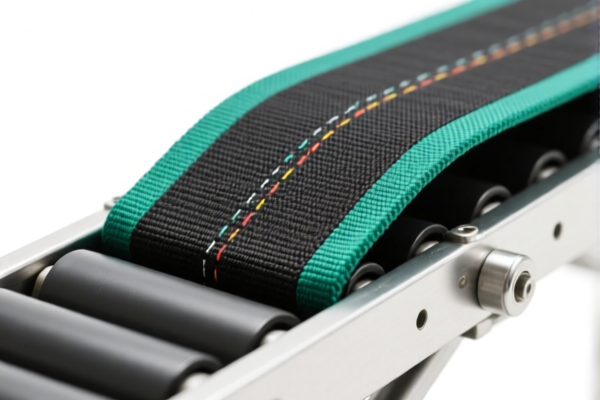
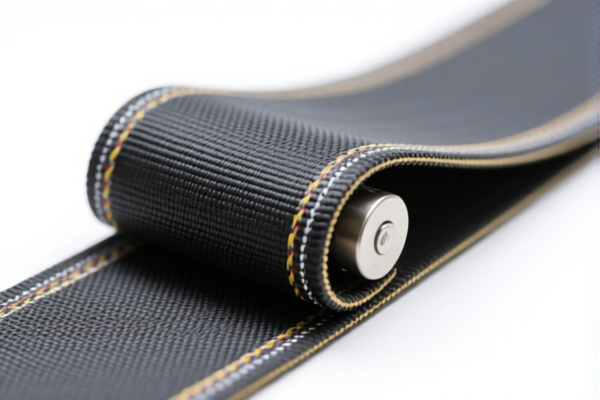
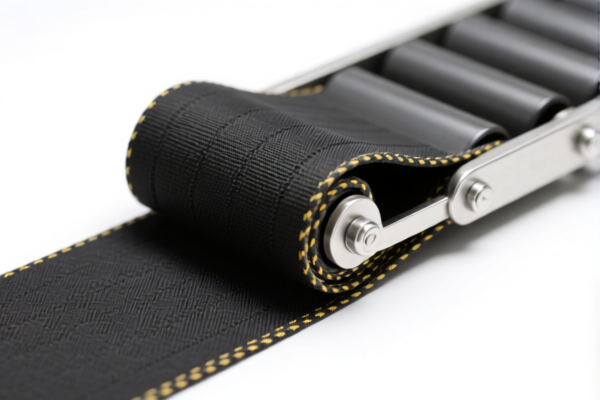
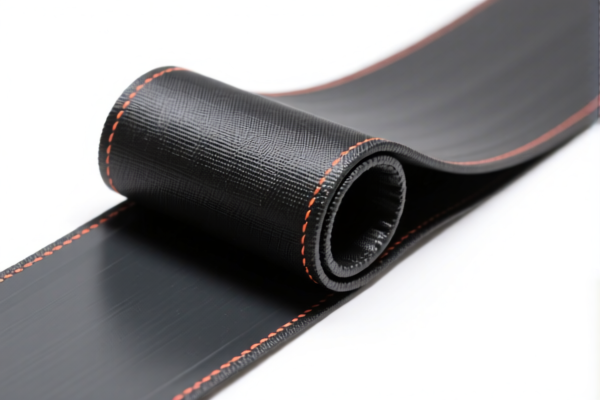
AI Analysis
🎒 Universal Fabric Reinforced Conveyor Belt (Industrial Logistics Core)
🌐 HS Code Reference & Customs Clearance Guide | 2026 Latest Tariff Analysis | Professional Clearance Strategy
📌 I. Product Definition & Classification: What Exactly Is a "Fabric Reinforced Conveyor Belt"?
A Universal Fabric Reinforced Conveyor Belt is a flexible, continuous loop of material used to move goods from one point to another. Unlike metal tracks or chains, these belts rely on internal reinforcement layers (usually polyester, nylon, or cotton) covered by rubber or PVC.
In international trade, the classification hinges on two key factors: 1. Material Composition: Is it purely textile/reinforced fabric, or does it contain significant rubber/plastic layers that change its primary function? 2. Functionality: Is it used strictly for transporting materials (Conveyor), or does it also transmit power (Drive/Belt) like a V-belt in an engine?
⚠️ Critical Distinction:
- If the belt is primarily for moving goods on a conveyor system → Chapter 59 (Textiles/Rubberized Textiles).
- If the belt is a spare part for a specific machine (e.g., a mining excavator) and the machine is the primary focus → Chapter 84 (Machinery Parts).
- Do NOT confuse with "Drive Belts" (V-belts, timing belts) used in engines, which may fall under different subheadings.
📦 II. HS Code Classification Details (2026 Latest Tariff Authority Comparison)
Based on the provided data for "Universal Fabric Reinforced Conveyor Belt", here are the three most likely HS Codes with their tax implications for imports into the USA (from China):
| HS Code | Product Description | Applicable Scenario | Material/Structure Conflict? |
|---|---|---|---|
5910.00.90.00 |
Textile-reinforced conveyor belts, made of textile materials, used for conveying | Standard Case: Purely textile reinforcement, used solely for material transport | ✅ Match: Perfect fit for fabric-reinforced belts |
5910.00.10.70 |
Other textile-reinforced conveyor belts, form: conveyor belt, purpose: transmission/conveying, material: artificial fiber/textile, belongs to "Other" category | Edge Case: When the belt has mixed materials or doesn't fit the "standard" definition of 5910.90, but is still primarily textile | ⚠️ Partial: Slightly higher base tariff; used if 90.00 is rejected by customs |
8431.39.00.10 |
Parts of machinery for lifting, handling, loading or unloading (e.g., conveyor systems), identified as a spare part for a conveyor machine | Spare Part Scenario: If declared as a replacement part for a specific industrial conveyor system, and not as a standalone "belt" product | ✅ No Conflict: Structure description aligns with machinery parts |
🔍 Key Takeaway:
- 5910.00.90.00 is the most direct and common classification for generic fabric-reinforced belts.
- 8431.39.00.10 can be strategic if the belt is sold as a replacement part for a specific machine, potentially lowering the base tariff (see below).
- 5910.00.10.70 is a fallback if customs rejects the first option but accepts the textile nature.
💰 III. 2026 Latest Tariff Rate Breakdown (Including Add-ons, Policy Surcharges)
✅ Applicable Country: USA (US)
✅ Country of Origin: China (CN)
✅ Effective Date: Nov 10, 2025 onwards (including subsequent imports)
🎯 1. 5910.00.90.00 —— Textile-Reinforced Conveyor Belt (Standard)
| Item | Content |
|---|---|
| Base Tariff | 2.6% |
| Section 301 Additional Tariff | +25.0% |
| Section 122 Tariff | +10.0% |
| Total Effective Rate | 37.6% |
| Tax Calculation | CIF Value × 37.6% |
| De Minimis Eligible? | ❌ NO (deny_de_minimis) |
| Legal Basis Path | USITC:5910.00.90.00 → 301:Footnote_301 → 122:Section122 |
📌 Explanation:
- This is the default classification for fabric belts.
- The 37.6% rate is high due to the cumulative effect of Section 301 and Section 122 tariffs on Chinese textile goods.
- No de minimis exemption: Even small shipments (under $800) are subject to duties.
🎯 2. 5910.00.10.70 —— Other Textile Conveyor Belts
| Item | Content |
|---|---|
| Base Tariff | 4.0% |
| Section 301 Additional Tariff | +25.0% |
| Section 122 Tariff | +10.0% |
| Total Effective Rate | 39.0% |
| Tax Calculation | CIF Value × 39.0% |
| De Minimis Eligible? | ❌ NO |
| Legal Basis Path | USITC:5910.00.10.70 → 301:Footnote_301 → 122:Section122 |
📌 Note:
- Slightly higher total tax than 5910.90.00 due to a higher base rate (4% vs 2.6%).
- Only use if customs requires this specific subheading due to material composition nuances (e.g., specific synthetic fibers).
🎯 3. 8431.39.00.10 —— Parts of Conveyor Machinery
| Item | Content |
|---|---|
| Base Tariff | 0.0% |
| Section 301 Additional Tariff | +25.0% |
| Section 122 Tariff | +10.0% |
| Total Effective Rate | 35.0% |
| Tax Calculation | CIF Value × 35.0% |
| De Minimis Eligible? | ❌ NO |
| Legal Basis Path | USITC:8431.39.00.10 → 301:Footnote_301 → 122:Section122 |
📌 Strategic Advantage:
- Lowest Total Tax (35.0%) among the three options.
- Condition: You must prove the belt is a part of a conveyor system (Chapter 84), not just a standalone textile product.
- Risk: Requires strong documentation linking the belt to specific machinery (e.g., invoices stating "Replacement Belt for Model XYZ Conveyor").
🛠️ IV. Customs Clearance Practical Advice (Real-World Pitfall Guide)
✅ 1. Required Documentation Checklist (Non-Negotiable)
| Document | Must Provide | Purpose |
|---|---|---|
| ✅ Product Specification Sheet | ✔️ | Details: Material (e.g., Nylon/Polyester), Layers, Width, Thickness, Tensile Strength |
| ✅ Commercial Invoice | ✔️ | Clearly state: "Fabric Reinforced Conveyor Belt, Used for Material Handling" |
| ✅ Packing List | ✔️ | Show roll dimensions, weight, and packaging type |
| ✅ Photo of Product & Label | ✔️ | Must show the textile reinforcement texture and any manufacturer markings |
| ✅ Letter of Guarantee (if using 8431) | ✔️ | If declaring as 8431.39.00.10, provide a letter stating it is a spare part for a specific machine, not a general-purpose textile |
| ✅ Origin Certificate | ✔️ | Form A or general CO, to confirm Chinese origin (triggers tariffs) |
✅ 2. Declaration Tips (Key Mantras)
🔥 “Material Matters, Function Defines, Parts Save Tax!”
| Scenario | Correct Declaration | Wrong Practice |
|---|---|---|
| Generic Belt Sold Online | 5910.00.90.00 (37.6%) |
Try to declare as 8431 without proof → Seizure Risk |
| Bulk Industrial Supply | 5910.00.90.00 |
Use 5910.00.10.70 unnecessarily → +1.4% Extra Cost |
| Replacement Part for Specific Machine | 8431.39.00.10 (35.0%) |
Declare as "Textile Belt" → Missed Savings |
| Belt with Metal Cords | Check if >5% metal → May shift to Chapter 73 | Assume it’s still Chapter 59 → Misclassification |
✅ 3. Special Cases & Handling
| Case | Handling Advice |
|---|---|
| Belt with Rubber/PVC Coating | If the rubber layer is >50% by weight, it may be classified under 4009 (Rubber Belts), not 5910. Check material ratio! |
| Multi-Purpose Belt | If used for both conveying AND driving (power transmission), customs may insist on Chapter 40 or 8431. Provide usage photos. |
| OEM Custom Belt | Provide client design specs. If the client is a machinery manufacturer, use 8431 to save 2.6% in base tax. |
| Small Samples (<$800) | ❌ NOT Exempt: Section 301 and 122 tariffs apply even to de minimis shipments from China. |
🌍 V. Global Market Comparison (2026 Latest)
| Country/Region | Recommended HS Code | Tariff Rate | Certification Required | Notes |
|---|---|---|---|---|
| 🇺🇸 USA | 5910.00.90.00 |
37.6% | None specific | High tariffs due to 301+122 |
| 🇨🇳 China | 5910.00.90.00 |
10% | CCC (if applicable) | Import duties lower, but no surcharges |
| 🇪🇺 EU | 5910.00.90 |
4.5% | CE (if machinery) | No Section 301/122 equivalents |
| 🇦🇺 Australia | 5910.00.90 |
5% | SAA Standards | Low base tariff |
| 🇯🇵 Japan | 5910.00.90 |
6.0% | PSE (if electrical) | Moderate tariffs |
📌 Conclusion:
- USA is the most expensive market for this product due to layered tariffs.
- EU/Asia/Australia are significantly cheaper (4.5–6%).
- Strategy: If shipping to the US, ensure the highest duty-paid value justification to avoid penalties, or explore foreign trade zones if available.
📌 VI. Common Mistakes & Pitfalls (Lessons Learned)
❌ Mistake 1: Declaring a Rubber-Coated Belt as 5910 (Textile)
👉 Consequence: If rubber >50%, it should be 4009. Misclassification → Penalty + Back Duties.
✅ Fix: Check material weight percentage.
❌ Mistake 2: Using 8431 for General Purpose Belts without documentation
👉 Consequence: Customs rejects the "Part" claim, charges 5910 (37.6%) + penalties.
✅ Fix: Only use 8431 if the belt is explicitly a replacement part for a specific machine model.
❌ Mistake 3: Ignoring Section 122
👉 Consequence: Believing only Section 301 (25%) applies, forgetting the extra 10%.
✅ Fix: Always calculate Total Tax = Base + 301 + 122.
❌ Mistake 4: Shipping via De Minimis ($800)
👉 Consequence: Packages held, taxed at 37.6%, and delayed.
✅ Fix: Include duties in pricing for small shipments; do NOT rely on de minimis for China-origin goods.
🎯 VII. Conclusion: Precision Classification, Maximize Profit
🎯 Remember the Mantra:
🔹 "Textile Base, 37.6% Total; Part Claim, 35.0% Save; Rubber Over, 4009 Awaits!"
🔹 "301 + 122 = 35% Surcharges, Plan Ahead, Avoid Delays!"
📌 Pro Tip:
If you are importing large volumes, consider:
1. Pre-Ruling: Apply for an Advance Ruling from CBP to lock in the HS Code.
2. Foreign Trade Zones (FTZ): Store goods in an FTZ to defer duty payments until sale.
3. Supply Chain Diversification: If tariffs remain high, consider sourcing from Vietnam or Thailand (where applicable tariffs may be lower, but check Rules of Origin!).
📣 Immediate Action Required:
📞 Contact a Licensed Customs Broker
📄 Submit Product Specs + Invoice + Photos
🚀 Secure Your HS Code Pre-Ruling Today!
✨ Smart Classification Starts Here!
💼 Every Percent Saved Is Profit Gained!
Customer Reviews
About HS Code Classification
The Harmonized System (HS) is an internationally standardized nomenclature developed by the World Customs Organization (WCO) to classify traded products. Over 200 countries use the HS system as the basis for customs tariffs, trade statistics, and import/export regulations.
Each HS code follows a hierarchical structure:
- Chapter (2 digits) — Broad category of goods (e.g., Chapter 84: Machinery and Mechanical Appliances)
- Heading (4 digits) — More specific grouping within the chapter
- Subheading (6 digits) — Internationally standardized breakdown, used by all WCO member countries
- National subdivisions (8-10 digits) — Country-specific extensions for further classification, such as US HTSUS 10-digit codes
Correct HS code classification is essential for smooth customs clearance, accurate duty payment, and compliance with trade regulations. Misclassification can lead to customs delays, overpayment of duties, or penalties.
When importing from CN to US, the applicable tariff rates may include:
- Most-Favored-Nation (MFN) rate — The standard duty rate applied to WTO members
- General rate — Applied to countries without trade agreements
- Trade remedy duties — Additional tariffs such as Section 301 (anti-dumping), Section 232 (national security), or countervailing duties
The information provided on this page is for reference purposes only. For official classification, please consult with your local customs authority or a licensed customs broker.