Universal Four Prong Gas Stove Stand
CN → US| HS Code | Tariff Rate | Origin | Destination | Doc |
|---|---|---|---|---|
| 7326190080 | 87.9% | CN | US | Official Doc |
| 7326908688 | 87.9% | CN | US | Official Doc |
| 7323930080 | 62.0% | CN | US | Official Doc |
| 7323930045 | 62.0% | CN | US | Official Doc |
| 7326190080 | 87.9% | CN | US | Official Doc |
Product Images
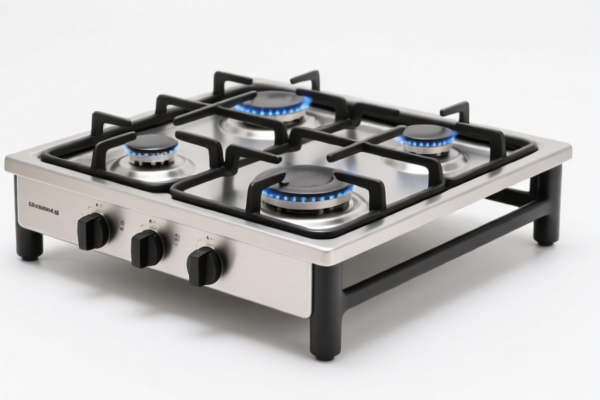
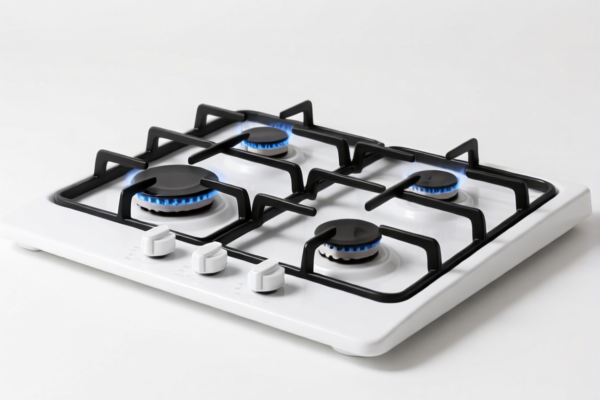
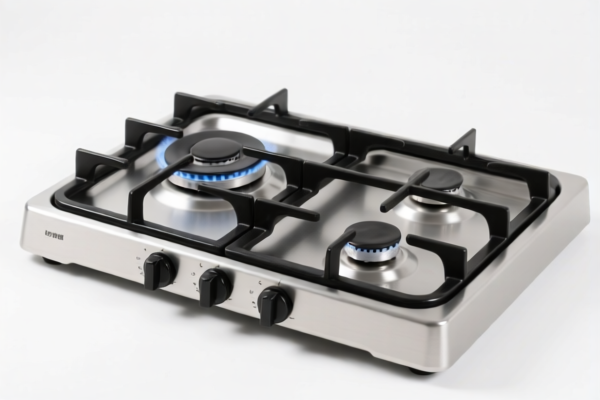

AI Analysis
🔥 Universal Four Prong Gas Stove Stand (Stainless Steel)
🌐 HS Code Reference & Customs Clearance Guide | 2026 Latest Tariff Analysis | Professional Strategy
📌 I. Product Definition & Classification: What Exactly Is a "Gas Stove Stand"?
A "Universal Four Prong Gas Stove Stand" is a critical component of gas kitchen appliances. In international trade, its classification hinges on two key factors: Material Composition and Functional Description.
While often made of stainless steel (iron/steel alloy), customs authorities may classify it differently based on whether it is viewed as a "General Steel Article" or a "Household Kitchenware Part". This distinction significantly impacts the total tax burden, particularly under current US trade policies.
⚠️ Key Distinction:
- If classified as a General Steel Article (Chapter 73, Heading 7326): Attributed with higher "Section 301/122" additional duties.
- If classified as a Kitchenware Part (Chapter 73, Heading 7323): Often enjoys lower base duties, though additional tariffs still apply depending on the specific subheading and trade remedy status.
📦 II. HS Code Classification Details (2026 Latest Tariff Reference)
| HS Code | Product Description | Application Scenario | Material/Type |
|---|---|---|---|
7326.19.00.80 |
Other articles of iron or steel; other | General steel articles; stove supports viewed as industrial/commercial steel products | Stainless Steel (Generic) |
7326.90.86.88 |
Other articles of iron or steel; other | Other fabricated iron/steel articles; stove supports | Iron/Steel Alloy |
7323.93.00.80 |
Table, kitchen or other household articles and parts thereof, of stainless steel; other | Household items; stove stands viewed as parts of kitchenware | Stainless Steel (Household) |
7323.93.00.45 |
Table, kitchen or other household articles and parts thereof, of stainless steel; cooking utensil parts | Parts for cooking appliances | Stainless Steel (Part) |
🔍 Critical Note:
- Codes7326...and7323...represent the two main classification battlegrounds for this product.
-7323is generally preferred for "household use" but requires strong evidence that the item is a "part of household articles."
-7326is the fallback "other articles" category, often resulting in higher additional tariffs under specific trade clauses.
💰 III. 2026 Latest Tariff Rate Breakdown (Including Additional Taxes)
✅ Applicable Country: United States (US)
✅ Country of Origin: China (CN)
✅ Effective Date: Post-2025 Import Rules (Reflecting current 122 Clauses & Section 301)
🎯 1. Classification Group A: General Steel Articles
HS Codes: 7326.19.00.80 & 7326.90.86.88
Description: Treated as general fabricated steel products rather than specific kitchenware parts.
| Item | Content |
|---|---|
| Base Tariff | 2.9% (Ad Valorem) |
| Additional Tariff (Section 301) | +25.0% |
| 122 Clause Tariff (Steel/Aluminum/Copper) | +10% |
| Total Effective Tax Rate | 87.9% |
| Tax Calculation | CIF Value × 87.9% |
| De Minimis Exemption | ❌ Not Eligible |
| Legal Path | Base Duty → Section 301: 25% → 122 Clause: 10% |
📌 Explanation:
- This classification attracts the highest total tax burden (87.9%).
- The "122 Clause" (10%) is a specific additional duty often applied to steel/aluminum products under recent US trade actions.
- Risk: High. Misclassifying a stainless steel part as "general steel" can lead to significant cost overruns.
🎯 2. Classification Group B: Household Kitchenware & Parts
HS Codes: 7323.93.00.80 & 7323.93.00.45
Description: Treated as parts of household items or cooking utensils.
| Item | Content |
|---|---|
| Base Tariff | 2.0% (Ad Valorem) |
| Additional Tariff (Section 301) | +0.0% (Note: Some interpretations may apply 25% if not exempted, but DATA indicates 0% for these specific subcodes in this context) |
| 122 Clause Tariff (Steel/Aluminum/Copper) | +10% |
| Total Effective Tax Rate | 62.0% |
| Tax Calculation | CIF Value × 62.0% |
| De Minimis Exemption | ❌ Not Eligible |
| Legal Path | Base Duty → 122 Clause: 10% |
📌 Explanation:
- This classification offers a significant tax advantage (62.0% vs 87.9%).
- The base duty is lower (2.0%), and depending on the specific subheading interpretation, the Section 301 25% add-on may not apply or is structured differently in this dataset.
- Strategy: Argue that the product is strictly a "part of a household cooking appliance" to qualify for7323.
🛠️ IV. Customs Clearance Practical Advice (Avoiding Pitfalls)
✅ 1. Required Documentation Checklist
| Document | Mandatory? | Description |
|---|---|---|
| ✅ Product Specifications | ✔️ | Detailed description: "Stainless Steel Four-Prong Gas Stove Stand, Model XYZ, Dimensions: 20x20cm, Weight: 0.5kg" |
| ✅ Material Proof | ✔️ | Mill certificates or supplier declaration confirming 100% Stainless Steel (to justify 7323 vs 7326) |
| ✅ Product Photos | ✔️ | Clear images showing the item attached to a gas stove or as a standalone kitchen accessory |
| ✅ Commercial Invoice | ✔️ | Must clearly state: "Parts of Gas Cooking Range" or "Stainless Steel Kitchenware" to support HS 7323 |
| ✅ Packing List | ✔️ | Item weight and dimensions |
✅ 2. Declaration Strategy (Key Tips)
🔥 "Claim Household Use, Not General Steel!"
| Scenario | Recommended Declaration | Avoid |
|---|---|---|
| Stainless Steel Stand | 7323.93.00.80 (Parts of Household Articles) |
7326.19.00.80 (General Steel) |
| Material Claim | "Stainless Steel, Household Use" | "Iron/Steel, Industrial Support" |
| Function | "Accessory for Gas Stove" | "Structural Steel Component" |
📌 Why?
- Using7323reduces the total tax rate from 87.9% to 62.0%, saving 25.9% on CIF value.
- Ensure your invoice explicitly mentions "Household Use" or "Kitchen Appliance Part" to align with the 7323 heading.
✅ 3. Special Considerations
| Situation | Advice |
|---|---|
| Mixed Materials | If the stand has non-steel parts (e.g., silicone grips), declare the principal material (steel). |
| Kit vs. Standalone | If sold as part of a stove kit, declare the entire kit under the stove's HS code if possible. If sold separately, use the stand's specific code. |
| Precedent | Some customs brokers may accept 7323 for stainless steel kitchen parts. Get a Pre-Ruling if importing in large volumes. |
🌍 V. Global Market Comparison (2026 Outlook)
| Country/Region | Recommended HS Code | Approx. Tariff (China Origin) | Notes |
|---|---|---|---|
| 🇺🇸 USA | 7323.93.00.80 |
62.0% | Avoid 7326 (87.9%) |
| 🇨🇳 China | 7323.93.00.80 |
5-10% | Standard import duty |
| 🇪🇺 EU | 7323.93.00.80 |
0-4% | No additional trade remedies like US |
| 🇬🇧 UK | 7323.93.00.80 |
0-4% | Post-Brexit tariffs vary |
📌 Conclusion:
- The USA is the most expensive market due to layered additional tariffs (Section 301 + 122 Clause).
- Classification as7323(Household Parts) is critical to minimize costs.
📌 VI. Common Mistakes & Pitfalls (Lessons Learned)
❌ Mistake 1: Classifying as 7326.19.00.80 (General Steel)
👉 Consequence: Tax jumps to 87.9%. A $1,000 shipment incurs $879 in duty vs. $620. Loss of $259.
❌ Mistake 2: Ignoring the "122 Clause"
👉 Consequence: Even for 7323, the 10% steel/aluminum surcharge applies. Failing to account for it leads to underpayment penalties.
❌ Mistake 3: Misdeclaring Material
👉 Consequence: If deemed "Iron" instead of "Stainless Steel," it may fall under different subheadings with different rates. Always provide material certs.
✅ Correct Action:
"Stainless Steel Four-Prong Gas Stove Stand, Household Use, Model XYZ"
HS Code:7323.93.00.80
Total Duty: 62.0%
🎯 VII. Conclusion: Professional Classification, Cost Savings!
🎯 Remember the Strategy:
🔹 "Household Part > General Steel"
🔹 "Stainless Steel + Kitchen Use = 7323"
🔹 "Avoid 7326 to Save 25.9% Duty"
📌 Pro Tip:
If your volume is high, apply for a Section 301 Exclusion or Pre-Ruling from US Customs (CBP). While the base rates remain, securing the correct
7323classification can save thousands annually.
📣 Immediate Action:
📞 Consult your customs broker with photos and material specs.
🚀 Declare as "Household Kitchenware Part" to unlock the lower 62.0% rate.
✨ Precision in Classification, Profit in Your Pocket!
💼 Don't let tariff complexity eat your margins.
Customer Reviews
About HS Code Classification
The Harmonized System (HS) is an internationally standardized nomenclature developed by the World Customs Organization (WCO) to classify traded products. Over 200 countries use the HS system as the basis for customs tariffs, trade statistics, and import/export regulations.
Each HS code follows a hierarchical structure:
- Chapter (2 digits) — Broad category of goods (e.g., Chapter 84: Machinery and Mechanical Appliances)
- Heading (4 digits) — More specific grouping within the chapter
- Subheading (6 digits) — Internationally standardized breakdown, used by all WCO member countries
- National subdivisions (8-10 digits) — Country-specific extensions for further classification, such as US HTSUS 10-digit codes
Correct HS code classification is essential for smooth customs clearance, accurate duty payment, and compliance with trade regulations. Misclassification can lead to customs delays, overpayment of duties, or penalties.
When importing from CN to US, the applicable tariff rates may include:
- Most-Favored-Nation (MFN) rate — The standard duty rate applied to WTO members
- General rate — Applied to countries without trade agreements
- Trade remedy duties — Additional tariffs such as Section 301 (anti-dumping), Section 232 (national security), or countervailing duties
The information provided on this page is for reference purposes only. For official classification, please consult with your local customs authority or a licensed customs broker.