Universal Horse Tack Set
CN → US| HS Code | Tariff Rate | Origin | Destination | Doc |
|---|---|---|---|---|
| 4201006000 | 37.8% | CN | US | Official Doc |
| 6307909891 | 24.5% | CN | US | Official Doc |
| 4201003000 | 37.4% | CN | US | Official Doc |
Product Images
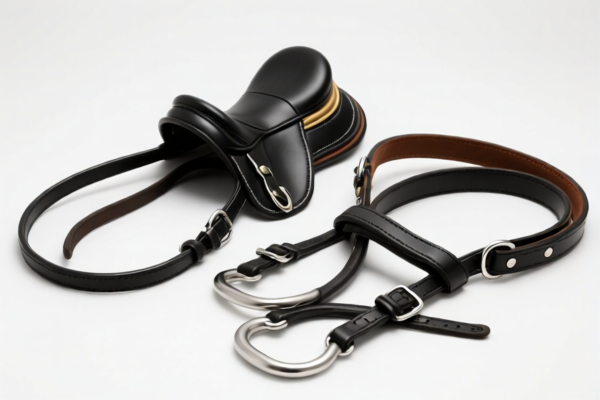
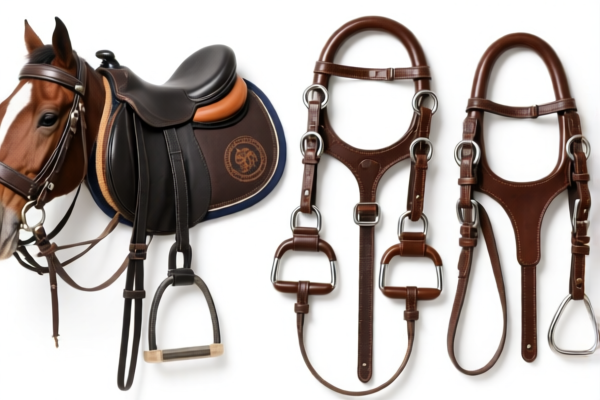
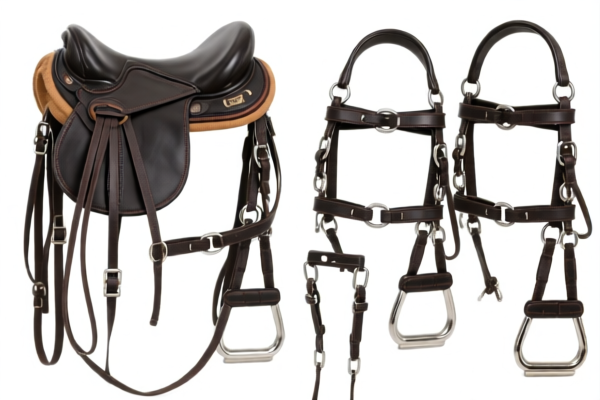

AI Analysis
🐎 Universal Horse Tack Set (General Equestrian Equipment)
🌐 HS Code Reference & Customs Clearance Guide | 2026 Latest Tariff Analysis | Professional Clearance Strategy
📌 I. Product Definition and Classification: Do You Really Understand "Universal Horse Tack Set"?
A "Universal Horse Tack Set" typically refers to a combination of equestrian equipment used for riding, handling, or driving horses. This includes items such as saddles, bridles, halters, reins, girths, and stirrups. In international trade, these items are categorized based on their material, function, and form (individual vs. set).
Key Classification Distinction: * Tack Sets (Groups/Assortments): If multiple items (e.g., saddle + bridle + girth) are packed together for retail sale as a single unit, they are often classified as "sets." The classification depends on the essential character or the specific heading for "tack and harness." * Individual Items: If sold separately, a saddle might fall under 4201, while a leather whip might fall under 4205. * Non-Leather/Textile Components: Items made entirely of textile or synthetic materials without leather structural components may fall under different headings like 6307.
⚠️ Critical Classification Point: - If the set is primarily leather and specifically designed for animal equipment (saddles, bridles), it generally falls under Chapter 42 (Articles of Leather). - If the set is a general finished good without specific leather construction characteristics, or is a mix of textiles/synthetics, it may fall under Chapter 63 (Other Made Up Articles).
📦 II. HS Code Classification Details (Based on Provided Data)
| HS Code | Product Description | Application Scenario | Material/Conflict Analysis |
|---|---|---|---|
4201.00.60.00 |
General Horse Tack Set Matches use; set form; no material/conflict issues. |
Full equestrian kit (saddle, bridle, etc.); leather-based. | ✅ No Conflict: Matches "tack and harness" perfectly. |
6307.90.98.91 |
General Horse Tack Set Finished goods (set); fallback category for "other made-up articles." |
Mixed material sets; non-leather dominant; no obvious material conflict. | ✅ Fallback: Used when specific leather/tack heading doesn't fully apply or for textile-heavy sets. |
4201.00.30.00 |
General Horse Tack Set Matches use; any material animal tack and harness. |
Any material (leather, synthetic, textile) animal tack. | ✅ Broad Category: Covers "any material" animal tack under Chapter 42. |
🔍 Key Reminder: -
4201is the primary heading for "Saddlery and harness of any material." It is the most accurate for traditional horse tack. -6307is a "catch-all" for other made-up articles. It is used here when the set doesn't fit neatly into specific leather subheadings or is predominantly textile-based. - No Material Conflict: The provided data explicitly states "no material or use conflict," indicating these codes are viable alternatives depending on the exact composition (leather vs. textile/synthetic).
💰 III. 2026 Latest Tariff Rate Breakdown (Including Surcharges & Policy Add-ons)
✅ Applicable Country: United States (US)
✅ Origin: China (CN)
✅ Effective Date: From 2025 onwards (as per provided data context)
🎯 1. 4201.00.60.00 —— General Horse Tack Set (Leather/Primary Tack)
| Item | Content |
|---|---|
| Base Tariff | 2.8% (Ad Valorem) |
| Section 301 Surcharge | +25.0% (Additional Tariff) |
| Section 122 Tariff | +10.0% (Additional Tariff) |
| Total Tariff Rate | 37.8% |
| Tax Calculation | CIF Value × 37.8% |
| De Minimis Eligibility | ❌ No (High tariff rate triggers scrutiny) |
| Legal Basis Path | Base Rate → Section 301 (Footnote 9903.88.01) → Section 122 |
📌 Explanation: - Base Tariff (2.8%): Standard MFN rate for saddlery. - Section 301 (25%): Standard additional tariff on Chinese goods under US Trade Act Section 301. - Section 122 (10%): Additional tariff applied under specific trade authorities (often related to national security or specific bilateral agreements). - Total: 37.8% is a significant cost. Must be accounted for in pricing.
🎯 2. 6307.90.98.91 —— General Horse Tack Set (Other Made-up Articles)
| Item | Content |
|---|---|
| Base Tariff | 7.0% (Ad Valorem) |
| Section 301 Surcharge | +7.5% (Additional Tariff) |
| Section 122 Tariff | +10.0% (Additional Tariff) |
| Total Tariff Rate | 24.5% |
| Tax Calculation | CIF Value × 24.5% |
| De Minimis Eligibility | ❌ No (Still subject to surcharges) |
| Legal Basis Path | Base Rate → Section 301 → Section 122 |
📌 Note: - Base Tariff (7.0%): Higher base rate than
4201, but lower Section 301 surcharge (7.5% vs 25%). - Total Savings: 13.3% lower than4201.00.60.00(37.8% vs 24.5%). - Strategy: If the product composition allows (e.g., significant textile/synthetic content), classifying under6307can save substantial duties. However, customs must accept it as "other made-up articles" and not "saddlery."
🎯 3. 4201.00.30.00 —— General Horse Tack Set (Any Material)
| Item | Content |
|---|---|
| Base Tariff | 2.4% (Ad Valorem) |
| Section 301 Surcharge | +25.0% (Additional Tariff) |
| Section 122 Tariff | +10.0% (Additional Tariff) |
| Total Tariff Rate | 37.4% |
| Tax Calculation | CIF Value × 37.4% |
| De Minimis Eligibility | ❌ No |
| Legal Basis Path | Base Rate → Section 301 → Section 122 |
📌 Explanation: - Base Tariff (2.4%): Slightly lower than
4201.00.60.00(2.8%). - Section 301 (25%): Same high surcharge as4201.00.60.00. - Total: 37.4%. Very similar to4201.00.60.00. Use this if the set is explicitly "any material" but still firmly under Chapter 42.
🛠️ IV. Customs Clearance Practical Advice (Avoiding Pitfalls)
✅ 1. Required Documentation Checklist (All Must Be Provided)
| Document | Required | Notes |
|---|---|---|
| ✅ Product Specification Sheet | ✔️ | List all items in the set (saddle, bridle, etc.), materials (leather, nylon, metal), and weights. |
| ✅ Composition Breakdown | ✔️ | Crucial for deciding between 4201 (Leather/Tack) and 6307 (Other). |
| ✅ Product Photos | ✔️ | Clear images of the set, including close-ups of materials and hardware. |
| ✅ Commercial Invoice | ✔️ | Clearly state "Universal Horse Tack Set" and declare value per item or total. |
| ✅ Packing List | ✔️ | Show how items are packed (as a set or separately). |
| ✅ Certificate of Origin (CO) | ✔️ | For US imports, confirm Chinese origin to apply correct surcharges. |
✅ 2. Declaration Strategy (Key Mnemonic)
🔥 “Set First, Material Second, Tariff Depends on ‘01’ or ‘07’!”
| Scenario | Correct HS Code | Why? |
|---|---|---|
| Leather-heavy set (Saddle, Bridle) | 4201.00.60.00 or 4201.00.30.00 |
Chapter 42 covers saddlery. 60.00 is common for sets; 30.00 for any material. |
| Textile/Synthetic Set (Nylon, Polyester) | 6307.90.98.91 |
If not primarily leather/tack, fall back to Chapter 63. Lower Section 301 rate. |
| Mixed Material Set | Evaluate Essential Character | If leather is essential → 4201. If textile is dominant → 6307. |
| Single Item (e.g., only a bridle) | Check specific subheading | Do not declare as a "set" if only one item is present. |
✅ 3. Special Circumstances Handling
| Situation | Handling Advice |
|---|---|
| OEM Custom Tack | Provide design specs. If materials are non-traditional (e.g., carbon fiber saddle), 6307 might be more appropriate. |
| Gift Set Packaging | Ensure the invoice reflects the true value of the goods, not just the packaging. |
| Used vs. New | Used tack may have different valuation rules. New is standard for these HS codes. |
| Dispute with Customs | If customs challenges 6307 for a leather set, be prepared to provide material composition reports to prove non-leather dominance. |
🌍 V. Global Market Comparison (2026 Latest)
| Country/Region | Recommended HS Code | Tariff Rate (Est.) | Certification | Remarks |
|---|---|---|---|---|
| 🇺🇸 USA | 4201.00.60.00 / 6307.90.98.91 |
24.5% - 37.8% | None specific | High surcharges apply. 6307 is cheaper. |
| 🇨🇳 China | 4201.00.60.00 |
~5-10% | N/A | Lower base rates, no Section 301. |
| 🇪🇺 EU | 4201.00.00 |
0-4.5% | CE (if applicable) | Generally lower tariffs, no Section 122 equivalent. |
| 🇬🇧 UK | 4201.00.00 |
0-4.5% | N/A | Post-Brexit tariffs similar to EU. |
| 🇨🇦 Canada | 4201.00.00 |
0-12.5% | N/A | CUSMA may apply if from US/Mexico. |
📌 Conclusion: - USA is the most expensive market due to Section 301 (25%) and Section 122 (10%). - Strategic Choice: If your product can be classified under
6307.90.98.91, you save 13.3% in tariffs (24.5% vs 37.8%). - Compliance: Ensure the product description matches the HS code to avoid penalties.
📌 VI. Common Errors & Pitfalls (Lessons Learned)
❌ Error 1: Declaring a leather saddle set as 6307 without justification.
👉 Consequence: Customs may reclassify to 4201, resulting in a 13.3% back-tariff + penalties.
❌ Error 2: Declaring a textile halter as 4201 (assuming all tack is Chapter 42).
👉 Consequence: May be accepted, but if disputed, could lead to delays. Better to justify with material content.
❌ Error 3: Splitting the set into individual items for shipping.
👉 Consequence: Higher total duty if items are taxed separately and lose "set" benefits. Also, higher shipping costs.
❌ Error 4: Ignoring Section 122 Tariff.
👉 Consequence: Unexpected 10% additional cost at customs. Always account for this.
✅ Correct Approach:
"Universal Horse Tack Set, 100% Synthetic/Nylon, No Leather, Includes Bridle, Halter, Lead Rope, Model XYZ"
→ Use6307.90.98.91(24.5% total)."Universal Horse Tack Set, Genuine Leather Saddle & Bridle, Model ABC"
→ Use4201.00.60.00(37.8% total).
🎯 VII. Conclusion: Professional Declaration, Cost Savings, Efficiency!
🎯 Remember Mnemonic:
🔹 “Leather Tack = 4201 (37.8%)”
🔹 “Textile/Other = 6307 (24.5%)”
🔹 “Savings: 13.3% if you can justify ‘Other’!”
📌 Tips:
- If your product is not made of leather or is predominantly textile/synthetic, strongly consider 6307.90.98.91.
- Always provide material composition reports to support your classification.
- Section 301 and Section 122 are unavoidable for Chinese-origin goods, so base tariff optimization is key.
📣 Immediate Action:
📞 Contact a professional customs broker.
📄 Provide product material breakdown.
🚀 Choose the lowest valid HS Code to save money!
✨ Professional Clearance Starts with Precise Classification!
💼 Every Percent Saved is Pure Profit!
Customer Reviews
About HS Code Classification
The Harmonized System (HS) is an internationally standardized nomenclature developed by the World Customs Organization (WCO) to classify traded products. Over 200 countries use the HS system as the basis for customs tariffs, trade statistics, and import/export regulations.
Each HS code follows a hierarchical structure:
- Chapter (2 digits) — Broad category of goods (e.g., Chapter 84: Machinery and Mechanical Appliances)
- Heading (4 digits) — More specific grouping within the chapter
- Subheading (6 digits) — Internationally standardized breakdown, used by all WCO member countries
- National subdivisions (8-10 digits) — Country-specific extensions for further classification, such as US HTSUS 10-digit codes
Correct HS code classification is essential for smooth customs clearance, accurate duty payment, and compliance with trade regulations. Misclassification can lead to customs delays, overpayment of duties, or penalties.
When importing from CN to US, the applicable tariff rates may include:
- Most-Favored-Nation (MFN) rate — The standard duty rate applied to WTO members
- General rate — Applied to countries without trade agreements
- Trade remedy duties — Additional tariffs such as Section 301 (anti-dumping), Section 232 (national security), or countervailing duties
The information provided on this page is for reference purposes only. For official classification, please consult with your local customs authority or a licensed customs broker.