Universal Insulating Tape
CN → US| HS Code | Tariff Rate | Origin | Destination | Doc |
|---|---|---|---|---|
| 3919102020 | 40.8% | CN | US | Official Doc |
| 3919905030 | 40.8% | CN | US | Official Doc |
| 3926909989 | 22.8% | CN | US | Official Doc |
| 3926904590 | 38.5% | CN | US | Official Doc |
| 3919102020 | 40.8% | CN | US | Official Doc |
Product Images
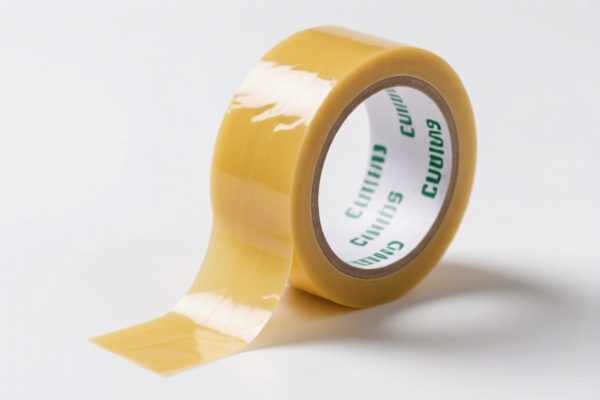
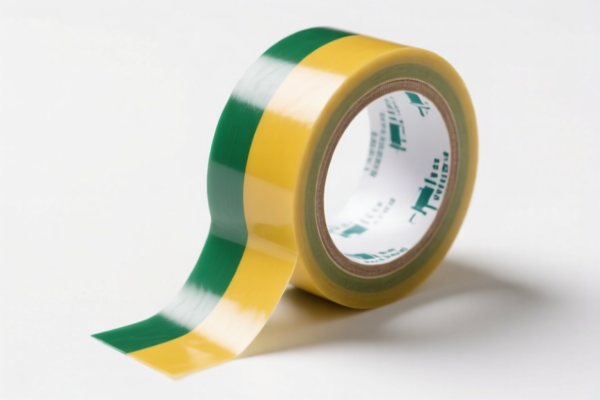
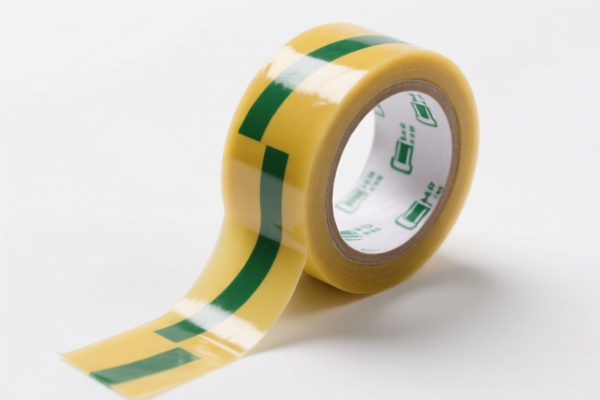
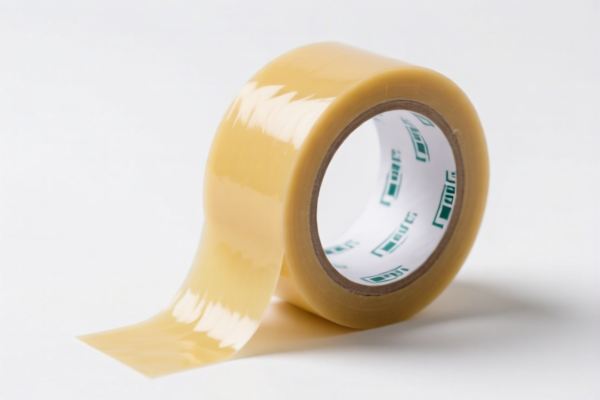
AI Analysis
🏗️ Universal Insulating Tape (Electrical & Industrial Adhesive Tapes)
🌐 HS Code Reference & Customs Clearance Guide | 2026 Latest Tariff Analysis | Professional Clearance Strategy
📌 I. Product Definition & Classification: Do You Really Understand "Insulating Tape"?
Universal Insulating Tape is a critical material in electrical engineering, automotive manufacturing, and industrial maintenance. In international trade, it is primarily classified under Chapter 39 (Plastics and Articles Thereof) due to its plastic substrate and adhesive composition.
It is generally categorized into two main types based on its specific form and application: 1. Self-Fusing / Self-Amalgamating Tapes (Rolls): Tapes that bond to themselves without a separate adhesive layer, often used for waterproofing and insulation. These fall under Heading 3919. 2. Other Plastic Tape/Sheeting: Tapes with a separate adhesive backing or those classified as general plastic articles/parts. These may fall under Heading 3926 (Other articles of plastics).
⚠️ Key Distinction Point:
- If the tape is a self-amalgamating roll (often used for high-voltage insulation or waterproofing in cables) → Classify under 3919.10 (Self-adhesive plates, sheets, film, foil, tape, strip and other flat shapes, of plastics).
- If the tape is a standard pressure-sensitive adhesive tape (e.g., PVC electrical tape, masking tape) or a plastic part/seal → It may fall under 3926.90 (Other articles of plastics and articles of other materials of headings 3901 to 3914).
- Note: The distinction often hinges on the "self-adhesive" nature and whether it is considered a "sheet/strip" (3919) vs. a "general article/part" (3926).
📦 II. HS Code Classification Details (Latest 2026 Tariff Reference)
| HS Code | Product Description | Application Scenario | Classification Logic |
|---|---|---|---|
3919.10.20.20 |
Self-adhesive plates, sheets, film, foil, tape, strip, and other flat shapes, of plastics: In rolls of a width not exceeding 20 cm, of non-cellular plastics: Other | Universal/Electrical Insulating Tape: Matches the characteristics of electrical usage and plastic self-adhesive material features. | ✅ Primary Choice for Standard Electrical Tapes: Fits the definition of self-adhesive plastic tape in rolls. |
3919.90.50.30 |
Self-adhesive plates, sheets, film, foil, tape, strip, and other flat shapes, of plastics: Other: Other | Universal Insulating Tape: Matches electrical insulation purposes and plastic self-adhesive tape attributes. | ✅ Alternative for Self-Fusing Tapes: Often used for self-amalgamating tapes or wider rolls not covered in 3919.10. |
3926.90.99.89 |
Other articles of plastics and articles of other materials of headings 3901 to 3914: Other: Other: Other | Universal Insulating Tape: Matches characteristics of other plastic/polymer products. | ✅ General Plastic Article: Used when the tape doesn't fit specific "tape" definitions in 3919 or is considered a finished plastic part. |
3926.90.45.90 |
Other articles of plastics and articles of other materials of headings 3901 to 3914: Other: Other: Other: Other: Other | Universal Insulating Tape: Matches the scope of plastic gaskets, seals, and other plastic products. | ⚠️ Niche Classification: May apply if the tape is considered a "seal" or "gasket" component rather than a raw tape material. |
3919.10.20.20 |
(Duplicate) Self-adhesive plates, sheets, film, foil, tape, strip, and other flat shapes, of plastics... | Automotive Insulating Tape: Matches electrical tape categories and plastic self-adhesive material features. | ✅ Automotive Specific: Explicitly recognized for automotive electrical insulation applications. |
🔍 Important Reminder:
- 3919 vs. 3926: The key is whether it is "self-adhesive flat shapes" (3919) or "other articles" (3926). Most standard electrical tapes (PVC, Cloth) fall under 3919. Self-amalgamating tapes also often fall under 3919 or 3919.90.
- Automotive Use: If the tape is specifically marketed and used for automotive wiring harnesses, 3919.10.20.20 is highly relevant.
- Packaging: Ensure the "tape" is not classified as a "packaging material" if it is used for insulation purposes, as this can change the heading.
💰 III. 2026 Latest Tariff Rate Breakdown (Including Additional Duties, Policy Add-ons)
✅ Applicable Country: United States (US)
✅ Country of Origin: China (CN)
✅ Effective Date: 2025 November 10 onwards (including subsequent imports)
🎯 1. 3919.10.20.20 —— Self-adhesive Plastic Tape (Electrical/General)
| Item | Content |
|---|---|
| Base Duty Rate | 5.8% (ad valorem) |
| USITC Additional Duty | +25% (Under USITC Footnote / Section 301) |
| IEEPA Additional Duty | +10% (Targeted at China/Hong Kong products, effective Nov 10, 2025) |
| Total Duty Rate | 40.8% |
| Tax Calculation | CIF Value × 40.8% |
| De Minimis Eligibility | ❌ Not Eligible (deny_de_minimis applies to Section 301/IEEPA duties) |
| Legal Basis Path | IEEPA:9903.01.25 → IEEPA:9903.01.24 → USITC:3919.10.20.20 → FOOTNOTE:301/IEEPA |
📌 Explanation:
- "Base Duty 5.8%": Standard Most Favored Nation (MFN) rate for self-adhesive plastic tapes.
- "USITC Additional 25%": Additional tariff imposed under Section 301 of the Trade Act of 1974 on Chinese goods.
- "IEEPA 10%": Additional tariff under the International Emergency Economic Powers Act.
- Total 40.8%: This is a very high duty rate. Importers must account for this in their cost structure.
- No De Minimis: Packages valued under $800 (de minimis) do not qualify for exemption from these additional duties if they are from China.
🎯 2. 3919.90.50.30 —— Other Self-adhesive Plastic Tape (Self-Fusing/Other)
| Item | Content |
|---|---|
| Base Duty Rate | 5.8% |
| USITC Additional Duty | +25% |
| IEEPA Additional Duty | +10% |
| Total Duty Rate | 40.8% |
| Tax Calculation | CIF Value × 40.8% |
| De Minimis Eligibility | ❌ Not Eligible |
| Legal Basis Path | IEEPA:9903.01.25 → IEEPA:9903.01.24 → USITC:3919.90.50.30 |
📌 Note:
- Same high duty rate as above.
- Applies to self-amalgamating tapes, high-voltage insulation tapes, etc.
🎯 3. 3926.90.99.89 —— Other Articles of Plastic (General)
| Item | Content |
|---|---|
| Base Duty Rate | 5.3% |
| USITC Additional Duty | +7.5% |
| IEEPA Additional Duty | +10% |
| Total Duty Rate | 22.8% |
| Tax Calculation | CIF Value × 22.8% |
| De Minimis Eligibility | ❌ Not Eligible |
| Legal Basis Path | IEEPA:9901.25 → IEEPA:9903.01.24 → USITC:3926.90.99.89 |
📌 Comparison:
- This rate is significantly lower (22.8% vs 40.8%).
- Risk: Misclassifying a self-adhesive tape (3919) as "other plastic articles" (3926) to reduce taxes is a high-risk compliance error. Customs may audit and penalize for misclassification. Only use this if the product truly does not fit the "self-adhesive tape" definition in 3919.
🎯 4. 3926.90.45.90 —— Plastic Gaskets/Seals & Other Articles
| Item | Content |
|---|---|
| Base Duty Rate | 3.5% |
| USITC Additional Duty | +25% |
| IEEPA Additional Duty | +10% |
| Total Duty Rate | 38.5% |
| Tax Calculation | CIF Value × 38.5% |
| De Minimis Eligibility | ❌ Not Eligible |
| Legal Basis Path | IEEPA:9903.01.25 → IEEPA:9903.01.24 → USITC:3926.90.45.90 |
📌 Note:
- Lower base rate (3.5%) but still high additional duties.
- Suitable only if the tape is explicitly used as a seal or gasket in a mechanical context, not just for electrical insulation.
🎯 5. 3919.10.20.20 (Automotive Specific) —— Automotive Insulating Tape
| Item | Content |
|---|---|
| Base Duty Rate | 5.8% |
| USITC Additional Duty | +25% |
| IEEPA Additional Duty | +10% |
| Total Duty Rate | 40.8% |
| Tax Calculation | CIF Value × 40.8% |
| De Minimis Eligibility | ❌ Not Eligible |
| Legal Basis Path | Same as standard electrical tape |
📌 Note:
- Identical tariff treatment to standard electrical insulating tape.
- Ensure documentation clearly states "Automotive" use if claiming any specific industry standards, though the tariff rate remains the same.
🛠️ IV. Customs Clearance Practical Advice (Real-World Pitfall Avoidance Guide)
✅ 1. Document Preparation Checklist (Mandatory)
| Document | Must Provide | Description |
|---|---|---|
| ✅ Product Specification Sheet | ✔️ | Details: Material (PVC, Vinyl, Rubber, etc.), Width, Length, Thickness, Adhesive Type, Voltage Rating. |
| ✅ Product Photos | ✔️ | Clear images of the roll, label, and packaging. Show the "self-adhesive" nature. |
| ✅ Commercial Invoice | ✔️ | Must describe the item as "Insulating Tape, Plastic, Self-Adhesive" with HS Code. |
| ✅ Packing List | ✔️ | Detail roll dimensions and quantity per package. |
| ✅ Material Safety Data Sheet (MSDS) | ✔️ | Required if the adhesive contains volatile organic compounds (VOCs). |
| ✅ Certificate of Origin (CO) | ✔️ | Confirm Country of Origin as China to assess correct additional duties. |
✅ 2. Declaration Tips (Key Mantra)
🔥 "Be Specific: 'Self-Adhesive Plastic Tape' NOT just 'Tape'!"
| Scenario | Correct Declaration | Wrong Practice |
|---|---|---|
| Standard Electrical Tape (PVC) | 3919.10.20.20 - "Self-adhesive plastic tape for electrical insulation" |
"Tape" → Ambiguous, may be audited. |
| Self-Amalgamating Tape | 3919.90.50.30 - "Self-fusing plastic tape" |
"Insulating Tape" → Too vague. |
| Automotive Wiring Harness Tape | 3919.10.20.20 - "Automotive insulating tape" |
"Plastic Strip" → Misclassification. |
| Tape Used as a Seal | 3926.90.45.90 - "Plastic sealing tape" |
Only if it functions primarily as a mechanical seal, not electrical insulation. |
✅ 3. Special Situations Handling
| Situation | Handling Advice |
|---|---|
| OEM Custom Tape | Provide client order + design specs. Ensure "self-adhesive" is clearly stated. |
| Tape with Metallic Foil | If >50% by weight is plastic, it still falls under Chapter 39. If metallic, it might shift to Chapter 76/83, but most insulating tapes are plastic-based. |
| Small Quantities (De Minimis) | ❌ Warning: Section 301 and IEEPA duties apply to de minimis shipments from China. Do not assume $800 exemption saves you from the 35-40% duty. |
| Re-export from Mexico/Vietnam | If the tape is manufactured in Mexico or Vietnam, it may qualify for USMCA or FTAA benefits, potentially reducing or eliminating the 25% Section 301 duty. Crucial: Provide a valid Certificate of Origin from the non-China country. |
🌍 V. Global Market Clearance Comparison (2026 Latest)
| Country/Region | Recommended HS Code | Duty Rate (China Origin) | Certification Requirements | Notes |
|---|---|---|---|---|
| 🇺🇸 USA | 3919.10.20.20 |
40.8% (Total) | No specific FDA, but may need UL/CE for electrical safety claims. | Highest Duty. Consider supply chain diversification. |
| 🇨🇳 China | 3919.10.20.20 |
5.8% (Import) | CCC (if applicable for electrical components). | Low import duty for China. |
| 🇪🇺 EU | 3919.10.20.00 |
6.5% (Standard) | CE Marking (if deemed electrical safety product), RoHS. | No additional punitive tariffs. |
| 🇬🇧 UK | 3919.10.20.00 |
6.5% | UKCA Marking. | Post-Brexit rules apply. |
| 🇯🇵 Japan | 3919.10.20.00 |
5.0% | PSE (if electrical). | Low duty, straightforward clearance. |
| 🇦🇺 Australia | 3919.10.20.00 |
5.0% | RCM. | Low duty. |
📌 Conclusion:
- The USA is the most challenging market for Chinese-made insulating tape due to the 40.8% combined duty.
- EU, Japan, and Australia offer much more favorable duty rates (5-6.5%).
- Strategy: If targeting the US, consider origin shifting (manufacturing in Vietnam, Mexico, or Thailand) to avoid Section 301 and IEEPA duties.
📌 VI. Common Errors & Pitfall Guide (Blood-Stained Lessons)
❌ Error 1: Declaring "Insulating Tape" as "Plastic Sheets" (3920) to avoid the 3919 heading.
👉 Consequence: Customs will reclassify under 3919 + 25% + 10% = 40.8%. Potential penalties for misdeclaration.
❌ Error 2: Ignoring the IEEPA 10% duty on de minimis shipments.
👉 Consequence: Packages under $800 will still be taxed at 35-40% if from China. Unexpected costs for buyers.
❌ Error 3: Using "General Purpose Tape" on the invoice.
👉 Consequence: Customs may suspect evasion of higher duties. Provide detailed description: "Self-adhesive PVC electrical insulation tape."
❌ Error 4: Claiming USMCA exemption for goods merely assembled in Mexico.
👉 Consequence: If the plastic resin and manufacturing process occur in China, it does not qualify for USMCA. Must provide proof of tariff shift and regional value content.
✅ Correct Approach:
"Self-Adhesive Plastic Tape, PVC, 19mm x 20m, Electrical Insulation Grade, Made in China, HS 3919.10.20.20"
🎯 VII. Conclusion: Professional Declaration, Save Time, Reduce Costs!
🎯 Remember the Mantra:
🔹 "Self-Adhesive? Check 3919. Plastic Article? Check 3926. China Origin? Pay 40%+ in USA!"
🔹 "HS Code Defines Your Cost. A 2% Base Rate Difference + 25% Penalty = Big Loss."
📌 Pro Tip:
If your insulating tape is manufactured in Vietnam, Mexico, Thailand, or Malaysia, you can apply for IEEPA/Section 301 exemption, reducing the duty to just the base rate (5-6%).
Recommendation: Apply for an Advance Ruling (Ruling Letter) from US Customs and Border Protection (CBP) to confirm the HS Code and duty liability before shipment.
📣 Immediate Action:
📞 Contact a Professional Customs Broker + Provide Product Photos + Apply for HS Code Advance Ruling
🚀 Let your insulating tape clear smoothly, minimize costs, and maximize profit!
✨ Professional Customs Clearance Starts with Accurate Classification!
💼 Every cent of your cost deserves precise calculation!
Customer Reviews
About HS Code Classification
The Harmonized System (HS) is an internationally standardized nomenclature developed by the World Customs Organization (WCO) to classify traded products. Over 200 countries use the HS system as the basis for customs tariffs, trade statistics, and import/export regulations.
Each HS code follows a hierarchical structure:
- Chapter (2 digits) — Broad category of goods (e.g., Chapter 84: Machinery and Mechanical Appliances)
- Heading (4 digits) — More specific grouping within the chapter
- Subheading (6 digits) — Internationally standardized breakdown, used by all WCO member countries
- National subdivisions (8-10 digits) — Country-specific extensions for further classification, such as US HTSUS 10-digit codes
Correct HS code classification is essential for smooth customs clearance, accurate duty payment, and compliance with trade regulations. Misclassification can lead to customs delays, overpayment of duties, or penalties.
When importing from CN to US, the applicable tariff rates may include:
- Most-Favored-Nation (MFN) rate — The standard duty rate applied to WTO members
- General rate — Applied to countries without trade agreements
- Trade remedy duties — Additional tariffs such as Section 301 (anti-dumping), Section 232 (national security), or countervailing duties
The information provided on this page is for reference purposes only. For official classification, please consult with your local customs authority or a licensed customs broker.