Universal Rubber Inner Tube
CN → US| HS Code | Tariff Rate | Origin | Destination | Doc |
|---|---|---|---|---|
| 4013905010 | 38.7% | CN | US | Official Doc |
| 4002390000 | 35.0% | CN | US | Official Doc |
| 4013905050 | 38.7% | CN | US | Official Doc |
| 8714100050 | 17.5% | CN | US | Official Doc |
| 8714998000 | 27.5% | CN | US | Official Doc |
Product Images
AI Analysis
🛞 Universal Rubber Inner Tube (Tire Inner Tubes)
🌐 HS Code Reference & Customs Clearance Guide | 2026 Latest Tariff Analysis | Professional Clearance Strategy
📌 I. Product Definition & Classification: What Exactly Is a "Universal Inner Tube"?
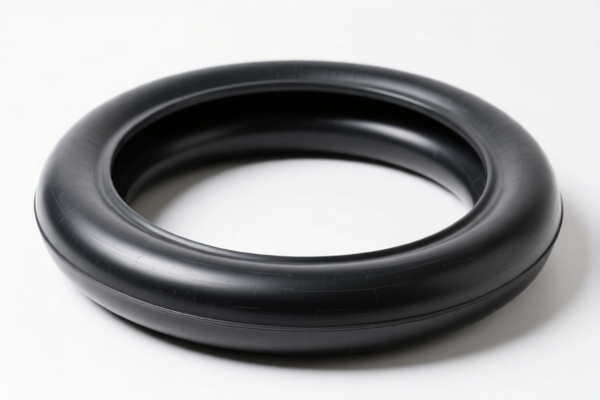
A "Universal Rubber Inner Tube" is a flexible, toroidal (torus-shaped) rubber component installed inside pneumatic tires to retain air pressure. In international trade, classification depends heavily on the material composition, end-use vehicle type, and specific rubber formulation.
Key Classification Distinctions: * By Vehicle Type: Is it for a motorcycle (HS 8714) or a general tire/automotive application (HS 4013)? * By Material: Is it generic "rubber" or specifically "Butyl Rubber" (Isobutylene-isoprene rubber)? * By Structure: Is it a finished tube or a raw material component?
⚠️ Critical Distinction Point:
- If the product is strictly for Motorcycles, it falls under Chapter 8714.
- If the product is for Cars/Trucks/Bicycles or uses specific Butyl Rubber formulations, it typically falls under Chapter 4013 (Tires) or 4002 (Synthetic Rubber).
- "Butyl Rubber" often attracts higher scrutiny due to specific trade measures (Section 122).
📦 II. HS Code Classification Details (2026 Latest Tariff Authority Comparison)
| HS Code | Product Description | Applicable Scenario | Material/Type |
|---|---|---|---|
4013.90.50.10 |
Rubber Inner Tubes, Generic | General purpose inner tubes, often for smaller vehicles | Generic Rubber |
4002.39.00.00 |
Butyl Rubber (Isobutylene-Isoprene) | Specific chemical classification for the rubber compound itself, sometimes used if imported as raw material or specific tire component | Butyl Rubber (Isobutylene-Isoprene) |
4013.90.50.50 |
Rubber Inner Tubes, Standard | Fits the standard definition of inner tubes in Chapter 40 | Rubber |
8714.10.00.50 |
Motorcycle Parts: Inner Tubes | Specific to Motorcycles. If the tube is marked/used for motorcycles, this is the preferred code. | Butyl Rubber / Motorcycle Part |
8714.99.80.00 |
Other Motorcycle Parts & Accessories | Catch-all for motorcycle accessories not elsewhere specified | Butyl Rubber |
🔍 Key Reminder:
- Motorcycle Inner Tubes have a significantly lower base tariff (0% vs 3.7%/10%) compared to general rubber tubes.
- However, Butyl Rubber products are frequently targeted by Section 122 tariffs (10%) due to USITC rulings on Chinese rubber imports.
- Misclassifying a motorcycle tube as a general tire tube (4013) can lead to higher base duties (3.7% + 25% + 10% = 38.7%) instead of the motorcycle rate (0% + 7.5% + 10% = 17.5%).
💰 III. 2026 Latest Tariff Rate Breakdown (Including Surcharges & Policy Add-ons)
✅ Applicable Country: United States (US)
✅ Origin: China (CN)
✅ Effective Time: 2025 November 10 onwards (including subsequent imports)
🎯 1. 4013.90.50.10 & 4013.90.50.50 — General Rubber Inner Tubes
| Item | Content |
|---|---|
| Base Tariff | 3.7% (ad valorem) |
| USITC Surcharge (Sec 301) | +25.0% |
| IEEPA Surcharge (Sec 122) | +10.0% (Targeted Chinese Rubber) |
| Total Tariff | 38.7% |
| Tax Calculation | CIF Value × 38.7% |
| De Minimis Exemption | ❌ Not Eligible (deny_de_minimis) |
| Legal Path | IEEPA:9903.01.25 → USITC:4013.90.50.10 → FOOTNOTE:9903.88.01 |
📌 Explanation:
- These codes classify the tube as a tire component rather than a vehicle part.
- The 38.7% total rate is extremely high.
- The 10% IEEPA surcharge is specifically triggered for rubber products from China under Section 122.
🎯 2. 4002.39.00.00 — Butyl Rubber (Isobutylene-Isoprene)
| Item | Content |
|---|---|
| Base Tariff | 0.0% |
| USITC Surcharge (Sec 301) | +25.0% |
| IEEPA Surcharge (Sec 122) | +10.0% |
| Total Tariff | 35.0% |
| Tax Calculation | CIF Value × 35.0% |
| De Minimis Exemption | ❌ Not Eligible |
| Legal Path | IEEPA:9903.01.25 → USITC:4002.39.00.00 |
📌 Note:
- Although the base rate is 0%, the surcharges push the total to 35.0%.
- This code is often used if the product is considered a raw material or a specific synthetic rubber compound rather than a finished inner tube.
- Still subject to the 10% Section 122 penalty.
🎯 3. 8714.10.00.50 — Motorcycle Inner Tubes (Part of Motorcycle)
| Item | Content |
|---|---|
| Base Tariff | 0.0% |
| USITC Surcharge (Sec 301) | +7.5% |
| IEEPA Surcharge (Sec 122) | +10.0% |
| Total Tariff | 17.5% |
| Tax Calculation | CIF Value × 17.5% |
| De Minimis Exemption | ❌ Not Eligible |
| Legal Path | IEEPA:9903.01.25 → USITC:8714.10.00.50 |
📌 Advantage:
- This is the MOST COST-EFFECTIVE option for motorcycle tubes.
- Base duty is 0%, and the Sec 301 surcharge is only 7.5% (vs 25% for tires).
- Crucial: Must be clearly identifiable as a motorcycle part.
🎯 4. 8714.99.80.00 — Other Motorcycle Parts/Accessories
| Item | Content |
|---|---|
| Base Tariff | 10.0% |
| USITC Surcharge (Sec 301) | +7.5% |
| IEEPA Surcharge (Sec 122) | +10.0% |
| Total Tariff | 27.5% |
| Tax Calculation | CIF Value × 27.5% |
| De Minimis Exemption | ❌ Not Eligible |
| Legal Path | IEEPA:9903.01.25 → USITC:8714.99.80.00 |
📌 Note:
- Use this only if the product does not fit8714.10(e.g., non-standard or accessory kits).
- Higher base duty (10%) makes it less favorable than8714.10.00.50.
🛠️ IV. Customs Clearance Practical Advice (Battle-Tested Pitfall Avoidance Guide)
✅ 1. Documentation Checklist (Missing Items = Delay)
| Document | Required | Description |
|---|---|---|
| ✅ Product Specification Sheet | ✔️ | Must specify: Material (Butyl/Natural Rubber), Size, Pressure Rating, Intended Vehicle Type (Motorcycle vs. Auto) |
| ✅ Product Photos | ✔️ | Clear images showing valve stem type, branding, and any "Motorcycle" markings |
| ✅ Commercial Invoice | ✔️ | Must explicitly state: "Inner Tube for Motorcycle, Model XYZ, Material: Butyl Rubber" |
| ✅ Packing List | ✔️ | List quantity, weight, and dimensions. Ensure no mixed shipments with non-dutiable items |
| ✅ Certificate of Origin | ✔️ | Required for origin verification, especially for Section 122 enforcement |
| ✅ Third-Party Test Report | ✔️ | ISO/SGS reports proving material composition (Butyl vs. Natural) |
✅ 2. Declaration Tips (Key Mnemonic)
🔥 "Motorcycle Code First, Butyl Penalty Clear, Don't Mix Tires, Save Big Dollars!"
| Scenario | Correct Declaration | Incorrect Practice |
|---|---|---|
| Tube for Motorcycle | 8714.10.00.50 |
Misclassifying as 4013.90.50.10 → Saves 21.2% tax |
| Tube for Car/Bike | 4013.90.50.10 or 4013.90.50.50 |
Using 8714 codes → Customs Rejection/Fine |
| Butyl Rubber Material | Clearly state "Butyl" in description | Omitting material type → Risk of Section 122 10% penalty |
| Mixed Shipment | Separate line items for Motorcycle vs. Auto parts | Combining into one HS code → Audit Risk |
✅ 3. Special Situations
| Situation | Handling Advice |
|---|---|
| OEM Custom Tubes | Provide customer PO and technical drawings to prove specific use (e.g., Motorcycle) |
| "Universal" Sizing | Even if labeled "Universal," if it fits motorcycles, argue for 8714.10 with proof of compatibility |
| Imported as Raw Material | If importing rolls of Butyl Rubber, use 4002.39.00.00 (35% tariff) |
| Small Parcel (De Minimis) | ❌ No De Minimis: All these codes are deny_de_minimis. Do not use 800-series informal entry for values under $800 |
🌍 V. Global Market Clearance Comparison (2026 Latest)
| Country/Region | Recommended HS Code | Total Tariff (China Origin) | Certification | Notes |
|---|---|---|---|---|
| 🇺🇸 USA | 8714.10.00.50 |
17.5% (Best Case) | None | 4013 codes hit 38.7% due to Sec 122 |
| 🇨🇳 China | 4013.90.50 |
~5-10% | CCC (if applicable) | No Sec 301/122 surcharges |
| 🇪🇺 EU | 4013.90 |
~0-3% (if CE marked) | CE | No heavy US-style surcharges |
| 🇦🇺 Australia | 4013.90 |
~5% | RCM | Moderate tariffs |
| 🇯🇵 Japan | 4013.90 |
~0-5% | PSE | Competitive market |
📌 Conclusion:
- USA is the most challenging market due to the 38.7% rate for general tubes and 17.5% for motorcycle tubes.
- Strategy: If your product is for motorcycles, ALWAYS use8714.10.00.50to save 21.2% in duties.
- Avoid: General4013codes for motorcycle parts unless you cannot prove motorcycle use.
📌 VI. Common Mistakes & Pitfall Guide (Lessons Learned the Hard Way)
❌ Mistake 1: Classifying Motorcycle Tubes as General Tire Tubes (4013)
👉 Consequence: Pay 38.7% instead of 17.5% → Overpay 21.2% per unit!
❌ Mistake 2: Ignoring the "Butyl Rubber" Material Specification
👉 Consequence: Customs may assign the 10% Section 122 penalty arbitrarily, leading to unexpected costs.
❌ Mistake 3: Using "Inner Tube" without specifying Vehicle Type
👉 Consequence: CBP issues a Request for Information (RFI), causing clearance delays of 5-10 days.
❌ Mistake 4: Attempting De Minimis (Section 321) for these items
👉 Consequence: Seizure or return. These HS codes are explicitly excluded from the $800 de minimis exemption.
✅ Correct Approach:
"Inner Tube, Motorcycle, 18x2.50, Butyl Rubber, Model ABC, Intended for OEM Motorcycle Use"
🎯 VII. Conclusion: Professional Declaration, Save Time, Cut Costs!
🎯 Remember the Mnemonic:
🔹 "Motorcycle Part = 17.5% (Save Big!)"
🔹 "General Tire = 38.7% (Painful!)"
🔹 "Butyl Penalty = 10% (Always Check!)"
🔹 "No De Minimis = Full Declaration Required!"
📌 Pro Tip:
- If you have mixed shipments (some for motorcycles, some for cars), split the HS codes on the commercial invoice.
- Consider applying for an Advance Ruling if your product is unique.
- Supplier Confirmation: Ensure your supplier provides a Material Safety Data Sheet (MSDS) confirming the rubber type to defend against Section 122 claims.
📣 Immediate Action:
📞 Verify your HS Code with a licensed Customs Broker
📄 Prepare detailed product specs
🚀 Clearance Success = Accurate Code + Complete Docs
✨ Professional Clearance Starts with Precise Classification!
💼 Every Percentage Point of Tariff Counts!
Customer Reviews
About HS Code Classification
The Harmonized System (HS) is an internationally standardized nomenclature developed by the World Customs Organization (WCO) to classify traded products. Over 200 countries use the HS system as the basis for customs tariffs, trade statistics, and import/export regulations.
Each HS code follows a hierarchical structure:
- Chapter (2 digits) — Broad category of goods (e.g., Chapter 84: Machinery and Mechanical Appliances)
- Heading (4 digits) — More specific grouping within the chapter
- Subheading (6 digits) — Internationally standardized breakdown, used by all WCO member countries
- National subdivisions (8-10 digits) — Country-specific extensions for further classification, such as US HTSUS 10-digit codes
Correct HS code classification is essential for smooth customs clearance, accurate duty payment, and compliance with trade regulations. Misclassification can lead to customs delays, overpayment of duties, or penalties.
When importing from CN to US, the applicable tariff rates may include:
- Most-Favored-Nation (MFN) rate — The standard duty rate applied to WTO members
- General rate — Applied to countries without trade agreements
- Trade remedy duties — Additional tariffs such as Section 301 (anti-dumping), Section 232 (national security), or countervailing duties
The information provided on this page is for reference purposes only. For official classification, please consult with your local customs authority or a licensed customs broker.