Universal Steering Shaft Assembly
CN → US| HS Code | Tariff Rate | Origin | Destination | Doc |
|---|---|---|---|---|
| 8708947550 | 0.0% | CN | US | Official Doc |
| 8483103010 | 37.5% | CN | US | Official Doc |
| 8708947510 | 0.0% | CN | US | Official Doc |
| 7326908688 | 87.9% | CN | US | Official Doc |
| 8483105000 | 35.0% | CN | US | Official Doc |
| 7326190080 | 87.9% | CN | US | Official Doc |
Product Images
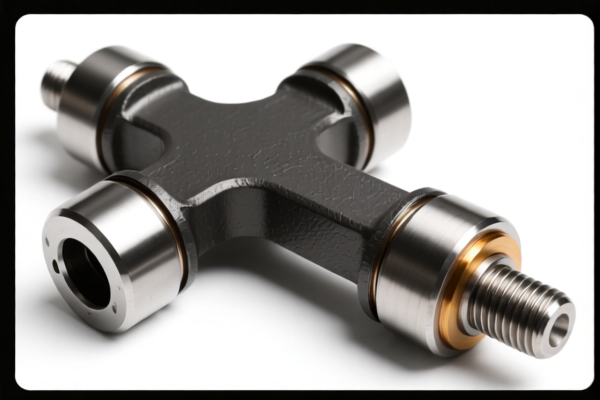
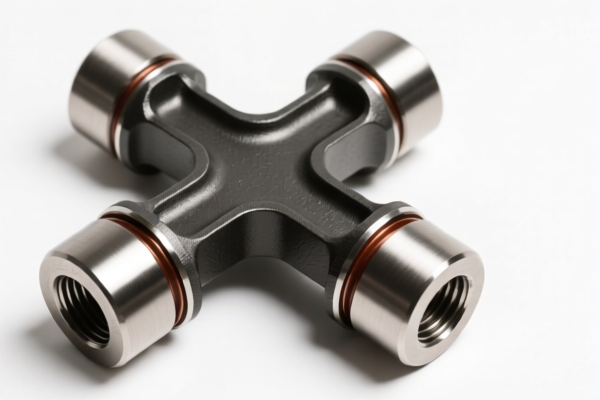
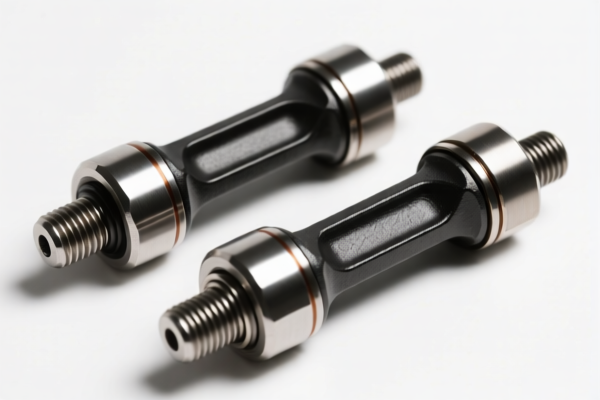
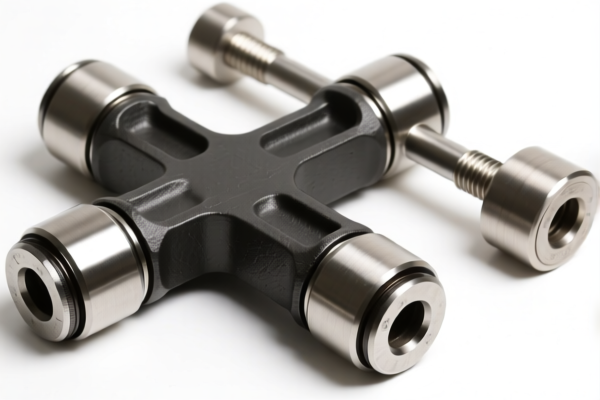
AI Analysis
🚗 Universal Steering Shaft Assembly
🌐 HS Code Reference & Clearance Guide | 2026 Latest Tariff Analysis | Professional Customs Strategy
📌 I. Product Definition & Classification: Do You Really Understand the "Steering Shaft"?
A Universal Steering Shaft Assembly is a critical transmission component in automotive systems, responsible for transmitting torque from the steering column to the steering gear or rack. In international trade, its classification depends heavily on its functional nature (whether it's a general mechanical power transmission part or a specific automotive part) and its material composition.
Key Distinction Points: * If classified as an Automotive Part: It falls under Chapter 87 (Vehicles), specifically parts of steering systems. * If classified as a General Mechanical Part: It falls under Chapter 84 (Machinery), specifically transmission shafts. * If classified as a General Metal Product: It falls under Chapter 73 (Articles of Iron or Steel), assuming it doesn't fit specific machinery chapters due to lack of functional specificity.
⚠️ Critical Note for Customs Declaration:
The most common dispute arises between 8708.94 (Parts of steering systems) and 8483.10 (Transmission shafts). - If the part is specifically designed for vehicle steering and cannot be easily used for other machinery, 8708 is preferred. - If the part is a generic universal joint shaft used in various industrial applications, 8483 or 7326 might apply.
📦 II. HS Code Classification Details (2026 Latest Tariff Authority Comparison)
Based on the provided data, here are the six possible HS Code classifications for the "Universal Steering Shaft Assembly," ranked by likelihood and tariff impact.
| HS Code | Product Description & Summary | Applicability / Reasoning |
|---|---|---|
| 8708.94.75.50 | Steering System Part Matches "Other parts of steering systems." No obvious material conflict. |
High Likelihood. Best fits if the shaft is a dedicated component for vehicle steering systems. |
| 8708.94.75.10 | Steering Column & Parts Consistent with steering columns and their parts. Inferred material has no conflict based on common sense. |
High Likelihood. Similar to above; often grouped with steering columns. |
| 8483.10.30.10 | Transmission Shaft / Crank Belongs to the category of transmission shafts. Fits the default matching principle for spare parts. |
Medium Likelihood. If considered a general mechanical transmission part rather than a specific auto part. |
| 8483.10.50.00 | Transmission Shaft & Crank Belongs to the category of transmission shafts and cranks. No material conflict. |
Medium Likelihood. Another variant within the transmission shaft chapter. |
| 7326.90.86.88 | Other Articles of Iron or Steel Inferred to be a metal product, fitting "Other articles of iron or steel." |
Low Likelihood (High Risk). Used if the item is deemed a generic steel article not specifically defined elsewhere. Highest Tariff Risk. |
| 7326.19.00.80 | Other Articles of Iron or Steel Inferred to be an iron/steel product, fitting "Other articles of iron and steel" components. |
Low Likelihood (High Risk). Similar to above. Generic metal classification. Highest Tariff Risk. |
🔍 Key Takeaway:
- 8708 Series is the most accurate for automotive-specific steering shafts. - 8483 Series is acceptable for generic transmission shafts. - 7326 Series is a "fallback" for generic metal parts and carries punitive tariffs. Avoid this unless the part is truly non-functional generic metal.
💰 III. 2026 Latest Tariff Rate Breakdown (Including Surtaxes & Policy Surcharges)
✅ Applicable Country: United States (US)
✅ Origin: China (CN)
✅ Effective Date: Post-2025 (Current Policy Context)
The tariff structure is complex due to Section 301 (25%) and Section 122 (10%) surcharges, plus base rates.
🎯 1. 8708.94.75.50 & 8708.94.75.10 —— Automotive Steering Parts (Recommended)
| Item | Detail |
|---|---|
| Base Duty Rate | 2.5% (Ad Valorem) |
| Section 301 Surcharge | +25.0% (On Chinese origin goods) |
| Section 122 Surcharge | +10.0% (Specific trade policy surcharge) |
| Total Effective Tax Rate | 37.5% (2.5% + 25.0% + 10.0%) |
| Calculation Basis | CIF Value × 37.5% |
| De Minimis Exemption? | ❌ No (De Minimis is denied for these HS codes under current restrictions) |
| Legal Path | Base Rate → USITC Footnote 301 → IEEPA Section 122 |
📌 Explanation:
- These codes carry the standard trade war penalties (35% total surcharge + base). - This is the lowest risk among high-tariff options if the product is truly an auto part.
🎯 2. 8483.10.30.10 & 8483.10.50.00 —— Transmission Shafts
| Item | Detail |
|---|---|
| Base Duty Rate | 0.0% to 2.5% (Varies by sub-heading) |
| Section 301 Surcharge | +25.0% |
| Section 122 Surcharge | +10.0% |
| Total Effective Tax Rate | 35.0% to 37.5% |
| Calculation Basis | CIF Value × Rate |
| De Minimis Exemption? | ❌ No |
📌 Note:
-8483.10.50.00has a 0% base rate, making its total 35.0%. -8483.10.30.10has a 2.5% base rate, making its total 37.5%. - These are slightly cheaper than8708if the 0% base applies, but classification risk is higher if the part is clearly automotive.
🎯 3. 7326.90.86.88 & 7326.19.00.80 —— Generic Iron/Steel Articles (AVOID)
| Item | Detail |
|---|---|
| Base Duty Rate | 2.9% |
| Section 301 Surcharge | +25.0% |
| Section 122 Surcharge | +10.0% |
| Section 122 Steel/Copper Aluminum Surcharge | +50.0% (Specific to steel/aluminum products under certain clauses) |
| Total Effective Tax Rate | 87.9% (2.9% + 25.0% + 10.0% + 50.0%) |
| Calculation Basis | CIF Value × 87.9% |
| De Minimis Exemption? | ❌ No |
📌 WARNING:
- This is the MOST EXPENSIVE classification. - The +50% surcharge for steel/copper/aluminum articles is devastating. - Do NOT declare a steering shaft as a generic "steel article" unless you have no other choice. It will cost you nearly 90% of the product value in duties.
🛠️ IV. Clearance Practical Advice (Battle-Tested Pitfall Guide)
✅ 1. Required Documentation Checklist (Non-Negotiable)
| Document | Mandatory? | Description |
|---|---|---|
| ✅ Product Specification Sheet | ✔️ | Must clearly state: "Steering Shaft for Automotive Use," dimensions, material (Steel/Aluminum), and compatibility (e.g., "For Toyota Camry 2020"). |
| ✅ Technical Drawings / Photos | ✔️ | Show universal joints (U-joints), splines, and mounting points. Proves it is a mechanical transmission component, not a raw steel bar. |
| ✅ Commercial Invoice | ✔️ | Must explicitly use the term "Steering Shaft Assembly" or "Steering System Part." Avoid vague terms like "Metal Shaft" or "Power Transmission Component" unless intended for 8483. |
| ✅ Origin Certificate (CO) | ✔️ | Required to prove Chinese origin (triggering surcharges) or to claim exemptions if applicable (rare for China). |
| ✅ Packing List | ✔️ | Ensure no disassembly of the assembly. Declare as one unit. |
✅ 2. Declaration Strategy (Key Mantra)
🔥 "Function Dictates Code, Material Dictates Penalty!"
| Scenario | Correct Declaration | Wrong Declaration | Consequence |
|---|---|---|---|
| Dedicated Auto Part | 8708.94.75.50 (Steering Part) |
7326.90.86.88 (Steel Article) |
Tariff Jumps from 37.5% to 87.9%! |
| Generic Industrial Shaft | 8483.10.50.00 (Transmission Shaft) |
8708.94.75.10 (Auto Part) |
Risk of reclassification by CBP, possible penalties. |
| Raw Steel Bar with Splines | 7326.90.86.88 (Steel Article) |
8483.10.50.00 (Transmission Shaft) |
If not yet a functional shaft, this may be correct, but 87.9% tax applies. |
💡 Pro Tip:
If your product is a Universal Joint (U-Joint) assembly, it is often considered a part of the transmission system. However, if it is specifically shaped for a car's steering column, 8708 is safer. If it is a generic U-joint used in tractors, pumps, and cars, 8483 is appropriate.
✅ 3. Special Handling for "Universal" Parts
| Case | Handling Advice |
|---|---|
| OEM Parts | Provide the OEM part number and vehicle model compatibility. This strongly supports 8708 classification. |
| Aftermarket Parts | Clearly state "Aftermarket Steering Shaft for [Vehicle Make/Model]." Avoid vague "Universal Fit" without context. |
| Mixed Shipments | If shipping steering shafts with other auto parts, ensure they are declared separately. Do not lump them into a generic "Auto Parts" bin if specific HS codes are available. |
🌍 V. Global Market Clearance Comparison (2026 Latest)
| Country/Region | Recommended HS Code | Tariff (China Origin) | Certification | Note |
|---|---|---|---|---|
| 🇺🇸 USA | 8708.94.75.50 |
37.5% | None specific | High tariffs due to 301/122. Avoid 7326. |
| 🇨🇳 China | 8708.94.75.50 |
7.0% - 8.0% (Est.) | CCC (if applicable) | Lower base rate, no US surcharges. |
| 🇪🇺 EU | 8708.94 |
0% | ECE R79 (Steering) | No surcharges. Requires ECE certification for safety. |
| 🇲🇽 Mexico | 8708.94 |
0% (if USMCA) | NOM | Beneficial under USMCA if rules of origin are met. |
📌 Conclusion:
- USA is the most challenging market due to 37.5% minimum duty (or 87.9% if misclassified). - EU and Mexico offer better tariff structures but require safety certifications (ECE/NOM).
📌 VI. Common Errors & Pitfall Guide (Lessons Learned)
❌ Error 1: Declaring a steering shaft as "Steel Rod" or "Metal Shaft"
👉 Consequence: Misclassified as 7326, triggering 87.9% tax. Loss of profit margin.
❌ Error 2: Using "Transmission Shaft" for a clearly automotive-specific part
👉 Consequence: Customs may reclassify to 8708. While tax is similar (37.5%), it delays clearance and may incur penalties for inaccurate declaration.
❌ Error 3: Failing to provide Vehicle Compatibility info
👉 Consequence: Customs cannot verify if it's an auto part (8708) or a generic part (8483/7326). Leads to holdups and manual inspection.
✅ Correct Practice:
"Universal Steering Shaft Assembly, Steel, for Automotive Steering Systems, Compatible with [List Models], No Electrical Components."
🎯 VII. Conclusion: Precision Classification Saves Money!
🎯 Remember the Mantra:
🔹 "Auto Part = 8708 (37.5%) | Generic Shaft = 8483 (35-37.5%) | Steel Rod = 7326 (87.9%)"
🔹 "One digit wrong, ten percent lost!"
📌 Tip:
If you are importing into the US, consider Advance Rulings from CBP to lock in the 8708 or 8483 classification before shipment. This prevents surprise 87.9% bills at the border.
📣 Take Action Now:
📞 Consult a licensed customs broker.
📄 Provide detailed photos and OEM numbers.
🚀 Secure your HS Code to minimize tax liability and ensure smooth clearance.
✨ Professional Clearance, Starting with Accurate Classification!
💼 Every dollar of duty saved is pure profit!
Customer Reviews
About HS Code Classification
The Harmonized System (HS) is an internationally standardized nomenclature developed by the World Customs Organization (WCO) to classify traded products. Over 200 countries use the HS system as the basis for customs tariffs, trade statistics, and import/export regulations.
Each HS code follows a hierarchical structure:
- Chapter (2 digits) — Broad category of goods (e.g., Chapter 84: Machinery and Mechanical Appliances)
- Heading (4 digits) — More specific grouping within the chapter
- Subheading (6 digits) — Internationally standardized breakdown, used by all WCO member countries
- National subdivisions (8-10 digits) — Country-specific extensions for further classification, such as US HTSUS 10-digit codes
Correct HS code classification is essential for smooth customs clearance, accurate duty payment, and compliance with trade regulations. Misclassification can lead to customs delays, overpayment of duties, or penalties.
When importing from CN to US, the applicable tariff rates may include:
- Most-Favored-Nation (MFN) rate — The standard duty rate applied to WTO members
- General rate — Applied to countries without trade agreements
- Trade remedy duties — Additional tariffs such as Section 301 (anti-dumping), Section 232 (national security), or countervailing duties
The information provided on this page is for reference purposes only. For official classification, please consult with your local customs authority or a licensed customs broker.