Universal Vehicle Steering Shaft Assembly
CN → US| HS Code | Tariff Rate | Origin | Destination | Doc |
|---|---|---|---|---|
| 8483103010 | 37.5% | CN | US | Official Doc |
| 8708947550 | 0.0% | CN | US | Official Doc |
| 8708947510 | 0.0% | CN | US | Official Doc |
| 8483105000 | 35.0% | CN | US | Official Doc |
| 7326908688 | 87.9% | CN | US | Official Doc |
Product Images
AI Analysis
🚗 Universal Vehicle Steering Shaft Assembly (Universal Joint Shaft)
🌐 HS Code Reference & Customs Clearance Guide | 2024 Latest Tariff Analysis | Professional Clearance Strategy
📌 I. Product Definition: What is a "Steering Shaft"?
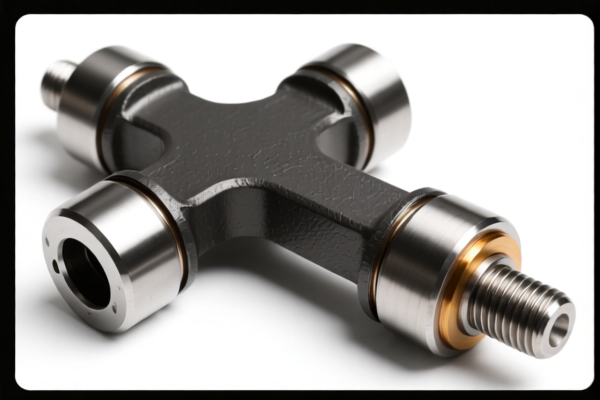
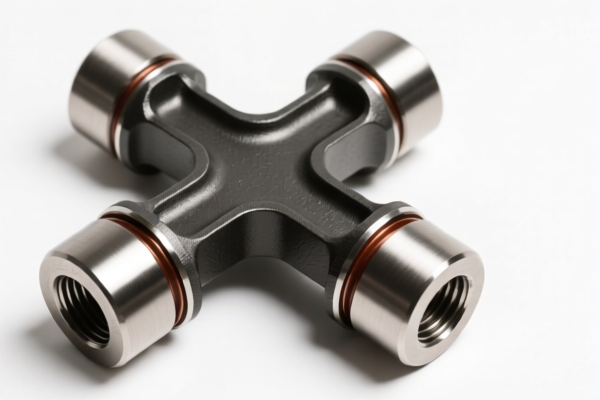
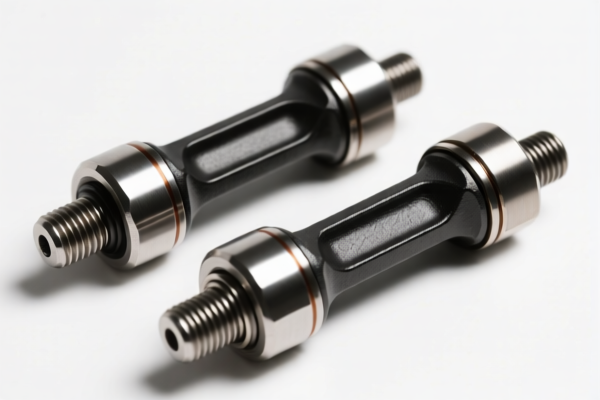
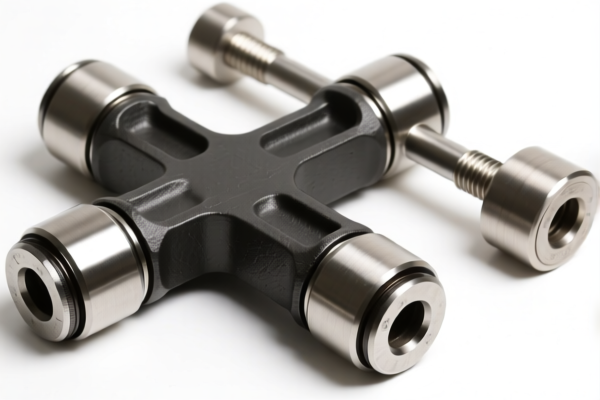
A Universal Vehicle Steering Shaft Assembly is a critical component of the automotive steering system. It connects the steering column to the steering gear (rack or box), transmitting torque while accommodating angular movement.
In international trade, this part is often disputed between two main categories: 1. Transmitted Power Shafting (Chapter 84): General mechanical transmission components. 2. Parts of Motor Vehicles (Chapter 87): Specific parts intended for use solely, principally, or exclusively with vehicles.
⚠️ Key Distinction Point:
- If classified as 8483 (Transmitted Power Shafting): It is treated as a general mechanical part.
- If classified as 8708 (Parts of Motor Vehicles): It is treated as an automotive-specific component, often benefiting from lower base duties but subject to specific automotive part rules.
📦 II. HS Code Classification Details (Based on Provided Data)
The following HS Codes are derived from the provided <DATA> context. Each classification reflects a different interpretation of the product's function and material.
| HS Code | Product Description | Summary/Reasoning |
|---|---|---|
8483.10.30.10 |
Transmitted Power Shafting | Considered within the scope of "transmission shafts," matching the default tendency for spare parts. |
8708.94.75.50 |
Parts of Motor Vehicles (Steering System) | Classified as a steering system part, adhering strictly to "parts rule" logic. |
8708.94.75.10 |
Parts of Motor Vehicles (Steering Column) | Highly consistent with steering columns and their parts in terms of use and form. |
8483.10.50.00 |
Transmitted Power Shafting (Other) | Viewed as a type of transmission shaft/crank, fitting the broader shaft category. |
7326.90.86.88 |
Articles of Iron or Steel (Miscellaneous) | Inferred as a metal product based on common sense; classified as "other articles of iron/steel." |
🔍 Important Note:
- The choice between 8483 and 8708 is critical. While 8708 is the most logically accurate for automotive steering shafts, customs authorities sometimes default to 8483 if the specific automotive part heading is not explicitly detailed or if the component is seen as a generic mechanical shaft. - 7326 is generally a fallback classification for metal goods that don’t fit specific functional headings, resulting in the highest duty rates.
💰 III. 2024 Latest Tariff Rate Breakdown (Including Surcharges)
✅ Applicable Country: United States (US)
✅ Origin: China (CN)
✅ Effective Date: Current policies apply (including Section 301 & Section 232/122 implications)
🎯 1. 8483.10.30.10 & 8483.10.50.00 — Transmitted Power Shafting (Chapter 84)
These classifications fall under general mechanical parts.
| Item | Content |
|---|---|
| Base Duty Rate | 0.0% – 2.5% (Varies by specific subheading) |
| Section 301 Surcharge | +25.0% (Standard 301 tariff on Chinese imports) |
| Section 122 Tariff | +10.0% (Applicable to specific goods under Section 122, if applicable) |
| Steel/Aluminum Surcharge (Section 232) | +50.0% (If applicable under specific steel/aluminum provisions; note: some entries in data suggest this for 7326, but verify if 8483 steel parts are included) |
| Total Effective Duty | 35.0% – 87.9% (See below for specific breakdowns) |
Detailed Breakdown by HS Code:
A. 8483.10.30.10
| Component | Rate |
|---|---|
| Base Duty | 2.5% |
| Section 301 | 25.0% |
| Section 122 | 10.0% |
| Total | 37.5% |
B. 8483.10.50.00
| Component | Rate |
|---|---|
| Base Duty | 0.0% |
| Section 301 | 25.0% |
| Section 122 | 10.0% |
| Total | 35.0% |
🎯 2. 8708.94.75.50 & 8708.94.75.10 — Parts of Motor Vehicles (Chapter 87)
These are the most logical classifications for a steering shaft assembly as it is a dedicated automotive part.
| Item | Content |
|---|---|
| Base Duty Rate | 2.5% |
| Section 301 Surcharge | +25.0% |
| Section 122 Tariff | +10.0% |
| Total | 37.5% (Displayed as 2.5% + 35.0% in data) |
📌 Interpretation:
- Base: 2.5% (Standard MFN rate for parts of vehicles)
- Surcharges: 25% (Sec 301) + 10% (Sec 122) = 35% additional
- Total: 2.5% + 35% = 37.5%
🎯 3. 7326.90.86.88 — Articles of Iron or Steel (Miscellaneous)
This classification is the least desirable due to high base rates and potential steel surcharges.
| Component | Rate |
|---|---|
| Base Duty | 2.9% |
| Section 301 | 25.0% |
| Section 122 | 10.0% |
| Steel/Aluminum Surcharge | +50.0% (Note: Data indicates "Steel, Aluminum, Copper articles surcharge: 50%") |
| Total | 87.9% |
⚠️ Warning:
- This classification implies the product is treated as a generic metal article, not a functional automotive part.
- The 50% steel surcharge significantly increases costs.
- Total Duty: 87.9% is extremely high and should be avoided if a functional heading (8483 or 8708) is appropriate.
🛠️ IV. Customs Clearance Practical Advice (Pitfall Avoidance Guide)
✅ 1. Recommended HS Code Strategy
| Scenario | Recommended HS Code | Total Duty | Reason |
|---|---|---|---|
| Standard Automotive Import | 8708.94.75.50 or 8708.94.75.10 |
37.5% | Most accurate for "Steering Shaft." Aligns with "Parts of Motor Vehicles." |
| Generic Mechanical Part | 8483.10.50.00 |
35.0% | Lower base duty (0%), but still high total. Use if automotive classification is disputed. |
| Generic Metal Article | 7326.90.86.88 |
87.9% | AVOID. Only use if no functional heading applies. Highest cost. |
📌 Strategic Insight:
-8708.94.75.50is the strongest candidate because it explicitly covers "parts of steering systems."
-8483.10.50.00offers a slight saving (35% vs 37.5%) due to a 0% base rate, but risks being challenged if customs insists it’s an automotive part.
-7326.90.86.88should be avoided unless the shaft is a non-automotive, custom-made steel component with no clear mechanical function.
✅ 2. Documentation Requirements
| Document | Requirement | Notes |
|---|---|---|
| Commercial Invoice | Must specify "Steering Shaft Assembly for Vehicle" | Avoid vague terms like "Metal Rod" |
| Technical Data Sheet | Include dimensions, material (e.g., Chrome Molybdenum steel), and intended vehicle model | Helps prove automotive use |
| OE Number / Part Number | Provide manufacturer part number | Links product to specific vehicle application |
| Bill of Lading | Clear description matching invoice | No discrepancies |
✅ 3. Common Errors & Pitfalls
❌ Error 1: Misclassifying as "Other Metal Articles" (7326)
👉 Consequence: Duty jumps to 87.9%.
👉 Fix: Provide evidence that the part is specifically for automotive steering systems (e.g., OE number, fitment data).
❌ Error 2: Ignoring Section 122 Tariff
👉 Consequence: Underpayment of 10% additional duty.
👉 Fix: Ensure tariff calculation includes all applicable surcharges (301 + 122).
❌ Error 3: Claiming "General Machinery" (8483) without justification
👉 Consequence: Customs may accept or reject. If rejected, penalty + retroactive duty.
👉 Fix: If using 8483, be prepared to argue that it’s a generic transmission shaft not exclusive to vehicles. However, 8708 is preferred for auto parts.
🌍 V. Global Market Comparison (Quick Reference)
| Market | Recommended HS Code | Approx. Duty (China Origin) | Notes |
|---|---|---|---|
| 🇺🇸 USA | 8708.94.75.50 |
37.5% | Includes 301 (25%) + 122 (10%) |
| 🇨🇳 China | 8708.94.75.50 |
Varies (Low/Zero) | Check FTAs; generally lower base rates |
| 🇪🇺 EU | 8708.94.75.50 |
3.5% | No US-style 301 tariffs; standard auto part rates apply |
| 🇯🇵 Japan | 8708.94.75.50 |
3.5% - 4.5% | Standard auto part duty; no major surcharges |
📌 Conclusion:
- The US market imposes the highest effective duty due to Section 301 (25%) and Section 122 (10%) tariffs.
- Duty optimization is crucial: Choosing8708.94.75.50over7326.90.86.88saves 50.4% in duty.
📌 VI. Final Clearance Recommendation
-
Primary Classification: Use
8708.94.75.50(Parts of Steering System).- Total Duty: 37.5%
- Reason: Accurately reflects the product’s function as an automotive steering component.
-
Alternative Classification: Use
8483.10.50.00if the part is generic and not exclusive to vehicles.- Total Duty: 35.0%
- Risk: Must justify why it’s not a "part of motor vehicles" under GRI 1.
-
Avoid:
7326.90.86.88unless absolutely necessary.- Total Duty: 87.9%
- Risk: Excessive cost and potential reclassification by customs.
🚀 Pro Tip:
Always include OE numbers and vehicle fitment data in your commercial invoice to support the 8708 classification. This minimizes the risk of being downgraded to 7326 or challenged on 8483.
✨ Professional Clearance, Precision Classification, Cost Efficiency!
💼 Your product’s value depends on its correct HS Code. Don’t let 50% unnecessary duty kill your margin!
Customer Reviews
About HS Code Classification
The Harmonized System (HS) is an internationally standardized nomenclature developed by the World Customs Organization (WCO) to classify traded products. Over 200 countries use the HS system as the basis for customs tariffs, trade statistics, and import/export regulations.
Each HS code follows a hierarchical structure:
- Chapter (2 digits) — Broad category of goods (e.g., Chapter 84: Machinery and Mechanical Appliances)
- Heading (4 digits) — More specific grouping within the chapter
- Subheading (6 digits) — Internationally standardized breakdown, used by all WCO member countries
- National subdivisions (8-10 digits) — Country-specific extensions for further classification, such as US HTSUS 10-digit codes
Correct HS code classification is essential for smooth customs clearance, accurate duty payment, and compliance with trade regulations. Misclassification can lead to customs delays, overpayment of duties, or penalties.
When importing from CN to US, the applicable tariff rates may include:
- Most-Favored-Nation (MFN) rate — The standard duty rate applied to WTO members
- General rate — Applied to countries without trade agreements
- Trade remedy duties — Additional tariffs such as Section 301 (anti-dumping), Section 232 (national security), or countervailing duties
The information provided on this page is for reference purposes only. For official classification, please consult with your local customs authority or a licensed customs broker.