Unlaminated Polyethylene Plastic Pipe
CN → US| HS Code | Tariff Rate | Origin | Destination | Doc |
|---|---|---|---|---|
| 3916100000 | 40.8% | CN | US | Official Doc |
| 3917320020 | 38.1% | CN | US | Official Doc |
| 3916903000 | 41.5% | CN | US | Official Doc |
| 3917210000 | 38.1% | CN | US | Official Doc |
Product Images
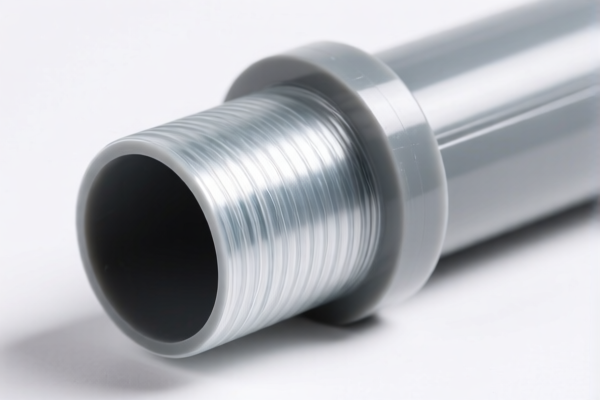
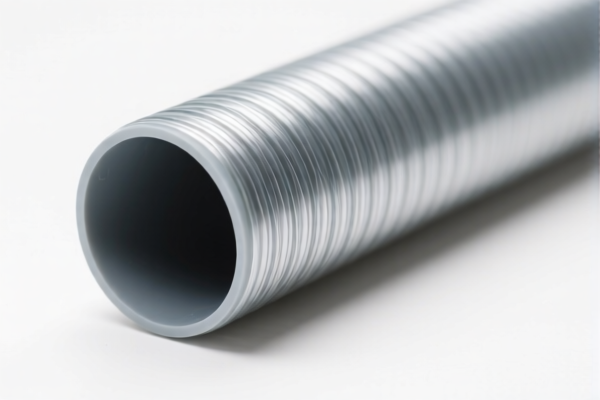
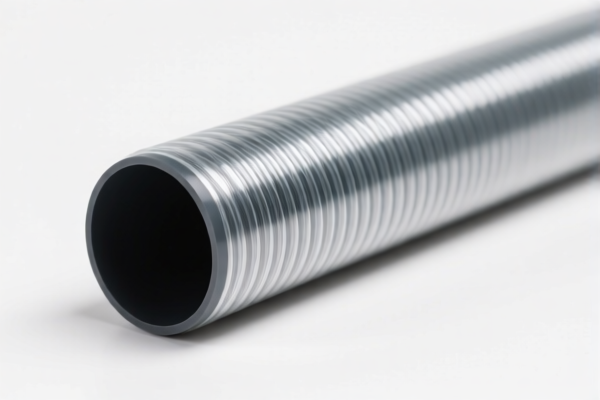
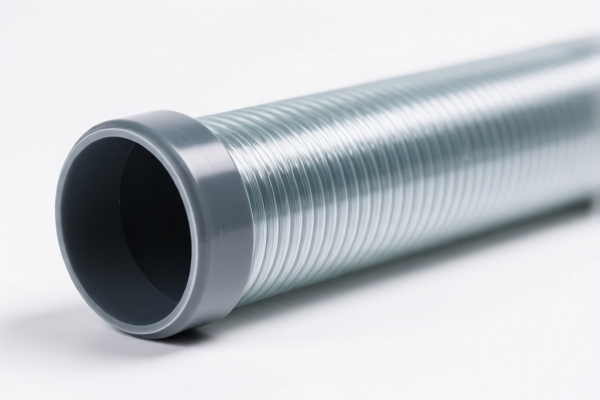
AI Analysis
🧪 Unlaminated Polyethylene Plastic Pipe
🌐 HS Code Reference & Customs Clearance Guide | 2026 Latest Tariff Analysis | Professional Clearance Strategy
📌 I. Product Definition: What Exactly is "Unlaminated Polyethylene Plastic Pipe"?
Polyethylene (PE) pipes are among the most widely used plastic products in global infrastructure, water supply, gas distribution, and industrial fluid transport. In international trade, the key to correct classification lies in distinguishing between structural profiles (Section 3916) and tubes/hoses (Section 3917), as well as identifying whether the material is treated as a simple polymer or a composite.
⚠️ Critical Distinction:
- 3916 vs. 3917: 3916 covers " rods, sticks and profile shapes," while 3917 covers "tubes, pipes and hoses." If the pipe has a hollow cross-section designed for fluid transport, it leans towards 3917. However, if it is a solid rod used as a structural profile, it goes to 3916.
- Material Specifics: Polyethylene must be specified. Some codes require "ethylene polymer," while others accept "polyethylene."
📦 II. HS Code Classification Details (2026 Latest Tariff Authority Mapping)
| HS Code | Product Description | Summary Logic | Application Scenario |
|---|---|---|---|
3916.10.00.00 |
Unlaminated Polyethylene Plastic Pipe, Material: Polyethylene, Form: Pipe | Match Success | Solid rods, sticks, or profile shapes made of PE. Often used in construction or as structural components rather than fluid conduits. |
3917.32.00.20 |
Unlaminated Polyethylene Plastic Pipe, Material: Polyethylene, Form: Plastic Pipe | Fully Consistent | Hollow tubes/pipes made of PE, typically for water or gas transport. This is the most common classification for standard PE pipes. |
3916.90.30.00 |
Unlaminated Polyethylene Plastic Pipe, Material: Polyethylene, Form: Pipe | Matches Rods/Bars/Profiles | PE products that resemble rods, bars, or other profile shapes but don't fit specific subheadings. Used for non-hollow structural PE parts. |
3917.21.00.00 |
Unlaminated Polyethylene Plastic Pipe, Material: Ethylene Polymer, Form: Rigid Tube | Meets Classification Requirements | Rigid tubes made of ethylene polymers (including PE). Specifically targets hard, rigid plastic tubing used in industrial applications. |
🔍 Key Reminder:
- Hollow vs. Solid: If the product is clearly a pipe/tube (hollow),3917series is generally more accurate unless customs authorities deem it a "profile."
- Rigidity: Rigid tubes often fall under3917.21, while flexible or standard pressure pipes might fall under3917.32or3916depending on exact shape and use.
💰 III. 2026 Latest Tariff Rate Breakdown (Including Surtaxes & Policy Add-ons)
✅ Applicable Country: United States (US)
✅ Origin: China (CN)
✅ Effective Time: Ongoing (Section 301 & IEEPA tariffs apply)
🎯 1. 3916.10.00.00 —— Unlaminated Polyethylene Plastic Pipe (Profile/Rod)
| Item | Content |
|---|---|
| Base Tariff | 5.8% (ad valorem) |
| Surtax (Section 301) | +25.0% |
| 122 Clause Surtax | +10.0% |
| Total Tariff Rate | 40.8% |
| Tax Calculation | CIF Value × 40.8% |
| De Minimis Exemption | ❌ Not Applicable (High tariff rates exceed exemption thresholds) |
| Legal Basis Path | HTSUS:3916.10.00.00 → Section 301 Footnote 1 → 122 Clause |
📌 Explanation:
- The 5.8% base rate is the standard Most Favored Nation (MFN) rate for PE profiles.
- The 25% Section 301 tariff is a punitive tariff on Chinese goods in this category.
- The 10% "122 Clause" tariff is an additional levy imposed on certain Chinese imports.
- Total: 40.8%. This is a high-cost classification. Importers must factor this into their landed cost.
🎯 2. 3917.32.00.20 —— Unlaminated Polyethylene Plastic Pipe (Tube/Pipe)
| Item | Content |
|---|---|
| Base Tariff | 3.1% (ad valorem) |
| Surtax (Section 301) | +25.0% |
| 122 Clause Surtax | +10.0% |
| Total Tariff Rate | 38.1% |
| Tax Calculation | CIF Value × 38.1% |
| De Minimis Exemption | ❌ Not Applicable |
| Legal Basis Path | HTSUS:3917.32.00.20 → Section 301 Footnote 1 → 122 Clause |
📌 Explanation:
- The 3.1% base rate is slightly lower than 3916.10, reflecting the general duty for plastic tubes.
- Like the previous code, it is subject to the 25% Section 301 and 10% 122 Clause surtaxes.
- Total: 38.1%. While slightly cheaper than 3916.10, the surtaxes dominate the cost structure.
🎯 3. 3916.90.30.00 —— Unlaminated Polyethylene Plastic Pipe (Rods/Bars/Profiles)
| Item | Content |
|---|---|
| Base Tariff | 6.5% (ad valorem) |
| Surtax (Section 301) | +25.0% |
| 122 Clause Surtax | +10.0% |
| Total Tariff Rate | 41.5% |
| Tax Calculation | CIF Value × 41.5% |
| De Minimis Exemption | ❌ Not Applicable |
| Legal Basis Path | HTSUS:3916.90.30.00 → Section 301 Footnote 1 → 122 Clause |
📌 Explanation:
- This is a "catch-all" for PE profiles not specifically listed elsewhere.
- The 6.5% base rate is the highest among the options.
- Total: 41.5%. This is the most expensive classification. Avoid if possible by proving the product is a tube (3917) or a specific profile (3916.10).
🎯 4. 3917.21.00.00 —— Unlaminated Polyethylene Plastic Pipe (Rigid Tube)
| Item | Content |
|---|---|
| Base Tariff | 3.1% (ad valorem) |
| Surtax (Section 301) | +25.0% |
| 122 Clause Surtax | +10.0% |
| Total Tariff Rate | 38.1% |
| Tax Calculation | CIF Value × 38.1% |
| De Minimis Exemption | ❌ Not Applicable |
| Legal Basis Path | HTSUS:3917.21.00.00 → Section 301 Footnote 1 → 122 Clause |
📌 Explanation:
- Specifically for rigid tubes made of ethylene polymers.
- Shares the same 3.1% base rate as3917.32.00.20.
- Total: 38.1%. Ideal if the product is explicitly a rigid conduit.
🛠️ IV. Customs Clearance Practical Advice (Real-World Pitfall Avoidance)
✅ 1. Required Documentation Checklist (Non-Negotiable)
| Document | Mandatory? | Explanation |
|---|---|---|
| ✅ Product Specification Sheet | ✔️ | Must detail material (PE/HDPE/LDPE), diameter, wall thickness, pressure rating, and whether it is rigid or flexible. |
| ✅ Product Photos | ✔️ | Clear images showing cross-section (hollow vs. solid) and ends. Crucial for distinguishing 3916 (profile) from 3917 (tube). |
| ✅ Commercial Invoice | ✔️ | Must clearly state "Unlaminated Polyethylene Plastic Pipe" and HS Code. |
| ✅ Certificate of Origin (CO) | ✔️ | If claiming preferential treatment under USMCA or other FTAs (though unlikely for China origin). |
| ✅ Material Safety Data Sheet (MSDS) | ✔️ | For chemical compliance and safety verification. |
| ✅ Third-Party Test Report | ✔️ | ASTM D3350, ISO 4427, or equivalent proof of PE material properties. |
✅ 2. Declaration Techniques (Key Mantra)
🔥 “Shape Defines Code, Material Defines Base, Surtax Adds 35%!”
| Scenario | Correct Declaration | Wrong Practice |
|---|---|---|
| Hollow Pipe for Water/Gas | 3917.32.00.20 or 3917.21.00.00 |
Declare as 3916 → Risk of penalty + 40.8%+ |
| Solid PE Rod/Profile | 3916.10.00.00 |
Declare as 3917 → Risk of penalty + 41.5% |
| Mixed Shipment (Pipe + Rod) | Split HS Codes | Combine into one code → Misclassification risk |
| Rigid Tube | 3917.21.00.00 |
Declare as 3917.32 → Minor rate difference, but accuracy matters |
✅ 3. Special Handling for High-Tariff Impact
| Situation | Recommended Action |
|---|---|
| High Tariff Burden (38-41%) | Consider Duty Entitlement programs if eligible (e.g., HTSUS 9802.80 for assembly abroad). |
| Unclear Shape | Provide 3D Renderings and Cross-Section Diagrams to CBP to justify 3917 (tube) over 3916 (profile) if hollow. |
| Customs Audit | Be prepared to demonstrate that the product is "unlaminated" (no other materials bonded) to qualify for Chapter 39. |
| 122 Clause Applicability | Verify if the specific PE grade or form is exempt from the 10% 122 clause (rare, but check latest CBP memos). |
🌍 V. Global Market Comparison (2026 Latest)
| Country/Region | Recommended HS Code | Tariff Rate (China Origin) | Certification Requirements | Notes |
|---|---|---|---|---|
| 🇺🇸 USA | 3917.32.00.20 / 3917.21.00.00 |
38.1% - 40.8% | ASTM, NSF/ANSI 61 (for potable water) | Highest tariff due to Section 301 + 122 Clause. |
| 🇨🇳 China | 3917.32.00.20 |
0% (Import Duty) | CCC (if applicable), GB Standards | Low import duty, but export restrictions may apply. |
| 🇪🇺 EU | 3917.21.00 / 3917.32.00 |
0% - 3% (if eligible) | REACH, CE Marking | Generally low tariffs, but strict chemical compliance. |
| 🇲🇽 Mexico | 3917.32.00 |
0% (under USMCA) | NOM Certifications | Benefit from USMCA if rules of origin are met. |
| 🇻🇳 Vietnam | 3917.32.00 |
0% (under CPTPP) | QCVN Standards | Potential for lower tariffs if assembled in Vietnam. |
📌 Conclusion:
- USA imposes heavy tariffs (38-41%) on Chinese PE pipes.
- EU and Mexico offer much lower or zero tariffs, but require strict compliance and origin verification.
- Strategy: For US market, consider supply chain diversification (e.g., manufacturing in Vietnam or Mexico) to avoid US surtaxes.
📌 VI. Common Mistakes & Pitfalls (Lessons Learned)
❌ Mistake 1: Classifying hollow pipes as 3916 (profiles)
👉 Consequence: Higher base tariff (5.8-6.5%) + penalty for misclassification.
👉 Fix: Use 3917 for hollow tubes.
❌ Mistake 2: Ignoring the 122 Clause (10%)
👉 Consequence: Underpayment of 10% on CIF value.
👉 Fix: Always add 10% to Section 301 (25%) + Base Rate.
❌ Mistake 3: Not distinguishing Rigid vs. Flexible
👉 Consequence: Incorrect subheading (e.g., 3917.21 vs. 3917.32).
👉 Fix: Provide test reports showing rigidity (e.g., flexural strength).
❌ Mistake 4: Using vague terms like "Plastic Tube"
👉 Consequence: Customs may assign a default higher rate or hold shipment.
👉 Fix: Use precise terms: "Unlaminated Polyethylene Plastic Pipe, Rigid, for Water Supply."
✅ Correct Practice:
"Unlaminated High-Density Polyethylene (HDPE) Pipe, Hollow, Rigid, 4-inch Diameter, NSF/ANSI 61 Certified, HS Code 3917.32.00.20"
🎯 VII. Conclusion: Precision in Classification Saves Money!
🎯 Remember the Mantra:
🔹 "Hollow = 3917, Solid = 3916. Base Rate + 35% Surtax = Real Cost!"
🔹 "3917.32 & 3917.21 are your friends (38.1%). 3916.90 is your enemy (41.5%)."
📌 Pro Tip:
If your PE pipes are assembled or processed in Vietnam, Mexico, or Malaysia, you may qualify for zero or reduced tariffs under USMCA or CPTPP.
Recommendation: Apply for a Pre-Ruling (Advance Ruling) from US Customs (CBP) to confirm the HS Code and avoid costly delays.
📣 Take Action Now:
📞 Contact a licensed customs broker + Provide Product Specs + Request HS Code Pre-Ruling
🚀 Ensure smooth clearance, avoid penalties, and optimize landed costs!
✨ Professional Clearance Starts with Accurate Classification!
💼 Every percentage point saved is pure profit!
Customer Reviews
About HS Code Classification
The Harmonized System (HS) is an internationally standardized nomenclature developed by the World Customs Organization (WCO) to classify traded products. Over 200 countries use the HS system as the basis for customs tariffs, trade statistics, and import/export regulations.
Each HS code follows a hierarchical structure:
- Chapter (2 digits) — Broad category of goods (e.g., Chapter 84: Machinery and Mechanical Appliances)
- Heading (4 digits) — More specific grouping within the chapter
- Subheading (6 digits) — Internationally standardized breakdown, used by all WCO member countries
- National subdivisions (8-10 digits) — Country-specific extensions for further classification, such as US HTSUS 10-digit codes
Correct HS code classification is essential for smooth customs clearance, accurate duty payment, and compliance with trade regulations. Misclassification can lead to customs delays, overpayment of duties, or penalties.
When importing from CN to US, the applicable tariff rates may include:
- Most-Favored-Nation (MFN) rate — The standard duty rate applied to WTO members
- General rate — Applied to countries without trade agreements
- Trade remedy duties — Additional tariffs such as Section 301 (anti-dumping), Section 232 (national security), or countervailing duties
The information provided on this page is for reference purposes only. For official classification, please consult with your local customs authority or a licensed customs broker.