Unpeeled Larch Logs
CN → USProduct Images

AI Analysis
🌲 Unpeeled Larch Logs (Raw Timber)
🌐 HS Code Reference & Customs Clearance Guide | 2026 Latest Tariff Analysis | Professional Import Strategy for Wood Products
📌 I. Product Definition & Classification: What Exactly Are "Unpeeled Larch Logs"?
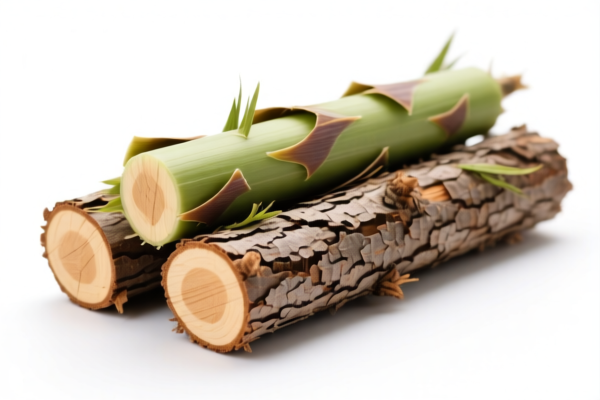
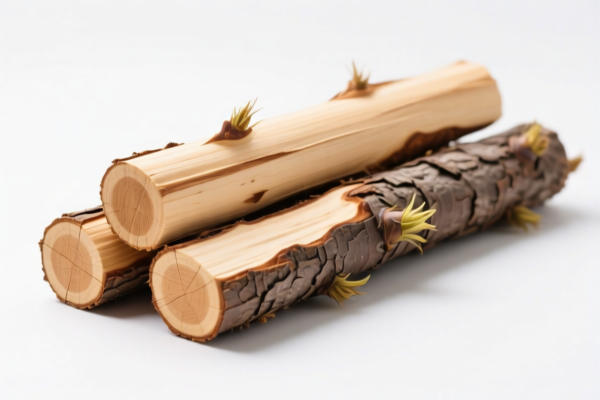
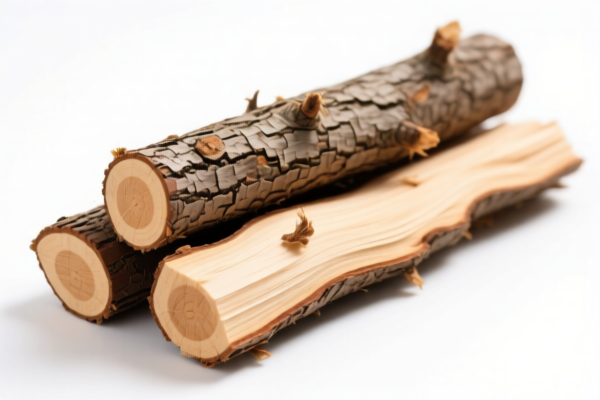
Unpeeled Larch Logs refer to tree trunks of the Larix genus (Larch) that have been felled, delimbed, and topped, but retain their bark and are in their raw, unprocessed state. They are the primary raw material for the lumber, plywood, and paper industries.
In international trade, precise classification is critical because: 1. Bark Status Matters: "Unpeeled" (with bark) vs. "Peeling/Sawn" (processed) triggers entirely different HS Codes. 2. Coniferous vs. Non-Coniferous: Larch is a coniferous tree (softwood), not a hardwood. Misclassifying it as hardwood leads to severe penalties. 3. Treatment Status: Untreated wood faces strict quarantine risks (ISPM 15 standards).
⚠️ Key Distinction:
- If bark is present and no mechanical processing beyond felling → Chapter 44 (Wood).
- If bark is removed (debarked) or sawn/chopped → Different HS Codes (e.g., 4403.41 for debarked sawn wood).
- Larch is NOT Pine, Spruce, or Fir, but it falls under the broader "Other Coniferous" category.
📦 II. HS Code Classification Details (2026 Latest Tariff Authority)
| HS Code | Product Description | Application Scenario | Bark Status | Processing Level |
|---|---|---|---|---|
4403.41.90.00 |
Other coniferous wood, unpeeled, with or without bark or sapwood, treated or not | Primary Classification for Unpeeled Larch Logs | ✅ With Bark | Raw/Felled |
4403.41.20.00 |
Pine (Pinus spp.) logs, unpeeled | For Pine logs only | ✅ With Bark | Raw |
4403.41.10.00 |
Spruce or Fir (Picea spp. or Abies spp.) logs, unpeeled | For Spruce/Fir logs only | ✅ With Bark | Raw |
4407.10.00.00 |
Wood sawn lengthwise, chipped or split, of coniferous species | Sawn planks/lumber | ❌ No Bark | Processed |
4403.90.00.00 |
Other wood, not including bamboo, treated or not | Non-coniferous hardwoods | ✅ With Bark | Raw |
🔍 Critical Reminder:
- Larch (Larix spp.) is classified under "Other coniferous wood" because it is not Pinus, Picea, or Abies.
- Therefore, the correct code is4403.41.90.00(or local 8-10 digit variation).
- Do NOT use4403.41.10(Spruce) or4403.41.20(Pine) for Larch. This is a common customs error.
💰 III. 2026 Latest Tariff Rate Details (Including Surtaxes & Policies)
✅ Applicable Country: United States (US)
✅ Origin: China (CN)
✅ Effective Time: Post-November 2025 (Current Trade War Context)
🎯 1. 4403.41.90.00 —— Other Coniferous Wood, Unpeeled (Larch Logs)
| Item | Content |
|---|---|
| Base MFN Rate | 0% (Most Favored Nation) |
| USITC Section 301 Surcharge | +25% (Footnote 9903.88.01) |
| IEEPA Surcharge | +10% (China-specific, effective Nov 2025) |
| Total Effective Rate | 35% |
| Tax Calculation | CIF Value × 35% |
| De Minimis Exemption | ❌ Not Eligible (deny_de_minimis) |
| Legal Basis Path | IEEPA:9903.01.25 → USITC:4403.41.90.00 → FOOTNOTE:9903.88.01 |
📌 Explanation:
- Wood products from China are heavily scrutinized due to Section 301 tariffs.
- The 35% total rate is significant and affects landed cost calculation.
- No de minimis exemption applies to wood logs; every shipment must be formally declared and taxed.
🛠️ IV. Customs Clearance Practical Advice (Real-World Pitfall Guide)
✅ 1. Documentation Checklist (Mandatory)
| Document | Required | Explanation |
|---|---|---|
| ✅ Phytosanitary Certificate | ✔️ | Critical! Issued by the exporting country's plant protection agency. Must state "Treatment: None" or specify fumigation. |
| ✅ Commercial Invoice | ✔️ | Must specify: "Unpeeled Larch Logs," Species: Larix spp., Country of Origin: China. |
| ✅ Bill of Lading | ✔️ | Clear description of cargo. |
| ✅ Wood Packaging Declaration | ✔️ | If logs are packed on pallets, pallets must comply with ISPM 15 (heat-treated + IPPC mark). |
| ✅ Import Permit | ✔️ | Some US states require additional forestry permits. |
| ✅ Certified Log Declaration | ✔️ | Proof of legal harvesting (Lacey Act compliance). |
✅ 2. Classification Tips (Key Mantra)
🔥 "Raw with Bark = 4403.41.90. Other Coniferous. Not Pine. Not Spruce. Not Hardwood."
| Scenario | Correct HS Code | Wrong Practice |
|---|---|---|
| Larch logs with bark | 4403.41.90.00 |
Using 4403.41.10 (Spruce) → Misclassification Penalty |
| Larch logs debarked | 4403.41.90.00 |
Still 4403.41.90.00 (Code covers "with or without bark") |
| Sawn Larch Planks | 4407.10.00.00 |
Misdeclaring as logs → Higher Inspection Risk |
| Larch Bark (Waste) | 4401.30.00.00 |
Misdeclaring as raw logs → Tax Difference |
✅ 3. Special Considerations
| Situation | Handling Advice |
|---|---|
| ISPM 15 Compliance | Ensure any wooden pallets/cribbing are stamped. Non-compliant wood will be rejected or destroyed at port. |
| Lacey Act (USA) | Provide a Plant and Plant Product Import Notification (PPIN). Failure to declare can result in civil/criminal penalties. |
| Pest Inspection | Unpeeled logs are high-risk for bark beetles and nematodes. Be prepared for USDA APHIS inspection and potential fumigation at US port (cost + delay). |
| Origin Marking | Clearly mark "Made in China" on packaging. Mislabeling origin (e.g., claiming Russia) leads to seizure. |
🌍 V. Global Market Comparison (2026 Latest)
| Country/Region | Recommended HS Code | Tariff Rate (China Origin) | Key Requirements | Notes |
|---|---|---|---|---|
| 🇺🇸 USA | 4403.41.90.00 |
35% (25% 301 + 10% IEEPA) | Phytosanitary Cert + Lacey Act | High inspection risk; pest control mandatory |
| 🇨🇳 China | 4403.41.90.00 |
0% (Import Duty) | Phytosanitary Cert | China imports timber; duty-free but strict biosecurity |
| 🇪🇺 EU | 4403.41.90 |
0% (Most cases) | EUTR (EU Timber Regulation) | Requires Due Diligence Statement (DDS) |
| 🇬🇧 UK | 4403.41.90 |
0% | UK Timber Regulation | Similar to EU DDS requirements |
| 🇯🇵 Japan | 4403.41.90 |
5% | Phytosanitary Cert | Strict insect-free certification |
📌 Conclusion:
- USA is the most expensive and regulated market due to 35% tariffs and Lacey Act.
- EU/UK focus on legality and due diligence rather than high tariffs.
- Japan has moderate tariffs but strict phytosanitary rules.
📌 VI. Common Mistakes & Pitfall Guide (Lessons Learned)
❌ Mistake 1: Declaring Larch as "Pine" (4403.41.20.00)
👉 Consequence: Customs rejects as false declaration; fines + detention.
👉 Fix: Use generic "Other Coniferous" code 4403.41.90.00 for Larch.
❌ Mistake 2: Ignoring ISPM 15 for Pallets
👉 Consequence: Entire shipment quarantined or destroyed.
👉 Fix: Ensure pallets have the IPPC Stamp.
❌ Mistake 3: Missing Lacey Act Documentation
👉 Consequence: Cargo held at port; penalties up to $500,000 per violation.
👉 Fix: Submit PPIN form with import entry.
❌ Mistake 4: Assuming "Unpeeled" means "Untreated"
👉 Consequence: If logs are chemically treated, Phytosanitary Cert must declare it.
👉 Fix: Specify treatment status on Phytosanitary Cert.
✅ Correct Declaration Example:
"UNPEELED LARCH LOGS, SPECIES: LARIX DECIDUA, COUNTRY OF ORIGIN: CHINA, TREATED: NONE, PACKED ON IPPC STAMPED PALLETS"
🎯 VII. Conclusion: Professional Classification Saves Money & Time
🎯 Remember the Mantra:
🔹 "Larch = Other Coniferous = 4403.41.90"
🔹 "Bark Present = Raw Wood = Chapter 44"
🔹 "Phytosanitary Cert is Non-Negotiable"
🔹 "Lacey Act Compliance Avoids Fines"
📌 Pro Tip:
If you are importing to the USA, calculate the 35% total duty into your cost model. Consider transshipment through non-China countries (e.g., Vietnam, Mexico) only if legal origin rules are met (avoid circumvention risks).
For EU/UK, invest in a Due Diligence System to ensure EUTR/UKTR compliance.
📣 Immediate Action:
📞 Contact your customs broker to verify local 8-10 digit HS Code variations.
📄 Secure Phytosanitary Certificate before shipment departure.
📋 Prepare Lacey Act PPIN for US imports.
✨ Professional Customs Clearance Starts with Accurate Classification!
💼 Every Log Declared Correctly, Every Shipment Cleared Smoothly!
Customer Reviews
About HS Code Classification
The Harmonized System (HS) is an internationally standardized nomenclature developed by the World Customs Organization (WCO) to classify traded products. Over 200 countries use the HS system as the basis for customs tariffs, trade statistics, and import/export regulations.
Each HS code follows a hierarchical structure:
- Chapter (2 digits) — Broad category of goods (e.g., Chapter 84: Machinery and Mechanical Appliances)
- Heading (4 digits) — More specific grouping within the chapter
- Subheading (6 digits) — Internationally standardized breakdown, used by all WCO member countries
- National subdivisions (8-10 digits) — Country-specific extensions for further classification, such as US HTSUS 10-digit codes
Correct HS code classification is essential for smooth customs clearance, accurate duty payment, and compliance with trade regulations. Misclassification can lead to customs delays, overpayment of duties, or penalties.
When importing from CN to US, the applicable tariff rates may include:
- Most-Favored-Nation (MFN) rate — The standard duty rate applied to WTO members
- General rate — Applied to countries without trade agreements
- Trade remedy duties — Additional tariffs such as Section 301 (anti-dumping), Section 232 (national security), or countervailing duties
The information provided on this page is for reference purposes only. For official classification, please consult with your local customs authority or a licensed customs broker.