Unpeeled Roughly Square Oak Timber
CN → US| HS Code | Tariff Rate | Origin | Destination | Doc |
|---|---|---|---|---|
| 4407910022 | 35.0% | CN | US | Official Doc |
| 4407910063 | 35.0% | CN | US | Official Doc |
| 4403910020 | 35.0% | CN | US | Official Doc |
| 4403910040 | 35.0% | CN | US | Official Doc |
Product Images
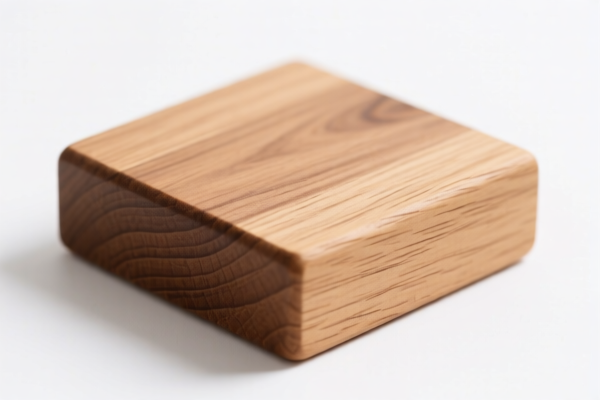
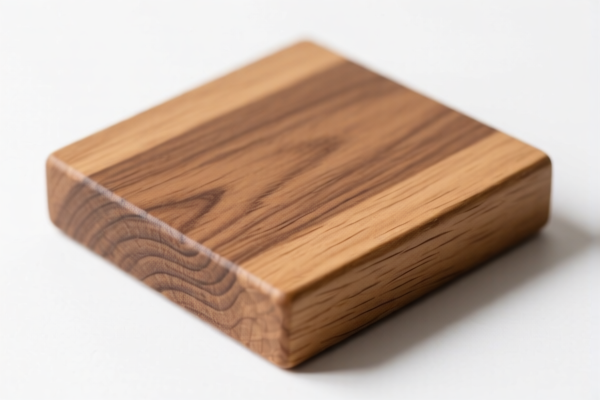
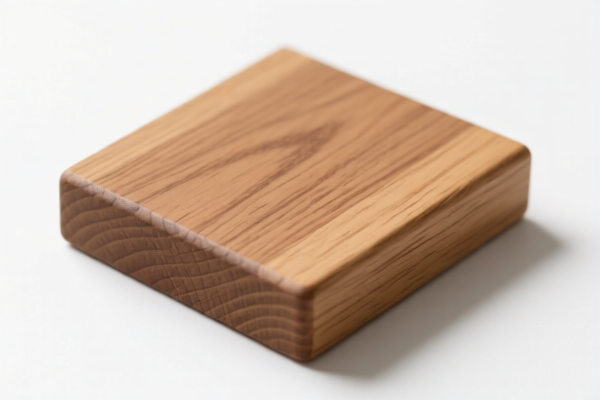
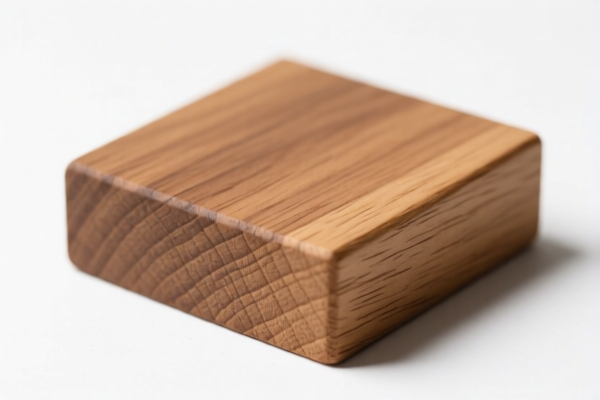
AI Analysis
🪵 Unpeeled Roughly Square Oak Timber
🌐 HS Code Reference & Customs Clearance Guide | 2026 Latest Tariff Analysis | Professional Entry Strategy
📌 I. Product Definition & Classification: What Exactly is "Unpeeled Roughly Square Oak"?
In international timber trade, "Unpeeled Roughly Square Oak" refers to wood products derived from the Oak family (Quercus sp.) that have undergone longitudinal sawing but retain their bark (unpeeled) and are shaped into rough square or rectangular cross-sections.
This category is distinct because: 1. Material: Strictly Oak (Red Oak, White Oak, or generic Oak genus). 2. Processing State: Roughly shaped (not planed, sanded, or finished) and Unpeeled (bark still intact). 3. Form: Square/Rectangular (cross-section is roughly equal in width and depth, distinguishing it from logs or planks).
⚠️ Key Distinction Points:
- Bark Status: If peeled/barked → Different HS Code. If unpeeled → Applies here.
- Shape: If round/cylindrical → Classified as Logs (4403). If square/rectangular → Classified as Sawn Wood (4407).
- Species: Specific species (Red Oak vs. Generic Oak) may shift codes within the same tax bracket.
📦 II. HS Code Classification Details (2026 Latest Tariff Authority)
Based on the provided data, there are four precise HS Codes for this product, depending on the specific sub-category of Oak and exact form.
| HS Code | Product Description | Specific Criteria | Tax Rate |
|---|---|---|---|
4407.91.00.22 |
Rough Square Oak (Unpeeled) | Material: Oak; Form: Longitudinally Sawed | 35.0% |
4407.91.00.63 |
Rough Square Oak (Unpeeled) | Material: Oak; Form: Sawn Square Lumber | 35.0% |
4403.91.00.20 |
Rough Red Oak Logs (Unpeeled) | Material: Red Oak; Form: Coarsely Sawed Timber | 35.0% |
4403.91.00.40 |
Rough Oak Logs (Unpeeled) | Material: Oak Genus (Quercus); Form: Logs | 35.0% |
🔍 Critical Analysis:
- Codes4407...(Sawn Wood): Apply when the timber is cut into squares/rectangles. The distinction between.22and.63is subtle:.22emphasizes longitudinal sawing, while.63emphasizes square lumber form.
- Codes4403...(Logs/Timber): Apply if the "square" shape is coarse or if the item is still considered a log (coarsely sawed timber). Specifically,.20is for Red Oak, while.40is for generic Oak genus.
- All four codes carry the SAME total tax rate of 35%.
💰 III. 2026 Latest Tariff Rate Breakdown (Including Surcharges & Policy Add-ons)
✅ Applicable Country: United States (US)
✅ Origin: China (CN)
✅ Effective Date: From November 10, 2025 onwards
🎯 Unified Tax Structure for All Listed HS Codes
For all four HS codes (4407.91.00.22, 4407.91.00.63, 4403.91.00.20, 4403.91.00.40), the tariff structure is identical:
| Item | Content |
|---|---|
| Base Duty Rate | 0.0% (Ad Valorem) |
| Section 301 Surcharge | +25.0% (Applied to Chinese-origin wood products) |
| Section 122 Duty | +10.0% (Specific trade remedy duty) |
| Total Tax Rate | 35.0% |
| Tax Calculation | CIF Value × 35% |
| De Minimis Exemption | ❌ Not Applicable (Cannot use $800 de minimis for timber shipments) |
| Legal Basis Path | Section 301: 9903.01.25 → Section 122: 9903.01.24 → USITC: 4407/4403 Subheadings |
📌 Explanation:
- Base Rate (0%): Wood products generally have low base tariffs.
- Section 301 (25%): Retaliatory tariffs on Chinese goods, specifically targeting forestry products to protect US timber industries.
- Section 122 (10%): Additional duty under specific trade provisions affecting Chinese timber imports.
- Total 35%: This is a significant cost factor. Importers must price accordingly.
🛠️ IV. Customs Clearance Practical Advice (Real-World Pitfall Guide)
✅ 1. Preparation Checklist (Essential Documents)
| Document | Required? | Notes |
|---|---|---|
| ✅ Commercial Invoice | ✔️ | Must clearly state "Oak", "Unpeeled", and "Roughly Square". |
| ✅ Packing List | ✔️ | Detail dimensions (Length, Width, Depth) to prove "Square" shape. |
| ✅ Phytosanitary Certificate | ✔️ | Mandatory for wood products to prove no pests/diseases. |
| ✅ Fumigation Certificate | ✔️ | Proof of treatment (ISPM 15 standard). |
| ✅ Species Declaration | ✔️ | Must specify Red Oak vs. White Oak vs. Generic Oak to select correct HS Code. |
| ✅ Bill of Lading | ✔️ | Clean bill of lading, no damage claims. |
✅ 2. Classification Tips (Key Mnemonics)
🔥 "Bark On, Square Cut, Check Red vs. Genus, 35% Tax Hits!"
| Situation | Correct HS Code | Risk if Wrong |
|---|---|---|
| Red Oak, Coarsely Sawed | 4403.91.00.20 |
Misclassification leads to delays. |
| Generic Oak, Logs | 4403.91.00.40 |
If it's actually square lumber, use 4407 instead. |
| Oak, Longitudinally Sawed Square | 4407.91.00.22 |
Ensure bark is present; peeled oak = different code. |
| Oak, Sawn Square Lumber | 4407.91.00.63 |
Verify "rough" finish; planed wood = different code. |
✅ 3. Special Handling
| Situation | Advice |
|---|---|
| Mixed Species | If shipment contains both Red Oak and White Oak, consider separating them or using the more specific code if possible. |
| Bark Removal | If bark is removed during transit or by mistake, the product may be reclassified as "Peeled Timber," potentially changing the HS code. |
| Dimensional Accuracy | Ensure dimensions are clearly stated as "Roughly Square." If too close to log shape, Customs may classify under 4403 (Logs). |
🌍 V. Global Market Comparison (2026 Latest)
| Country/Region | Recommended HS Code | Tariff (China Origin) | Notes |
|---|---|---|---|
| 🇺🇸 United States | 4407.91.00.22/63 or 4403.91.00.20/40 |
35.0% | High due to Section 301 + Section 122. |
| 🇨🇳 China | 4407.91.00.22/63 or 4403.91.00.20/40 |
Varies (0-15%) | Check latest import tariff schedule for wood products. |
| 🇪🇺 European Union | 4407.91.00 or 4403.91.00 |
0-2.5% | Generally low base duty, but strict phytosanitary rules. |
| 🇨🇦 Canada | 4407.91.00.22 or 4403.91.00.40 |
0% | Often zero-duty for wood under CUSMA, but phytosanitary certs required. |
| 🇲🇽 Mexico | 4407.91.00.22 or 4403.91.00.40 |
0-5% | Check USMCA eligibility. |
📌 Conclusion:
- USA is the most expensive market due to 35% total tariff.
- EU, Canada, Mexico offer lower duties but have strict environmental and phytosanitary regulations.
📌 VI. Common Mistakes & Pitfalls (Lessons Learned)
❌ Mistake 1: Declaring "Wood Planks" instead of "Roughly Square Timber"
👉 Result: Customs may classify as 4407.91.00.xx incorrectly, leading to delayed release.
❌ Mistake 2: Ignoring the "Unpeeled" status
👉 Result: If bark is removed but declared as unpeeled, Customs may reject the shipment or fine for misdeclaration.
❌ Mistake 3: Confusing Red Oak with Generic Oak
👉 Result: Using 4403.91.00.40 (Generic) for Red Oak (4403.91.00.20) may seem minor, but accuracy is key for statistics and compliance.
❌ Mistake 4: Assuming De Minimis Applies
👉 Result: Timber cannot use the $800 de minimis exemption. All shipments must be formally entered.
✅ Best Practice:
"Declare Species, Shape, and Bark Status Clearly. Ensure Phytosanitary Cert is Valid. Expect 35% Tax in the USA."
🎯 VII. Conclusion: Precision in Classification, Savings in Compliance
🎯 Remember the Mantra:
🔹 "Bark On, Square Cut, 35% Tax, Docs Must Be Right!"
🔹 "Red Oak vs. Genus Matters, Section 301 + 122 Hits Hard!"
📌 Pro Tip:
If your timber is sourced from Vietnam, Mexico, or ASEAN countries, you may avoid the Section 301 and Section 122 duties, reducing the total tax to 0-5%.
✅ Recommendation: Apply for Advance Ruling with US Customs and Border Protection (CBP) if the product shape is borderline between "Log" and "Sawn Wood."
📣 Action Required:
📞 Contact Your Customs Broker + Provide Product Photos + Verify Phytosanitary Certificate
🚀 Ensure Smooth Clearance, Avoid Delays, Maximize Profit Margins!
✨ Professional Clearance Starts with Accurate Classification!
💼 Every Percent of Tariff Counts in Timber Trade!
Customer Reviews
About HS Code Classification
The Harmonized System (HS) is an internationally standardized nomenclature developed by the World Customs Organization (WCO) to classify traded products. Over 200 countries use the HS system as the basis for customs tariffs, trade statistics, and import/export regulations.
Each HS code follows a hierarchical structure:
- Chapter (2 digits) — Broad category of goods (e.g., Chapter 84: Machinery and Mechanical Appliances)
- Heading (4 digits) — More specific grouping within the chapter
- Subheading (6 digits) — Internationally standardized breakdown, used by all WCO member countries
- National subdivisions (8-10 digits) — Country-specific extensions for further classification, such as US HTSUS 10-digit codes
Correct HS code classification is essential for smooth customs clearance, accurate duty payment, and compliance with trade regulations. Misclassification can lead to customs delays, overpayment of duties, or penalties.
When importing from CN to US, the applicable tariff rates may include:
- Most-Favored-Nation (MFN) rate — The standard duty rate applied to WTO members
- General rate — Applied to countries without trade agreements
- Trade remedy duties — Additional tariffs such as Section 301 (anti-dumping), Section 232 (national security), or countervailing duties
The information provided on this page is for reference purposes only. For official classification, please consult with your local customs authority or a licensed customs broker.