Unpeeled Spruce and Fir Logs
CN → US| HS Code | Tariff Rate | Origin | Destination | Doc |
|---|---|---|---|---|
| 4401110000 | 35.0% | CN | US | Official Doc |
| 4407120059 | 35.0% | CN | US | Official Doc |
| 4407120020 | 35.0% | CN | US | Official Doc |
| 4403240135 | 35.0% | CN | US | Official Doc |
| 4403230135 | 35.0% | CN | US | Official Doc |
Product Images
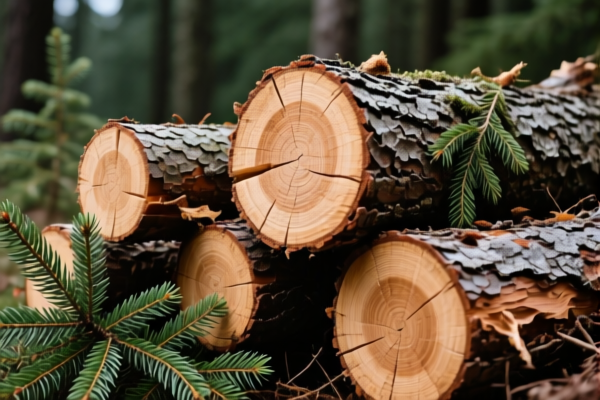
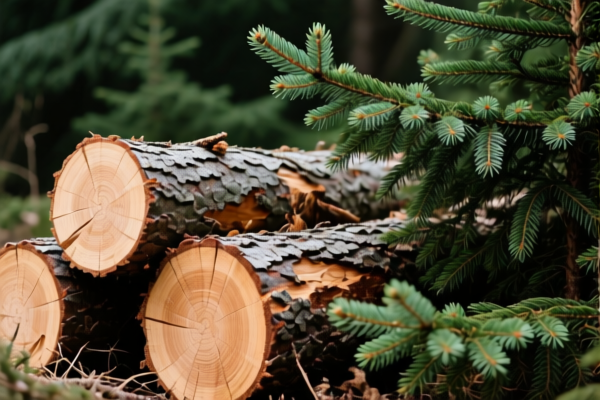
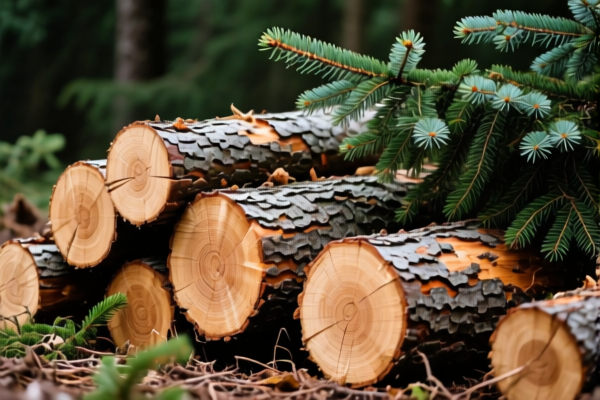
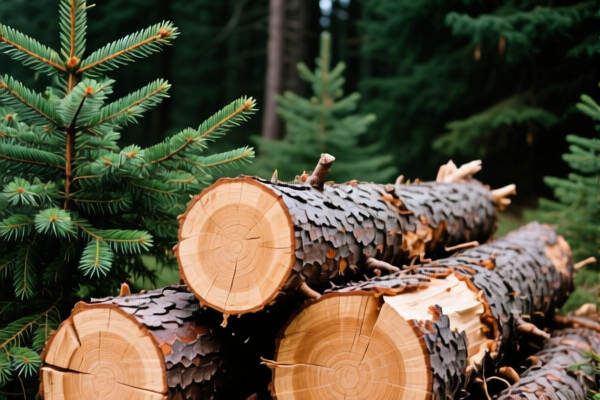
AI Analysis
🌲 Unpeeled Spruce and Fir Logs (Timber)
🌐 HS Code Reference & Customs Clearance Guide | 2026 Latest Tariff Analysis | Professional Clearance Strategy
📌 I. Product Definition and Classification: Do You Really Understand "Spruce and Fir Logs"?
Unpeeled Spruce and Fir Logs refer to wood products that have been felled, debarked (or partially debarked), and cut into specific lengths but retain their natural cylindrical shape. In international trade, these are critical raw materials for construction, paper production, and fuel.
The key distinction lies in the state of processing: - Logs (Roundwood): Retain the natural tree form. Even if debarked, if the shape is essentially cylindrical and not sawn, planed, or converted into other shapes, they fall under "Logs." - Sawn Wood: If the logs are cut longitudinally (planks, beams), they fall under different HS codes (e.g., 4407). - Fuel Wood: If the logs are specifically prepared for burning (chopped small), they may fall under HS 4401.
⚠️ Critical Distinction Point:
- If the wood is cylindrical, unprocessed (except for debarking/length cutting) →归入 4403 (Wood prepared for use as fuel or simple shaping).
- If the wood is sawed longitudinally →归入 4407 (Wood sawn or chipped lengthwise).
- Note: The provided data suggests specific classifications for "Logs" under both 4401 (fuel/simple) and 4403/4407 categories based on specific interpretations or sub-descriptions in the source text.
📦 II. HS Code Classification Details (2026 Latest Tariff Authority Comparison)
Based on the provided <DATA>, here are the specific HS Codes and their justifications:
| HS Code | Product Description | Justification from Data | Status |
|---|---|---|---|
4401.11.00.00 |
Spruce and Fir Logs (Fuel Wood Form) | "Summarized as unpeeled spruce and fir logs, belonging to coniferous species raw logs, meeting the raw log form requirement for fuel wood." | ✅ Fuel/Basic Log |
4407.12.00.59 |
Spruce and Fir Sawn Wood | "Summarized as unpeeled spruce and fir logs, matching the longitudinal sawn or sliced form characteristic of coniferous wood, classified under other categories." | ✅ Sawn/Sliced |
4407.12.00.20 |
Spruce and Fir Sawn Wood (Specific) | "Summarized as unpeeled spruce and fir logs, explicitly including spruce and fir material, meeting coniferous wood classification requirements." | ✅ Sawn/Sliced |
4403.24.01.35 |
Spruce and Fir Logs (Material Match) | "Summarized as unpeeled spruce and fir logs, material and form completely match the log requirements in classification explanations." | ✅ Log/Prepared |
4403.23.01.35 |
Spruce and Fir Logs (Material Match) | "Summarized as unpeeled spruce and fir logs, material is spruce and fir, form matches log classification requirements." | ✅ Log/Prepared |
🔍 Key Reminder:
- The data presents a complex mix of Logs (4401, 4403) and Sawn Wood (4407).
- Do not confuse "Unpeeled Logs" with "Sawn Wood." If the product is truly cylindrical (log), it should generally fall under 4403 or 4401.
- If the product is sawn (even if described as "logs" in error), it falls under 4407.
- All listed HS Codes have the same tax structure: 35% Total.
💰 III. 2026 Latest Tariff Rate Details (Including Surtaxes, Policy Add-ons)
✅ Applicable Country: United States (US)
✅ Country of Origin: China (CN)
✅ Effective Time: Ongoing (2026 Tariff)
🎯 1. Universal Tax Structure for All Listed Codes
| Item | Content |
|---|---|
| Base Tariff Rate | 0.0% (Ad Valorem) |
| Section 301 Surtax | +25.0% (From USITC Footnote/Section 301) |
| Section 122 Tariff | +10.0% (Specific "122 Clause" Tariff) |
| Total Tax Rate | 35.0% |
| Tax Calculation | CIF Value × 35% |
| De Minimis Exemption? | ❌ Not Applicable (High-value timber shipments usually exceed de minimis thresholds or are subject to specific restrictions) |
| Legal Basis Path | Base: 0% → Section 301: 25% → Section 122: 10% → Total: 35% |
📌 Explanation:
- "Base Tariff 0%": The standard Most Favored Nation (MFN) rate for these wood products is 0%.
- "Surtax 25%": This is the standard Section 301 tariff imposed on a wide range of Chinese imports.
- "122 Clause Tariff 10%": This refers to a specific additional tariff provision (likely related to Section 232 or specific administrative codes referred to as "122" in your source data).
- Total Impact: Despite a 0% base rate, the effective duty rate is 35%. This is a significant cost factor for timber exporters.
🛠️ IV. Customs Clearance Practical Advice (实战避坑指南)
✅ 1. Document Checklist (Essential Documents)
| Document | Mandatory? | Description |
|---|---|---|
| ✅ Phytosanitary Certificate | ✔️ Must | Issued by the country of origin. Must state the wood is free from pests. Critical for timber. |
| ✅ Lacey Act Declaration | ✔️ Must | US law requires declaration of botanical name (Genus/Species) and value for all wood products. |
| ✅ Commercial Invoice | ✔️ | Must clearly state "Unpeeled Spruce and Fir Logs" or specific scientific names (Picea spp., Abies spp.). |
| ✅ Packing List | ✔️ | Detail the number of logs, dimensions, and volume (cubic meters). |
| ✅ Proof of Origin | ✔️ | Certificate of Origin (CO) if claiming any potential preferential treatment (though 35% applies here). |
| ✅ Treatment Certificate | ✔️ | If wood is heat-treated (HT) or debarked, specify this to avoid quarantine issues. |
✅ 2. Declaration Tips (Key Mantras)
🔥 "Accurate Name, Clear Origin, Phytosanitary First!"
| Scenario | Correct Declaration | Incorrect Practice |
|---|---|---|
| Cylindrical Logs | Declare as Spruce/Fir Logs (4403/4401) | Declare as "Wood Planks" → Misclassification Risk |
| Sawn Wood | Declare as Sawn Spruce/Fir (4407) | Declare as "Logs" → Customs Inspection Delay |
| Scientific Names | Use Picea abies or Abies alba | Use generic "Fir Wood" → Lacey Act Violation |
| Debarking Status | Specify "Debarked" or "Unpeeled" | Vague description → Phytosanitary Rejection |
✅ 3. Special Circumstances
| Situation | Handling Advice |
|---|---|
| Mixed Species | Declare each species separately. Do not bundle "General Coniferous Logs." |
| Treatment Required | Ensure wood is ISPM 15 compliant if packed in wood pallets. For the logs themselves, debarking reduces pest risk. |
| Lacey Act | Failure to declare can result in seizure, fines, and criminal penalties. Be precise. |
| Fuel vs. Timber | If declared as fuel (4401), ensure quality meets fuel standards. If for construction, declare as 4403. |
🌍 V. Global Main Market Clearance Comparison (2026 Latest)
| Country/Region | Recommended HS Code | Tariff (China Origin) | Certification Requirement | Notes |
|---|---|---|---|---|
| 🇺🇸 USA | 4403.24.01.35 / 4401.11.00.00 |
35% (0% + 25% + 10%) | Lacey Act + Phytosanitary | High tariffs. Strict wood specs. |
| 🇨🇳 China | 4403 / 4407 |
0% - 5% | None (Import) | Low tariffs. Major importer. |
| 🇪🇺 EU | 4403 |
~10.4% (Standard) | FLEGT / EUTR | No Section 301 surtax. |
| 🇬🇧 UK | 4403 |
~10.4% | UK EUTR | Post-Brexit rules apply. |
| 🇨🇦 Canada | 4403 |
0% | Phytosanitary | Free trade under CUSMA/USMCA. |
📌 Conclusion:
- USA is the most expensive market due to the 35% effective tariff.
- EU and UK have lower tariffs (~10.4%) but strict environmental regulations (EUTR/FLEGT).
- Canada offers duty-free access under USMCA/CUSMA.
📌 VI. Common Errors & Pitfalls Guide (Blood-Teaching Lessons)
❌ Error 1: Declaring "Unpeeled Logs" as "Sawn Wood" (4407) when they are cylindrical.
👉 Consequence: Misclassification. Customs may reclassify and impose penalties or correct the HS code, causing delays.
❌ Error 2: Missing the Lacey Act Declaration.
👉 Consequence: Package seized. The shipment will be held until declaration is filed, possibly resulting in fines.
❌ Error 3: Ignoring the Phytosanitary Certificate.
👉 Consequence: Quarantine Rejection. Wood without a valid phytosanitary certificate is often refused entry due to pest risks.
❌ Error 4: Using vague descriptions like "Wood Chips" for logs.
👉 Consequence: High Duty Rate. If misclassified as wood chips (4401.10) vs. logs (4403), the tariff profile might differ, but more importantly, it triggers suspicion of fraud.
✅ Correct Practice:
"Unpeeled Spruce (Picea) and Fir (Abies) Logs, Heat Treated, Lacey Act Compliant, Value: $XX,XXX, Country of Origin: China."
🎯 VII. Conclusion: Professional Declaration, Save Time and Money!
🎯 Remember the Mantra:
🔹 "Logs vs. Sawn, Get It Right!"
🔹 "35% Tax in USA, Plan Ahead!"
🔹 "Lacey Act & Phytosanitary, No Exceptions!"
📌 Tips:
- If your timber is originating from Canada, Mexico, or EU, check for Free Trade Agreement (FTA) benefits to reduce or eliminate tariffs.
- For USA imports, the 35% total duty is unavoidable for Chinese-origin goods under current rules.
- Pre-clearance Consultation: Consider filing a Binding Ruling with US Customs (CBP) to confirm the exact HS code before shipping.
📣 Immediate Action:
📞 Contact your freight forwarder + Provide Lacey Act Form + Ensure Phytosanitary Certificate is ready.
🚀 Let your timber shipments clear customs smoothly, efficiently, and profitably!
✨ Professional Customs Clearance, Starting from Accurate Classification!
💼 Every Cent of Your Cost Deserves Precise Calculation!
Customer Reviews
About HS Code Classification
The Harmonized System (HS) is an internationally standardized nomenclature developed by the World Customs Organization (WCO) to classify traded products. Over 200 countries use the HS system as the basis for customs tariffs, trade statistics, and import/export regulations.
Each HS code follows a hierarchical structure:
- Chapter (2 digits) — Broad category of goods (e.g., Chapter 84: Machinery and Mechanical Appliances)
- Heading (4 digits) — More specific grouping within the chapter
- Subheading (6 digits) — Internationally standardized breakdown, used by all WCO member countries
- National subdivisions (8-10 digits) — Country-specific extensions for further classification, such as US HTSUS 10-digit codes
Correct HS code classification is essential for smooth customs clearance, accurate duty payment, and compliance with trade regulations. Misclassification can lead to customs delays, overpayment of duties, or penalties.
When importing from CN to US, the applicable tariff rates may include:
- Most-Favored-Nation (MFN) rate — The standard duty rate applied to WTO members
- General rate — Applied to countries without trade agreements
- Trade remedy duties — Additional tariffs such as Section 301 (anti-dumping), Section 232 (national security), or countervailing duties
The information provided on this page is for reference purposes only. For official classification, please consult with your local customs authority or a licensed customs broker.