Unplaned pine logs
CN → US| HS Code | Tariff Rate | Origin | Destination | Doc |
|---|---|---|---|---|
| 4403210130 | 35.0% | CN | US | Official Doc |
| 4403220120 | 35.0% | CN | US | Official Doc |
| 4407110052 | 35.0% | CN | US | Official Doc |
| 4407110053 | 35.0% | CN | US | Official Doc |
| 4403210130 | 35.0% | CN | US | Official Doc |
Product Images
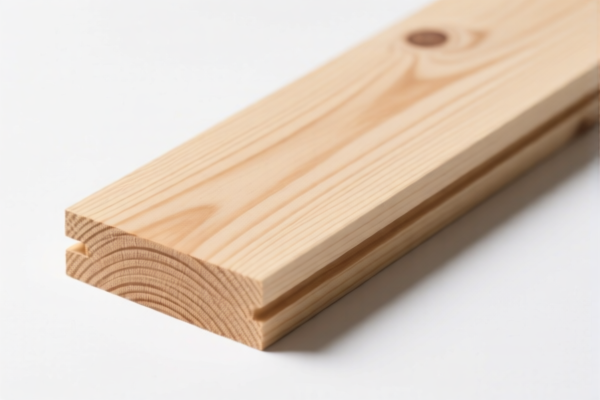
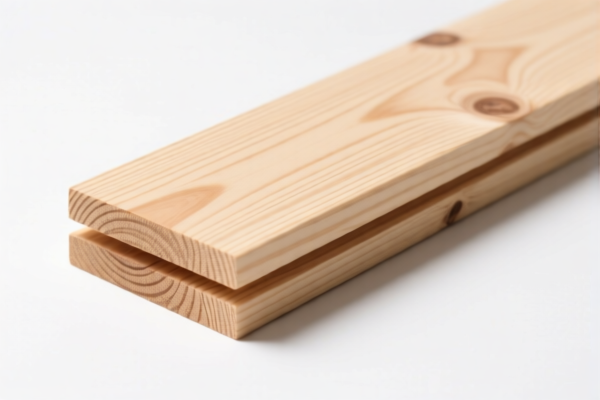
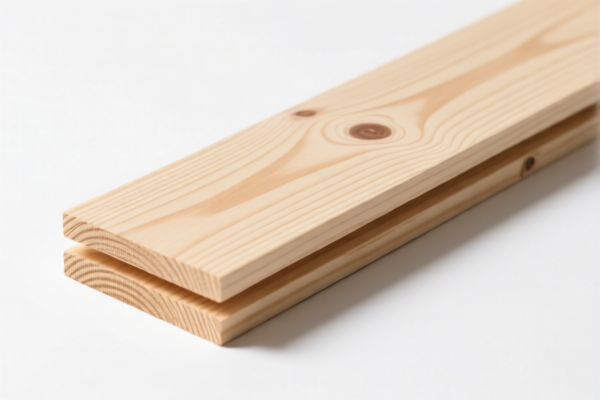
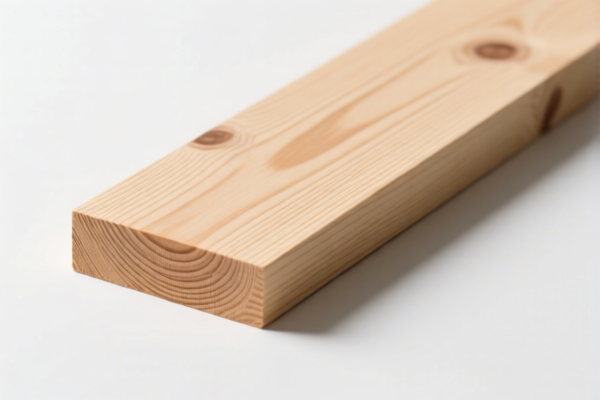
AI Analysis
🌲 Unplanned Pine Logs (Unfinished Timber)
🌐 HS Code Reference & Customs Clearance Guide | 2026 Latest Tariff Analysis | Professional Entry Strategy
📌 I. Product Definition & Classification: What Exactly Are "Unplanned Pine Logs"?
Unplanned Pine Logs refer to raw timber derived from pine trees that has undergone minimal processing. In international trade, this category specifically excludes logs that have been planed, squared, or otherwise refined. The key characteristic is the "rough-sawn" or "natural" state.
Key Distinction Points:
- If the bark is removed but the wood is still in log form (cylindrical or roughly cylindrical) → Classified under 4403.21.01.30 / 4403.22.01.20 (Treated timber, logs).
- If the wood is stripped of bark but shaped into beams/plies (not logs) → Classified under 4407.11.00.52 / 4407.11.00.53 (Wood sawn lengthwise).
- If the bark remains and it is purely in its natural log state → Classified under 4403.21.01.30.
⚠️ Critical Note:
- "Unplanned" in this context refers to the lack of planing/surfacing. It does not necessarily mean "untreated" (preservative-free), though most raw logs are untreated.
- "Logs" vs. "Sawn Wood": If the wood has been cut into planks or beams (even if rough), it falls under 4407, not 4403. 4403 is strictly for logs/round wood.
📦 II. HS Code Classification Details (2026 Latest Tariff Authority Alignment)
| HS Code | Product Description | Application Scenario | Processing Level |
|---|---|---|---|
4403.21.01.30 |
Unplanned Pine Logs (Bark Retained or Roughly Bark-Stripped) | Raw timber exports, construction base materials | ✅ Raw/Log Form |
4403.22.01.20 |
Unplanned Pine Logs (Bark Removed, Rough Surface) | Logs where bark has been peeled but shape preserved | ✅ Rough/Log Form |
4407.11.00.52 |
Other Pine Wood, Sawed or Chipped Lengthwise, Unplaned | Rough-sawn planks/beams, NOT logs | ✅ Sawn, Not Planed |
4407.11.00.53 |
Other Pine Wood, Unplaned (Fallback Category) | Miscellaneous rough pine wood, not fitting specific sub-categories | ✅ Sawn, Not Planed |
4403.21.01.30 |
Unplanned Pine Logs (Bark Removed, Rough-Sawn Features) | Logs with partial bark removal, maintaining log identity | ✅ Rough/Log Form |
🔍 Key Reminder:
- All round wood/logs (cylindrical or nearly so) must be classified under 4403.
- Once the wood is cut into planks, boards, or beams (even if rough/unplaned), it shifts to 4407.
- Do not confuse "logs" with "sawn wood". Misclassification leads to significant duty discrepancies.
💰 III. 2026 Latest Tariff Rate Breakdown (Including Surcharges & Policy Add-ons)
✅ Applicable Country: United States (US)
✅ Origin: China (CN)
✅ Effective Date: From November 10, 2025 (including subsequent imports)
🎯 1. 4403.21.01.30 & 4403.22.01.20 — Unplanned Pine Logs (Raw Wood)
| Item | Details |
|---|---|
| Base Tariff Rate | 0.0% (ad valorem) |
| Section 301 Surcharge | +25.0% (USITC Footnote 9903.44.01) |
| Section 122 Tariff | +10.0% (Specific to certain timber products from China) |
| Total Tariff Rate | 35.0% |
| Tax Calculation | CIF Value × 35% |
| De Minimis Exemption Available | ❌ No (deny_de_minimis) |
| Legal Basis Path | Section 301:9903.44.01 → Section 122:122.Timber → USITC:4403.21.01.30 |
📌 Explanation:
- The 25% Section 301 tariff is the primary surcharge on Chinese-origin timber products;
- The 10% Section 122 tariff is a specific additional duty applied to certain wood products;
- Combined 35% is a high tariff, significantly impacting profit margins.
- No de minimis exemption applies, meaning even small shipments are subject to full duty calculation.
🎯 2. 4407.11.00.52 & 4407.11.00.53 — Unplaned Pine Sawn Wood
| Item | Details |
|---|---|
| Base Tariff Rate | 0.0% |
| Section 301 Surcharge | +25.0% |
| Section 122 Tariff | +10.0% |
| Total Tariff Rate | 35.0% |
| Tax Calculation | CIF Value × 35% |
| De Minimis Exemption Available | ❌ No |
| Legal Basis Path | Section 301:9903.44.01 → Section 122:122.Timber → USITC:4407.11.00.52 |
📌 Note:
- Sawn pine wood (planks/beams) carries the same 35% total tariff as raw logs.
- The distinction between 4403 (logs) and 4407 (sawn wood) affects customs procedures and inspection requirements, not just the duty rate.
🛠️ IV. Customs Clearance Practical Advice (Avoid Pitfalls)
✅ 1. Required Documentation Checklist (Non-Negotiable)
| Document | Required | Notes |
|---|---|---|
| ✅ Commercial Invoice | ✔️ | Must clearly state "Unplanned Pine Logs" or "Rough-Sawn Pine Wood" |
| ✅ Packing List | ✔️ | Detail dimensions, volume (CBM), and weight |
| ✅ Phytosanitary Certificate | ✔️ | Mandatory for all wood products from China to US |
| ✅ Fumigation Certificate | ✔️ | Proof of ISPM 15 compliance |
| ✅ Bill of Lading | ✔️ | Ensure HS Codes are correct |
| ✅ Certificate of Origin | ✔️ | To confirm Chinese origin (subject to tariffs) |
📌 Critical:
- Phytosanitary Certification is the #1 reason for delays. Ensure it is issued by the Chinese Customs/Plant Quarantine authority.
- Mislabeling as "Furniture Parts" or "Craft Wood" instead of "Logs" or "Sawn Wood" will trigger audits and fines.
✅ 2. Declaration Tips (Key Rules)
🔥 “Logs are Logs, Sawn Wood is Sawn. Don’t Mix Them!”
| Scenario | Correct HS Code | Wrong Action |
|---|---|---|
| Round wood, bark on/off | 4403.21.01.30 / 4403.22.01.20 |
Classify as 4407 → Penalty + Delay |
| Rough planks/beams | 4407.11.00.52 / 4407.11.00.53 |
Classify as 4403 → Penalty + Delay |
| Treated wood (chemically preserved) | Same HS Codes | Declare "Treated" on invoice → Additional Inspection |
| Mixed species (Pine + Others) | Split declaration | Declare as one line → Confiscation Risk |
✅ 3. Special Cases Handling
| Situation | Handling Advice |
|---|---|
| Green Wood (High Moisture) | May require additional phytosanitary checks. Declare moisture content. |
| Wood with Pests/Damage | Risk of rejection. Ensure fumigation is effective. |
| Wood for Construction vs. Furniture | No difference in HS Code, but different usage declaration may affect inspection focus. |
| Transshipment via Third Country | High Risk. US CBP traces origin. Do not misdeclare origin. |
🌍 V. Global Market Comparison (2026 Latest)
| Country/Region | Recommended HS Code | Tariff | Certification | Notes |
|---|---|---|---|---|
| 🇺🇸 USA | 4403.21.01.30 / 4407.11.00.52 |
35% | Phytosanitary + Fumigation | High Tariff on Chinese Origin |
| 🇨🇳 China | 4403.21.01.30 / 4407.11.00.52 |
0-5% | N/A | Low tariff for domestic trade |
| 🇪🇺 EU | 4403.21.01.30 / 4407.11.00.52 |
0-3% | FSC/PEFC (Optional) | No Section 301 tariffs |
| 🇯🇵 Japan | 4403.21.01.30 / 4407.11.00.52 |
0% | IPPC Mark | Very low barrier |
| 🇰🇷 Korea | 4403.21.01.30 / 4407.11.00.52 |
0% | ISPM 15 | Favorable for Asian timber |
📌 Conclusion:
- USA is the most expensive market for Chinese pine wood due to 35% combined tariffs.
- Europe, Japan, and Korea offer much lower tariffs, but quality and certification (FSC/PEFC) are more critical.
- Strategy: If targeting the US, ensure strict compliance with phytosanitary rules to avoid delays that could negate any cost advantages.
📌 VI. Common Mistakes & Pitfalls (Lessons Learned)
❌ Mistake 1: Declaring "Sawn Wood" as "Logs" to avoid inspection
👉 Consequence: Customs inspection reveals planks → Fine + Delay + Back Taxes.
❌ Mistake 2: Ignoring Phytosanitary Certificate
👉 Consequence: Cargo held at port for weeks, potential destruction if pests found.
❌ Mistake 3: Not specifying "Unplaned" in description
👉 Consequence: Customs may classify as "Planed Wood" (higher base tariff) → Overpayment.
❌ Mistake 4: Using generic terms like "Wood" or "Timber"
👉 Consequence: Ambiguity leads to manual review → Delays.
✅ Correct Approach:
"Unplanned Pine Logs, Species: Pinus, Origin: China, Volume: 50 CBM, Fumigated, Phytosanitary Cert No: XXX"
🎯 VII. Conclusion: Precision in Classification Saves Money!
🎯 Remember:
🔹 "Logs are 4403, Sawn is 4407. Mix them up, and you’ll pay the price!"
🔹 "35% Tariff is a Fact. Plan your costs accordingly!"
🔹 "Phytosanitary is King. No Cert, No Entry!"
📌 Pro Tip:
For US imports, consider pre-shipment inspection and early filing of customs entry to minimize storage fees.
If possible, explore FTA benefits if wood is sourced from non-Chinese origins (e.g., Vietnam, Canada) to avoid Section 301 + Section 122 tariffs.
📣 Immediate Action Required:
📞 Contact your customs broker with exact product photos and dimensions.
📄 Ensure Phytosanitary Certificate is obtained before shipping.
🚀 Clear the way for smooth customs clearance!
✨ Professional clearance starts with accurate classification!
💼 Every dollar saved on compliance is a dollar earned!
Customer Reviews
About HS Code Classification
The Harmonized System (HS) is an internationally standardized nomenclature developed by the World Customs Organization (WCO) to classify traded products. Over 200 countries use the HS system as the basis for customs tariffs, trade statistics, and import/export regulations.
Each HS code follows a hierarchical structure:
- Chapter (2 digits) — Broad category of goods (e.g., Chapter 84: Machinery and Mechanical Appliances)
- Heading (4 digits) — More specific grouping within the chapter
- Subheading (6 digits) — Internationally standardized breakdown, used by all WCO member countries
- National subdivisions (8-10 digits) — Country-specific extensions for further classification, such as US HTSUS 10-digit codes
Correct HS code classification is essential for smooth customs clearance, accurate duty payment, and compliance with trade regulations. Misclassification can lead to customs delays, overpayment of duties, or penalties.
When importing from CN to US, the applicable tariff rates may include:
- Most-Favored-Nation (MFN) rate — The standard duty rate applied to WTO members
- General rate — Applied to countries without trade agreements
- Trade remedy duties — Additional tariffs such as Section 301 (anti-dumping), Section 232 (national security), or countervailing duties
The information provided on this page is for reference purposes only. For official classification, please consult with your local customs authority or a licensed customs broker.