Unprocessed Ash Wood Logs
CN → US| HS Code | Tariff Rate | Origin | Destination | Doc |
|---|---|---|---|---|
| 4403990140 | 35.0% | CN | US | Official Doc |
| 4407950000 | 35.0% | CN | US | Official Doc |
| 4408900156 | 35.0% | CN | US | Official Doc |
| 4403210130 | 35.0% | CN | US | Official Doc |
| 4403220120 | 35.0% | CN | US | Official Doc |
Product Images
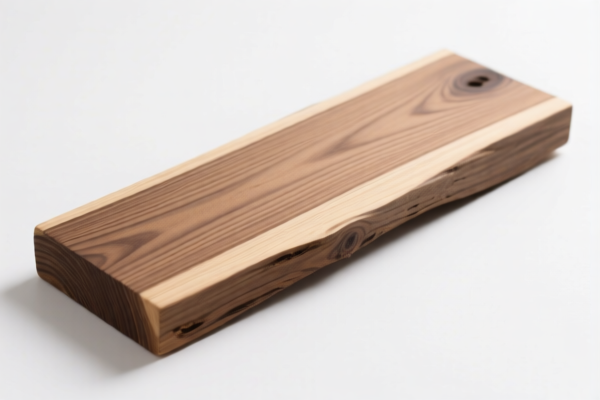
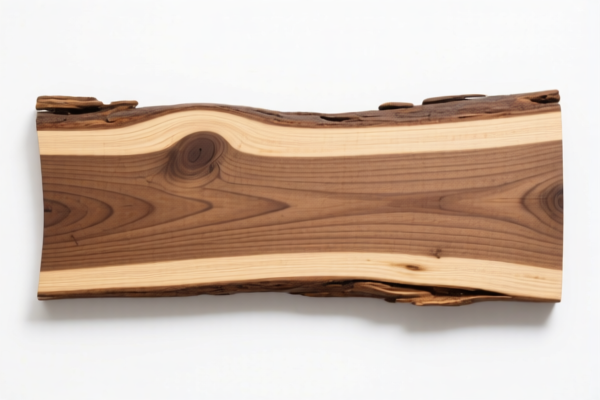
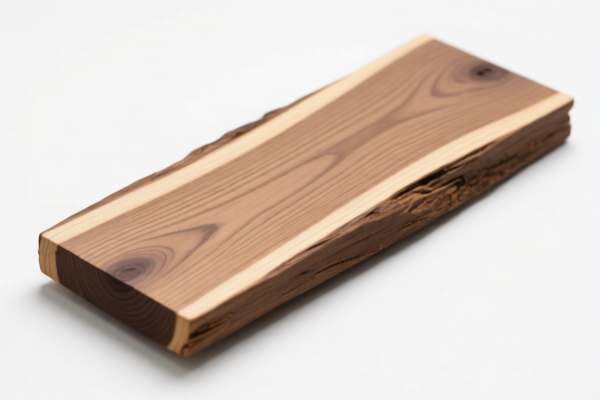
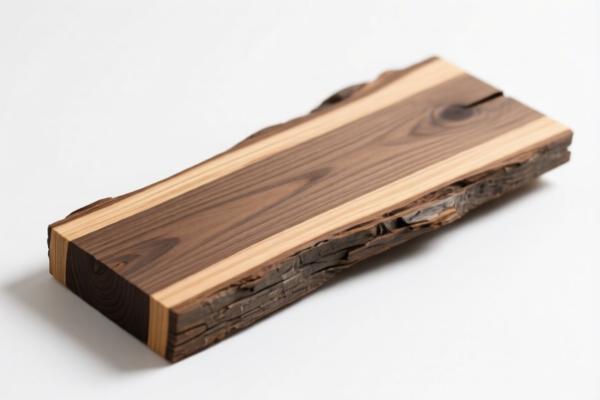
AI Analysis
🌲 Unprocessed Ash Wood Logs (Fraxinus / White Ash)
🌐 HS Code Reference & Customs Clearance Guide | 2026 Latest Tariff Analysis | Professional Clearance Strategy for Chinese-Origin Timber
📌 I. Product Definition & Classification: What Exactly is "Unprocessed Ash Wood"?
Ash wood logs, primarily referring to White Ash (Fraxinus americana) or European Ash, are high-quality timber resources used in furniture making, flooring, tool handles, and musical instruments. In international trade, "unprocessed" refers to timber in its primary, raw state before significant milling or processing.
Key Distinctions in Classification: 1. Raw Logs (Unmanufactured): Bark may be retained or stripped; shape is natural. Classified under 4403. 2. Sawn/Chipped Wood: Cut into beams, planks, or rough sawn timber. Classified under 4407. 3. Slicing/Veneer Sheets: Thin slices for veneer. Classified under 4408.
⚠️ Critical Classification Point:
- If the wood is roughly shaped but not sawn (e.g., debarked logs, chips): → HS 4403
- If the wood is sawn longitudinally (even roughly): → HS 4407
- If the wood is sliced or peeled (veneer): → HS 4408
- All three categories are heavily impacted by current US tariffs on Chinese timber.
📦 II. HS Code Classification Details (2026 Tariff Authority Reference)
| HS Code | Product Description | Application Scenario | Processing State |
|---|---|---|---|
4403.99.01.40 |
Ash Wood Logs, Roughly Squared or Chipped | Rough sawn logs, debarked but not planed | ✅ Rough/Sawn (4403 Scope) |
4407.95.00.00 |
Ash Wood, Planed, Sawn, or Chipped Lengthwise | Standard sawn timber, planks, beams | ✅ Sawn/Planed (4407 Scope) |
4408.90.01.56 |
Ash Wood Slices, Veneer Sheets | Thin slices for veneer or plywood | ✅ Sliced (4408 Scope) |
4403.21.01.30 |
Pine Logs, Unprocessed | Reference: Pine vs. Ash (Not Ash) | ❌ N/A |
4403.22.01.20 |
Pine Logs, Unprocessed | Reference: Pine vs. Ash (Not Ash) | ❌ N/A |
🔍 Key Reminder:
- Although the data includes Pine codes (4403.21,4403.22), Ash Wood falls under 4403.99, 4407.95, or 4408.90.
- Do NOT misclassify Ash as Pine (4403.21/22) — this is a common error that leads to delays.
- All Ash wood classifications above attract the same total tariff rate of 35% under current US trade policies.
💰 III. 2026 Latest Tariff Rate Breakdown (Including Surcharges & Policy Add-ons)
✅ Applicable Country: United States (US)
✅ Country of Origin: China (CN)
✅ Effective Date: 2025/2026 (Current Trade Policy)
🎯 1. 4403.99.01.40 — Ash Wood Logs, Rough/Sawn
| Item | Content |
|---|---|
| Base Tariff | 0% (ad valorem) |
| USITC Surcharge | +25% (Section 301 Duties) |
| IEEPA Surcharge | +10% (Section 122 / IEEPA, China-specific) |
| Total Rate | 35% |
| Tax Calculation | CIF Value × 35% |
| De Minimis Eligibility | ❌ Not Eligible (deny_de_minimis) |
| Legal Basis Path | IEEPA:9903.01.25 → USITC:4403.99.01.40 → FOOTNOTE:301_Timber |
📌 Explanation:
- The 25% is the standard Section 301 tariff on Chinese wood products.
- The 10% is the additional "122 Clause" or IEEPA-based surcharge specifically targeting Chinese raw materials.
- Total 35% is extremely high for raw timber. Profit margins must be carefully calculated.
🎯 2. 4407.95.00.00 — Ash Wood, Sawn/Planed
| Item | Content |
|---|---|
| Base Tariff | 0% |
| USITC Surcharge | +25% |
| IEEPA Surcharge | +10% |
| Total Rate | 35% |
| Tax Calculation | CIF × 35% |
| De Minimis Eligibility | ❌ Not Eligible |
| Legal Basis Path | IEEPA:9903.01.24 → USITC:4407.95.00.00 → FOOTNOTE:301_Timber |
📌 Note:
- Sawn Ash timber faces the same 35% total rate as rough logs.
- Even if processed into planks or beams, the surcharge remains unchanged.
- No preferential treatment for intermediate processing within China.
🎯 3. 4408.90.01.56 — Ash Wood Slices/Veneer
| Item | Content |
|---|---|
| Base Tariff | 0% |
| USITC Surcharge | +25% |
| IEEPA Surcharge | +10% |
| Total Rate | 35% |
| Tax Calculation | CIF × 35% |
| De Minimis Eligibility | ❌ Not Eligible |
| Legal Basis Path | IEEPA:9901.25 → USITC:4408.90.01.56 → FOOTNOTE:301_Timber |
📌 Attention:
- Veneer sheets, often used for high-end furniture, are also subject to 35%.
- High-value veneer with 35% tax significantly impacts cost competitiveness.
- Ensure correct description: "Veneer Sheets" not "Wood Panels".
🛠️ IV. Customs Clearance Practical Advice (Real-World Pitfall Avoidance)
✅ 1. Required Documentation Checklist (Mandatory)
| Document | Must Provide | Explanation |
|---|---|---|
| ✅ Phytosanitary Certificate | ✔️ | Issued by China Customs/GACC. Critical for wood. |
| ✅ ISPM 15 Marking | ✔️ | Heat treatment (HT) or Fumigation (MB) mark on packaging/logs. |
| ✅ Species Declaration | ✔️ | Must specify Fraxinus (Ash), not generic "hardwood". |
| ✅ Commercial Invoice | ✔️ | Clearly state "Unprocessed Ash Wood Logs" or "Sawn Ash Timber". |
| ✅ Packing List | ✔️ | Detail wood volume (m³), weight, and packaging type. |
| ✅ Bill of Lading/Air Waybill | ✔️ | Consistent with invoice and packing list. |
| ✅ Certificate of Origin | ✔️ | Proof of Chinese origin (triggers tariffs). |
✅ 2. Declaration Tips (Key Mnemonics)
🔥 “Species Accurate, ISPM Marked, Tariff 35%”
| Scenario | Correct Declaration | Wrong Practice |
|---|---|---|
| Rough Logs | 4403.99.01.40 + "Ash Logs, Unprocessed" |
Generic "Wood Logs" → Delay + Inspection |
| Sawn Planks | 4407.95.00.00 + "Ash Timber, Sawn" |
Mislabel as "Pine" → Rejection/Fine |
| Veneer Sheets | 4408.90.01.56 + "Ash Veneer" |
Label as "Wood Panel" → Higher Tax/Rejection |
| Non-Chinese Origin | Provide Non-PRC CO | Claim Chinese origin for Vietnam-origin wood → Fraud |
✅ 3. Special Handling Cases
| Scenario | Handling Advice |
|---|---|
| Bark Retained | Declare as "Logs with Bark" → May require stricter phytosanitary checks. |
| Debarked Logs | Declare as "Debarked Ash Logs" → Easier clearance, but still 35% tax. |
| Mixed Wood Loads | Do NOT mix Ash with Pine in one declaration. Separate HS Codes, separate taxes. |
| Fumigation vs. Heat Treatment | Prefer HT (Heat Treatment) — more widely accepted, less regulatory friction. |
🌍 V. Global Market Comparison (2026 Latest)
| Country/Region | Recommended HS Code | Tariff (China Origin) | Certification Required | Notes |
|---|---|---|---|---|
| 🇺🇸 USA | 4403.99.01.40 / 4407.95 / 4408.90 |
35% (25% + 10%) | ISPM 15, Phytosanitary | Highest Tariff Market |
| 🇨🇳 China | Same HS Codes | 5% - 10% | N/A (Domestic) | Low barrier |
| 🇪🇺 EU | Same HS Codes | 0% - 6% | FLEGT, EUTR Compliance | Strict traceability |
| 🇬🇧 UK | Same HS Codes | 0% - 6% | FLEGT | Post-Brexit rules apply |
| 🇯🇵 Japan | Same HS Codes | 0% - 5.5% | Phytosanitary | Low tariffs, strict inspection |
📌 Conclusion:
- The US is the most challenging market for Chinese Ash wood due to the 35% combined tariff.
- EU and Japan are more tariff-friendly but have strict environmental and phytosanitary regulations.
- Consider supply chain diversification (e.g., sourcing from Eastern Europe or North America) to mitigate US tariffs.
📌 VI. Common Mistakes & Pitfalls (Lessons Learned)
❌ Mistake 1: Misdeclaring Ash as Pine (4403.21)
👉 Consequence: Customs inspection reveals species mismatch → Seizure, fines, or return.
❌ Mistake 2: Forgetting ISPM 15 Marking
👉 Consequence: Wood rejected at port due to pest risk → Demurrage costs, destruction.
❌ Mistake 3: Mixing Ash and Pine in one shipment
👉 Consequence: Complex customs classification → Delays, potential misclassification penalties.
❌ Mistake 4: Underestimating 35% Total Tariff
👉 Consequence: Profit margin wiped out → Financial loss. Always factor in 35% minimum.
✅ Correct Approach:
"Ash Wood Logs, Fraxinus sp., Debarked, Heat Treated (HT), ISPM 15 Marked, HS 4403.99.01.40"
🎯 VII. Conclusion: Professional Declaration, Cost Control, Risk Mitigation
🎯 Remember the Key Points:
🔹 “35% is the Floor” — Do not ignore the 25% + 10% surcharge.
🔹 “ISPM 15 is Mandatory” — No mark, no entry.
🔹 “Species Accuracy is Critical” — Ash ≠ Pine.
🔹 “Documentation Must Match” — Invoice, Packing List, and Phytosanitary Cert must align.
📌 Pro Tip:
If your Ash wood is sourced from Russia, Canada, or Europe, you can avoid US tariffs (0% - 6%).
Recommendation:
- Pre-clearance Ruling: Apply for an Advance Ruling from US CBP if unsure about HS code.
- Supply Chain Review: Consider sourcing non-Chinese Ash wood for US-bound shipments to save 35% cost.
📣 Immediate Action:
📞 Consult a licensed customs broker + Provide Phytosanitary Cert + Verify ISPM 15 Marking
🚀 Ensure your Ash wood logs clear customs smoothly, avoid penalties, and protect margins!
✨ Professional clearance starts with accurate classification!
💼 Every percentage point of tariff counts — know your 35%!
Customer Reviews
About HS Code Classification
The Harmonized System (HS) is an internationally standardized nomenclature developed by the World Customs Organization (WCO) to classify traded products. Over 200 countries use the HS system as the basis for customs tariffs, trade statistics, and import/export regulations.
Each HS code follows a hierarchical structure:
- Chapter (2 digits) — Broad category of goods (e.g., Chapter 84: Machinery and Mechanical Appliances)
- Heading (4 digits) — More specific grouping within the chapter
- Subheading (6 digits) — Internationally standardized breakdown, used by all WCO member countries
- National subdivisions (8-10 digits) — Country-specific extensions for further classification, such as US HTSUS 10-digit codes
Correct HS code classification is essential for smooth customs clearance, accurate duty payment, and compliance with trade regulations. Misclassification can lead to customs delays, overpayment of duties, or penalties.
When importing from CN to US, the applicable tariff rates may include:
- Most-Favored-Nation (MFN) rate — The standard duty rate applied to WTO members
- General rate — Applied to countries without trade agreements
- Trade remedy duties — Additional tariffs such as Section 301 (anti-dumping), Section 232 (national security), or countervailing duties
The information provided on this page is for reference purposes only. For official classification, please consult with your local customs authority or a licensed customs broker.