Unprocessed Aspen Wood Poles
CN → US| HS Code | Tariff Rate | Origin | Destination | Doc |
|---|---|---|---|---|
| 4403970026 | 35.0% | CN | US | Official Doc |
| 4403970067 | 35.0% | CN | US | Official Doc |
Product Images
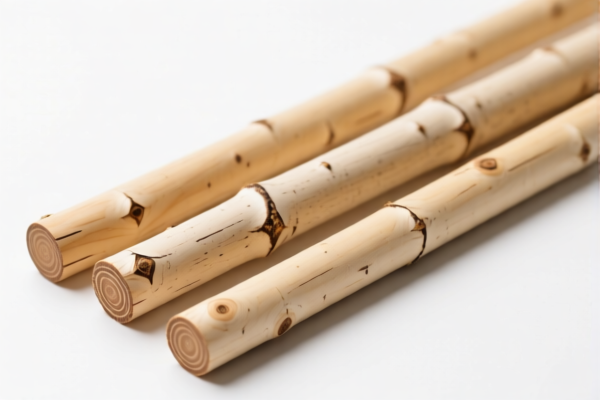
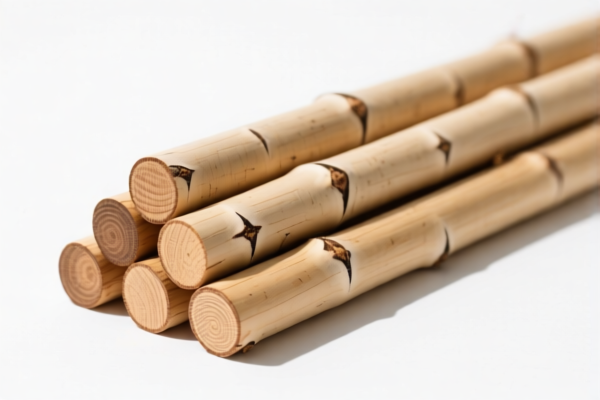


AI Analysis
🪵 Unprocessed Aspen Wood Poles
🌐 HS Code Reference & Customs Clearance Guide | 2026 Latest Tariff Analysis | Professional Strategy
📌 1. Product Definition & Classification: What Exactly Is "Unprocessed Aspen Wood"?
"Unprocessed Aspen Wood Poles" refer to timber harvested from Aspen trees (Populus tremuloides or other Populus spp.) that has been shaped for use as poles, piles, or posts but has not undergone significant manufacturing processes such as planing, sanding, or chemical treatment. In international trade, this category is strictly defined by its physical state and intended heavy-duty application.
⚠️ Key Distinction:
- If the wood is roughly squared (four flat sides) or retains its natural cylindrical shape but is intended for structural support (e.g., utility poles, fence posts, mining props) → It falls under Chapter 44 (Wood and Wood Artifacts).
- If it is merely raw logs without any shaping for poles → It might fall under different sub-headings, but "Poles, Piles and Posts" is a specific designation within the "Other" category for non-coniferous wood.
- Crucial Note: "Aspen" is classified under Populus spp. This is distinct from other poplars if specific sub-codes apply, but for general pole classification, it is grouped under the Populus heading.
📦 2. HS Code Classification Details (2026 Latest Tariff Authority对照)
Based on the provided data, there are two primary HS Codes for Unprocessed Aspen Wood Poles, distinguished by their specific sub-category within Populus spp.
| HS Code | Product Description | Application Scenario | Tax Rate (Total) |
|---|---|---|---|
4403.97.00.26 |
Poles, piles and posts: Of poplar and aspen (Populus spp.) | Heavy structural uses: Utility poles, railway ties, fence posts, mining props | 25.0% |
4403.97.00.67 |
Other: Of poplar and aspen (Populus spp.) | Non-pole forms: Raw lumber, planks, or non-structural aspen wood from other poplar/aspen varieties | 25.0% |
🔍 Focus for Your Product:
Since your product is "Unprocessed Aspen Wood Poles", you must select4403.97.00.26.
- Why? The description explicitly states: "Poles, piles and posts".
- Warning: Do NOT use4403.97.00.67("Other"). Using the wrong code may lead to customs delays, fines, or incorrect duty assessments, even though the total tax rate is currently the same. The classification accuracy is vital for compliance.
💰 3. 2026 Latest Tariff Rate Breakdown
✅ Applicable Country: USA (US)
✅ Origin: China (CN) (Assumed based on the 25% additional tariff context)
✅ Effective Date: Current tariffs apply.
🎯 HS Code: 4403.97.00.26 – Aspen Wood Poles
| Item | Details |
|---|---|
| Base Tariff (MFN) | 0.0% (Ad Valorem) |
| Additional Tariff (Section 301) | +25.0% |
| Total Effective Tax Rate | 25.0% |
| Tax Calculation | CIF Value × 25% |
| De Minimis Exemption | ❌ Not Eligible (Section 301 tariffs generally apply regardless of value) |
| Legal Reference | HTSUS 4403.97.00.26; USITC Footnote associated with Section 301 List 4 |
📌 Explanation:
- Base Rate (0%): Wood products from China often have low or zero base MFN rates under normal trade conditions.
- Section 301 Tariff (25%): This is the critical cost driver. Wood products, including poles and piles from China, are subject to the 25% additional duty imposed under Section 301 of the Trade Act of 1974.
- No Other Major Surcharges: Unlike electronics or certain machinery, wood poles do not typically incur additional IEEPA tariffs or other complex surcharges in this specific category, keeping the total at 25%.
🛠️ 4. Customs Clearance Practical Advice (Avoiding Pitfalls)
✅ 1. Documentation Checklist (Mandatory)
| Document | Required? | Notes |
|---|---|---|
| Commercial Invoice | ✔️ | Must clearly state "Unprocessed Aspen Wood Poles" and HS Code 4403.97.00.26. |
| Packing List | ✔️ | Detail dimensions, weight, and number of poles. |
| Phytosanitary Certificate | ✔️ | CRITICAL: Wood is susceptible to pests. Must be certified free from bark, insects, and diseases (ISPM 15 compliant). |
| Fumigation Certificate | ✔️ | Often required alongside Phytosanitary Certificate. |
| Bill of Lading/Air Waybill | ✔️ | Standard shipping documents. |
| Country of Origin Certificate | ✔️ | To confirm Chinese origin for tariff application. |
✅ 2. Declaration Tips (Key Mantras)
🔥 "Be Specific, Be Accurate: 'Poles' Not 'Lumber'!"
| Scenario | Correct Declaration | Incorrect Declaration | Consequence |
|---|---|---|---|
| Aspen Poles | 4403.97.00.26 |
4403.97.00.67 (Other) |
Potential audit for misclassification. |
| Roughly Squared | State "Roughly Squared" or "Natural Shape" | "Planed/Sanded" | If planed, it may move to Chapter 44.20 or 44.07, changing tax rates. |
| Bark Status | State "Stripped of Bark" or "With Bark" | Ambiguous | Bark presence can affect phytosanitary requirements and classification nuances. |
✅ 3. Special Considerations
| Issue | Advice |
|---|---|
| Pest Control | Ensure all bark is removed if specified in the contract. Bark increases the risk of pest infestation and may lead to rejection by USDA APHIS. |
| Moisture Content | Declare moisture content if required by buyer specs, but note that HS Code 4403 does not differentiate based on moisture. |
| Value Declaration | Ensure the CIF value is accurate. The 25% tariff is calculated on the total value (goods + insurance + freight). Under-declaring can lead to severe penalties. |
🌍 5. Global Market Comparison (2026)
| Country/Region | Recommended HS Code | Base Tariff | Additional Tariffs | Total Estimated Rate | Notes |
|---|---|---|---|---|---|
| 🇺🇸 USA | 4403.97.00.26 |
0% | +25% (Sec 301) | 25% | Strict phytosanitary rules. |
| 🇨🇳 China | 4403.97.00.26 |
0-5%* | None | 0-5% | Import duty may vary based on trade agreements. |
| 🇪🇺 EU | 4403.97.00 |
0-2% | None (for most wood) | 0-2% | Requires FLEGT license or EUTR compliance. |
| 🇬🇧 UK | 4403.97.00 |
0-2% | None | 0-2% | Post-Brexit rules similar to EU for wood. |
📌 Conclusion:
- The USA imposes a significant 25% additional tariff on Chinese-sourced wooden poles.
- Competitors in Vietnam or Thailand may enjoy lower or zero tariffs, affecting competitiveness.
- Phytosanitary compliance is just as important as the tariff itself for entry into the US and EU.
📌 6. Common Errors & Pitfalls (Lessons Learned)
❌ Error 1: Declaring "Aspen Lumber" instead of "Poles"
👉 Result: Incorrect HS Code (4403.97.00.67 vs 26), potential customs inquiry.
❌ Error 2: Omitting Phytosanitary Certificate
👉 Result: Goods detained or destroyed by USDA APHIS due to pest risk. No shipment without this!
❌ Error 3: Under-declaring Value
👉 Result: Severe fines, seizure of goods, and loss of import privileges.
✅ Correct Practice:
"Aspen Wood Poles, Unprocessed, Roughly Squared, Stripped of Bark, For Utility Use, Origin China, Phytosanitary Cert Attached"
🎯 7. Conclusion: Professional Declaration, Cost Control
🎯 Key Takeaway:
🔹 "Poles = 4403.97.00.26"
🔹 "Tax = 25% (Base 0% + Sec 301 25%)"
🔹 "Phytosanitary = Mandatory"
📌 Pro Tip:
If you are sourcing from China, factor in the 25% additional tariff into your cost model. Consider working with a customs broker to ensure the Phytosanitary Certificate is perfectly aligned with USDA requirements to avoid costly delays at the port of entry.
📣 Immediate Action:
📞 Verify your supplier's phytosanitary certification capabilities.
📄 Ensure your invoice explicitly states "Poles, Piles, and Posts".
🧮 Calculate landed cost including the 25% duty.
✨ Professional Customs Clearance Starts with Precise Classification!
💼 Your Profit Margin Depends on Accurate Tariff Application!
Customer Reviews
About HS Code Classification
The Harmonized System (HS) is an internationally standardized nomenclature developed by the World Customs Organization (WCO) to classify traded products. Over 200 countries use the HS system as the basis for customs tariffs, trade statistics, and import/export regulations.
Each HS code follows a hierarchical structure:
- Chapter (2 digits) — Broad category of goods (e.g., Chapter 84: Machinery and Mechanical Appliances)
- Heading (4 digits) — More specific grouping within the chapter
- Subheading (6 digits) — Internationally standardized breakdown, used by all WCO member countries
- National subdivisions (8-10 digits) — Country-specific extensions for further classification, such as US HTSUS 10-digit codes
Correct HS code classification is essential for smooth customs clearance, accurate duty payment, and compliance with trade regulations. Misclassification can lead to customs delays, overpayment of duties, or penalties.
When importing from CN to US, the applicable tariff rates may include:
- Most-Favored-Nation (MFN) rate — The standard duty rate applied to WTO members
- General rate — Applied to countries without trade agreements
- Trade remedy duties — Additional tariffs such as Section 301 (anti-dumping), Section 232 (national security), or countervailing duties
The information provided on this page is for reference purposes only. For official classification, please consult with your local customs authority or a licensed customs broker.