Unprocessed Beech Wood
CN → US| HS Code | Tariff Rate | Origin | Destination | Doc |
|---|---|---|---|---|
| 4401120000 | 35.0% | CN | US | Official Doc |
| 4401220000 | 35.0% | CN | US | Official Doc |
| 4403940100 | 35.0% | CN | US | Official Doc |
| 4403930100 | 35.0% | CN | US | Official Doc |
| 4407920000 | 35.0% | CN | US | Official Doc |
| 44079900 | 0.0% | CN | US | Official Doc |
Product Images
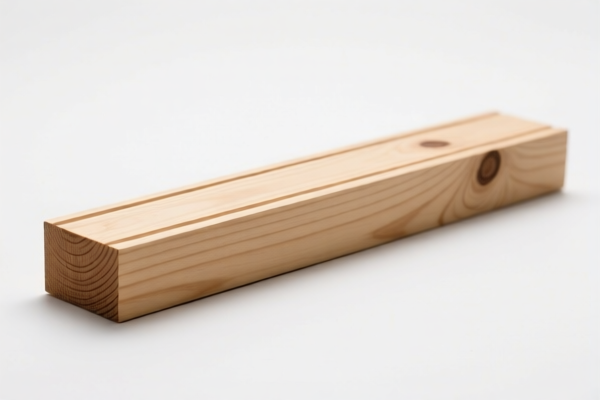
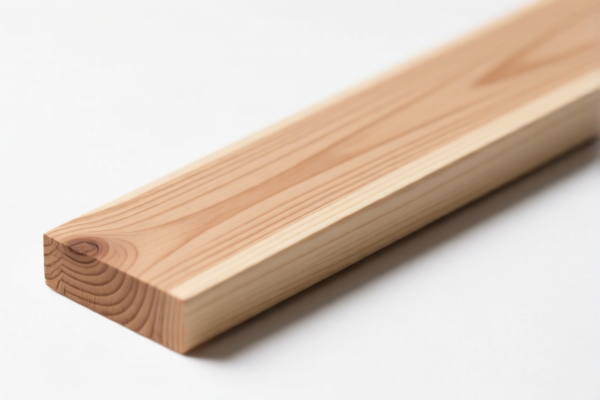
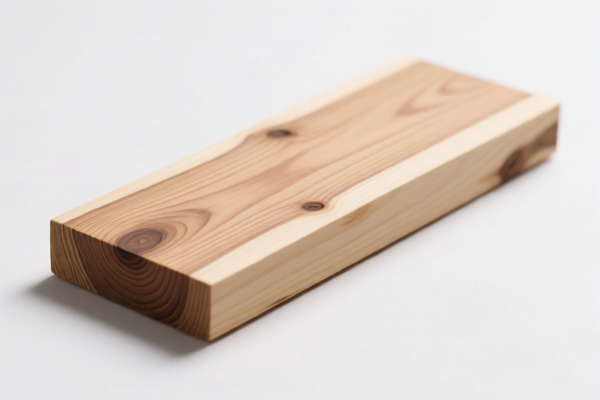
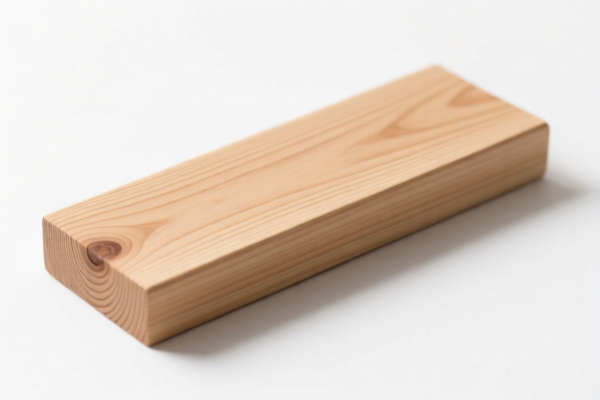
AI Analysis
🌳 Unprocessed Beech Wood (Beech Logs, Rough Sawn, or Chips)
🌐 HS Code Reference & Customs Clearance Guide | 2026 Latest Tariff Analysis | Professional Strategy for Nonconiferous Wood
📌 Part I: Product Definition & Classification: What is "Unprocessed Beech Wood"?
Beech wood (Fagus spp.) is a high-density, nonconiferous hardwood widely used in furniture, flooring, and tool handles. In international trade, "Unprocessed" does not mean "raw from the forest." It refers to wood that has undergone minimal transformation—primarily debarking, rough squaring, or chipping—before being planed, sliced, or processed into finished goods.
Key Distinctions: * Raw Logs (In the Rough): Wood stripped of bark/sapwood but not necessarily squared. * Roughly Squared: Wood cut into rectangular shapes with axes/saws, thickness >6mm, but not yet planed/sanded. * Chips/Particles: Wood reduced to small fragments for pulp or particleboard.
⚠️ Critical Classification Points:
- If the wood is nonconiferous (like Beech), it generally falls under Heading 4401 (Fuel/Sawdust) or Heading 4403/4407 (Sawn Wood).
- Thickness Matters: For sawn wood, thickness >6mm usually pushes it to 4407. Thickness ≤6mm or raw rough state goes to 4403.
- Form Matters: Logs/Billets vs. Chips vs. Sawn Planks determine the specific subheading.
📦 Part II: HS Code Classification Matrix (2026 Latest Tariff Authority)
Based on the provided data, here are the specific HS Codes for Unprocessed Beech Wood and their corresponding tax liabilities.
| HS Code | Product Description | Specific Form/Characteristic | Tax Status |
|---|---|---|---|
4403.94.01.00 |
Wood in the rough | Beech (Fagus spp.), other | 25.0% Total |
4403.93.01.00 |
Wood in the rough | Beech (Fagus spp.), smallest cross-section ≥15 cm | 25.0% Total |
4407.92.00.00 |
Wood sawn/chipped lengthwise | Of Beech (Fagus spp.), thickness >6mm | 25.0% Total |
4401.12.00.00 |
Fuel Wood | Nonconiferous (Logs, billets, twigs, faggots) | 25.0% Total |
4401.22.00.00 |
Wood in chips/particles | Nonconiferous | 25.0% Total |
4407.99.00 |
Wood sawn/chipped lengthwise | Non-coniferous, other (Includes Beech if not specified elsewhere) | ⚠️ Error/Retrieval Failed |
🔍 Important Note on
4407.99.00:
The data indicates a "Failed to retrieve tax information" error for this code. However, since Beech is "Nonconiferous," it often falls under this general bucket if it doesn't match the specific "Of Beech" (4407.92.00.00) criteria. Caution: Do not rely on this code without verifying the specific tax retrieval status with a customs broker, as the25.0%rate likely applies by analogy to other nonconiferous sawn woods in many jurisdictions.
💰 Part III: 2026 Tariff Rate Breakdown (Detailed Tax Analysis)
✅ Applicable Jurisdiction: United States (US)
✅ Origin: China (CN) (Assumed based on typical 25% + 0% structure in data)
✅ Effective Date: Current 2026 Tariff Schedule
🎯 1. 4403.94.01.00 & 4403.93.01.00 —— Beech Wood in the Rough
These codes cover Beech logs that have been debarked or roughly squared but not sawn into dimensional lumber.
| Item | Content |
|---|---|
| Base Tariff | 0.0% (Ad Valorem) |
| Section 301 / Additional Tariff | +25.0% |
| Total Tax Rate | 25.0% |
| Tax Calculation | CIF Value × 25% |
| Legal Basis | Standard USITC Tariff + Section 301 List 4C (Wood Products) |
📌 Explanation:
- Beech wood in the rough is considered a "raw material" subject to retaliatory or trade-imposed duties.
- The 0% base rate reflects its status as a natural resource, but the 25% additional duty is the primary cost driver.
- No De Minimis Exemption: Wood products are generally excluded from $800 de minimis thresholds.
🎯 2. 4407.92.00.00 —— Sawn Beech Wood (Thickness >6mm)
This code applies when the Beech wood has been sawn lengthwise, sliced, or peeled, and the thickness exceeds 6mm. It is more processed than "rough" wood.
| Item | Content |
|---|---|
| Base Tariff | 0.0% (Ad Valorem) |
| Section 301 / Additional Tariff | +25.0% |
| Total Tax Rate | 25.0% |
| Tax Calculation | CIF Value × 25% |
📌 Explanation:
- Even though it is "sawn," Beech is explicitly listed under4407.92.
- The tax structure remains 0% + 25% = 25%.
- Risk: If the wood is planed, sanded, or end-jointed further, it may move to a different heading (e.g., 4409 for continuously shaped wood), which might have different rates.
🎯 3. 4401.12.00.00 & 4401.22.00.00 —— Beech Wood as Fuel/Chips
If the Beech wood is intended for burning (fuel) or chipped for industrial use.
| Item | Content |
|---|---|
| Base Tariff | 0.0% (Ad Valorem) |
| Section 301 / Additional Tariff | +25.0% |
| Total Tax Rate | 25.0% |
📌 Explanation:
- Classification as "Fuel Wood" or "Chips" is common for low-grade beech or waste.
- The 25% duty still applies because it is Nonconiferous.
🎯 4. 4407.99.00 —— Other Nonconiferous Wood (Sawn)
| Item | Content |
|---|---|
| Base Tariff | Unknown (Data Error) |
| Additional Tariff | Likely +25.0% (By Analogy) |
| Total Tax Rate | ⚠️ Error / Verify |
📌 Warning:
- This code is a catch-all for non-specified nonconiferous woods.
- Do not use this code for Beech if4407.92.00.00is applicable, as it is more specific.
- If4407.92.00.00is not applicable (e.g., unusual processing), you must resolve the tax retrieval error before filing.
🛠️ Part IV: Customs Clearance Practical Advice
✅ 1. Documentation Checklist (Mandatory)
| Document | Required? | Notes |
|---|---|---|
| ✅ Commercial Invoice | ✔️ | Must state "Beech Wood (Fagus spp.)" and HS Code. |
| ✅ Packing List | ✔️ | Detail dimensions, weight, and number of pieces. |
| ✅ Phytosanitary Certificate | ✔️ | Critical. Wood is subject to ISPM 15 regulations. Must show heat treatment or fumigation. |
| ✅ Bill of Lading / Air Waybill | ✔️ | Standard shipping documents. |
| ✅ Certificate of Origin | ✔️ | To prove origin (e.g., China) and apply correct tariffs. |
| ✅ Product Specifications | ✔️ | Confirm dimensions, thickness, and treatment method. |
✅ 2. Classification Strategy (Key Tips)
🔥 “Rough is Rough, Sawn is Sawn, Chips are Chips, Choose Right!”
| Scenario | Recommended HS Code | Risk |
|---|---|---|
| Beech Logs, debarked, not sawn | 4403.94.01.00 or 4403.93.01.00 |
Low |
| Beech Planks, sawn, >6mm thick | 4407.92.00.00 |
Low |
| Beech Logs for Burning | 4401.12.00.00 |
Medium (Must prove intent) |
| Beech Chips for Pulp | 4401.22.00.00 |
Low |
| Beech Wood, Planed & Sanded | Not in Data | ⚠️ May fall under 4409 (Continuously Shaped) |
📌 Critical Warning:
- Phytosanitary Compliance: Beech wood must have an ISPM 15 mark. Without it, the shipment will be detained or destroyed by customs/agriculture inspectors, regardless of tariff classification.
- Misclassification Risk: Do not classify sawn beech as "fuel wood" (4401) to avoid duties. Customs will inspect and reclassify, leading to penalties.
✅ 3. Cost Optimization & Avoidance
| Strategy | Action |
|---|---|
| Pre-Ruling | Apply for an Advance Ruling from CBP if the form of the wood is ambiguous (e.g., "roughly squared" vs. "sawn"). |
| Origin Diversification | If sourced from countries with FTAs (e.g., Canada, EU), tariffs may be 0%. Beech from US/Canada/EU may have 0% duty. |
| Accurate Description | Avoid vague terms like "Wood." Use "Unprocessed Beech Wood (Fagus spp.), Roughly Squared, ISPM 15 Treated." |
🌍 Part V: Global Market Comparison (2026)
| Country/Region | Recommended HS Code | Tariff Rate | Key Requirement |
|---|---|---|---|
| 🇺🇸 USA | 4403.94.01.00 / 4407.92.00.00 |
25% | ISPM 15, Phytosanitary Cert |
| 🇪🇺 EU | 4403.94 / 4407.92 |
0% - 4.7% | FSC Certification (often required) |
| 🇨🇳 China | 4403.94 / 4407.92 |
5% - 10% | Import License (if applicable) |
| 🇯🇵 Japan | 4403.94 / 4407.92 |
0% - 1.7% | Fumigation Certificate |
📌 Conclusion:
- The 25% US tariff is a significant cost barrier.
- Non-US markets (EU, Japan, China) typically have lower or zero base tariffs for Beech wood, but non-tariff barriers (FSC, Phytosanitary) are strict.
📌 Part VI: Common Errors & Pitfalls
❌ Error 1: Classifying Sawn Beech as "Fuel Wood" (4401)
👉 Consequence: Customs reclassification → Back taxes + Penalties.
Fix: Use 4407.92.00.00 for sawn wood.
❌ Error 2: Missing ISPM 15 Mark
👉 Consequence: Shipment rejected/destroyed by USDA/APHIS.
Fix: Ensure all pallets/logs have the official stamp.
❌ Error 3: Ignoring the "Thickness" Rule
👉 Consequence: Misclassification between 4403 (Rough) and 4407 (Sawn).
Fix: Verify if the wood is "roughly squared" (4403) or "saw/chipped lengthwise" (4407).
🎯 Part VII: Conclusion: Professional Classification, Smooth Clearance!
🎯 Remember:
🔹 "Rough = 4403, Sawn = 4407, Chips = 4401."
🔹 "Beech is Nonconiferous → 25% US Duty."
🔹 "ISPM 15 is Non-Negotiable."
📌 Pro Tip:
If your Beech wood is sourced from Europe or North America, you may qualify for 0% duty in the US due to FTAs (e.g., USMCA, EUMC). Always check the country of origin!
📣 Immediate Action:
📞 Contact a licensed customs broker to verify the Phytosanitary Certificate and ISPM 15 compliance.
🚀 Clear the air, clear the goods, and secure your margins!
✨ Precise Classification, Predictable Costs!
💼 Your Wood, Your Way, But Follow the Rules!
Customer Reviews
About HS Code Classification
The Harmonized System (HS) is an internationally standardized nomenclature developed by the World Customs Organization (WCO) to classify traded products. Over 200 countries use the HS system as the basis for customs tariffs, trade statistics, and import/export regulations.
Each HS code follows a hierarchical structure:
- Chapter (2 digits) — Broad category of goods (e.g., Chapter 84: Machinery and Mechanical Appliances)
- Heading (4 digits) — More specific grouping within the chapter
- Subheading (6 digits) — Internationally standardized breakdown, used by all WCO member countries
- National subdivisions (8-10 digits) — Country-specific extensions for further classification, such as US HTSUS 10-digit codes
Correct HS code classification is essential for smooth customs clearance, accurate duty payment, and compliance with trade regulations. Misclassification can lead to customs delays, overpayment of duties, or penalties.
When importing from CN to US, the applicable tariff rates may include:
- Most-Favored-Nation (MFN) rate — The standard duty rate applied to WTO members
- General rate — Applied to countries without trade agreements
- Trade remedy duties — Additional tariffs such as Section 301 (anti-dumping), Section 232 (national security), or countervailing duties
The information provided on this page is for reference purposes only. For official classification, please consult with your local customs authority or a licensed customs broker.