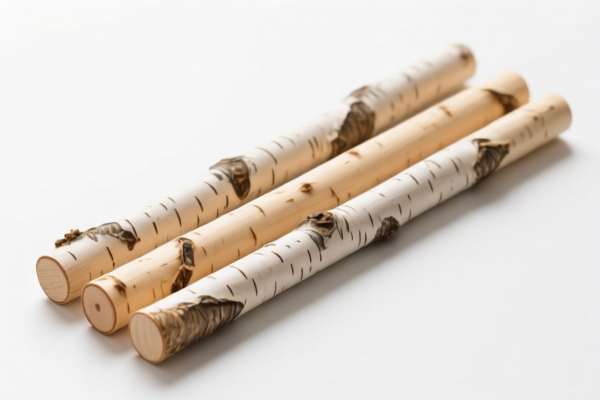
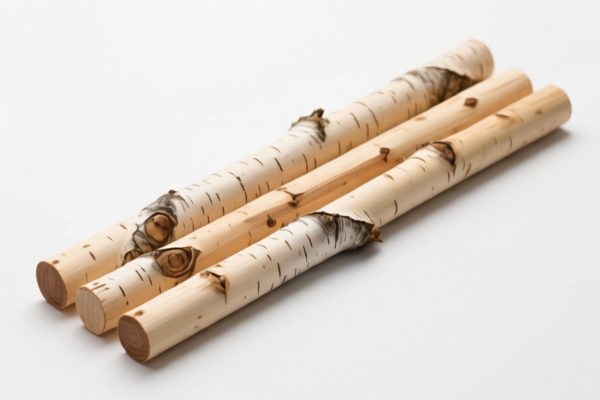
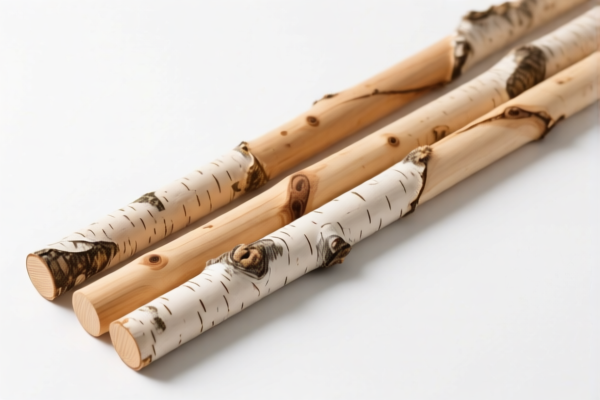
Unprocessed Birch Poles
CN → US| HS Code | Tariff Rate | Origin | Destination | Doc |
|---|---|---|---|---|
| 4403950127 | 35.0% | CN | US | Official Doc |
| 4403960127 | 35.0% | CN | US | Official Doc |
Product Images

AI Analysis
🌲 Unprocessed Birch Poles (桦木原木或杆,匹配材质(桦木)与形态(杆、桩、柱))
🌐 HS Code Reference & Customs Clearance Guide | 2026 Latest Tariff Analysis | Professional Clearance Strategy
📌 1. Product Definition & Classification: What Exactly Are "Unprocessed Birch Poles"?
"Unprocessed Birch Poles" refer to raw timber derived from the birch tree (Betula species), retained in their natural cylindrical form without significant processing beyond debarking or simple shaping. In international trade, these are categorized based on their material (Birch) and physical state (Poles, Stakes, or Posts).
These items fall strictly under Chapter 44 of the HS Code system, specifically under headings for wood in the rough. They are distinct from processed lumber, plywood, or furniture components.
⚠️ Key Distinction Point:
- If the wood is merely stripped of bark and shaped into a pole/stake → HS Code 4403
- If the wood has been planed, sawn into planks, or treated → Different HS Code (e.g., 4407 or 4409)
- Note: Even if labeled as "construction poles" or "agricultural stakes," if they are unprocessed raw wood, they remain within the 4403 scope.
📦 2. HS Code Classification Details (2026 Latest Tariff Authority Mapping)
Based on the provided data, all variations of "Unprocessed Birch Poles" map to two specific HS Codes depending on the exact sub-category description, but with identical tax implications.
| HS Code | Product Description | Applicable Scenario | Key Attribute |
|---|---|---|---|
4403.95.01.27 |
Birch wood poles, stakes, and posts; matched material (Birch) and form (Pole, Stake, Post) | Agricultural stakes, construction poles, natural poles | ✅ Raw/Unprocessed |
4403.96.01.23 |
Birch unprocessed logs; matched material (Birch) and form (Unprocessed Log) | Raw birch logs used for poles or general timber | ✅ Raw/Unprocessed |
🔍 Crucial Insight:
- Whether classified as "Poles/Stakes" (4403.95) or "Unprocessed Logs" (4403.96), the total tax rate is identical (35.0%).
- This classification applies to Birch specifically. Other hardwoods have different sub-codes.
- "Construction Birch Logs" are also mapped here (either to 4403.95 or 4403.96 depending on exact form), ensuring no ambiguity for builders importing raw birch timber.
💰 3. 2026 Latest Tariff Rate Breakdown (Including Surtaxes & Policy Add-ons)
✅ Applicable Country: United States (US)
✅ Origin: China (CN)
✅ Effective Date: Current rates applied (referencing 122 Clause & Section 301)
🎯 1. HS Code 4403.95.01.27 – Birch Wood Poles, Stakes, and Posts
| Item | Content |
|---|---|
| Basic Tariff | 0.0% (ad valorem) |
| Section 301 Surcharge | +25.0% |
| Clause 122 Surtax | +10.0% |
| Total Tax Rate | 35.0% |
| Tax Calculation | CIF Value × 35% |
| De Minimis Eligibility | ❌ Not Eligible (High-risk category for small parcels) |
| Legal Basis Path | Section 301: Footnote 9903.88.01 → Clause 122: Specific China Surcharge → USITC:4403.95.01.27 |
📌 Explanation:
- "Section 301 25%": This is the standard additional duty imposed on Chinese-origin wood products under US Trade Law Section 301.
- "Clause 122 10%": An additional surtax specifically targeting certain Chinese goods, often linked to intellectual property or trade remedy measures.
- Total 35%: This is a very high effective duty for raw timber. Importers must factor this into landed cost calculations immediately.
🎯 2. HS Code 4403.96.01.23 – Birch Unprocessed Logs
| Item | Content |
|---|---|
| Basic Tariff | 0.0% |
| Section 301 Surcharge | +25.0% |
| Clause 122 Surtax | +10.0% |
| Total Tax Rate | 35.0% |
| Tax Calculation | CIF Value × 35% |
| De Minimis Eligibility | ❌ Not Eligible |
| Legal Basis Path | Section 301: Footnote 9903.88.01 → Clause 122: Specific China Surcharge → USITC:4403.96.01.23 |
📌 Note:
- Even if the wood is described as "Construction Birch Logs" (raw timber for building), it falls under the same 35% total tax bracket.
- Agricultural Birch Poles also inherit this rate, as they are considered unprocessed wood products.
🛠️ 4. Customs Clearance Practical Advice (Real-World Pitfall Avoidance)
✅ 1. Required Documentation Checklist (Mandatory)
| Document | Required? | Description |
|---|---|---|
| ✅ Commercial Invoice | ✔️ | Must clearly state "Unprocessed Birch Poles" or "Birch Logs," specifying quantity and value. |
| ✅ Packing List | ✔️ | Detailing dimensions, weight, and packaging type (e.g., bales, crates). |
| ✅ Phytosanitary Certificate | ✔️ | Critical: Raw wood requires a certificate from the exporting country’s plant authority to prove freedom from pests/diseases. |
| ✅ Certificate of Origin (CO) | ✔️ | To confirm Chinese origin (triggers the 35% tax) and potentially for any future preferential claims (if applicable). |
| ✅ Bill of Lading/Air Waybill | ✔️ | Standard shipping document. |
| ✅ ISF Filing (10+2) | ✔️ | For US imports, Importer Security Filing must be submitted 24 hours before loading. |
✅ 2. Declaration Tips (Key Mantra)
🔥 “Raw Wood, No Tricks, Phytosanitary is Key, 35% Tax, Don’t Miss!”
| Scenario | Correct Declaration | Wrong Practice |
|---|---|---|
| Unprocessed birch poles for farm use | 4403.95.01.27 - "Birch Poles" |
Misdeclaring as "Processed Lumber" → Risk of seizure |
| Raw birch logs for construction | 4403.96.01.23 or 4403.95.01.27 |
Splitting shipment to avoid detection → Severe penalties |
| Birch wood with bark removed | 4403.95.01.27 |
Claiming as "Finished Wood" → Customs rejection |
| Birch wood treated with preservatives | Different HS Code | Declaring as "Unprocessed" if treated → Misclassification |
📌 Important:
- If the birch wood has been chemically treated or heat-treated for export, it may still fall under 4403, but the phytosanitary certificate must state the treatment method (e.g., HT – Heat Treatment).
- Do not declare "Birch Poles" as "Furniture Parts" or "Wooden Sticks" to avoid duties. Customs will inspect and reassess, leading to back taxes + fines.
✅ 3. Special Situation Handling
| Situation | Handling Advice |
|---|---|
| Bark Still Attached | Still qualifies as "Unprocessed" under 4403. Ensure phytosanitary cert covers pest risks from bark. |
| Partial Processing (e.g., pointed ends) | If shaping is minimal (debarking, cutting to length), it remains Unprocessed (4403). If planed/sanded → Processed (4407/4409). |
| High Value Logs | Given the 35% tax, ensure CIF value is accurately declared to avoid under-invoicing penalties. |
| Wood Pests Detected | Immediate quarantine. May require fumigation at port (costly) or re-export. |
🌍 5. Global Market Comparison (2026 Latest)
| Country/Region | Recommended HS Code | Tariff Rate | Certification | Notes |
|---|---|---|---|---|
| 🇺🇸 USA | 4403.95.01.27 / 4403.96.01.23 |
35.0% | Phytosanitary + ISF | Highest duty due to Section 301 + Clause 122. |
| 🇨🇳 China | 4403.95 / 4403.96 |
0-5% | N/A (Export) | No surtaxes for exports. |
| 🇪🇺 EU | 4403.95 / 4403.96 |
0% (Most FTA) | FLEGT / IPPC | Generally low duty, but strict phytosanitary rules. |
| 🇨🇦 Canada | 4403.95 / 4403.96 |
0% (USMCA) | Phytosanitary | No surtaxes if meeting rules of origin. |
| 🇯🇵 Japan | 4403.95 / 4403.96 |
3.2% | IPPC | Moderate duty, no US-style surtaxes. |
📌 Conclusion:
- The USA imposes the heaviest burden on Chinese birch poles/logs at 35%.
- Importers should consider supply chain diversification (e.g., sourcing from Russia, Belarus, or North America) to mitigate tariff risks.
- EU and Japan are more tariff-friendly but have strict phytosanitary and environmental compliance requirements.
📌 6. Common Mistakes & Pitfall Guide (Lessons Learned)
❌ Mistake 1: Failing to provide a Phytosanitary Certificate
👉 Consequence: Goods held at port, fumigated, or returned → Delays and storage fees.
❌ Mistake 2: Misdeclaring as "Processed Wood" to avoid scrutiny
👉 Consequence: Customs inspection reveals raw bark/shape → Retrospective 35% tax + fines.
❌ Mistake 3: Ignoring the "Clause 122" 10% surtax
👉 Consequence: Underestimating landed cost → Loss of profit margin.
❌ Mistake 4: Splitting shipment into small parcels to exploit De Minimis
👉 Consequence: High-risk goods (wood) are excluded from De Minimis anyway → Shipment seized.
✅ Correct Action:
“Unprocessed Birch Poles, De-barked, Length: 2-3m, Origin: China, Phytosanitary Cert: Attached”
🎯 7. Conclusion: Professional Declaration, Cost Control, Risk Mitigation
🎯 Remember the Mantra:
🔹 “Raw Birch, 35% Tax, Phytosanitary Must, Don’t Rush!”
🔹 “HS Code 4403, Section 301 + Clause 122, Clear the Path!”
📌 Pro Tip:
If your birch poles are destined for the US market, calculate the 35% tax into your FOB price or adjust your sourcing strategy. Consider applying for a Harmonized Tariff Schedule (HTS) Exclusion if your specific product qualifies (though rare for raw timber). For non-US markets, enjoy lower duties but ensure IPPC Marking is present on all wood packaging.
📣 Immediate Action:
📞 Contact a licensed customs broker + Provide Phytosanitary Cert + Verify HS Code with Customs
🚀 Ensure your Birch Poles pass customs smoothly, minimize tax leakage, and avoid delays!
✨ Professional Customs Clearance Starts with Accurate Classification!
💼 Every Percent of Tax Counts – Optimize Your Supply Chain Today!
Customer Reviews
About HS Code Classification
The Harmonized System (HS) is an internationally standardized nomenclature developed by the World Customs Organization (WCO) to classify traded products. Over 200 countries use the HS system as the basis for customs tariffs, trade statistics, and import/export regulations.
Each HS code follows a hierarchical structure:
- Chapter (2 digits) — Broad category of goods (e.g., Chapter 84: Machinery and Mechanical Appliances)
- Heading (4 digits) — More specific grouping within the chapter
- Subheading (6 digits) — Internationally standardized breakdown, used by all WCO member countries
- National subdivisions (8-10 digits) — Country-specific extensions for further classification, such as US HTSUS 10-digit codes
Correct HS code classification is essential for smooth customs clearance, accurate duty payment, and compliance with trade regulations. Misclassification can lead to customs delays, overpayment of duties, or penalties.
When importing from CN to US, the applicable tariff rates may include:
- Most-Favored-Nation (MFN) rate — The standard duty rate applied to WTO members
- General rate — Applied to countries without trade agreements
- Trade remedy duties — Additional tariffs such as Section 301 (anti-dumping), Section 232 (national security), or countervailing duties
The information provided on this page is for reference purposes only. For official classification, please consult with your local customs authority or a licensed customs broker.