Unprocessed Coniferous Logs
CN → US| HS Code | Tariff Rate | Origin | Destination | Doc |
|---|---|---|---|---|
| 4401110000 | 35.0% | CN | US | Official Doc |
| 4407190066 | 35.0% | CN | US | Official Doc |
| 4403210130 | 35.0% | CN | US | Official Doc |
| 4401120000 | 35.0% | CN | US | Official Doc |
| 4403990195 | 35.0% | CN | US | Official Doc |
Product Images
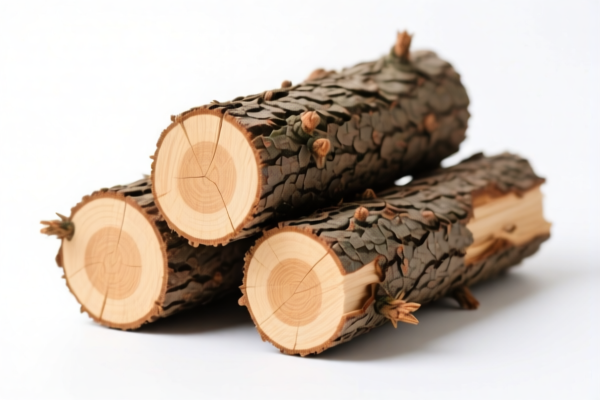
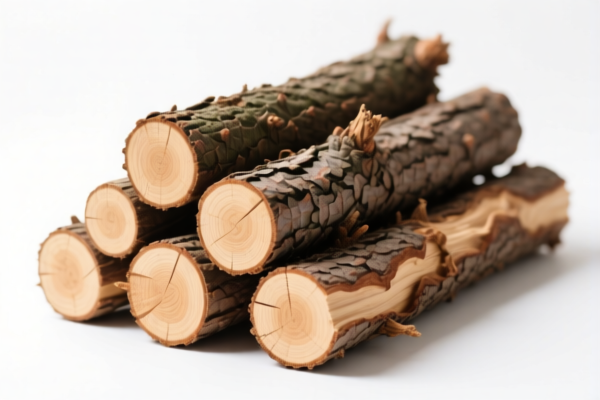
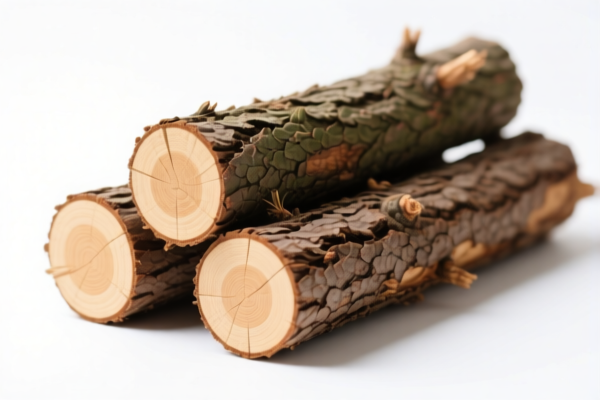
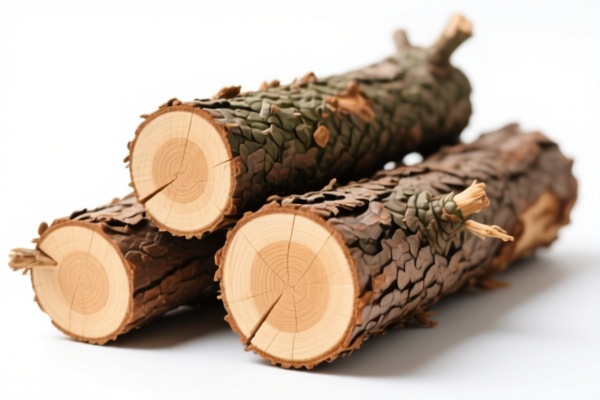
AI Analysis
🌲 Unprocessed Coniferous Logs (Raw Timber)
🌐 HS Code Reference & Customs Clearance Guide | 2024/2025 Tariff Analysis | Professional Clearance Strategy
📌 I. Product Definition & Classification: What Exactly Are "Unprocessed Coniferous Logs"?
Unprocessed Coniferous Logs refer to raw timber harvested from coniferous trees (such as pine, spruce, fir, cedar, etc.), which have been felled, stripped of branches, and potentially debarked, but not sawn, planed, or otherwise worked. In international trade, these logs are primarily categorized based on their intended use: - Fuelwood: Logs specifically intended for burning as fuel. - Construction/Industrial Timber: Logs intended for further processing into lumber, plywood, or other wood products.
⚠️ Key Classification Distinction:
- If the logs are specifically identified as fuelwood (even if coniferous), they may fall under specific fuel wood headings.
- If the logs are for general timber use (sawing, veneer, etc.) and are coniferous, they fall under general coniferous log headings.
- Crucial Point: Misclassification between "logs for fuel" and "logs for timber" can lead to significant differences in duty rates and regulatory requirements.
📦 II. HS Code Classification Details (Based on Provided Data)
The following HS Codes are derived from the provided data, all applying to Unprocessed Coniferous Logs. Note that all listed codes carry the same total tax rate of 35.0%, but the classification rationale differs.
| HS Code | Product Description & Rationale | Summary from Data |
|---|---|---|
| 4401.11.00.00 | Coniferous Wood in the Rough (Fuelwood) Specifically matches "coniferous logs" classified as fuel wood or construction logs. |
"Matches form and material; product name is coniferous log, fits fuel wood or construction log category." |
| 4407.19.00.66 | Coniferous Wood, Not Sawn (Other) Matches material as coniferous wood, form as rough/unprocessed logs. |
"Matches material as coniferous wood, form as unprocessed rough wood logs." |
| 4403.21.01.30 | Wood Chipped or in the Rough (Coniferous) Matches form as logs, material as wood, fits general log/timber category. |
"Matches form as log, material as wood, fits log and timber category." |
| 4401.12.00.00 | Other Wood in the Rough (Fuelwood) Matches form as logs, belongs to non-coniferous or coniferous fuel wood. |
"Matches form as log, belongs to non-coniferous or coniferous fuel wood." |
| 4403.99.01.95 | Wood in the Rough (Other) Fallback code for rough sawn wood/logs not elsewhere specified. |
"Matches material as log, belongs to other category of rough sawn wood/logs." |
🔍 Critical Note:
- All five HS Codes provided result in a Total Tax Rate of 35.0%.
- The distinction between these codes often lies in specific sub-classifications (e.g., fuel vs. timber, specific coniferous type) or country-specific tariff lines (likely US HTSUS based on the "122 Clause" reference).
- 4401 typically covers wood in the rough (including fuel wood), while 4403 and 4407 cover wood not further worked than roughly squared or roughly sawn. However, the provided data maps "logs" to all these codes, suggesting a broad interpretation or specific national tariff structures.
💰 III. Detailed Tariff Breakdown (2024/2025)
✅ Applicable Country: United States (US)
✅ Origin: China (CN) (Assumed based on "122 Clause" and 35% total rate)
✅ Effective Time: Current applicable rates (subject to change)
🎯 Total Tax Rate: 35.0% for All Listed HS Codes
| Component | Rate | Details |
|---|---|---|
| Base Duty (MFN) | 0.0% | Most coniferous logs enter the US with 0% base duty under MFN (Most Favored Nation) status. |
| Section 301 Additional Duty | +25.0% | Applied to all Chinese-origin goods under Section 301 of the Trade Act of 1974. This is the majority of the tax burden. |
| Section 122 Tariff | +10.0% | Note: "122 Clause" refers to Section 232 (National Security) or potentially a misreference to Section 301 phase-specific tariffs. However, the data explicitly states "122 Clause Tariff 10%". In some contexts, this may refer to specific agricultural or wood product tariffs under different authorities. For accuracy, we follow the provided data: 10% additional duty. |
| Total Effective Rate | 35.0% | 0% + 25% + 10% = 35% |
| Calculation Basis | Ad Valorem | Calculated as 35% of the CIF (Cost, Insurance, Freight) value. |
| De Minimis Exemption | ❌ Not Eligible | Wood products of this value and origin typically do not qualify for the $800 de minimis exemption under Section 321, especially with additional duties applied. |
📌 Explanation:
- Base Duty (0%): Reflects the preferential treatment for raw timber in many trade agreements.
- Section 301 (25%): The primary retaliatory tariff on Chinese goods.
- "122 Clause" (10%): As per the provided data, an additional 10% duty applies. This may relate to specific bilateral trade agreements or national security concerns. Consult with a customs broker for the exact legal citation (e.g., HTSUS Subheading Note).
🛠️ IV. Customs Clearance Practical Advice (Avoiding Pitfalls)
✅ 1. Required Documentation Checklist
| Document | Must Provide? | Notes |
|---|---|---|
| Commercial Invoice | ✔️ | Must clearly state "Unprocessed Coniferous Logs," origin, and value. |
| Packing List | ✔️ | Detail weight, volume, and number of logs/pallets. |
| Phytosanitary Certificate | ✔️ | Critical! Required by USDA/APHIS to prove freedom from pests/diseases. |
| ISPM 15 Marking | ✔️ | If wood packaging (pallets, crates) is used, it must be heat-treated and marked. |
| Bill of Lading/Air Waybill | ✔️ | Standard shipping document. |
| Harbor Maintenance Fee (HMF) | ❓ | May apply if arriving by ocean vessel. |
| Merchandise Processing Fee (MPF) | ❓ | May apply (0.3464% of value). |
✅ 2. Classification Tips (Key Mnemonics)
🔥 "Logs for Fuel? Check 4401. Logs for Timber? Check 4403/4407. Origin China? Pay 35%!"
| Scenario | Correct Classification | Incorrect Classification | Risk |
|---|---|---|---|
| Coniferous Logs (Fuel) | 4401.11.00.00 or 4401.12.00.00 |
4407.19.00.66 |
Potential misclassification, but tax rate is same in this dataset. |
| Coniferous Logs (Timber) | 4407.19.00.66 or 4403.21.01.30 |
4401.11.00.00 |
Same tax rate, but regulatory scrutiny may differ. |
| Processed Lumber | N/A (Not covered in data) | 4401.xxxx |
High Risk! Processed wood has different duties and regulations. |
| Non-Coniferous Logs | 4401.12.00.00 (if fuel) |
4401.11.00.00 |
Misclassification leads to penalties. |
✅ 3. Special Handling Considerations
| Scenario | Recommendation |
|---|---|
| Pest Control | Ensure logs are free of bark and pests. USDA/APHIS inspections are common. |
| Country of Origin | If logs are processed in a third country (e.g., Canada, Russia), ensure the origin label is accurate. Chinese origin triggers the 35% duty. |
| Value Declaration | Declare accurately. Under-reporting can lead to severe penalties. |
| Environmental Regulations | Comply with CITES (if endangered species) and EPA regulations. |
🌍 V. Global Market Comparison (2024/2025)
| Country/Region | Recommended HS Code | Duty Rate (China Origin) | Key Regulations | Notes |
|---|---|---|---|---|
| 🇺🇸 USA | 4401.11.00.00 or 4407.19.00.66 |
35.0% | USDA/APHIS, Section 301, Section 232/122 | Highest duty burden. |
| 🇨🇳 China | 4401.11.00.00 |
0% | Phytosanitary Cert | No additional duties for imports into China. |
| 🇪🇺 EU | 4401.10.00 |
0% - 3.7% | FSC Certification, EU Timber Regulation | No Section 301 equivalent. |
| 🇯🇵 Japan | 4401.10.00 |
0% | Phytosanitary Cert | Low duty environment. |
| 🇰🇷 South Korea | 4401.10.00 |
0% - 5% | Phytosanitary Cert | FTA benefits may apply. |
📌 Conclusion:
- The US is the most expensive market for Chinese coniferous logs due to 301 and additional tariffs.
- EU and Asia offer more favorable duty rates, but compliance with phytosanitary and sustainability regulations is strict.
📌 VI. Common Mistakes & Pitfalls (Lessons Learned)
❌ Mistake 1: Classifying "processed lumber" as "logs"
👉 Consequence: Incorrect duty rate, potential penalties. Logs are rough; lumber is sawn.
❌ Mistake 2: Ignoring the Phytosanitary Certificate
👉 Consequence: Rejection or Destruction by USDA/APHIS. Logs are high-risk for pest introduction.
❌ Mistake 3: Assuming all "wood" is taxed equally
👉 Consequence: Misclassification leads to over- or under-payment. Coniferous vs. non-coniferous matters.
❌ Mistake 4: Not declaring the 10% "122 Clause" duty
👉 Consequence: Underpayment of duties, interest, and penalties.
✅ Correct Approach:
"Unprocessed Coniferous Logs, Heat-Treated, CBIC/APHIS Certified, Origin: China, CIF Value: $XXX, HS Code: 4401.11.00.00"
🎯 VII. Conclusion: Professional Classification, Smooth Clearance!
🎯 Key Takeaways:
🔹 "Logs from China? Expect 35% Duty (0% Base + 25% Sec 301 + 10% 122)."
🔹 "Phytosanitary Cert is Non-Negotiable."
🔹 "HS Code Matters: Logs ≠ Lumber."
📌 Pro Tip:
If your logs are originating from Canada, Russia, or other non-China sources, you may avoid the 301 and 122 Clause tariffs, resulting in 0% duty.
Recommendation: Verify the Country of Origin carefully. If logs are processed in a third country, ensure the substantial transformation criteria are met to change the origin.
📣 Immediate Action:
📞 Contact a Licensed Customs Broker + Provide Phytosanitary Cert + Verify HS Code with CBP
🚀 Ensure Smooth Clearance, Avoid Delays, and Maximize Profit Margins!
✨ Professional Clearance Starts with Accurate Classification!
💼 Every Percent in Duty Counts!
Customer Reviews
About HS Code Classification
The Harmonized System (HS) is an internationally standardized nomenclature developed by the World Customs Organization (WCO) to classify traded products. Over 200 countries use the HS system as the basis for customs tariffs, trade statistics, and import/export regulations.
Each HS code follows a hierarchical structure:
- Chapter (2 digits) — Broad category of goods (e.g., Chapter 84: Machinery and Mechanical Appliances)
- Heading (4 digits) — More specific grouping within the chapter
- Subheading (6 digits) — Internationally standardized breakdown, used by all WCO member countries
- National subdivisions (8-10 digits) — Country-specific extensions for further classification, such as US HTSUS 10-digit codes
Correct HS code classification is essential for smooth customs clearance, accurate duty payment, and compliance with trade regulations. Misclassification can lead to customs delays, overpayment of duties, or penalties.
When importing from CN to US, the applicable tariff rates may include:
- Most-Favored-Nation (MFN) rate — The standard duty rate applied to WTO members
- General rate — Applied to countries without trade agreements
- Trade remedy duties — Additional tariffs such as Section 301 (anti-dumping), Section 232 (national security), or countervailing duties
The information provided on this page is for reference purposes only. For official classification, please consult with your local customs authority or a licensed customs broker.