Unprocessed Coniferous Logs for Fine Woodworking or Carpentry
CN → US| HS Code | Tariff Rate | Origin | Destination | Doc |
|---|---|---|---|---|
| 4403210130 | 35.0% | CN | US | Official Doc |
| 4403220120 | 35.0% | CN | US | Official Doc |
| 4403240104 | 35.0% | CN | US | Official Doc |
| 4403260108 | 35.0% | CN | US | Official Doc |
| 4403260165 | 35.0% | CN | US | Official Doc |
Product Images
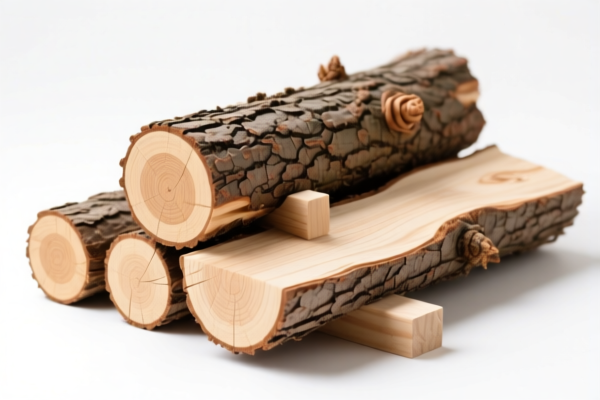
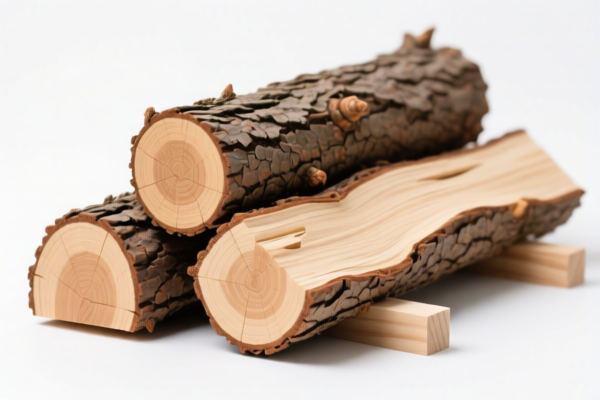
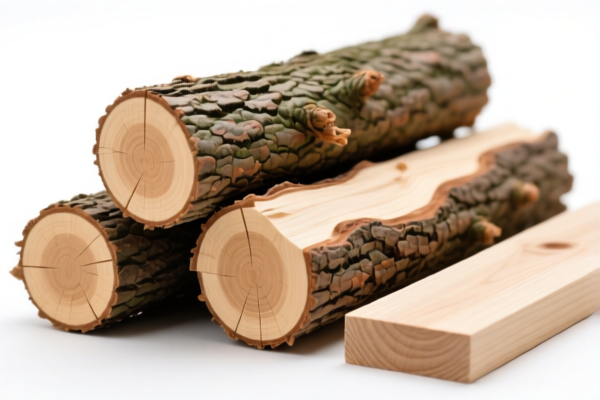

AI Analysis
🌲 Unprocessed Coniferous Logs for Fine Woodworking or Carpentry (Raw Timber)
🌐 HS Code Reference & Customs Clearance Guide | 2026 Latest Tariff Analysis | Professional Clearance Strategy
📌 Part 1: Product Definition & Classification: Do You Really Understand "Raw Coniferous Logs"?
Coniferous logs are the foundational raw materials for the global woodworking, construction, and furniture industries. In international trade, they are strictly classified based on processing level, material type, and physical form.
For "Unprocessed Coniferous Logs intended for Fine Woodworking or Carpentry," the key characteristics are: 1. Raw State: The wood has not been treated, painted, or heavily machined into specific furniture parts. It is typically "rough-sawn" or in its natural "log" form. 2. Material: Specifically Coniferous (Softwood), such as Pine, Spruce, Fir, or Larch. 3. Intended Use: While destined for "fine woodworking," the current physical state dictates the HS Code, not the final product. Rough-sawn timber is still classified under Chapter 44 (Wood and Wood Articles).
⚠️ Key Distinction Point:
- If the wood is rough-sawn (even if planed on all sides but not further processed) → Classified under 4403 (Wood prepared for woodworking).
- If the wood is charred or chemically treated → It may fall under different chapters, but standard raw logs are 4403.
- If the logs are bundled for pulp/papermaking → Specific subheadings apply (e.g., 4403.26).
📦 Part 2: HS Code Classification Details (2026 Latest Tariff Authority Cross-Reference)
Based on the provided data, here are the specific HS Codes for unprocessed coniferous logs, their descriptions, and applicable scenarios.
| HS Code | Product Description | Applicable Scenario | Processing Status |
|---|---|---|---|
4403.21.01.30 |
Unprocessed coniferous logs for fine woodworking/carpentry; matches coniferous material and log morphology; fits attributes of untreated rough-sawn timber. | General rough-sawn softwood logs; ready for planing/sawing into boards. | ✅ Untreated / Rough-Sawn |
4403.22.01.20 |
Unprocessed coniferous logs for fine woodworking/carpentry; coniferous material; log form; standard classification. | Standard softwood logs; common pine/spruce varieties used in construction. | ✅ Untreated / Log Form |
4403.24.01.04 |
Bulk unprocessed coniferous wood; coniferous material; bulk/unprocessed form; fits rough timber classification. | Bulk shipments of softwood logs; often for sawmills or chip processing. | ✅ Bulk / Unprocessed |
4403.26.01.08 |
Bulk unprocessed coniferous wood; coniferous material; bulk unprocessed form; typically used for pulp production. | Logs destined for paper/pulp mills; often smaller diameter or lower grade. | ✅ Bulk / Pulp-Grade |
4403.26.01.65 |
Other unprocessed coniferous logs; coniferous material; unprocessed log form; no specific variety conflict. | "Other" category for specialized coniferous logs not covered in above specific subheads. | ✅ Other / Unprocessed |
🔍 Key Reminder:
- All codes listed share the same Tariff Structure because they are all Unprocessed Coniferous Logs. - The distinction lies in the specific morphological details (e.g., bulk vs. individual logs, pulp-grade vs. woodworking-grade). - Misclassification Risk: Declaring "Furniture Parts" (HS 9403) when importing "Raw Logs" (HS 4403) will lead to severe customs penalties. Always declare based on the physical state at import.
💰 Part 3: 2026 Latest Tariff Rate Breakdown (Including Surtaxes & Policy Add-ons)
✅ Applicable Country: United States (US)
✅ Origin: China (CN)
✅ Effective Date: 2025/2026 Period (Subject to ongoing trade policies)
All five HS Codes (4403.21.01.30, 4403.22.01.20, 4403.24.01.04, 4403.26.01.08, 4403.26.01.65) share the identical tax structure for Chinese-origin goods.
🎯 1. Universal Tax Structure for Coniferous Logs
| Item | Content |
|---|---|
| Base Tariff Rate | 0.0% (Ad Valorem) Note: Base MFN rates for raw timber are often zero. |
| Section 301 Surtax | +25.0% Source: USITC Footnote 9903.88.01 (China Countrywide) |
| Section 122 Tariff | +10.0% Source: Trade Act Section 122 (Bilateral Retaliatory Measures) |
| Total Effective Rate | 35.0% |
| Tax Calculation | CIF Value × 35% |
| De Minimis Eligibility | ❌ Not Eligible Wood products are explicitly excluded from Section 321 (De Minimis) relief. |
| Legal Path | USITC:4403.xx.xx.xx → FOOTNOTE:9903.88.01 (301 Tariff) + Section 122 (10% Tariff) |
📌 Explanation:
- "Base Tariff 0%": Raw timber is often duty-free to encourage processing within the US.
- "301 Tariff 25%": This is the primary penalty for Chinese-origin goods in many categories, including wood products.
- "Section 122 Tariff 10%": An additional layer of tariff applied specifically to Chinese imports under current trade enforcement frameworks.
- Total 35%: This is a high-cost barrier. Importers must factor this into landed cost calculations immediately.
🛠️ Part 4: Customs Clearance Practical Advice (Battle-Tested Pitfall Guide)
✅ 1. Required Documentation Checklist (Mandatory)
| Document | Must Provide | Purpose |
|---|---|---|
| ✅ Phytosanitary Certificate | ✔️ Critical | Issued by the exporting country’s plant protection agency. Proves wood is free from pests/diseases. Without this, shipment will be rejected. |
| ✅ Commercial Invoice | ✔️ | Must clearly state: "Unprocessed Coniferous Logs," HS Code, CIF Value, Country of Origin. |
| ✅ Packing List | ✔️ | Detail quantity (cubic meters or tons), weight, and packaging type (e.g., bundled, loose). |
| ✅ Bill of Lading (B/L) | ✔️ | Standard shipping document. |
| ✅ ISPM 15 Compliance Proof | ✔️ | If wood packaging (pallets/crates) is used, it must be heat-treated and stamped with the ISPM 15 mark. |
| ✅ Species Declaration | ✔️ | Specific conifer species (e.g., Pine, Spruce) may be required for accurate HS subheading assignment. |
✅ 2. Clearance Tips (Key Mantra)
🔥 "Raw State, Raw Code. Pests = Rejection. Bulk = 4403.26."
| Scenario | Correct Declaration | Incorrect Practice |
|---|---|---|
| Rough-sawn logs for carpentry | 4403.21.01.30 or 4403.22.01.20 |
Declaring as "Finished Wood" → Higher tax, audit risk. |
| Logs for Pulp/Chip | 4403.26.01.08 |
Declaring as "Construction Timber" → Misclassification. |
| Wood Packaging (Pallets) | Separate HS Code (e.g., 4421) | Mixing with log value → Valuation error. |
| Chemically Treated Wood | Different Chapter (e.g., 4403.90) | Declaring as "Unprocessed" → Phytosanitary violation. |
✅ 3. Special Cases & Handling
| Case | Handling Advice |
|---|---|
| Pest Infestation Risk | Ensure Phytosanitary Certificate is valid and matches the shipment. USDA APHIS may inspect at port. |
| Bulk vs. Unitized | If logs are loose (bulk), ensure the HS Code (4403.24 or 4403.26) reflects this. If bundled, 4403.21 or 4403.22 may apply. |
| Wood Packaging | Pallets must comply with ISPM 15. Non-compliant pallets can lead to entire container rejection or fumigation costs. |
| Value Declaration | Declare CIF Value accurately. Under-declaring to avoid 35% tax will trigger audits and penalties. |
🌍 Part 5: Global Market Comparison (2026 Latest)
| Country/Region | Recommended HS Code | Tariff (China Origin) | Certification | Notes |
|---|---|---|---|---|
| 🇺🇸 United States | 4403.21/22/24/26 |
35% (0% + 25% + 10%) | Phytosanitary Cert | High tariff barrier. |
| 🇨🇳 China | 4403.21/22/24/26 |
Varies (0-10%) | Phytosanitary Cert | Lower tariffs, but import restrictions may apply. |
| 🇪🇺 European Union | 4403.21/22/24/26 |
~4-6% | EUTM (Timber Regulation) | Strict legality documentation required. |
| 🇯🇵 Japan | 4403.21/22/24/26 |
~5-8% | Phytosanitary Cert | Strict pest control. |
📌 Conclusion:
- The US is the most expensive market for Chinese coniferous logs due to the 35% combined tariff.
- Phytosanitary compliance is non-negotiable globally.
- Consider supply chain diversification if US market access is critical, as 35% significantly impacts margin.
📌 Part 6: Common Errors & Pitfall Guide (Lessons Learned)
❌ Error 1: Forgetting the Phytosanitary Certificate
👉 Consequence: Shipment halted at port, forced fumigation, or return to origin. Cost: >$5,000 + delays.
❌ Error 2: Misclassifying Bulk Logs as Rough-Sawn Boards
👉 Consequence: Customs may reject the declaration if physical inspection shows bulk logs, leading to reassessment penalties.
❌ Error 3: Ignoring ISPM 15 for wooden pallets
👉 Consequence: Entire container rejected if pallets are not stamped. Cost: Disposal of pallets + re-packing fees.
❌ Error 4: Under-declaring Value to Avoid 35% Tariff
👉 Consequence: Severe fines, loss of import privileges, and criminal charges in cases of fraud.
✅ Correct Action:
"Unprocessed Coniferous Logs, Pine Species, Rough-Sawn, for Carpentry, CIF Value $X, Phytosanitary Cert No. Y, ISPM 15 Pallets."
🎯 Part 7: Conclusion: Professional Clearance Saves Costs!
🎯 Remember the Mantra:
🔹 "35% is the Price of Entry. Phytosanitary is the Key."
🔹 "Log = Raw Code. Pack = ISPM 15. Paper = Cert."
📌 Pro Tip:
- If your logs are not from China (e.g., from Russia, Canada, or New Zealand), the 301 and 122 tariffs do not apply. Check for FTA (Free Trade Agreement) benefits.
- Always request a Pre-Ruling from CBP (Customs and Border Protection) if your product is on the borderline between "Log" and "Rough-Sawn."
📣 Immediate Action:
📞 Consult your freight forwarder for Phytosanitary requirements.
📝 Verify ISPM 15 stamping with your supplier.
💰 Calculate Landed Cost including the 35% tariff.
✨ Professional Clearance Starts with Accurate Classification!
💼 Every dollar saved in clearance is profit kept!
Customer Reviews
About HS Code Classification
The Harmonized System (HS) is an internationally standardized nomenclature developed by the World Customs Organization (WCO) to classify traded products. Over 200 countries use the HS system as the basis for customs tariffs, trade statistics, and import/export regulations.
Each HS code follows a hierarchical structure:
- Chapter (2 digits) — Broad category of goods (e.g., Chapter 84: Machinery and Mechanical Appliances)
- Heading (4 digits) — More specific grouping within the chapter
- Subheading (6 digits) — Internationally standardized breakdown, used by all WCO member countries
- National subdivisions (8-10 digits) — Country-specific extensions for further classification, such as US HTSUS 10-digit codes
Correct HS code classification is essential for smooth customs clearance, accurate duty payment, and compliance with trade regulations. Misclassification can lead to customs delays, overpayment of duties, or penalties.
When importing from CN to US, the applicable tariff rates may include:
- Most-Favored-Nation (MFN) rate — The standard duty rate applied to WTO members
- General rate — Applied to countries without trade agreements
- Trade remedy duties — Additional tariffs such as Section 301 (anti-dumping), Section 232 (national security), or countervailing duties
The information provided on this page is for reference purposes only. For official classification, please consult with your local customs authority or a licensed customs broker.