Unprocessed Deep Red Mahogany Wood
CN → US| HS Code | Tariff Rate | Origin | Destination | Doc |
|---|---|---|---|---|
| 4407250000 | 35.0% | CN | US | Official Doc |
| 4407210000 | 35.0% | CN | US | Official Doc |
Product Images
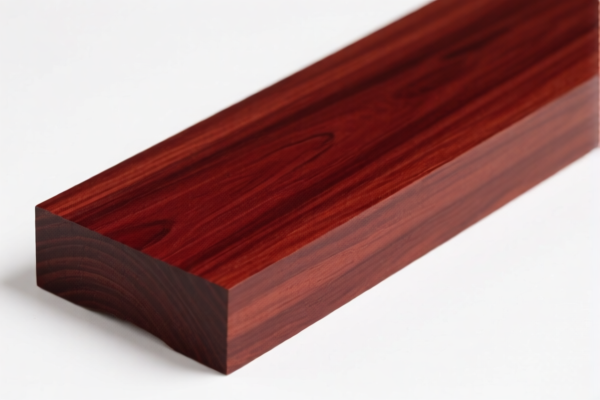
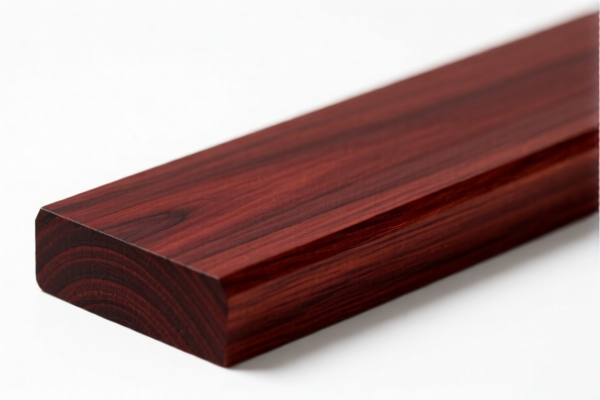
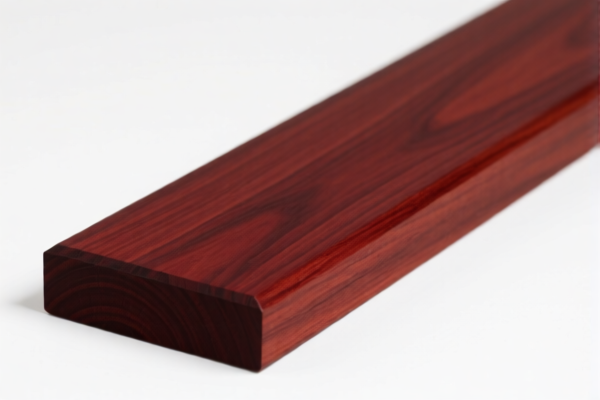
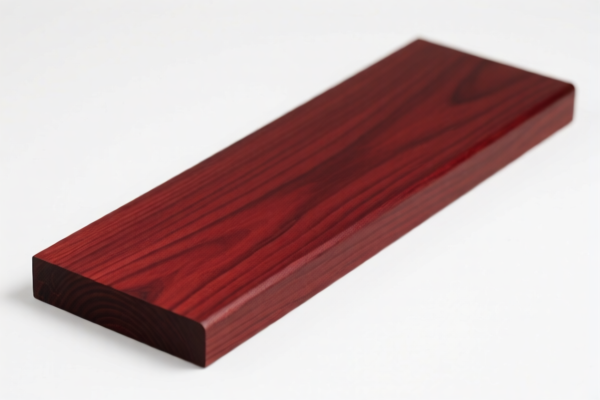
AI Analysis
🌳 Unprocessed Deep Red Mahogany Wood
🌐 HS Code Reference & Customs Clearance Guide | 2026 Latest Tariff Analysis | Professional Import Strategy
📌 Part I: Product Definition & Classification – Do You Really Understand "Deep Red Mahogany"?
Deep Red Mahogany (often referred to as Meranti in commercial trade, specifically Shorea species) is a premium tropical hardwood widely used in high-end furniture, veneer, and interior decoration. In international trade, it is strictly classified under Chapter 44 (Wood and articles of wood), specifically as processed wood exceeding 6mm in thickness.
⚠️ Critical Distinction: "Mahogany" vs. "True Mahogany"
True Mahogany (Swietenia spp.): Belongs to HS Code 4407.21.00.00.
Deep Red Mahogany (Meranti/Dark/Red Meranti): Despite the common name "Mahogany" in the trade, this wood is botanically Meranti (Shoreacaceae). It belongs to HS Code 4407.25.00.00.
Why this matters*: Misclassifying Meranti as True Mahogany can lead to customs disputes, as the tariff rates and regulatory requirements may differ slightly in specific jurisdictions, though in the provided data, the tax rate is identical. However, accuracy is key for compliance.
🔍 Key Identification Point:
- If the wood is Red Meranti, Dark Red Meranti, or Meranti Bakau, it falls under4407.25.00.00.
- If the wood is True Mahogany (Swietenia species), it falls under4407.21.00.00.
- "Unprocessed" here refers to wood that is sawn, chipped, sliced, or peeled, but not yet manufactured into finished goods (like furniture).
📦 Part II: HS Code Classification Details (2026 Latest Tariff Authority Comparison)
Based on the provided , there are two potential HS Codes depending on the exact botanical species and commercial designation. For "Unprocessed Deep Red Mahogany," the most accurate match is 4407.25.00.00, but we must also consider 4407.21.00.00 if the wood is legally classified as true Mahogany.
| HS Code | Product Description | Applicable Scenario | Tax Rate (Total) |
|---|---|---|---|
4407.25.00.00 |
Wood of tropical wood: Dark Red Meranti, Light Red Meranti and Meranti Bakau | Commercial "Deep Red Mahogany" (Meranti species); Plank/Lumber >6mm thickness | 25.0% |
4407.21.00.00 |
Wood of tropical wood: Mahogany (Swietenia spp.) | True Mahogany (Swietenia genus); Plank/Lumber >6mm thickness | 25.0% |
🔍 Critical Alert:
- Thickness: Both codes require a thickness exceeding 6 mm. If the wood is thinner (e.g., thin veneers), it falls under different chapters (likely Chapter 44 or 47 depending on processing).
- Processing Level: The wood must be "sawn or chipped lengthwise, sliced or peeled." Rough logs or unprocessed timber in their natural state may fall under HS4403(Wood in the rough), but once sawn into planks/lumber, it moves to Chapter 44.
💰 Part III: 2026 Latest Tariff Rate Breakdown (Including Surcharges)
✅ Applicable Country: United States (US)
✅ Origin: China (CN) (Assumed based on the 25% surcharge pattern typical of US-China trade)
✅ Effective Date: 2025/2026 Current Regulations
🎯 1. 4407.25.00.00 —— Deep Red Meranti / Dark Red Meranti ("Deep Red Mahogany")
| Item | Content |
|---|---|
| Base Tariff | 0.0% (Ad valorem) |
| Additional Tariff (Section 301) | +25.0% |
| Total Tax Rate | 25.0% |
| Tax Calculation | CIF Value × 25% |
| De Minimis Exemption | ❌ Not Applicable (Wood products are generally excluded from $800 de minimis thresholds if subject to Section 301) |
| Legal Basis | HTSUS 4407.25.00.00 → USITC Footnote 301.01 (China) |
📌 Explanation:
- The base MFN rate for tropical wood sawn to >6mm is 0%.
- However, due to Section 301 of the Trade Act of 1974, all wood products from China are subject to an additional 25% tariff.
- Total Cost Impact: For every $10,000 CIF value, you pay $2,500 in duties. This is a significant cost factor that must be included in your landed cost calculation.
🎯 2. 4407.21.00.00 —— True Mahogany (Swietenia spp.)
| Item | Content |
|---|---|
| Base Tariff | 0.0% (Ad valorem) |
| Additional Tariff (Section 301) | +25.0% |
| Total Tax Rate | 25.0% |
| Tax Calculation | CIF Value × 25% |
| De Minimis Exemption | ❌ Not Applicable |
| Legal Basis | HTSUS 4407.21.00.00 → USITC Footnote 301.01 (China) |
📌 Note:
- Even if classified as True Mahogany, the tax rate is identical (25%) in the provided data.
- CITES Consideration: Some Swietenia species are listed in CITES Appendix II. If the wood is from endangered species, you must provide CITES Permits in addition to standard customs documents. Meranti (Shorea spp.) is also CITES Appendix II listed since 2020, so CITES compliance is critical for both codes.
🛠️ Part IV: Customs Clearance Practical Advice (Pitfall Avoidance Guide)
✅ 1. Required Documentation Checklist (Mandatory)
| Document | Must Provide | Explanation |
|---|---|---|
| ✅ Commercial Invoice | ✔️ | Must clearly state: "Sawn Wood, Tropical, Depth >6mm, Species: Shorea spp. (Meranti)" or "Swietenia spp. (Mahogany)" |
| ✅ Bill of Lading | ✔️ | Show quantity, weight, and package type |
| ✅ CITES Permit | ✔️ | CRITICAL: Both Meranti and Mahogany are CITES-listed. Without a valid CITES permit from the exporting country, shipment will be seized or returned. |
| ✅ Fumigation Certificate | ✔️ | Wood products must be fumigated or heat-treated (ISPM 15 standard) to prevent pest introduction |
| ✅ Phytosanitary Certificate | ✔️ | Issued by the national plant protection organization of the exporting country |
| ✅ Product Specification Sheet | ✔️ | Include dimensions, thickness (must be >6mm), and moisture content |
✅ 2. Declaration Tips (Key Mnemonics)
🔥 "Species Matters, CITES is King, Thickness is Key, 25% Tax is Real!"
| Scenario | Correct Declaration | Wrong Practice |
|---|---|---|
| Meranti sold as "Deep Red Mahogany" | Declare as 4407.25.00.00 (Meranti) with botanical name Shorea spp. |
Declare as 4407.21.00.00 (True Mahogany) → Misclassification Risk |
| Wood < 6mm Thickness | Not covered in this data (likely 4408 or 4407 other subheadings) |
Declare as 4407.25 → Rejection |
| Unfurnished Logs | Likely HS 4403 (Wood in the rough) |
Declare as 4407 (Sawn wood) → Undervaluation/ Misdeclaration |
| No CITES Permit | Do not ship! | Assume "Wood is wood" → Seizure & Fines |
✅ 3. Special Circumstances Handling
| Situation | Handling Advice |
|---|---|
| Mixed Shipments | If the shipment contains both Meranti and True Mahogany, declare each separately with accurate quantities to avoid penalty |
| CITES Appendix II | Ensure the exporting country has issued a CITES export permit. The US importer must have a CITES import permit if required |
| Wood Moisture Content | High moisture content can lead to mold during transit. Ensure wood is properly dried and fumigated to meet ISPM 15 |
| Value Declaration | Declare CIF Value (Cost + Insurance + Freight). The 25% tax is calculated on the total CIF value, not just the product cost |
🌍 Part V: Global Market Clearance Comparison (2026 Latest)
| Country/Region | Recommended HS Code | Tariff (Base + Additional) | Certification Requirements | Notes |
|---|---|---|---|---|
| 🇺🇸 United States | 4407.25.00.00 (Meranti)4407.21.00.00 (Mahogany) |
25.0% (25% Section 301) | CITES + Fumigation | High duty; CITES is mandatory |
| 🇨🇳 China | 4407.25.00.00 |
0% - 5% (Varies by FTA) | Phytosanitary | No Section 301 if imported into China |
| 🇪🇺 European Union | 4407.25.00 |
0% (Most likely under FLEGT) | CITES + EU Timber Regulation (EUTR) | Strict due diligence required |
| 🇯🇵 Japan | 4407.25.00 |
0% - 1.5% | CITES | No high additional tariffs |
📌 Conclusion:
- The US market has a significant 25% additional tariff on these wood products from China.
- CITES compliance is universal for both Meranti and Mahogany globally.
- No duty advantages exist between4407.25and4407.21in the US (both are 25%). Focus on accurate botanical identification to avoid customs delays.
📌 Part VI: Common Mistakes & Pitfall Guide (Lessons Learned)
❌ Mistake 1: Using "Deep Red Mahogany" as the species name without botanical clarification
👉 Consequence: Customs may reject the declaration if they cannot verify the species under CITES.
✅ Correct: Use "Shorea spp. (Dark Red Meranti)" or "Swietenia spp. (Mahogany)" + Common Name.
❌ Mistake 2: Ignoring CITES requirements
👉 Consequence: Shipment seizure, fines, and potential legal action.
✅ Correct: Obtain CITES Export Permit before shipment.
❌ Mistake 3: Declaring wood thickness as "6mm" when it is exactly 6mm
👉 Consequence: HS 4407 requires >6mm. If exactly 6mm or less, it may fall under different codes.
✅ Correct: Ensure thickness is strictly greater than 6mm for this classification.
❌ Mistake 4: Not accounting for the 25% tariff in pricing
👉 Consequence: Loss of profit margin.
✅ Correct: Include 25% duty in your landed cost calculation.
🎯 Part VII: Conclusion: Professional Clearance, Cost Control, Efficiency!
🎯 Remember the Mnemonic:
🔹 "Species is Key, CITES is Mandatory, 25% Tax is Real, Thickness >6mm!"
🔹 "HS Code4407.25for Meranti,4407.21for True Mahogany, both 25% in US!"
📌 Pro Tip:
If your wood is sourced from Vietnam, Indonesia, or Malaysia (and not China), you may not be subject to the 25% Section 301 tariff, potentially reducing your duty to 0% (plus any CITES costs).
👉 Recommendation: Verify the Country of Origin carefully. If possible, source from non-China origins to avoid the 25% surcharge.
📣 Immediate Action:
📞 Contact a licensed customs broker + Provide CITES Permits + Verify Botanical Species
🚀 Ensure smooth customs clearance, avoid seizures, and optimize your supply chain costs!
✨ Professional Clearance Starts with Accurate Classification!
💼 Every percent of duty matters – get it right from the start!
Customer Reviews
About HS Code Classification
The Harmonized System (HS) is an internationally standardized nomenclature developed by the World Customs Organization (WCO) to classify traded products. Over 200 countries use the HS system as the basis for customs tariffs, trade statistics, and import/export regulations.
Each HS code follows a hierarchical structure:
- Chapter (2 digits) — Broad category of goods (e.g., Chapter 84: Machinery and Mechanical Appliances)
- Heading (4 digits) — More specific grouping within the chapter
- Subheading (6 digits) — Internationally standardized breakdown, used by all WCO member countries
- National subdivisions (8-10 digits) — Country-specific extensions for further classification, such as US HTSUS 10-digit codes
Correct HS code classification is essential for smooth customs clearance, accurate duty payment, and compliance with trade regulations. Misclassification can lead to customs delays, overpayment of duties, or penalties.
When importing from CN to US, the applicable tariff rates may include:
- Most-Favored-Nation (MFN) rate — The standard duty rate applied to WTO members
- General rate — Applied to countries without trade agreements
- Trade remedy duties — Additional tariffs such as Section 301 (anti-dumping), Section 232 (national security), or countervailing duties
The information provided on this page is for reference purposes only. For official classification, please consult with your local customs authority or a licensed customs broker.