Unprocessed Human Hair Bundles
CN → US| HS Code | Tariff Rate | Origin | Destination | Doc |
|---|---|---|---|---|
| 560100 | 0.0% | CN | US | Official Doc |
| 560200 | 0.0% | CN | US | Official Doc |
Product Images
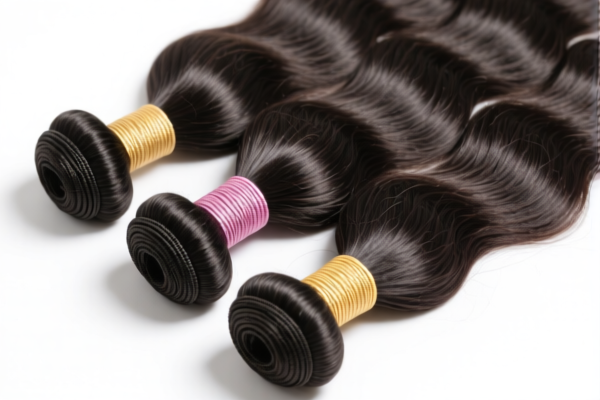
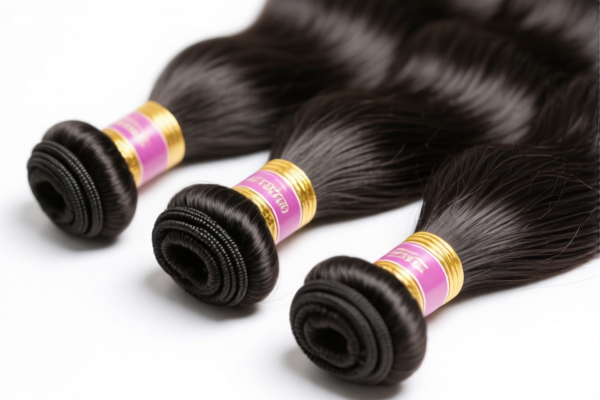
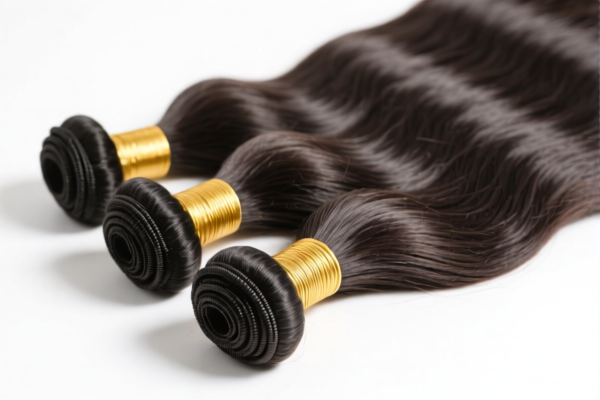
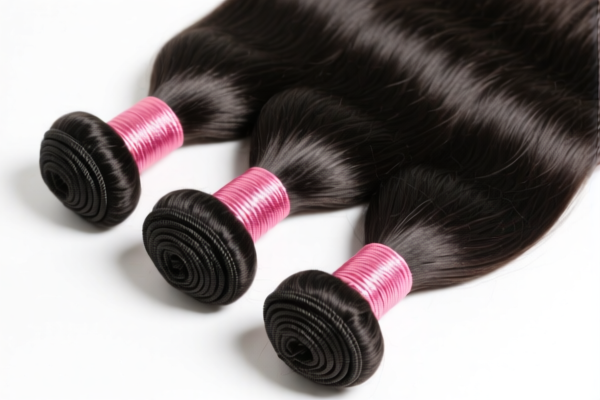
AI Analysis
👩🦰 Unprocessed Human Hair Bundles (未加工的人发束)
🌐 HS Code Reference & Customs Clearance Guide | 2026 Tariff Analysis | Professional Compliance Strategy
📌 I. Product Definition & Classification: What Exactly Is "Unprocessed Human Hair"?
Unprocessed Human Hair refers to hair that has been collected, cut, or shed, but has not undergone any processing that prepares it for spinning (such as carding or combing). In the context of international trade, "bundles" indicate that the hair is gathered together, whether in simple ties, locks, or tresses, but it remains in its raw, natural state.
Key Characteristics: * Source: Human only (synthetic hair is excluded). * State: Raw, natural, unprocessed. * Form: Bundles, locks, or tresses (not put up for retail sale as wigs/extensions yet). * Exclusions: Hair prepared for spinning (carded/combed), hair used for making brushes, or hair already manufactured into wigs/hairpieces.
⚠️ Critical Distinction:
- If the hair is raw, uncombed, and bundled → It falls under Heading 56.01 or 56.02.
- If the hair is washed, treated, colored, or woven into wigs → It falls under Heading 67.03 or 67.04 (different tax codes, different rules).
- This guide strictly applies to RAW/HUMAN HAIR BUNDLES as per the provided data.
📦 II. HS Code Classification Details (Based on Provided Data)
According to the provided <DATA>, there are two specific HS codes for unprocessed human hair in bundles. Both share identical tax outcomes.
| HS Code | Product Description | Applicable Scenario | Processing Status |
|---|---|---|---|
5601.00 |
Unprocessed human hair, not put up in bundles... (including bundles/locks/tresses) | Raw hair extensions, wig-making materials in bulk, natural hair locks | ✅ Unprocessed (Not carded/combed) |
5602.00 |
Human hair, not put up in bundles... (including bundles/locks/tresses) | Raw hair bundles, natural hair tresses for industrial use | ✅ Unprocessed (Not carded/combed) |
🔍 Important Note:
- Both5601.00and5602.00describe the exact same product state based on the provided text.
- The distinction between them in standard HS nomenclature often relates to specific manufacturing nuances or regional tariff line subdivisions, but for tariff purposes in this dataset, they are treated identically.
- Exclusion: Hair used for making brushes is explicitly excluded from these codes.
💰 III. 2026 Latest Tariff Rate Details (Tax Information)
✅ Source Data Constraint: The provided
<DATA>explicitly states that tax information retrieval failed.
✅ Result: Tax Information Unavailable / Error
🎯 1. 5601.00 —— Unprocessed Human Hair Bundles
| Item | Content |
|---|---|
| Tax Detail | ❌ Failed to retrieve tax information |
| Total Tax | ⚠️ Error |
| Basis | Provided <DATA> contains no tariff rate, no country-specific duty, no VAT/GST info. |
🎯 2. 5602.00 —— Human Hair Bundles
| Item | Content |
|---|---|
| Tax Detail | ❌ Failed to retrieve tax information |
| Total Tax | ⚠️ Error |
| Basis | Provided <DATA> contains no tariff rate, no country-specific duty, no VAT/GST info. |
📌 Explanation:
- The dataset provided does not contain any tariff rates, additional duties, or tax calculations.
- Do not assume a rate. You must consult the official customs tariff of the destination country (e.g., US HTS, EU CN, China HS Code) for specific duty percentages.
- Human hair products often attract high duties (e.g., 10-15% base duty) and may be subject to anti-dumping duties or special tariffs depending on origin.
🛠️ IV. Customs Clearance Practical Advice (Real-World Pitfalls Guide)
✅ 1. Documentation Checklist (Non-Negotiable)
| Document | Required | Explanation |
|---|---|---|
| ✅ Commercial Invoice | ✔️ | Must clearly state "Unprocessed Human Hair Bundles"; specify weight, length, and origin. |
| ✅ Packing List | ✔️ | Detail bundle weights, number of tresses, and packaging type. |
| ✅ Certificate of Origin | ✔️ | Crucial for determining duty rates; verify if FTA applies. |
| ✅ Health/Sanitary Certificate | ✔️ | Many countries require proof that hair is from healthy donors and free from contaminants. |
| ✅ Product Specification Sheet | ✔️ | Confirm hair is NOT carded, combed, or processed. |
| ✅ Manufacturer’s Declaration | ✔️ | Confirm no synthetic blends; 100% human hair. |
✅ 2. Declaration Tips (Key Mnemonic)
🔥 “Raw Hair = 5601/5602 | Processed Hair = 6703/6704 | Brushes = Excluded!”
| Scenario | Correct HS Code | Incorrect Code | Consequence |
|---|---|---|---|
| Raw, uncombed bundles | 5601.00 / 5602.00 |
6703.90 |
Misclassification → Delays/Fines |
| Washed, colored, combed hair | 6703.90 / 6704.90 |
5601.00 |
Over/Under-declaration → Penalties |
| Hair for brushes | Excluded from 56 | 5601.00 |
Rejection/Return |
| Wigs/Hairpieces | 6704.19 / 6704.20 |
5601.00 |
Major misclassification → High penalties |
✅ 3. Special Handling Cases
| Case | Handling Advice |
|---|---|
| Hygiene Concerns | Ensure hair is cleaned and sterilized if required by destination country. Provide Sanitary Certificate. |
| Anti-Dumping | Check for anti-dumping duties on Chinese-origin human hair in the US/EU. This can add 50-200% to duties. |
| Ethical Sourcing | Some markets require proof of ethical sourcing (no forced labor). Prepare Supply Chain Audits. |
| Mixed Bundles | If bundles contain synthetic hair, they are NOT "unprocessed human hair." They fall under different categories (e.g., 6504 or 6703). |
🌍 V. Global Market Comparison (2026 General Trends)
| Country/Region | Typical HS Code (Raw Hair) | Estimated Duty Range* | Certification Required | Notes |
|---|---|---|---|---|
| 🇺🇸 USA | 5601.00 / 5602.00 |
0-5% + Possible AD/CVD | FDA (if cosmetic), USDA | Check for Section 301 tariffs if from China. |
| 🇨🇳 China | 5601.00 / 5602.00 |
5-10% | None specific | Major importer; strict hygiene checks. |
| 🇪🇺 EU | 5601.00 / 5602.00 |
0-6% | CE (if cosmetic), REACH | Requires ethical sourcing documentation. |
| 🇮🇳 India | 5601.00 / 5602.00 |
5-10% | BIS (if applicable) | High demand for raw hair; strict inspection. |
| 🇦🇺 Australia | 5601.00 / 5602.00 |
5-10% | Biosecurity Clearance | Strict biosecurity laws; must declare origin. |
📌 Conclusion:
- Duties vary significantly by country.
- USA & EU may impose anti-dumping duties on Chinese hair.
- Australia has strict biosecurity requirements for biological materials.
- Always verify destination-specific rules.
📌 VI. Common Mistakes & Pitfalls (Lessons Learned)
❌ Mistake 1: Declaring "processed hair" as "unprocessed"
👉 Consequence: Misclassification → Fines & Delays. Processed hair falls under Heading 67.
❌ Mistake 2: Ignoring anti-dumping duties
👉 Consequence: Unexpected high taxes (e.g., 200%+ in US/EU for Chinese origin).
❌ Mistake 3: Failing to provide Sanitary/Health Certificates
👉 Consequence: Seizure or destruction of goods at customs.
❌ Mistake 4: Mixing synthetic and human hair without declaration
👉 Consequence: Customs audit → Potential fraud charges.
✅ Correct Approach:
“Raw Human Hair Bundles, Unprocessed, Uncombed, 100% Human, Length 12-24 inches, Origin: [Country], Sanitary Certificate Attached”
🎯 VII. Conclusion: Precision Matters in Hair Trade
🎯 Remember:
🔹 “Raw = 56 | Processed = 67 | Brushes = Out | Wigs = 6704”
🔹 “Check for Anti-Dumping! Check for Biosecurity!”
🔹 “Documentation is Key: Invoice + Origin + Health Cert”
📌 Pro Tip:
Since the provided <DATA> shows “Failed to retrieve tax information,” you MUST consult the official customs tariff of your destination country. Human hair is often subject to:
1. Base Duty (0-10%)
2. VAT/GST (10-25%)
3. Anti-Dumping Duties (0-200% depending on origin)
4. Biosecurity Fees (Australia/Canada/NZ)
📣 Immediate Action:
📞 Consult a licensed customs broker in the destination country.
📄 Prepare Sanitary & Ethical Sourcing Documents.
🔍 Verify Anti-Dumping Status for your country of origin.
✨ Professional clearance starts with accurate classification!
💼 Your cargo’s value depends on your paperwork!
Customer Reviews
About HS Code Classification
The Harmonized System (HS) is an internationally standardized nomenclature developed by the World Customs Organization (WCO) to classify traded products. Over 200 countries use the HS system as the basis for customs tariffs, trade statistics, and import/export regulations.
Each HS code follows a hierarchical structure:
- Chapter (2 digits) — Broad category of goods (e.g., Chapter 84: Machinery and Mechanical Appliances)
- Heading (4 digits) — More specific grouping within the chapter
- Subheading (6 digits) — Internationally standardized breakdown, used by all WCO member countries
- National subdivisions (8-10 digits) — Country-specific extensions for further classification, such as US HTSUS 10-digit codes
Correct HS code classification is essential for smooth customs clearance, accurate duty payment, and compliance with trade regulations. Misclassification can lead to customs delays, overpayment of duties, or penalties.
When importing from CN to US, the applicable tariff rates may include:
- Most-Favored-Nation (MFN) rate — The standard duty rate applied to WTO members
- General rate — Applied to countries without trade agreements
- Trade remedy duties — Additional tariffs such as Section 301 (anti-dumping), Section 232 (national security), or countervailing duties
The information provided on this page is for reference purposes only. For official classification, please consult with your local customs authority or a licensed customs broker.