Unprocessed Leather Belt
CN → US| HS Code | Tariff Rate | Origin | Destination | Doc |
|---|---|---|---|---|
| 4203406000 | 35.0% | CN | US | Official Doc |
| 4205008000 | 35.0% | CN | US | Official Doc |
| 4203300000 | 37.7% | CN | US | Official Doc |
Product Images
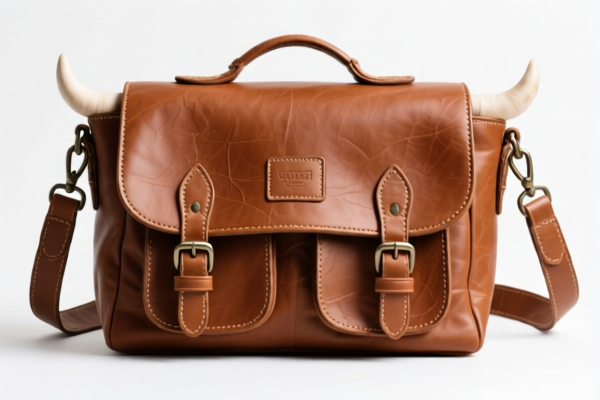
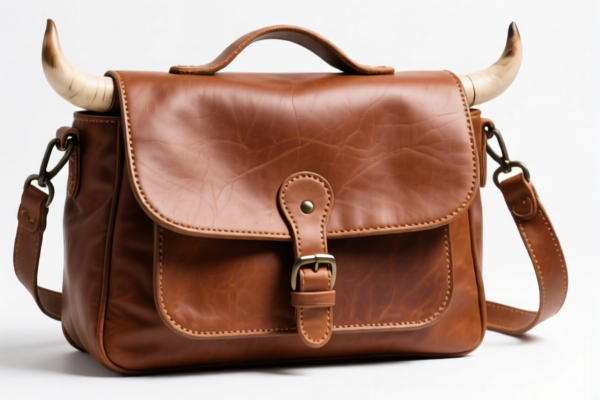
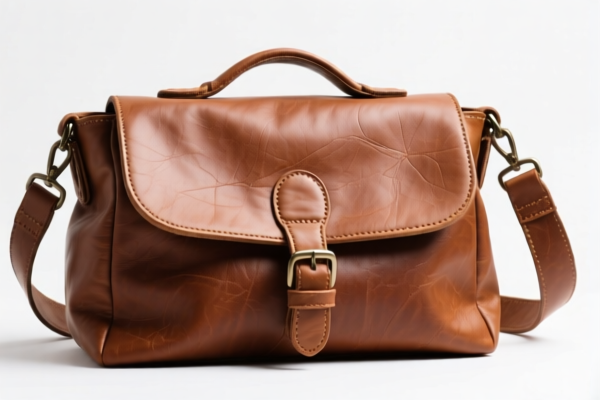
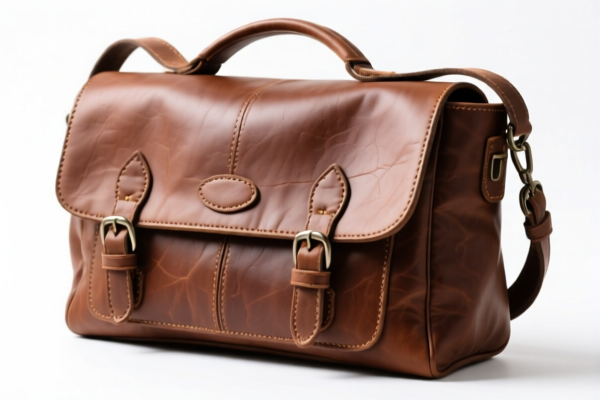
AI Analysis
🎽 Unprocessed Leather Belt: HS Code Classification & US Customs Strategy (2026)
🌐 HS Code Reference & Customs Clearance Guide | 2026 Latest Tariff Analysis | Professional Clearance Strategy
📌 I. Product Definition & Classification: Do You Really Understand "Unprocessed Leather Belts"?
An "Unprocessed Leather Belt" in the context of international trade typically refers to leather goods primarily composed of leather, designed for waist fastening, and categorized under leather accessories rather than general apparel.
In international trade, these are divided into two main categories based on construction and specific sub-heading definitions:
- Buckles & Hardware-Integrated Belts: Leather belts that include metal buckles or specific fastening mechanisms. These fall under Clothing Accessories.
- Plain/Non-Hardware Leather Belts: Simple leather straps without complex fastening hardware or classified broadly as other leather articles. These fall under Other Leather Articles.
⚠️ Key Distinction Point:
- If the belt is described as a "Clothing Accessory" with a focus on its role in apparel (especially if it has a buckle), it leans towards Chapter 42 (Articles of Leather), Section 4203.
- If it is described broadly as a "Leather Article" without specific clothing accessory classification features, it may fall under 4205 (Other articles of leather).
- Note: The term "Unprocessed" here likely refers to the raw material state in classification logic rather than unfinished manufacturing, as belts must be finished to function. We assume standard finished leather goods for clearance purposes.
📦 II. HS Code Classification Details (2026 Latest Tariff Authority Comparison)
| HS Code | Product Description | Application Scenario | Tax Rate (Total) | Tax Detail |
|---|---|---|---|---|
4203.40.60.00 |
Other clothing accessories | Leather belts categorized as general clothing accessories (e.g., fashion belts with buckles) | 35.0% | Base: 0.0%, Section 301: 25.0%, Section 122: 10% |
4205.00.80.00 |
Other articles of leather | Leather belts classified broadly as "other leather articles" (e.g., simple straps, non-specific accessories) | 35.0% | Base: 0.0%, Section 301: 25.0%, Section 122: 10% |
4203.30.00.00 |
Other clothing accessories | Leather belts classified specifically as "belt buckles" or specific fastening accessories (e.g., buckle-on belts) | 37.7% | Base: 2.7%, Section 301: 25.0%, Section 122: 10% |
🔍 Key Reminder:
- Both4203.40.60.00and4205.00.80.00share the same total rate (35%) but differ in narrative specificity.
-4203.30.00.00carries a higher base tariff (2.7%), resulting in a 37.7% total rate.
- Do not mix these codes arbitrarily; misclassification can lead to audits, delays, or penalties.
💰 III. 2026 Latest Tariff Rate Breakdown (Including Surcharges & Policy Additions)
✅ Applicable Country: United States (US)
✅ Country of Origin: China (CN)
✅ Effective Date: From November 10, 2025 (including subsequent imports)
🎯 1. 4203.40.60.00 —— Other Clothing Accessories (Leather Belts)
| Item | Content |
|---|---|
| Base Tariff | 0% (ad valorem) |
| Section 301 Surcharge | +25% (Under US Trade Act Section 301) |
| Section 122 Surcharge | +10% (Under Section 122 of the Trade Expansion Act) |
| Total Tariff | 35.0% |
| Tax Calculation | CIF Value × 35.0% |
| De Minimis Eligibility | ❌ Not Eligible (Leather articles are generally excluded from de minimis relief for Chinese origin) |
| Legal Basis Path | Section 301: 9903.01.25 → Section 122: 9903.01.24 → USITC: 4203.40.60.00 |
📌 Explanation:
- The 0% base reflects the general MFN rate for this specific subheading.
- The 35% total is driven entirely by trade remedy tariffs, not base duties.
- High cost alert: This is a significant duty burden. Ensure accurate valuation to avoid disputes.
🎯 2. 4205.00.80.00 —— Other Articles of Leather
| Item | Content |
|---|---|
| Base Tariff | 0% |
| Section 301 Surcharge | +25% |
| Section 122 Surcharge | +10% |
| Total Tariff | 35.0% |
| Tax Calculation | CIF Value × 35.0% |
| De Minimis Eligibility | ❌ Not Eligible |
| Legal Basis Path | Section 301: 9903.01.25 → Section 122: 9903.01.24 → USITC: 4205.00.80.00 |
📌 Note:
- Identical tariff structure to4203.40.60.00.
- Suitable for belts that do not fit neatly into "clothing accessories" but are clearly leather articles.
- Use this if the belt lacks typical clothing accessory features (e.g., no branded buckle, plain strap).
🎯 3. 4203.30.00.00 —— Other Clothing Accessories (Specifically for Belt Buckles/Fasteners)
| Item | Content |
|---|---|
| Base Tariff | 2.7% |
| Section 301 Surcharge | +25% |
| Section 122 Surcharge | +10% |
| Total Tariff | 37.7% |
| Tax Calculation | CIF Value × 37.7% |
| De Minimis Eligibility | ❌ Not Eligible |
| Legal Basis Path | Section 301: 9903.01.25 → Section 122: 9903.01.24 → USITC: 4203.30.00.00 |
📌 Critical Warning:
- This code has a base tariff of 2.7%, making the total 2.7% higher than the other two options.
- Only use this if the product is specifically classified as a belt buckle or fastening component rather than the belt itself.
- Misclassifying a full belt as this code could result in overpayment or underpayment disputes if customs disagrees with the "fastener-only" classification.
🛠️ IV. Customs Clearance Practical Advice (Real-World Pitfall Guide)
✅ 1. Required Documentation Checklist (Mandatory)
| Document | Must Provide | Description |
|---|---|---|
| ✅ Product Specification Sheet | ✔️ | Material composition (100% Leather?), dimensions, width, thickness |
| ✅ Product Photos (Including Label) | ✔️ | Clear view of the belt, buckle (if any), and brand/origin labels |
| ✅ Commercial Invoice | ✔️ | Clearly state "Leather Belt" and specify "For Personal Use/Commercial" |
| ✅ Packing List | ✔️ | Indicate quantity, net/gross weight, and packaging type |
| ✅ Proof of Origin (if applicable) | ✔️ | If shipped from a non-China country, claim FTA benefits |
✅ 2. Declaration Tips (Key Mantras)
🔥 "Material First, Buckle Second, Code Specific, Rate Clear!"
| Scenario | Correct Declaration | Wrong Approach |
|---|---|---|
| Full Leather Belt with Buckle | 4203.40.60.00 or 4205.00.80.00 |
Declare as "Clothing" → Incorrect Chapter |
| Plain Leather Strap (No Buckle) | 4205.00.80.00 |
Declare as "Belt Accessory" → Potential audit |
| Belt Buckle Only (No Strap) | 4203.30.00.00 |
Declare as "Leather Belt" → Rate mismatch |
| Mixed Materials (Leather + Fabric) | Consult HS Code Rules | Assume Leather-only → Incorrect classification |
✅ 3. Special Case Handling
| Case | Handling Suggestion |
|---|---|
| OEM Custom Belts | Provide design specs and buyer order; avoid generic descriptions |
| Leather + Metal Buckle | Still classified under Leather Goods (Ch. 42), not Metal Goods |
| Sample Imports | Clearly mark as "Sample" to avoid commercial duty disputes |
| High-Value Luxury Belts | Ensure accurate valuation to prevent customs valuation adjustments |
🌍 V. Global Market Clearance Comparison (2026 Latest)
| Country/Region | Recommended HS Code | Tariff | Certification | Notes |
|---|---|---|---|---|
| 🇺🇸 USA | 4203.40.60.00 / 4205.00.80.00 |
35% (China) | None specific | High duty due to Section 301 & 122 |
| 🇨🇳 China | 4203.40.60.00 |
8% | None | Standard import duty |
| 🇪🇺 EU | 4203.29.00 |
~10% | CE (if applicable) | No Section 301 equivalent |
| 🇦🇺 Australia | 4203.29.00 |
5% | None | Lower base duty |
| 🇯🇵 Japan | 4203.29.00 |
8% | None | Moderate duty |
📌 Conclusion:
- The US is the highest-cost market for Chinese-origin leather belts due to additive tariffs.
- China, EU, and Japan have lower base duties but no equivalent Section 122 surcharges.
- Strategy: For US-bound goods, ensure precise classification to avoid the 37.7% rate if possible. Consider supply chain diversification for duty mitigation.
📌 VI. Common Mistakes & Pitfall Guide (Lessons Learned)
❌ Mistake 1: Declaring a full belt as a "Buckle" (4203.30.00.00)
👉 Consequence: Customs may reclassify it, leading to 37.7% vs 35% dispute or penalties for misdeclaration.
❌ Mistake 2: Ignoring the Section 122 Surcharge
👉 Consequence: Unexpected cost increase. Always budget for 35% total, not just 25%.
❌ Mistake 3: Using vague terms like "Leather Good"
👉 Consequence: Customs may delay clearance for further classification review. Be specific: "Leather Belt."
❌ Mistake 4: Assuming De Minimis applies
👉 Consequence: Leather articles from China are NOT eligible for $800 de minimis relief. Full duties apply.
✅ Correct Approach:
"Leather Belt, 100% Bovine Leather, Width 3cm, with Metal Buckle, Model XYZ, Origin: China"
🎯 VII. Conclusion: Precise Classification Saves Money!
🎯 Remember the Mantra:
🔹 "Leather Belts: 35% Total (Base 0% + 25% + 10%)";
🔹 "Specific Buckle Code: 37.7% (Base 2.7% + 25% + 10%);"
🔹 "No De Minimis for China!"
🔹 "Code Choice: 35% vs 37.7% – Don't Pay Extra!"
📌 Pro Tip:
- If your belts are originating from Vietnam, Mexico, or Thailand, you may qualify for lower or zero tariffs due to trade agreements.
- Apply for an Advance Ruling (Pre-Ruling) before shipping to confirm the exact HS Code and duty rate.
📣 Act Now:
📞 Contact a licensed customs broker + Provide product photos + Request HS Code pre-ruling
🚀 Ensure smooth clearance, minimize costs, and maximize profits!
✨ Professional clearance starts with accurate classification!
💼 Every percentage point saved is pure profit!
Customer Reviews
About HS Code Classification
The Harmonized System (HS) is an internationally standardized nomenclature developed by the World Customs Organization (WCO) to classify traded products. Over 200 countries use the HS system as the basis for customs tariffs, trade statistics, and import/export regulations.
Each HS code follows a hierarchical structure:
- Chapter (2 digits) — Broad category of goods (e.g., Chapter 84: Machinery and Mechanical Appliances)
- Heading (4 digits) — More specific grouping within the chapter
- Subheading (6 digits) — Internationally standardized breakdown, used by all WCO member countries
- National subdivisions (8-10 digits) — Country-specific extensions for further classification, such as US HTSUS 10-digit codes
Correct HS code classification is essential for smooth customs clearance, accurate duty payment, and compliance with trade regulations. Misclassification can lead to customs delays, overpayment of duties, or penalties.
When importing from CN to US, the applicable tariff rates may include:
- Most-Favored-Nation (MFN) rate — The standard duty rate applied to WTO members
- General rate — Applied to countries without trade agreements
- Trade remedy duties — Additional tariffs such as Section 301 (anti-dumping), Section 232 (national security), or countervailing duties
The information provided on this page is for reference purposes only. For official classification, please consult with your local customs authority or a licensed customs broker.