Unprocessed Light Red Mahogany Wood
CN → US| HS Code | Tariff Rate | Origin | Destination | Doc |
|---|---|---|---|---|
| 4409229090 | 35.0% | CN | US | Official Doc |
| 4409220535 | 38.2% | CN | US | Official Doc |
| 4418300100 | 38.2% | CN | US | Official Doc |
| 4418999140 | 38.2% | CN | US | Official Doc |
| 4403490200 | 35.0% | CN | US | Official Doc |
Product Images
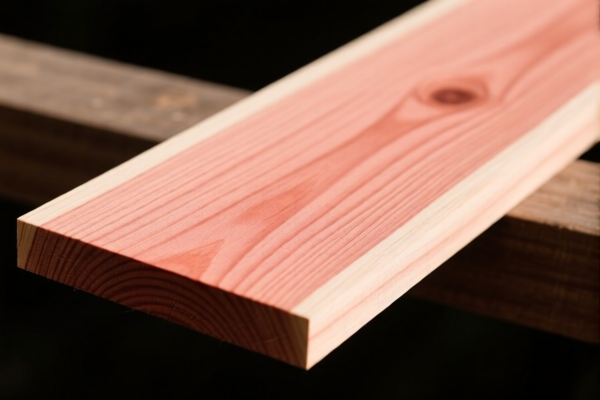
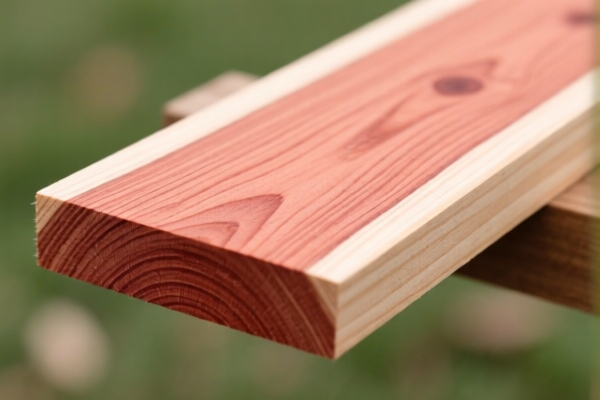
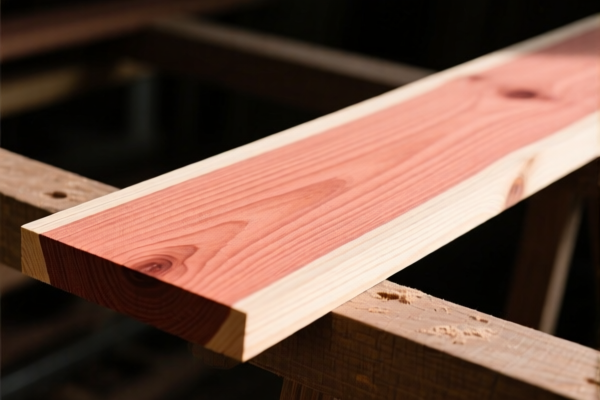
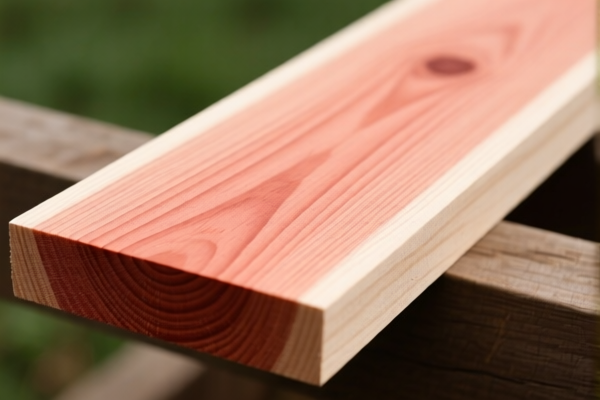
AI Analysis
🌳 Unprocessed Light Red Mahogany Wood (Structure Timber & Raw Logs)
🌐 HS Code Reference & Customs Clearance Guide | 2026 Latest Tariff Analysis | Professional Transit Strategy for US Imports
📌 I. Product Definition & Classification: Do You Really Understand "Light Red Mahogany"?
Unprocessed Light Red Mahogany is a high-value tropical hardwood primarily used for furniture, musical instruments, flooring, and decorative veneers. In international trade (specifically US imports), the classification depends strictly on its physical state (raw vs. processed) and species specificity.
The key distinction lies in whether the wood is merely "sawn/treated" (raw logs/sleepers) or "specially shaped/finished" (structural components). Misclassification leads to severe delays or incorrect duty calculations.
⚠️ Critical Distinction:
- If the wood is plainly sawn, roughly squared, or in its natural state (even if light red) → It is generally considered "Raw/Primary Product" or "Sawn Wood" (Chapter 44, Section 03/04).
- If the wood is specifically shaped, contoured, or prepared for immediate assembly (e.g., tongue-and-groove, end-lapped) → It falls under "Continuously Profiled" or "Prefabricated Structural Parts" (Chapter 44, Section 09/18).
- Species Note: "Light Red Mahogany" often refers to species like Cedrela odorata or Swietenia mahagoni substitutes. The HS code may vary slightly if it is identified as "Sanos Mahogany" vs. generic "Mahogany."
📦 II. HS Code Classification Details (2026 Latest Tariff Authority Match)
Based on the provided data, here are the five specific HS codes applicable to different forms of Unprocessed Light Red Mahogany:
| HS Code | Product Description | Physical State / Form | Key Identifier |
|---|---|---|---|
4409.22.90.90 |
Light Red Mahogany Structural Timber | Shaped Wood (Continuously Profiled/Finished) | Ends are continuously formed; ready for joinery. |
4409.22.05.35 |
Light Red Mahogany Structural Timber | Continuous End-Lapped Wood | Specific species: Sanos Mahogany; end-lapped profile. |
4418.30.01.00 |
Light Red Mahogany Structural Timber | Wood / Primary Product | Semi-processed; structural components原材料; basic shape. |
4418.99.91.40 |
Light Red Mahogany Structural Timber | Raw Material for Prefab Structural Members | Semi-finished; intended for further fabrication into prefab parts. |
4403.49.02.00 |
Dark Red Mahogany (Tropical Wood) | Unprocessed / No Conflict State | Raw logs/sawn timber; general tropical hardwood classification. |
🔍 Important Note:
- Although the user input is "Light Red," code4403.49.02.00is included in the reference data as a related tropical wood category, often used for broader tropical hardwood imports if specific "Light Red" identification is ambiguous at the border.
- Codes4409and4418apply to processed/structured mahogany. Code4403applies to basic/raw mahogany.
💰 III. 2026 Latest Tariff Rate Details (Including Surcharges & Policy Add-ons)
✅ Applicable Country: United States (US)
✅ Origin: China (CN) (Implied by "122 Section" and typical US-China trade context)
✅ Effective Time: Current tariffs apply (Section 301 + IEEPA Section 122)
🎯 1. 4409.22.90.90 —— Shaped Mahogany Wood (Continuously Profiled)
| Item | Content |
|---|---|
| Base Rate | 0.0% (Ad valorem) |
| Section 301 Surcharge | +25.0% (USITC Footnote 11 for HS 4409) |
| Section 122 Surcharge | +10.0% (Bipartisan Trade Enforcement Act) |
| Total Rate | 35.0% |
| Calculation Basis | CIF Value × 35% |
| De Minimis Exemption | ❌ Not Eligible (Valued goods > $800 not applicable; even if under, specific exclusions may apply) |
| Legal Path | HS:4409.22.90.90 → SEC301:Footnote11 → IEEPA122:Sec122 |
📌 Explanation:
- This code applies to wood that has been profiling-cut (e.g., tongue-and-groove, edge-matched).
- While the base MFN rate is 0%, the 35% total tariff is significant.
- Warning: Section 122 is a newer, bipartisan trade enforcement tool targeting specific categories. Ensure your invoice clearly states "Shaped Mahogany Wood" to avoid being misclassified as raw log (which might trigger different scrutiny).
🎯 2. 4409.22.05.35 —— Sanos Mahogany (Continuous End-Lapped)
| Item | Content |
|---|---|
| Base Rate | 3.2% |
| Section 301 Surcharge | +25.0% |
| Section 122 Surcharge | +10.0% |
| Total Rate | 38.2% |
| Calculation Basis | CIF Value × 38.2% |
| De Minimis Exemption | ❌ Not Eligible |
| Legal Path | HS:4409.22.05.35 → SEC301:Footnote11 → IEEPA122:Sec122 |
📌 Explanation:
- This is a specific sub-heading for "Sanos Mahogany" (a specific type of light red mahogany).
- The base rate is higher (3.2%) compared to generic shaped wood (0%), making the total tax burden 38.2%.
- Crucial: If your wood is not Sanos Mahogany, declaring it under this code is illegal misdeclaration. Use4409.22.90.90instead to save 3.2%.
🎯 3. 4418.30.01.00 —— Structural Timber (Primary Product)
| Item | Content |
|---|---|
| Base Rate | 3.2% |
| Section 301 Surcharge | +25.0% |
| Section 122 Surcharge | +10.0% |
| Total Rate | 38.2% |
| Calculation Basis | CIF Value × 38.2% |
| De Minimis Exemption | ❌ Not Eligible |
| Legal Path | HS:4418.30.01.00 → SEC301:Footnote11 → IEEPA122:Sec122 |
📌 Explanation:
- Applies to prefabricated structural components (e.g., trusses, beams) made from light red mahogany.
- If your wood is just "sawn planks" and not yet a "structural component," do not use this code. Use4403or4418.99instead.
🎯 4. 4418.99.91.40 —— Raw Material for Prefab Structural Members
| Item | Content |
|---|---|
| Base Rate | 3.2% |
| Section 301 Surcharge | +25.0% |
| Section 122 Surcharge | +10.0% |
| Total Rate | 38.2% |
| Calculation Basis | CIF Value × 38.2% |
| De Minimis Exemption | ❌ Not Eligible |
| Legal Path | HS:4418.99.91.40 → SEC301:Footnote11 → IEEPA122:Sec122 |
📌 Explanation:
- This is a "catch-all" for other parts of structures made of wood.
- Use this if the wood is cut into specific shapes for construction but is not yet an assembly (like a truss).
- Risk: Customs may require proof that it is indeed "for structural use."
🎯 5. 4403.49.02.00 —— Dark Red Mahogany (Tropical Wood)
| Item | Content |
|---|---|
| Base Rate | 0.0% |
| Section 301 Surcharge | +25.0% |
| Section 122 Surcharge | +10.0% |
| Total Rate | 35.0% |
| Calculation Basis | CIF Value × 35.0% |
| De Minimis Exemption | ❌ Not Eligible |
| Legal Path | HS:4403.49.02.00 → SEC301:Footnote11 → IEEPA122:Sec122 |
📌 Explanation:
- This code covers unprocessed tropical hardwoods, including "Dark Red Mahogany."
- If your "Light Red" wood is not sufficiently distinguished or if the importer uses a broader category for raw logs, this code may apply.
- Note: The description says "Dark Red," but if the physical inspection reveals it is tropical hardwood, customs may adjust. Always match the visual and scientific description.
🛠️ IV. Customs Clearance Practical Advice (Battle-Tested Pitfall Guide)
✅ 1. Preparation Checklist (No Compromise)
| Document | Required | Notes |
|---|---|---|
| ✅ Scientific Name | ✔️ | Must provide Latin name (e.g., Cedrela odorata, Swietenia mahagoni). "Light Red" is not a scientific term. |
| ✅ Harmonized Tariff Schedule (HTS) Justification | ✔️ | Explain why it is 4409 (shaped) vs. 4403 (raw). Include photos of edges/profiles. |
| ✅ Commercial Invoice | ✔️ | Must clearly state: "Light Red Mahogany, Shaped/Sawn, HS 4409.22.90.90." |
| ✅ Phytosanitary Certificate | ✔️ | Mandatory for all wood products to prove pest-free treatment (ISPM 15). |
| ✅ FSC/PEFC Certification | ✔️ | Highly recommended to avoid CITES or Lacey Act scrutiny. |
| ✅ Lacey Act Declaration | ✔️ | Required for all plant/wood imports to the US. |
✅ 2. Declaration Tips (Key Mantra)
🔥 "Profile Defines Code, Species Defines Rate, Certificates Clear the Border!"
| Scenario | Correct Declaration | Wrong Practice |
|---|---|---|
| Wood has tongue-and-groove edges | 4409.22.90.90 (Shaped) |
Declare as "Raw Wood" → Risk of audit |
| Wood is Sanos Mahogany, end-lapped | 4409.22.05.35 |
Declare as generic 4409.22.90.90 → Over/under-payment |
| Wood is rough-sawn planks | 4403.49.02.00 (or similar 4403 code) |
Declare as "Structural Timber" → Delay |
| Wood is for prefab trusses | 4418.30.01.00 |
Declare as "Raw Material" → If it's already shaped, error |
✅ 3. Special Cases & Handling
| Situation | Recommendation |
|---|---|
| CITES-Listed Species | If the mahogany is Swietenia macrophylla (Big-leaf), it is CITES-listed. Requires CITES Permit. Do not ignore this! |
| Lacey Act | All wood imports > $250 must be declared with scientific name, value, and country of harvest. Failure = Penalty + Confiscation. |
| "Light Red" vs. "Dark Red" | If unsure, provide photos to a customs broker. Mislabeling "Dark" as "Light" can lead to classification errors. |
| Section 122 Impact | This 10% surcharge is new and strict. Ensure your supplier invoices do not undervalue the goods to avoid scrutiny. |
🌍 V. Global Market Comparison (2026 Latest)
| Country/Region | Recommended HS Code | Tariff (US Origin) | Certification | Notes |
|---|---|---|---|---|
| 🇺🇸 USA | 4409.22.90.90 / 4409.22.05.35 |
35% - 38.2% | Lacey Act + Phytosanitary | High tariffs; strict enforcement |
| 🇨🇳 China | 4409 / 4403 |
5% - 12% | Phytosanitary | Lower import duty, but export restrictions may apply |
| 🇪🇺 EU | 4409 / 4403 |
0% - 6.5% | FLEGT/EUTR | No Section 301/122; strict sustainability checks |
| 🇬🇧 UK | 4409 / 4403 |
0% - 5% | UK EUTR | Similar to EU post-Brexit |
📌 Conclusion:
- USA is the most expensive market due to 301 + 122 tariffs.
- EU/UK have lower tariffs but stricter environmental compliance (EUTR/FLEGT).
- Always prioritize correct scientific naming to avoid penalties in any market.
📌 VI. Common Errors & Pitfall Guide (Blood Lessons)
❌ Error 1: Declaring "Shaped Wood" as "Raw Logs" to avoid 25% tariff
👉 Consequence: Customs inspection reveals profiling → 100% Penalty + Back Taxes + Delay!
❌ Error 2: Ignoring CITES for Big-Leaf Mahogany
👉 Consequence: Seizure of Cargo + Fines up to $10,000+ per violation.
❌ Error 3: Using "Light Red Mahogany" without Latin Name on Invoice
👉 Consequence: Lacey Act Violation → Goods held for verification, costing daily storage fees.
❌ Error 4: Confusing 4409 (Profiled) with 4418 (Structural Parts)
👉 Consequence: If the wood is just planks, 4418 is wrong. If it's trusses, 4409 is wrong. Mismatch = Audit.
✅ Correct Practice:
"Light Red Mahogany Wood, Cedrela odorata, Tongue-and-Groove Profiled, HS 4409.22.90.90, CITES Compliant, Lacey Act Declared."
🎯 VII. Conclusion: Precision Classification, Cost Control, Compliance!
🎯 Remember the Mantra:
🔹 "Profile is Key, Species is King, Certificates are Law, Tariffs are High!"
🔹 "HS Code decides tax, 35% is the baseline, 38% is the peak, mistake costs you peace!"
📌 Pro Tip:
If your wood is shaped (4409), the base rate is 0%, but the total is 35%.
If your wood is Sanos Mahogany (4409.22.05.35), the base rate is 3.2%, total 38.2%.
Check your species! A small difference in Latin name can change your cost by 3.2%.
📣 Immediate Action:
📞 Contact a licensed customs broker + Provide Latin Name + Apply for Lacey Act Declaration
🚀 Ensure your wood is Phytosanitary Certified to avoid quarantine!
✨ Professional Clearance Starts with Accurate Classification!
💼 Every Dollar Saved is Profit Gained!
Customer Reviews
About HS Code Classification
The Harmonized System (HS) is an internationally standardized nomenclature developed by the World Customs Organization (WCO) to classify traded products. Over 200 countries use the HS system as the basis for customs tariffs, trade statistics, and import/export regulations.
Each HS code follows a hierarchical structure:
- Chapter (2 digits) — Broad category of goods (e.g., Chapter 84: Machinery and Mechanical Appliances)
- Heading (4 digits) — More specific grouping within the chapter
- Subheading (6 digits) — Internationally standardized breakdown, used by all WCO member countries
- National subdivisions (8-10 digits) — Country-specific extensions for further classification, such as US HTSUS 10-digit codes
Correct HS code classification is essential for smooth customs clearance, accurate duty payment, and compliance with trade regulations. Misclassification can lead to customs delays, overpayment of duties, or penalties.
When importing from CN to US, the applicable tariff rates may include:
- Most-Favored-Nation (MFN) rate — The standard duty rate applied to WTO members
- General rate — Applied to countries without trade agreements
- Trade remedy duties — Additional tariffs such as Section 301 (anti-dumping), Section 232 (national security), or countervailing duties
The information provided on this page is for reference purposes only. For official classification, please consult with your local customs authority or a licensed customs broker.