Unprocessed PVC Decking Profile
CN → US| HS Code | Tariff Rate | Origin | Destination | Doc |
|---|---|---|---|---|
| 3925900000 | 40.3% | CN | US | Official Doc |
| 3925200091 | 22.8% | CN | US | Official Doc |
| 3921125000 | 41.5% | CN | US | Official Doc |
| 3921121950 | 40.3% | CN | US | Official Doc |
| 3916200020 | 40.8% | CN | US | Official Doc |
| 3916200091 | 40.8% | CN | US | Official Doc |
Product Images
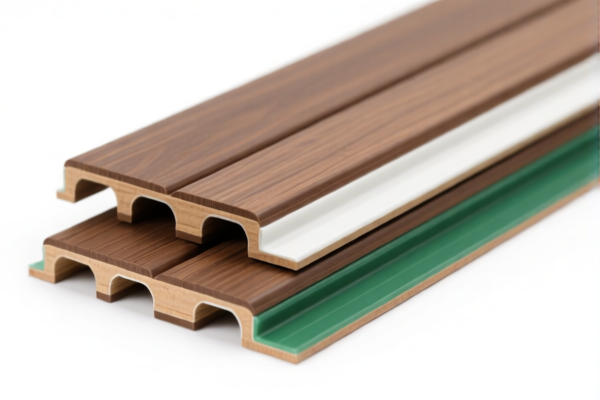
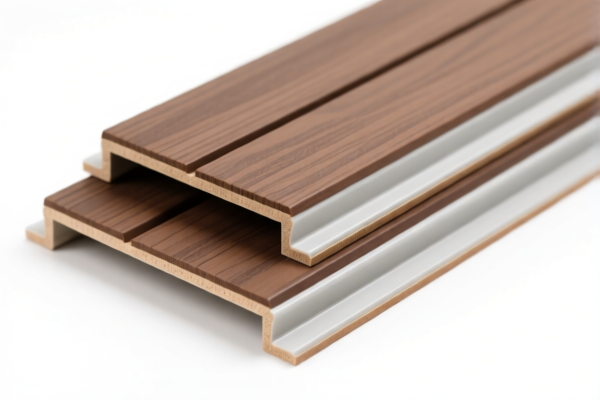
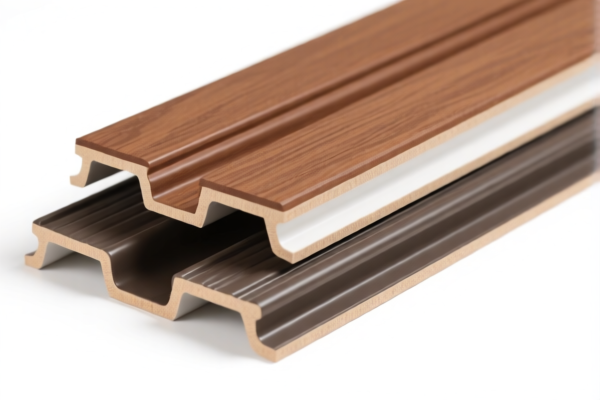
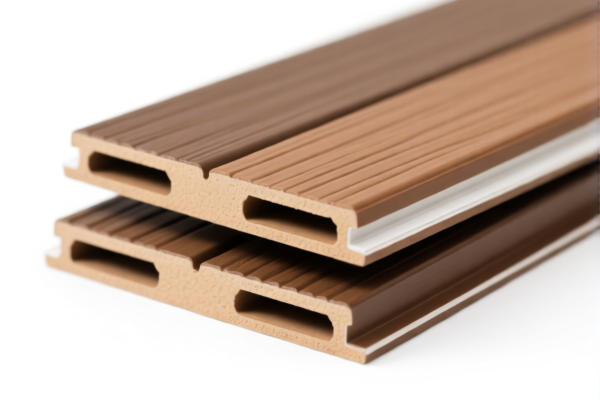
AI Analysis
🏗️ Unprocessed PVC Decking Profile (The "Floor" That Walks)
🌐 HS Code Reference & Customs Clearance Guide | 2026 Latest Tariff Analysis | Professional Clearance Strategy
📌 I. Product Definition & Classification: What Exactly is "PVC Decking"?
Unprocessed PVC Decking Profile refers to plastic construction materials specifically designed for outdoor decking, railings, or window/door frames. These are typically made from Polyvinyl Chloride (PVC).
In international trade, the classification hinges on two critical factors: 1. Form: Is it a finished piece or a semi-finished profile? * "Unprocessed" (Not Otherwise Worked): Refers to rods, sticks, sticks, and profile shapes that have been extruded or molded but have not been further worked (e.g., no drilling, cutting to final size, painting, or assembly). * "Builders' Ware": If the product is pre-cut and ready for installation, it falls under "Builders' ware." 2. Material: Is it PVC? * If yes, it belongs to Chapter 39 (Plastics and Articles Thereof).
⚠️ Critical Distinction:
- If the item is a raw extruded profile (long sticks/profiles before cutting/drilling) → Chapter 39.16
- If the item is a finished door/window frame or pre-cut decking board ready for installation → Chapter 39.25
- Note: The input specifies "Unprocessed... Profile," which strongly points to Chapter 39.16, but we must check the specific description in the DATA.
📦 II. HS Code Classification Matrix (Based on Provided DATA)
Based on the provided <DATA>, here are the relevant HS Codes for PVC plastic shapes and builders' ware:
| HS Code | Product Description | Key Characteristics | Tax Total |
|---|---|---|---|
| 3916.20.00.20 | Monofilament/Rods/Sticks/Profile shapes of plastics: Of polymers of vinyl chloride: Window, door, decking or railing profiles | BEST FIT for "Unprocessed Decking Profile". Specifically lists "decking... profiles". | 30.8% |
| 3916.20.00.91 | Monofilament/Rods/Sticks/Profile shapes of plastics: Of polymers of vinyl chloride: Other | Used if the profile does not fit the specific window/door/decking/railing description (rare for decking). | 30.8% |
| 3925.20.00.91 | Builders' ware of plastics: Doors, windows and their frames and thresholds for doors: Other | Applies if the decking is considered a "builder's ware" finished good (not just a raw profile). | 12.8% |
| 3925.90.00.00 | Builders' ware of plastics, not elsewhere specified or included: Other | Generic bucket for other builders' ware. Usually lower tax but less specific. | 0.0% |
| 3921.12.50.00 | Other plates, sheets, film, foil and strip, of plastics: Cellular: Of polymers of vinyl chloride: Other | Applies only if the decking is a sheet/panel (cellular PVC foam board), not a "profile" (extruded shape). | 31.5% |
| 3921.12.19.50 | Other plates, sheets...: Cellular: Of polymers of vinyl chloride: Combined with textile materials... | Specific to composite materials. Likely NOT applicable to standard solid PVC decking. | 30.3% |
🔍 Primary Classification Logic:
The term "Profile" in HS terminology (Chapter 39) refers to shapes with a constant cross-section (like extruded bars or tubes). Since the input specifies "Unprocessed... Profile", the most accurate classification is 3916.20.00.20, as it explicitly covers "decking... profiles".
💰 III. Detailed Tariff Rate Analysis (US Market Focus)
✅ Applicable Country: United States (US)
✅ Origin: China (CN) (Assumed based on the 25% additional tariff structure in the DATA)
✅ Note: The DATA shows "Add-on Tariff: 25.0%" which aligns with US Section 301 tariffs on Chinese goods.
🎯 1. 3916.20.00.20 — Unprocessed PVC Decking/Railing Profiles
This is the most likely HS Code for "Unprocessed PVC Decking Profile".
| Item | Detail |
|---|---|
| Base Tariff | 5.8% |
| Additional Tariff (Section 301) | +25.0% |
| Total Tax Rate | 30.8% |
| Tax Calculation | CIF Value × 30.8% |
| De Minimis Exemption | ❌ Not Eligible (Section 301 goods are excluded from de minimis exemptions under current US rules) |
| Legal Reference | USITC HTSUS 3916.20.00.20 + Section 301 Footnote |
📌 Explanation:
- The 5.8% is the standard Most Favored Nation (MFN) duty for PVC profiles.
- The 25.0% is the punitive tariff added to Chinese-origin PVC products.
- Total: 30.8%. This is a high-cost classification. Importers must budget accordingly.
🎯 2. 3925.20.00.91 — Builders' Ware (Windows/Doors/Thresholds)
Only applicable if the product is considered a "finished builder's ware" rather than a raw profile.
| Item | Detail |
|---|---|
| Base Tariff | 5.3% |
| Additional Tariff | +7.5% |
| Total Tax Rate | 12.8% |
| Tax Calculation | CIF Value × 12.8% |
| De Minimis Exemption | ❌ Not Eligible |
| Legal Reference | USITC HTSUS 3925.20.00.91 |
⚠️ Warning:
- You can only claim 12.8% if you can prove the item is "Builders' Ware" (e.g., pre-cut, pre-drilled frames) and NOT a raw "Profile".
- If you ship raw extruded sticks and call them "Builders' Ware," Customs will likely reclassify them to 3916.20.00.20 (30.8%), leading to back taxes + penalties.
🎯 3. 3925.90.00.00 — Other Builders' Ware
Applicable for generic plastic building components not listed elsewhere.
| Item | Detail |
|---|---|
| Base Tariff | 0.0% |
| Additional Tariff | 0.0% |
| Total Tax Rate | 0.0% |
| Tax Calculation | $0 |
| Legal Reference | USITC HTSUS 3925.90.00.00 |
📌 Strategy:
- This is the lowest tax (0%).
- However, it is risky to use for "Decking Profiles" unless you can argue the product is not a "profile" (Chapter 39.16) nor a "window/door frame" (3925.20).
- If the product is clearly a decking board/profile, Customs will likely reject 3925.90.00.00 and assess 30.8%.
🛠️ IV. Customs Clearance Practical Advice (Pitfall Avoidance Guide)
✅ 1. Documentation Checklist (Must-Haves)
| Document | Required | Reason |
|---|---|---|
| ✅ Product Specification Sheet | ✔️ | Must clearly state: "Unprocessed Extruded PVC Profile," "Not yet cut to size," "No pre-drilling." |
| ✅ Photographs | ✔️ | Show the product as a long, continuous profile (not cut into deck boards). |
| ✅ Commercial Invoice | ✔️ | Description must match HS Code: "PVC Decking Profile, Unprocessed, Extruded." |
| ✅ Bill of Lading | ✔️ | Ensure no "Finished Decking Boards" language is used. |
| ✅ Material Certificate | ✔️ | Proof that material is Polyvinyl Chloride (PVC), not PP or PE (which have different tariffs). |
✅ 2. Declaration Strategy (Crucial!)
🔥 Golden Rule:
"Describe the Form, Not Just the Function!"
| Scenario | Correct Declaration | Risk of Wrong Declaration |
|---|---|---|
| Raw Extruded Profiles | "Unprocessed PVC Decking Profile, Extruded" | If declared as "Decking Boards," Customs may apply 3921 (sheets) or 3925 (builders' ware) incorrectly, leading to delays. |
| Pre-Cut Decking Boards | "PVC Decking Board, Finished" | Likely falls under 3925.90.00.00 (0%) or 3925.20.00.91 (12.8%) depending on exact use. MUCH CHEAPER. |
| Window/Door Profiles | "PVC Window/Door Profile" | Must use 3916.20.00.20 (30.8%). Do not misdeclare as generic profile. |
✅ 3. Special Cases & Mitigation
| Situation | Recommendation |
|---|---|
| Mixed Containers | If you mix unprocessed profiles (30.8%) with finished decking (potentially 0-12.8%), declare them separately. Do not mix descriptions. |
| Cellular PVC (Foam Core) | If the decking has a foam core (lightweight), it might be classified as 3921.12.50.00 (Cellular Sheets) at 31.5%. Check if your product is "Profile" (3916) or "Sheet/Board" (3921). "Profile" usually implies extrusion; "Sheet/Board" implies casting or calendering. |
| Origin Marking | Ensure all products are clearly marked "Made in China" to avoid origin fraud allegations. |
🌍 V. Global Market Comparison (2026 Outlook)
| Country/Region | Likely HS Code | Estimated Duty (China Origin) | Notes |
|---|---|---|---|
| 🇺🇸 USA | 3916.20.00.20 |
30.8% | High tariff due to Section 301. |
| 🇨🇳 China | 3916.20.00 |
~5-10% | Import duty into China (if re-importing). |
| 🇪🇺 EU | 3916.20 |
6.5% | No Section 301 equivalent, but check anti-dumping duties. |
| 🇬🇧 UK | 3916.20 |
6.5% | Post-Brexit tariff regime. |
| 🇦🇺 Australia | 3916.20 |
5% | No major additional tariffs on PVC profiles. |
📌 Key Insight:
The USA is the most expensive market for PVC decking profiles due to the 25% additional tariff.
- If your target market is the US, consider value-added strategies:
- Ship raw profiles (30.8%) and finish them in a third country? (Risky, requires substantial transformation).
- Or, design the product as "Finished Decking Boards" if possible, to potentially qualify for lower "Builders' Ware" rates (0-12.8%), though this requires pre-cutting/pre-drilling.
📌 VI. Common Errors & Pitfalls (Learn from Others' Mistakes)
❌ Error 1: Declaring "PVC Decking" as "Plastic Lumber" (4418/4421)
👉 Consequence: Customs will reject it because it's PVC (Chapter 39), not wood. Penalty + Back Taxes.
❌ Error 2: Using 3925.90.00.00 (0%) for unprocessed profiles
👉 Consequence: Customs auditor sees "Profile" and reclassifies to 3916.20.00.20 (30.8%). You owe the difference + interest.
❌ Error 3: Confusing "Profile" with "Sheet"
👉 Consequence: If you have a cellular (foam) PVC sheet used for decking, it goes to 3921.12.50.00 (31.5%), not 3916. Misclassification leads to audit flags.
✅ Correct Practice:
Description: "Unprocessed Extruded PVC Decking Profile, Polyvinyl Chloride, Not Cut to Size, Not Drilled"
HS Code:3916.20.00.20
Tax: 30.8%
🎯 VII. Conclusion: Expert Advice for Importers
🎯 Remember:
🔹 "Profile" = Chapter 39.16 (High Tax, 30.8% in US)
🔹 "Finished Board" = Chapter 39.25 (Lower Tax, 0-12.8% in US)
🔹 "Cellular Sheet" = Chapter 39.21 (High Tax, 31.5% in US)🚀 Strategic Recommendation:
If you are importing into the USA:
1. Maximize Value-Added Abroad: Can you cut and drill the profiles in Mexico or Canada to change the classification to "Builders' Ware" (12.8%)?
2. Pre-Cut for US Market: If you can ship pre-cut decking boards (even if unprocessed other than cutting), they may fall under 3925.90.00.00 (0%) or 3925.20.00.91 (12.8%), saving you 18-30% in duties.
3. Consult a Customs Broker: Before shipping, get an Advance Ruling from US Customs to confirm if your specific "Unprocessed Profile" can be classified under a lower duty rate.
📣 Immediate Action:
📞 Verify Product Form: Is it a long stick (Profile) or a cut board (Sheet/Plate)?
📑 Document Clearly: Use "Unprocessed Extruded Profile" for 3916.
💰 Budget for 30.8% if shipping raw profiles to the US.
✨ Professional Clearance Starts with Precise Classification!
💼 Every 1% of Duty Saved is Pure Profit!
Customer Reviews
About HS Code Classification
The Harmonized System (HS) is an internationally standardized nomenclature developed by the World Customs Organization (WCO) to classify traded products. Over 200 countries use the HS system as the basis for customs tariffs, trade statistics, and import/export regulations.
Each HS code follows a hierarchical structure:
- Chapter (2 digits) — Broad category of goods (e.g., Chapter 84: Machinery and Mechanical Appliances)
- Heading (4 digits) — More specific grouping within the chapter
- Subheading (6 digits) — Internationally standardized breakdown, used by all WCO member countries
- National subdivisions (8-10 digits) — Country-specific extensions for further classification, such as US HTSUS 10-digit codes
Correct HS code classification is essential for smooth customs clearance, accurate duty payment, and compliance with trade regulations. Misclassification can lead to customs delays, overpayment of duties, or penalties.
When importing from CN to US, the applicable tariff rates may include:
- Most-Favored-Nation (MFN) rate — The standard duty rate applied to WTO members
- General rate — Applied to countries without trade agreements
- Trade remedy duties — Additional tariffs such as Section 301 (anti-dumping), Section 232 (national security), or countervailing duties
The information provided on this page is for reference purposes only. For official classification, please consult with your local customs authority or a licensed customs broker.