Unprocessed Pine Pile
CN → US| HS Code | Tariff Rate | Origin | Destination | Doc |
|---|---|---|---|---|
| 4403220120 | 35.0% | CN | US | Official Doc |
| 4403210130 | 35.0% | CN | US | Official Doc |
| 4404100080 | 35.0% | CN | US | Official Doc |
| 4404100090 | 35.0% | CN | US | Official Doc |
| 4407110002 | 35.0% | CN | US | Official Doc |
Product Images
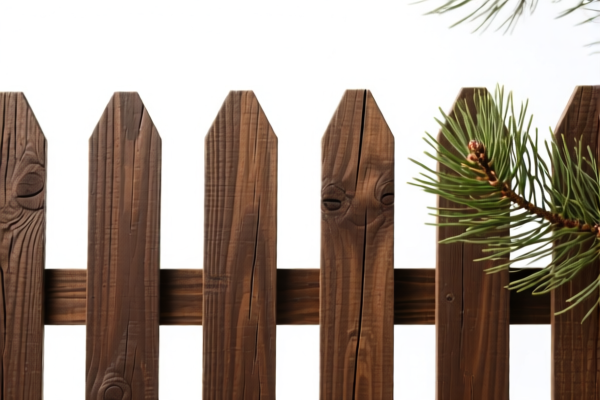
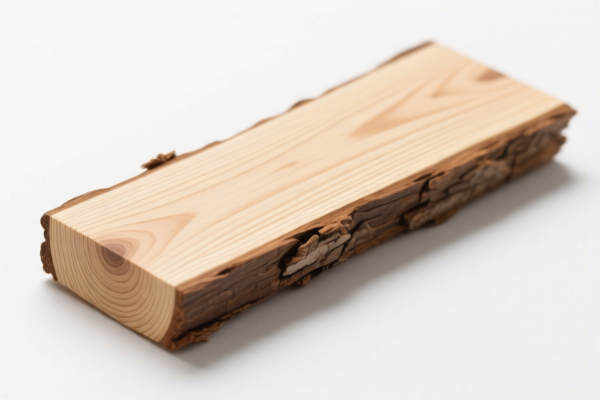
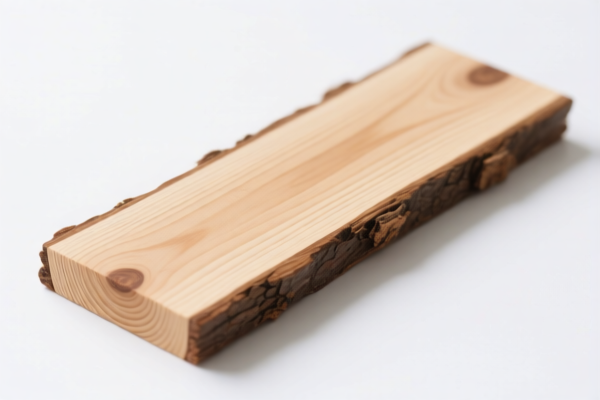
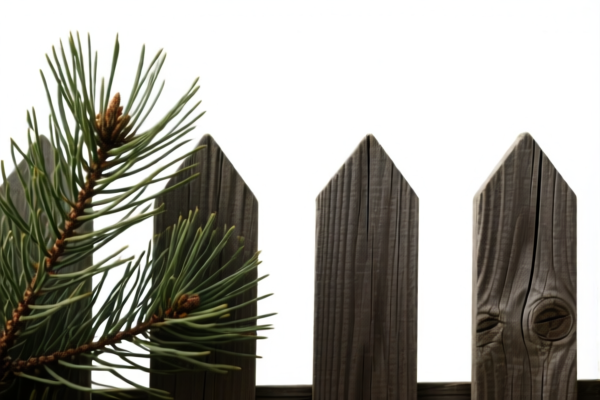
AI Analysis
🌲 Unprocessed Pine Pile (Raw Timber Logs)
🌐 HS Code Reference & Customs Clearance Guide | 2026 Latest Tariff Analysis | Professional Strategy for Unprocessed Softwood
📌 Part 1: Product Definition & Classification: Do You Really Understand "Unprocessed Pine"?
Unprocessed Pine Pile refers to raw timber derived from pine species (softwood) that has undergone minimal processing. In international trade, the key distinction lies in whether the wood retains its natural cylindrical form (logs/bolts) or has been further processed into poles, posts, or sawn timber.
Unprocessed Logs (Raw Form): Pine trees felled, debarked, or roughly trimmed, but not sawn, chipped, or chemically treated. They retain their natural round cross-section.
Processed Poles/Posts (Formal Shape): Pine timber that has been shaped into long, slender poles or posts, often involving some longitudinal processing, but still classified under specific sub-headings depending on the exact nature of the treatment and shape.
⚠️ Key Distinction Point:
- If the wood is round, un-sawn, and untreated → It is classified as Logs (HS 4403.22 or 4403.21).
- If the wood is shaped into poles/posts or treated → It may fall under 4403.22 (processed poles) or 4404.10 (continuous length wood poles), depending on specific physical characteristics.
- "Unprocessed" vs. "Processed": "Unprocessed" usually implies no chemical treatment and minimal mechanical shaping beyond debarking. "Processed" in this context often refers to shape modification (poles) or surface treatment.
📦 Part 2: HS Code Classification Details (2026 Latest Tariff Authority Comparison)
| HS Code | Product Description | Applicable Scenario | Key Features |
|---|---|---|---|
4403.22.01.20 |
Unprocessed Pine Logs | Raw pine logs, no chemical treatment, natural round shape | ✅ Matches: Pine species, Log form, Unprocessed |
4403.21.01.30 |
Unprocessed Pine Logs (Other) | Raw pine logs, no chemical treatment, natural round shape (alternative sub-category) | ✅ Matches: Pine species, Log form, Unprocessed |
4404.10.00.80 |
Processed Pine Poles | Pine poles, coniferous wood, shaped form, may include treatment | ✅ Matches: Pine species, Pole form |
4404.10.00.90 |
Processed Pine Poles (Other) | Pine poles, non-coniferous or other specific categories, shaped form | ✅ Matches: Pine species, Pole form (Other) |
4407.11.00.02 |
Processed Pine Poles (Longitudinal) | Pine poles, longitudinal processing, treated or shaped | ✅ Matches: Treated, Pine species, Longitudinal form |
🔍 Critical Reminder:
- "Unprocessed" (Logs): If the pine is in its natural round form and not chemically treated, it falls under 4403.
- "Processed" (Poles/Posts): If the pine is shaped into poles, posts, or subjected to longitudinal processing, it may fall under 4404 or 4407.
- Tax Rate Uniformity: All listed HS Codes carry a 35.0% total tax rate for US imports from China, comprising Base, Section 301, and Section 122 tariffs.
💰 Part 3: 2026 Latest Tariff Rate Breakdown (Including Surtaxes & Policy Surcharges)
✅ Applicable Country: United States (US)
✅ Country of Origin: China (CN)
✅ Effective Date: 2025/2026 (Subject to current trade policies)
🎯 1. 4403.22.01.20 & 4403.21.01.30 —— Unprocessed Pine Logs
| Item | Content |
|---|---|
| Base Tariff | 0% (ad valorem) |
| USITC Surtax (Section 301) | +25% |
| Section 122 Surtax | +10% |
| Total Tax Rate | 35.0% |
| Tax Calculation | CIF Value × 35% |
| De Minimis Exemption | ❌ Not Eligible (Deny de minimis) |
| Legal Basis | Section 301 Tariffs + Section 122 Tariffs on Chinese Wood Products |
📌 Explanation:
- Base Tariff (0%): Standard MFN rate for wood logs is generally low or zero.
- Section 301 Tariff (25%): Applies to a wide range of Chinese industrial and raw materials, including timber.
- Section 122 Tariff (10%): Specific surtax on certain Chinese wood products, including pine logs and processed wood.
- Total 35%: This is a high tariff burden. Importers must account for this in cost calculations.
🎯 2. 4404.10.00.80 & 4404.10.00.90 —— Processed Pine Poles
| Item | Content |
|---|---|
| Base Tariff | 0% |
| USITC Surtax (Section 301) | +25% |
| Section 122 Surtax | +10% |
| Total Tax Rate | 35.0% |
| Tax Calculation | CIF Value × 35% |
| De Minimis Exemption | ❌ Not Eligible |
| Legal Basis | Section 301 Tariffs + Section 122 Tariffs |
📌 Note:
- Even if classified as "poles" instead of "logs," the total tax rate remains 35%.
- The distinction between "logs" and "poles" affects the HS Code but not the final tariff burden in this specific list.
- Ensure accurate physical description to avoid misclassification penalties.
🎯 3. 4407.11.00.02 —— Processed Pine Poles (Longitudinal)
| Item | Content |
|---|---|
| Base Tariff | 0% |
| USITC Surtax (Section 301) | +25% |
| Section 122 Surtax | +10% |
| Total Tax Rate | 35.0% |
| Tax Calculation | CIF Value × 35% |
| De Minimis Exemption | ❌ Not Eligible |
| Legal Basis | Section 301 Tariffs + Section 122 Tariffs |
📌 Note:
- This code applies to pine poles with longitudinal processing (e.g., tapering, smoothing).
- Despite additional processing, the tariff rate remains 35% due to the applied surtaxes.
- Misclassification as "unprocessed" when it is "processed" can lead to audits and back taxes.
🛠️ Part 4: Customs Clearance Practical Advice (Real-World Pitfall Avoidance)
✅ 1. Documentation Checklist (Mandatory)
| Document | Required | Description |
|---|---|---|
| ✅ Product Specification Sheet | ✔️ | Species (Pinus spp.), dimensions, volume, treatment status (none/treated) |
| ✅ Phytosanitary Certificate | ✔️ | CRITICAL: Must be issued by the country of origin, confirming no pests/diseases |
| ✅ Commercial Invoice | ✔️ | Clearly state "Unprocessed Pine Logs" or "Pine Poles," HS Code, and CIF value |
| ✅ Packing List | ✔️ | Detail number of bundles, weight, and dimensions |
| ✅ Bill of Lading (B/L) | ✔️ | Consistent with invoice and packing list |
| ✅ Fumigation Certificate | ✔️ | If required by US regulations (ISPM 15 standards) |
✅ 2. Declaration Tips (Key Mnemonic)
🔥 "Logs vs. Poles: Shape Matters, Tax is Same! Phytosanitary is Key, Avoid Delays!"
| Scenario | Correct Declaration | Incorrect Practice |
|---|---|---|
| Raw, round pine trees | 4403.22.01.20 or 4403.21.01.30 |
Declare as "Sawn Timber" → Higher duty or rejection |
| Shaped pine poles | 4404.10.00.80 or 4407.11.00.02 |
Declare as "Logs" → Misclassification penalty |
| Treated wood | Clearly state "Treated" | Omit treatment info → Quarantine risk |
| Unprocessed wood | Clearly state "Unprocessed" | Ambiguous terms like "Wood" → Customs hold |
✅ 3. Special Situation Handling
| Situation | Handling Advice |
|---|---|
| Pest Inspection Risk | Provide Phytosanitary Certificate and Fumigation Certificate upfront. US CBP and USDA are strict on wood imports. |
| Volume Measurement Dispute | Use standardized volume calculation (e.g., Doyle, Scribner, or Metric). Pre-agree with buyer on measurement method. |
| Species Identification | Ensure "Pine" is accurately identified (e.g., Southern Yellow Pine, Radiata Pine). Incorrect species can lead to phyto issues. |
| Mixed Shipment | If shipment contains both logs and poles, declare separately with correct HS Codes. Do not lump them together. |
🌍 Part 5: Global Market Comparison (2026 Latest)
| Country/Region | Recommended HS Code | Tariff (China Origin) | Certification | Notes |
|---|---|---|---|---|
| 🇺🇸 USA | 4403.22.01.20 / 4404.10.00.80 |
35% (Base 0% + 25% + 10%) | Phytosanitary + ISPM 15 | High tariff burden, strict phyto checks |
| 🇨🇳 China | 4403.22.00.00 |
0-5% | None | Low duty, but import restrictions may apply |
| 🇪🇺 EU | 4403.22.00 |
0% (if FSC certified) | FSC/PEFC | No Section 301/122 tariffs, but high phyto standards |
| 🇯🇵 Japan | 4403.22.00 |
0% | IPPC | No surtaxes, strict wood quality standards |
📌 Conclusion:
- USA is the highest cost market for Chinese pine wood due to 35% total tariff.
- EU and Japan are more cost-effective but have strict environmental (FSC) and phyto requirements.
- Strategy: Consider sourcing from non-China origins for US market to avoid Section 301/122 tariffs, or absorb the 35% cost in pricing.
📌 Part 6: Common Mistakes & Pitfall Guide (Lessons Learned)
❌ Mistake 1: Declaring "Processed Poles" as "Unprocessed Logs" to save on paperwork
👉 Consequence: Misclassification, fines, and potential seizure by USDA.
❌ Mistake 2: Missing Phytosanitary Certificate
👉 Consequence: Shipment detained or destroyed at US port. No amount of tax payment can override phyto requirements.
❌ Mistake 3: Using generic "Wood" in description
👉 Consequence: Customs delays for species verification.
❌ Mistake 4: Ignoring Section 122 Tariff in cost calculation
👉 Consequence: Underestimating landed cost by 10%, leading to profit loss.
✅ Correct Practice:
"Unprocessed Pine Logs (Pinus radiata), Debarked, No Chemical Treatment, 1-2m Length, Volume: 10 CBM, Phytosanitary Certificate Attached"
🎯 Part 7: Conclusion: Precise Declaration, Smooth Clearance, Cost Control!
🎯 Remember Mnemonic:
🔹 "Logs 35%, Poles 35%, Phyto is Must, Avoid Rush!"
🔹 "HS Code 4403/4404, Tax 35%, Docs Complete, Sleep Well!"
📌 Pro Tip:
If your pine wood is sourced from Vietnam, Thailand, or Russia, check if it qualifies for lower tariffs or exemptions from Section 301/122.
Consider Advance Ruling (Pre-classification) from US CBP if your product mix is complex.
📣 Immediate Action:
📞 Contact a licensed customs broker + Provide Phytosanitary Cert + Declare Accurately
🚀 Let your pine wood clear US Customs smoothly, minimize costs, and maximize profits!
✨ Professional Clearance Starts with Accurate Classification!
💼 Every Dollar Saved in Tariffs is Pure Profit!
Customer Reviews
About HS Code Classification
The Harmonized System (HS) is an internationally standardized nomenclature developed by the World Customs Organization (WCO) to classify traded products. Over 200 countries use the HS system as the basis for customs tariffs, trade statistics, and import/export regulations.
Each HS code follows a hierarchical structure:
- Chapter (2 digits) — Broad category of goods (e.g., Chapter 84: Machinery and Mechanical Appliances)
- Heading (4 digits) — More specific grouping within the chapter
- Subheading (6 digits) — Internationally standardized breakdown, used by all WCO member countries
- National subdivisions (8-10 digits) — Country-specific extensions for further classification, such as US HTSUS 10-digit codes
Correct HS code classification is essential for smooth customs clearance, accurate duty payment, and compliance with trade regulations. Misclassification can lead to customs delays, overpayment of duties, or penalties.
When importing from CN to US, the applicable tariff rates may include:
- Most-Favored-Nation (MFN) rate — The standard duty rate applied to WTO members
- General rate — Applied to countries without trade agreements
- Trade remedy duties — Additional tariffs such as Section 301 (anti-dumping), Section 232 (national security), or countervailing duties
The information provided on this page is for reference purposes only. For official classification, please consult with your local customs authority or a licensed customs broker.