Unprocessed Pine Poles
CN → US| HS Code | Tariff Rate | Origin | Destination | Doc |
|---|---|---|---|---|
| 4407110042 | 35.0% | CN | US | Official Doc |
| 4407110044 | 35.0% | CN | US | Official Doc |
| 4404100080 | 35.0% | CN | US | Official Doc |
| 4404100090 | 35.0% | CN | US | Official Doc |
| 4403210112 | 35.0% | CN | US | Official Doc |
| 4403210115 | 35.0% | CN | US | Official Doc |
Product Images
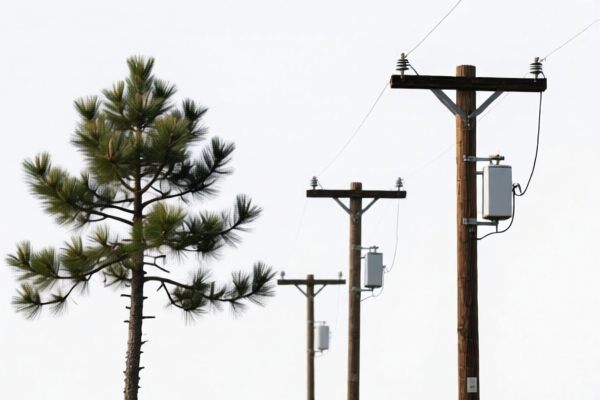
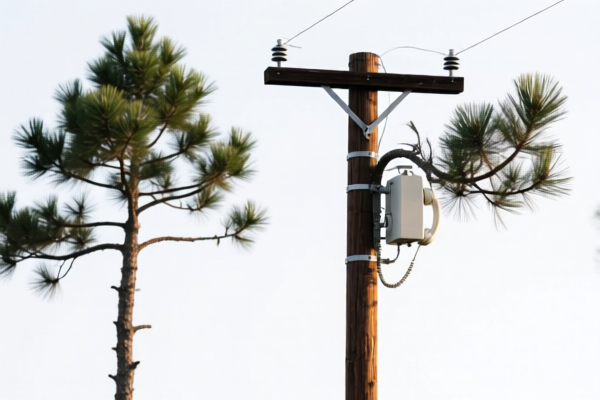
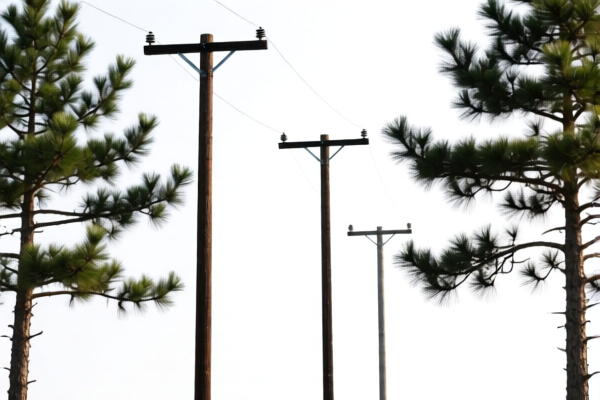
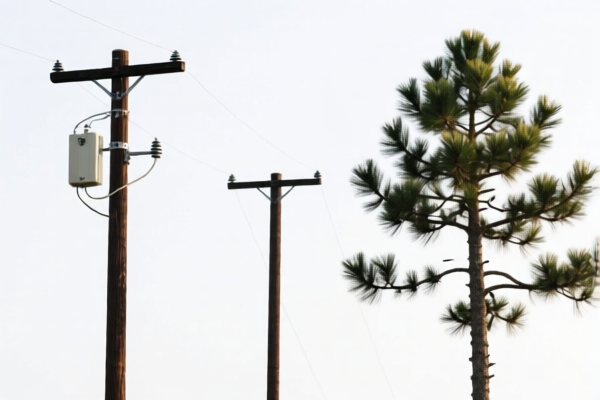
AI Analysis
🌲 Unprocessed Pine Poles (Raw Timber & Construction Stakes)
🌐 HS Code Reference & Customs Clearance Guide | 2026 Latest Tariff Analysis | Professional Clearance Strategy
📌 I. Product Definition & Classification: What Exactly Are "Unprocessed Pine Poles"?
"Unprocessed Pine Poles" is a broad trade term that covers various forms of raw coniferous timber, specifically pine (Pinus spp.), that have undergone minimal mechanical processing. In international trade, these goods are strictly categorized based on geometry, dimensional precision, and processing level.
Misclassification is the #1 cause of delays and penalties for timber imports. You must distinguish between: 1. Rough Sawn Lumber/Planks: Thickness > 6mm, sliced or chipped lengthwise. 2. Wood in the Rough (Posts/Poles): Stripped of bark but roughly squared, with specific cross-sectional dimensions (usually ≥ 15cm). 3. Split Poles/Stakes: Pointed ends, not sawn lengthwise, used for fencing or supports.
⚠️ Critical Distinction Point:
- If the wood is roughly squared and has a smallest cross-sectional dimension ≥ 15 cm → It is likely a Post/Pole (HS 4403).
- If it is sliced/chipped lengthwise with thickness > 6 mm → It is Sawn Wood (HS 4407).
- If it is split or pointed but NOT sawn lengthwise → It is Hoopwood/Stakes (HS 4404).
📦 II. HS Code Classification Details (2026 Latest Tariff Authority Comparison)
Based on your provided data, here are the exact classifications for Unprocessed Pine Poles:
| HS Code | Product Description | Application Scenario | Key Characteristics |
|---|---|---|---|
4403.21.01.12 |
Wood in the rough, coniferous pine, ≥15cm cross-section: Telephone, telegraph, and electrical power poles | Utility infrastructure, high-voltage towers, telecom masts | Roughly squared, large diameter, functional utility purpose |
4403.21.01.15 |
Wood in the rough, coniferous pine, ≥15cm cross-section: Fence posts | Agricultural fencing, garden borders, structural support | Roughly squared, large diameter, rural/agricultural use |
4404.10.00.80 |
Hoopwood/split poles; piles, pickets, stakes (pointed, NOT sawn lengthwise): Coniferous Poles, piles, posts | Dock piles, garden stakes, temporary fencing, landscaping | Pointed, Split, not sawn lengthwise, smaller cross-section than posts |
4404.10.00.90 |
Hoopwood/split poles; piles, pickets, stakes (pointed, NOT sawn lengthwise): Coniferous Other | General coniferous stakes, non-specific small poles | Pointed, Split, generic coniferous material |
4407.11.00.42 |
Sawn wood >6mm, coniferous pine (Pinus strobus/red pine), NOT treated: Rough | Eastern/Red Pine construction lumber, rough planks | Sawn lengthwise, Thickness >6mm, specific pine species |
4407.11.00.44 |
Sawn wood >6mm, coniferous pine (Pinus contorta), NOT treated: Rough | Lodgepole Pine construction lumber, rough planks | Sawn lengthwise, Thickness >6mm, specific pine species |
🔍 Key Insight:
- HS 4403 applies to "Wood in the Rough" (bark removed, roughly squared). This is the standard for utility poles and fence posts. - HS 4404 applies to split poles and stakes. Note the phrase "pointed but not sawn lengthwise". If you saw the pole lengthwise into planks, it moves to HS 4407. - HS 4407 applies to sawn wood (planks/boards). Even if "rough," if it was sliced/chipped lengthwise and exceeds 6mm thickness, it belongs here.
💰 III. 2026 Latest Tariff Rate Details (Including Surcharges)
✅ Applicable Country: United States (US)
✅ Origin: China (CN) (Assumed based on typical 25% tariff structure in data)
✅ Effective Date: Current as of 2026 Data Provided
🎯 1. 4403.21.01.12 & 4403.21.01.15 —— Utility & Fence Poles (Wood in the Rough)
| Item | Content |
|---|---|
| Basic Tariff | 0.0% |
| Additional Tariff (Section 301) | +25.0% |
| Total Tax Rate | 25.0% |
| Tax Detail | Base: 0.0% + Surtax: 25.0% |
| Legal Basis Path | HTSUS:4403.21.01 → Footnote:301 |
📌 Explanation:
- Pine poles used for infrastructure (power/telecom/fences) are taxed at 25%. - These are considered "raw materials" for construction/infrastructure. - No de minimis exemption for commercial shipments.
🎯 2. 4404.10.00.80 & 4404.10.00.90 —— Coniferous Poles, Stakes, & Hoopwood (Split/Pointed)
| Item | Content |
|---|---|
| Basic Tariff | 0.0% |
| Additional Tariff (Section 301) | +25.0% |
| Total Tax Rate | 25.0% |
| Tax Detail | Base: 0.0% + Surtax: 25.0% |
| Legal Basis Path | HTSUS:4404.10 → Footnote:301 |
📌 Explanation:
- These include garden stakes, dock piles, and fencing stakes that are split or pointed but not sawn lengthwise. - Like utility poles, they carry a 25% surcharge.
🎯 3. 4407.11.00.42 —— Eastern White Pine & Red Pine (Sawn, Rough)
| Item | Content |
|---|---|
| Basic Tariff | 0.0% |
| Additional Tariff (Section 301) | +25.0% |
| Total Tax Rate | 25.0% |
| Tax Detail | Base: 0.0% + Surtax: 25.0% |
| Legal Basis Path | HTSUS:4407.11.00.42 → Footnote:301 |
📌 Explanation:
- Specifically for Eastern White Pine and Red Pine. - Must be sawn lengthwise and rough (not planed). - 25% tax applies.
🎯 4. 4407.11.00.44 —— Lodgepole Pine (Sawn, Rough)
| Item | Content |
|---|---|
| Basic Tariff | 0.0% |
| Additional Tariff (Section 301) | 0.0% |
| Total Tax Rate | 0.0% |
| Tax Detail | Base: 0.0% + Surtax: 0.0% |
| Legal Basis Path | HTSUS:4407.11.00.44 |
📌 CRITICAL ADVANTAGE:
- Lodgepole Pine (Pinus contorta) is an EXEMPTION case in this dataset. - If your product is specifically Lodgepole Pine and is roughly sawn (>6mm), the total tax is 0%. - DO NOT misdeclare Pine contorta as general "Pine" (Pinus spp.) to avoid the 25% tax, BUT ensure species accuracy is defensible.
🛠️ IV. Customs Clearance Practical Advice (Real-World Pitfall Guide)
✅ 1. Preparation Checklist (Non-Negotiable)
| Document | Required? | Explanation |
|---|---|---|
| ✅ Species Declaration | ✔️ Mandatory | Must specify Pinus strobus, Pinus resinosa, Pinus contorta, or generic Pinus spp.. Mislabeling causes delays. |
| ✅ Processing Description | ✔️ Mandatory | Clearly state: "Rough Sawn," "Split," "Pointed," or "Roughly Squared." This determines HS 4403 vs 4404 vs 4407. |
| ✅ Cross-Sectional Dimensions | ✔️ Mandatory | Provide min/max width/height. Critical for distinguishing Posts (≥15cm) from Stakes/Sawn Wood (<15cm or specific shape). |
| ✅ Bark Status | ✔️ Mandatory | "Striped of bark" vs "With bark." Affects HS 4403 classification. |
| ✅ Phytosanitary Certificate | ✔️ Mandatory | Required by USDA APHIS for all raw wood imports from China. |
| ✅ IPPC Mark | ✔️ Mandatory | If packaged in wood, packaging must be heat-treated/marked. |
✅ 2. Classification Strategy (Key Mantras)
🔥 "Dimension Dictates Duty, Process Determines Code!"
| Scenario | Correct HS Code | Tax Rate | Pitfall to Avoid |
|---|---|---|---|
| Utility Pole (≥15cm, roughly squared) | 4403.21.01.12 |
25% | Don't declare as "wooden stick" (4404) to lower tax → Audit Risk! |
| Garden Stake (Pointed, Split, <15cm) | 4404.10.00.80/90 |
25% | Don't declare as "Lumber" (4407) unless truly sawn lengthwise. |
| Lodgepole Pine Planks (>6mm, Sawn) | 4407.11.00.44 |
0% | Ensure species is Pinus contorta. Generic "Pine" defaults to 25%. |
| White/Red Pine Planks (>6mm, Sawn) | 4407.11.00.42 |
25% | Correct species identification is key. |
✅ 3. Special Cases & Mitigation
| Situation | Handling Advice |
|---|---|
| Mixed Pine Species | If a shipment contains both Lodgepole and other pines, the entire shipment may be taxed at the higher rate (25%) unless strictly segregated and documented. |
| Treated Wood | If poles are creosote-treated or chemically preserved, they may fall under 4403.20 (Treated wood). Check specific treatment codes; some treatments may affect phytosanitary clearance but not necessarily the ad valorem rate shown here. |
| De Minimis (Section 321) | ❌ NOT APPLICABLE. Wood products generally do not qualify for the $800 de minimis exemption. |
| Wood Packaging Material | Ensure all pallets/crates are ISPM 15 compliant. Infested wood will lead to rejection/destruction. |
🌍 V. Global Market Comparison (2026 Update)
| Country/Region | Recommended HS Code | Tariff Rate (China Origin) | Key Requirement |
|---|---|---|---|
| 🇺🇸 United States | 4403.21.01.12 / 4407.11.00.44 |
0% - 25% | USDA APHIS Permit, IPPC Mark, Species Declaration |
| 🇪🇺 European Union | 4403.21 / 4404.10 |
0% - 4% | Timber Regulation (EUTR), FLEGT license (if applicable) |
| 🇨🇳 China | 4403.21 / 4404.10 |
0% - 5% | Phytosanitary Certificate |
| 🇯🇵 Japan | 4403.21 / 4404.10 |
0% - 3.2% | Phytosanitary Certificate, Fumigation Report |
📌 Conclusion:
- The US market is the most tariff-heavy for non-Lodgepole pine products (25%). - Species specificity is your best cost-saving tool. Lodgepole Pine (4407.11.00.44) offers 0% duty – verify this with your supplier. - Phytosanitary compliance is globally uniform but strictly enforced in the US/EU.
📌 VI. Common Mistakes & Pitfall Guide (Lessons Learned)
❌ Mistake 1: Declaring "Lodgepole Pine" when it is "Eastern White Pine"
👉 Consequence: Paying 0% when you should have paid 25% → Fraud Penalty + Back Taxes + Seizure.
👉 Solution: Require lab-tested species identification or supplier guarantees.
❌ Mistake 2: Calling "Sawn Planks" "Poles"
👉 Consequence: Misclassification. If the wood was sliced lengthwise, it cannot be a "pole" under HS 4404/4403 definitions.
👉 Solution: Define processing clearly: "Sawn" vs "Split" vs "Rough-Squared".
❌ Mistake 3: Ignoring Cross-Sectional Dimensions
👉 Consequence: Confusion between "Pole/Post" (≥15cm) and "Stake/Picket" (<15cm). While tax might be similar, regulatory requirements differ.
👉 Solution: Measure and document min/max dimensions on the commercial invoice.
❌ Mistake 4: Missing IPPC Mark on Pallets
👉 Consequence: Entire container rejected at port of entry.
👉 Solution: Inspect all wood packaging before loading.
✅ Correct Approach:
"Lodgepole Pine (Pinus contorta), Rough Sawn Planks, Thickness 75mm, Width 200mm, Heat-Treated, Fumigated, Phytosanitary Certificate Attached."
🎯 VII. Conclusion: Precision Classification Saves Money!
🎯 Remember These Mantras:
🔹 "Lodgepole is 0%, Others are 25%" – Species matters!
🔹 "Sawn Lengthwise = 4407; Split/Pointed = 4404; Rough-Squared Post = 4403" – Process matters!
🔹 "No De Minimis for Wood" – All shipments are dutiable.
🔹 "Phytosanitary is Key" – No Cert, No Entry.
📌 Pro Tip:
If you are importing Lodgepole Pine, ensure your supplier explicitly states Pinus contorta on the invoice and packing list. This can save you 25% on high-value timber shipments.
For all other pine poles/stakes, budget for a 25% tariff. Consider supply chain shifts to non-tariffed regions if volumes are high, or verify if any specific agricultural exemptions apply.
📣 Immediate Action:
📞 Contact your customs broker with a photo of the wood grain and ends for species verification.
📄 Request a Phytosanitary Certificate from the country of origin.
📝 Declare exact dimensions and processing method to avoid HS Code reclassification.
✨ Professional Clearance Starts with Accurate Classification!
💼 Your Bottom Line Depends on the Details!
Customer Reviews
About HS Code Classification
The Harmonized System (HS) is an internationally standardized nomenclature developed by the World Customs Organization (WCO) to classify traded products. Over 200 countries use the HS system as the basis for customs tariffs, trade statistics, and import/export regulations.
Each HS code follows a hierarchical structure:
- Chapter (2 digits) — Broad category of goods (e.g., Chapter 84: Machinery and Mechanical Appliances)
- Heading (4 digits) — More specific grouping within the chapter
- Subheading (6 digits) — Internationally standardized breakdown, used by all WCO member countries
- National subdivisions (8-10 digits) — Country-specific extensions for further classification, such as US HTSUS 10-digit codes
Correct HS code classification is essential for smooth customs clearance, accurate duty payment, and compliance with trade regulations. Misclassification can lead to customs delays, overpayment of duties, or penalties.
When importing from CN to US, the applicable tariff rates may include:
- Most-Favored-Nation (MFN) rate — The standard duty rate applied to WTO members
- General rate — Applied to countries without trade agreements
- Trade remedy duties — Additional tariffs such as Section 301 (anti-dumping), Section 232 (national security), or countervailing duties
The information provided on this page is for reference purposes only. For official classification, please consult with your local customs authority or a licensed customs broker.